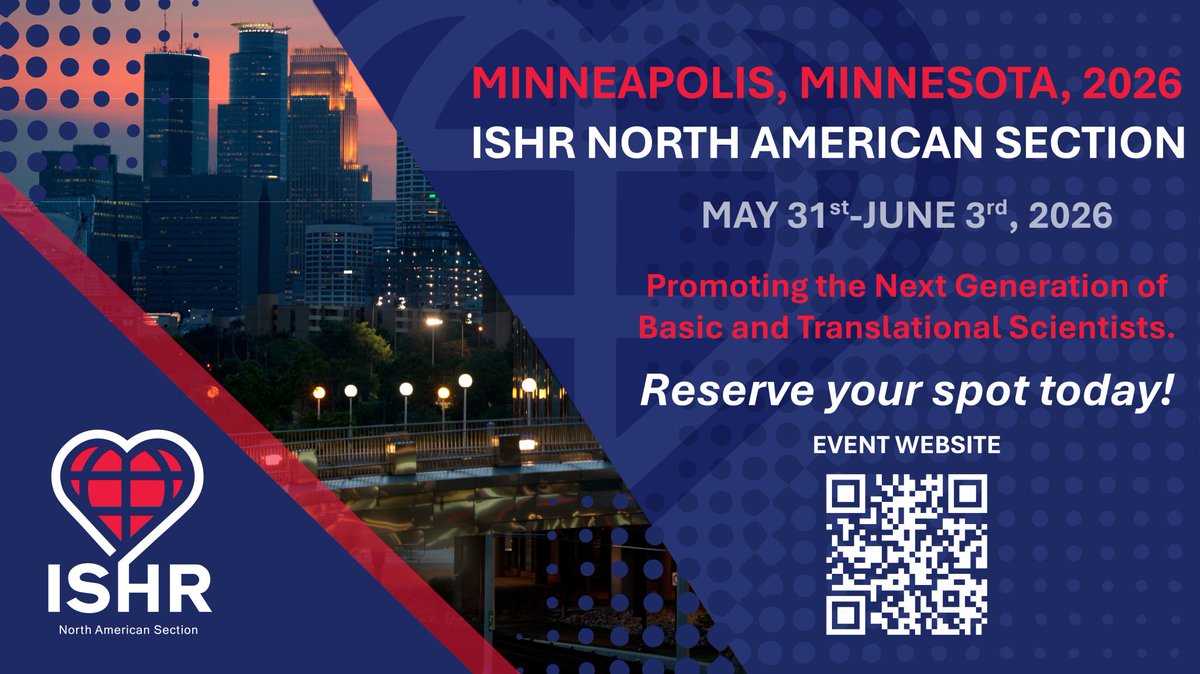
Join us in Minneapolis for the 2026 ISHR North American Section Meeting!
📍 Minneapolis, MN
📅 May 31–June 3, 2026
Promoting the next generation of basic and translational scientists. Reserve your spot today! #ISHRNAS2026
https://t.co/0XFYvwepRC
Ghiringhelli et al bioengineered a human-like #atrial heart model that reproduces complex #arrhythmias & can be precisely controlled with light (#optogenetics). Learn about this new platform for studying #AFib at https://t.co/WPqiTzHzGN
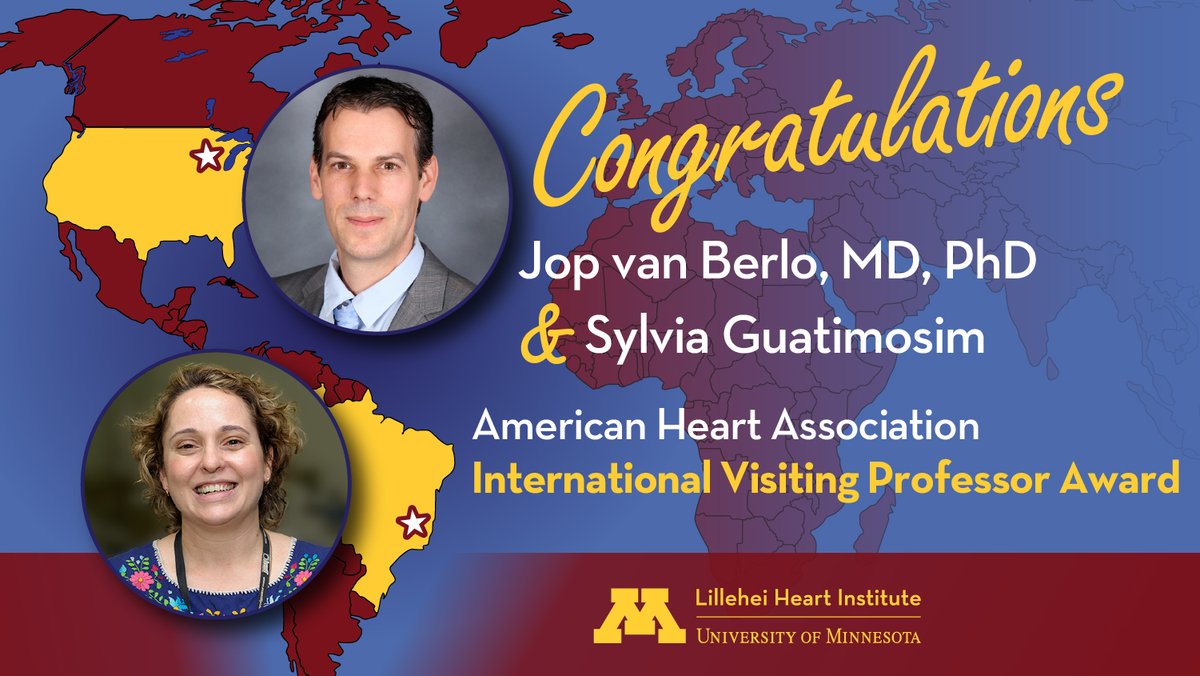
Huge congrats to Dr. Jop van Berlo (@UMNews) and Dr. Silvia Guatimosim (UFMG) on receiving the @American_Heart International Visiting Professor Award. They’re combining forces to tackle the complexities of cardiac remodeling and molecular cardiology. #Cardionerds#UMNresearch
@Ramihdd & colleagues by charting the heart cell #proteome & using #CRISPR for precise validation, identified a key protein that sustains the heart #proteostasis & preserves #mitochondrial protein levels. Find out more at https://t.co/krscAjpWqP
@KehatLab
New #SkeletalMuscle paper: FibroTrack: a standalone deep learning platform for automated fibrosis quantification in muscle and cardiac histology. https://t.co/ohceTGm7Qf
Finally out: We used CRISPRa/i to show that virtually ANY genomic site can become regulatory for cardiac genes—even without accessibility or active marks. TF recruitment remodeled chromatin & changed expression up to 70 kb away.
doi: 10.1016/j.isci.2025.114040
1/ Can #Axolotls teach us new things about #HeartRegeneration?
A great collaboration between @Tanaxolotl and Miguel Torres lab.
We’re happy to share our new work in which we ask how axolotls regenerate their hearts and could they help mammals with that?
https://t.co/db5tAnN3AR
Excited to launch the Landau-Levi Lab at @TechnionLive !
We develop organ-on-a-chip systems focused on cardiac and multi-organ interactions and the role of immune cells in shaping tissue function.
Learn more: https://t.co/5Vvm1DN1uL
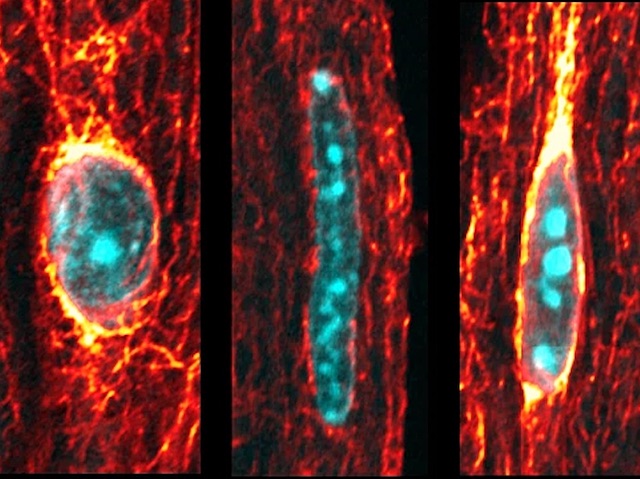
Quantifying cardiomyocyte contraction & nuclear deformation interaction reveals nucleus-damaging mechanism underlying LMNA cardiomyopathy
📷 @AmiadDaria & @julieheffler et al @WeillCornell@PennMedicine in @NatureCVR
➡️ https://t.co/lMBGFI9UoP