@RandomSprint@savitar0919 He's young and already so mathematically inclined! That's fantastic. Even if he never goes into math as a field, I hope he retains that curiosity throughout life.
Dusting off this tweet from April because this gap in shared understanding of LLM capability is *widening*. It's now less "two groups of people speaking past each other" and more a sharp funnel.
- Napkin math somewhere around 6B people (~75% of the population) have barely come in contact with LLMs at all.
- Around 1-2B (~20%) are casual and infrequent users of free-tier ChatGPT-like products. This group sees derpy chatbots and treats them a bit like a better Google search, a writing aid, or etc. Maybe an agent tries to book you a flight. I have non-tech friends who (reasonably, imo) say they have not much use for it at all. Even many professionals outside of math&code are in this tier. For example, execs and many other functions spend a lot of their time talking to other people, so while they understand what is happening intellectually, it is still second-hand and a bit abstract.
- Now we get to professional use of frontier-grade LLMs in math&code. Somewhere around 20M people (0.2%) see first-hand that large, complex projects that used to take them weeks/months can now be completed by agents with a prompt. Building apps, copying apps, translating apps, decompiling apps from binaries... This has all happened very quickly and recently - less than 1 year ago, I was writing code manually by hand, typing memorized computer code commands into a code editor character by character, occasionally pressing Tab to autocomplete a little chunk of code.
- And finally we get to the ~5,000 people (~0.00006%) with access to frontier-grade systems internally. The external world has seen the preview. It looks like swarms of thousands of agents collaborating over weeks on software mega projects: minting zero days, running cyber attacks and defenses at machine speeds, discovering new science, advancing the frontier of mathematics. Things that would have taken top professionals in the industry years of work. Meanwhile, human review and comprehension are starting to fall behind. For example, people are still involved in the "archeology" of the OpenAI-HF incident from many months ago. Mathematicians may be poring over the 722 manuscripts on frontier mathematics for a while.
The funnel is driven by a combination of factors:
1. The impact scales with ambition, problem size, and horizon. A question with a paragraph answer barely stresses the system. You need a reservoir of big, difficult problems that you really care about. This aspect drives the consumer / professional dimension of the funnel.
2. The jaggedness of the system (which I have written about a lot separately). Capability peaks in domains that are digital, verifiable and economically valuable. This is because LLM capability emerges from reinforcement learning on verifiable rewards on a curated environment mixture driven by revenue potential. This aspect primarily drives the area (e.g. math&code) dimension of the funnel.
3. Access. Free-tier, paid-tier, internal.
So this is the weirdness of the moment. The general public has mostly not interacted with these systems. When they have, it looks like a derpy chatbot. The majority of professionals still see only a modest uplift. And a small sliver of professionals are experiencing the vertigo of the curve going vertical. And it is all happening at the same time.
Intelligence must draw on memory. The mind must not simply compile data — as an algorithm now does more quickly than we can — but recall lived experiences, which contain depths of meaning that only the human soul can recognize, and connect more deeply with the goodness of these experiences. Everything that is good begins “with the Spirit” and thus possesses a breath, a dynamism and a sense of communion that, once experienced, are engraved upon the heart. https://t.co/Ij21tkb3qT
@MelindaBChu1@MonkeyCheeks8@balit_mario@bpodgursky@mathepi Absolutely delusional thinking. He's been teaching for over 30 years. 100% he's worked with people who are dumber than him. He works as director at IPAM and chair of UCLA. Do you honestly believe he isn't able to work in the "real" world? My goodness the hubris.
@stellachenyl@1wakur4Lain@LinusMixson@olivertraldi@littmath Appalling to see so many comments calling him and other mathematicians as "useless" and having no impact outside of math, when Tao himself built up the field of compressed sensing. These people are so mired in ignorance they don't even known what they don't know.
@Just_a_manifold@thegautamkamath@XYHan_ I'm skeptical of the idea that they will be completely substituted. They will either filter into new roles that have already been hiring them (quants) or the new desired spec will be problem creation over problem creation. Being at the edge of field gives them an advantage.
@thecoolcuber@thegautamkamath Money. At a certain point, people who majored in CS were there more for the silicon valley tech money rather than a love of programming. I can't blame them. Many Maths PhDs end up in quant roles for a similar reason.
A very common sentiment I'm hearing among math students: "I don't want to become a mathematician anymore." I've seen this before, I think the generation of digital artists who came of age around 2022 will be the last.
AI might not functionally replace mathematicians or artists, but it might well cause their near-extinction anyway, by crushing the spirits of the younger generations.
@DGP205244@sporadica@nbhv1n@thefoool64472@_bumblebee7_ OAI likely caught wind of this (application of the blow-up to a new problem class) and that was the reason they rushed to exhaust the search space for all the solutions.
The tension here is that bruteforcing a solution offers no novel insights.
@DGP205244@sporadica@nbhv1n@thefoool64472@_bumblebee7_ The blow-up framework that both OAI and Buckmaster-Alpöge papers relied on was established by Córdoba and Martínez‑Zoroa. There was very much progress being made.
Buckmaster-Alpöge's result was showing that the blow-up framework could apply to an entirely new problem class.
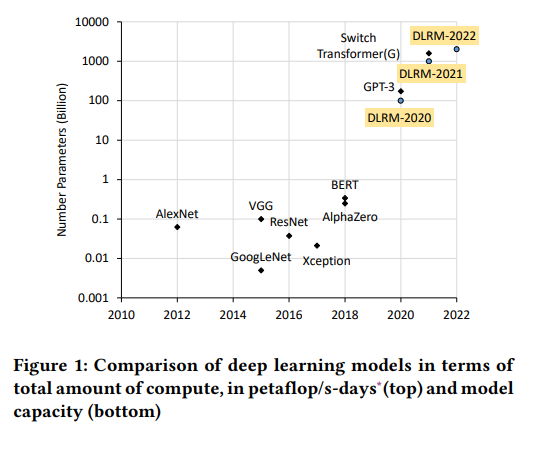
Facebook is deploying multi-trillion parameter recommendation models into production, and these models are approaching computational intensity of powerful models like BERT. Wrote about research here in Import AI 245: https://t.co/DJpUnl2E78
Paper here: https://t.co/3LNyUpxavN
Developing efficient algorithms for distributed computation on very large graphs is an ongoing challenge. Check out a new model that augments the capabilities of #MapReduce, providing a way to solve distributed graph algorithms in fewer computation rounds. https://t.co/8nE2XZ48IS
“If we want to make neural nets that understand images in the same way as people do, we need to figure out how neural nets can represent part-whole hierarchies.”
@GeoffreyHinton's latest work: “How to represent part-whole hierarchies in a neural network”
https://t.co/8kq9EGcleE