New study in #ASNCJASN shows that a lower-cost, tiered approach could make routine rejection surveillance more feasible in real-world kidney transplant care. https://t.co/tgsxqN2QQ7
🌍 Half-off ISN membership. Together across borders.
"I think what's unique about the International Society of Nephrology is its global outreach." @jradnephro
🎉 Join/renew your ISN membership for the rest of 2026 at 50% off, use code 50ISN26: https://t.co/u6KBdChvaK
𝗦𝘂𝗴𝗴𝗲𝘀𝘁𝗲𝗱 𝗥𝗲𝘃𝗲𝗿𝘀𝗮𝗹 𝗦𝘁𝗿𝗮𝘁𝗲𝗴𝗶𝗲𝘀 𝗼𝗳 𝗢𝗿𝗮𝗹 𝗔𝗻𝘁𝗶𝗰𝗼𝗮𝗴𝘂𝗹𝗮𝗻𝘁 𝗨𝘀𝗲 𝗳𝗼𝗿 𝗠𝗮𝗷𝗼𝗿 𝗕𝗹𝗲𝗲𝗱𝗶𝗻𝗴 𝗮𝗻𝗱 𝗯𝗲𝗳𝗼𝗿𝗲 𝗘𝗺𝗲𝗿𝗴𝗲𝗻𝗰𝘆 𝗦𝘂𝗿𝗴𝗲𝗿𝘆.
As shown in Panel A, reversal management depends on the urgency of surgery or the invasive procedure. Reversal management includes administration of oral or intravenous (IV) vitamin K with or without 4F-PCC, depending on the timing of the procedure (emergency or urgent), baseline international normalized ratio (INR) value, and presence (or absence) of active bleeding. For patients receiving direct oral anticoagulants (DOACs), the decision also depends on time to surgery. Decision making is informed by DOAC type, time since last dose, half-life, presence (or absence) of active bleeding, and renal function tests to estimate residual drug activity.
Panel B shows reversal strategies for patients presenting with major bleeding while receiving an oral anticoagulant. The reversal strategy of vitamin K antagonists includes vitamin K given intravenously or orally, combined with 4F-PCC and INR testing. Management of anticoagulant reversal of direct oral FXaIs is based on four key factors (shown as the 4Ts): type of bleeding, timing of the last dose, thrombotic risk, and need for invasive procedures in the next 48 hours that would result in the administration of UFH. These factors may facilitate the use of specific (e.g., andexanet alfa) or nonspecific (e.g., 4F-PCC) antidotes. The reversal of dabigatran is informed by three clinical variables (shown as the 3Rs) — the type of bleeding, time of the last dose of dabigatran, and preserved renal function.
Learn more in the Review Article “Antidotes for Anticoagulation Reversal” by Bianca Rocca, MD, PhD, and Hugo ten Cate, MD, PhD: https://t.co/XobqwMebfy
NEJM subscribers: Explore this article deeper with AI Companion.
The ASN journals, #ASNCJASN, #ASNJASN, and #ASNKidney360, recognize and honor the outstanding work of junior colleagues in their early stages of nephrology careers by awarding Trainee of the Year awards. Learn more about the opportunity here: https://t.co/qnwY2vzSr6
🔆Need to standardise HDF practice & promote wider adoption across 🇮🇳 subcontinent
🔥survival benefit, lower CV complications, lower IDH, better QOL
🔗 https://t.co/C9fCdDxs4N
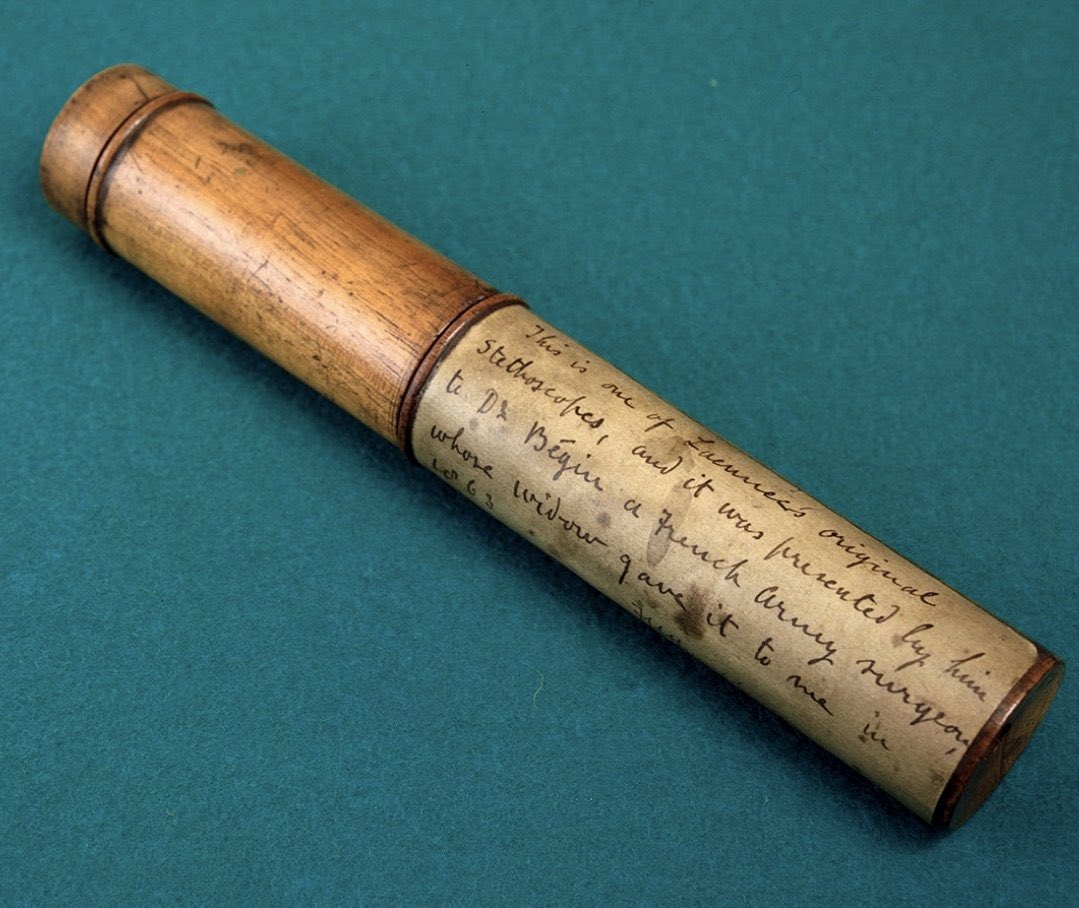
💥Do you know how René Laennec invented 🩺⁉️
🔥He was a French Physician & musician, skilled in carving wooden flute
🔆First Stethoscope was a 25x2.5cm hollow wooden cylinder
🔆Coined term “Stethoscope"
Greek: στήθος (stethos-chest) + σκοπός (skopos-examination)
Pic-Wiki
#FOAMed #MedTwitter #MedEd #Medicine #medstudent
🔆Need to standardise HDF practice & promote wider adoption across 🇮🇳 subcontinent
🔥survival benefit, lower CV complications, lower IDH, better QOL
🔗 https://t.co/C9fCdDxs4N
🎥Watch Dr Ozge Hurdogan present the CKJ publication:
Clinicopathologic features and outcomes of patients with DNAJB9 positive fibrillary glomerulonephritis
https://t.co/Ps1VvBgSX2