A must read for anyone interested in how the financial guardrails of the economy will look with the merge of AI and crypto. Combine this with Yen intervention and today’s debt buyback news and you can see the old system vs the new system. Be ready.
Storing critical keys in a single system means one vulnerability takes down your entire setup.
@Kostascrypto on why real security comes from splitting risk across open and closed hardware:
As we’re seeing in case study after case study, it turns out that the amount of value that can be created between the AI model and the ultimate end-user workflow is far larger than many people assumed or realized.
Model capability is obviously doing a lot of heavy lifting in agentic products, but there’s still a lot more work to diffuse AI into the enterprise.
1. Getting agents to work well (and alongside people) in mission critical workflows tends to need to be represented differently depending on the business process. Sometimes it’s a chat experience. Other times it’s a background agent running in a deterministic workflow. And dozens of other variants. This is a mix of needing a harness that’s tuned to specific domains of work, but also making it show up in the right product experience.
2. Different workflows connect into entirely different enterprise systems and need access to very different data. Working with that data -whether it’s life sciences, financial, legal, etc.- requires contextual approaches, understanding of the data, having the right user experience for data interaction, and more.
3. The need for domain-specific change management remains critical in most verticals. The way you talk and implement technology at a bank is very different from a law firm. Having the right talent with a singular mission ends up being extremely useful for something as complex as process reengineering.
4. The ability to work with a variety of models means you can tune the workflows to different cost and performance levels. And you can eventually post train models for specific tasks to tailor the outcomes and eke out gains that aren’t coming otherwise in frontier models.
5. Evals! AI is basically not useful if it can’t be evaluated. Domain-specific evals that let you dramatically improve the performance of your harness for specific workflows just has a crazy long tail given how many tasks there are in the economy. Nearly impossible for one system to be tuned for all of them.
6. Lots of verticals and domains require pricing models that reflect relevant abstractions on top of tokens alone. The ability to price in ways that work for your industry’s consumption model ends up mattering in a variety of spaces.
This just touches on some of the things that go into the applied AI layer. But it all adds up to being a huge surface area for being able to sustainably innovate and differentiate.
@JessieWritesx, Tech Lead Manager at @Mysten_Labs, on why AI agents learn through state accumulation rather than weight retraining:
When an agent completes a task, the surrounding system must observe the result, extract key lessons, store the state, and retrieve it when relevant.
Without this loop, every interaction is a cold start.
Here is how the state accumulation loop actually works in production.
Read the full guide: https://t.co/CjQAkb0MYR
We have paused some frontier RL training to ensure that we can meet the appropriate alignment, security and monitoring standards for the new level of capabilities in front of us. Model progress is now extremely rapid, and we always said we would take action if we felt that model capabilities were outstripping the pace of safety and alignment.
We care very deeply about AI safety. We believe the entire field will have to coordinate on shared safety standards, but will act unilaterally in the meantime.
We expect confidence in safety to increasingly set the pace of AI progress. We are optimistic about the alignment work we are doing, and we remain committed to making frontier capabilities widely available.
https://t.co/51kvKfbfrO
One of the things I truly admire about Steve Jobs is how deeply he understood that the simpler an idea becomes, the further it can spread
The best product ideas compress an enormous amount of technology, ambition and possibility into something people immediately understand
@lulumeservey's “turning a cook into a chef” example is exactly that
Lulu (@lulumeservey) is the best in the world at what she does.
She’s the go-to comms strategist for Silicon Valley and many of the top founders in tech trust her.
She’s an advocate for going direct, has built a singular career and shares everything she’s learned.
0:00 From China to America
2:08 Learning to Read the Room
6:18 Building a Movement
7:30 Learning Comms by Doing
10:50 Anduril as an Insurgent
15:07 The Power of a Manifesto
18:47 Go Direct
26:45 Conviction Over Charisma
31:30 Why Rostra Exists
33:23 How AI Leaders Lose Trust
40:40 Tell a Better Story
47:55 Do Things That Can't Be Faked
50:55 The Return to Beauty
57:11 Originality Over Templates
1:04:02 Do What Only You Can Do
1:07:14 The Jetsons Rule
1:10:41 Trust Yourself
1:12:29 Why Humans Crave Stories
Includes paid partnerships.
A founder texted @kostascrypto at midnight: their AI model got too expensive for client work, and they needed to move everything, fast.
That’s the exact problem portable memory is built to solve.
Very excited to be speaking at Sui Basecamp this year. There is a lot we’re building at @WalrusProtocol that I’ve wanted to talk about. This feels like the right moment
The agentic future needs regulation, cryptography, and infra that works for humans and agents.
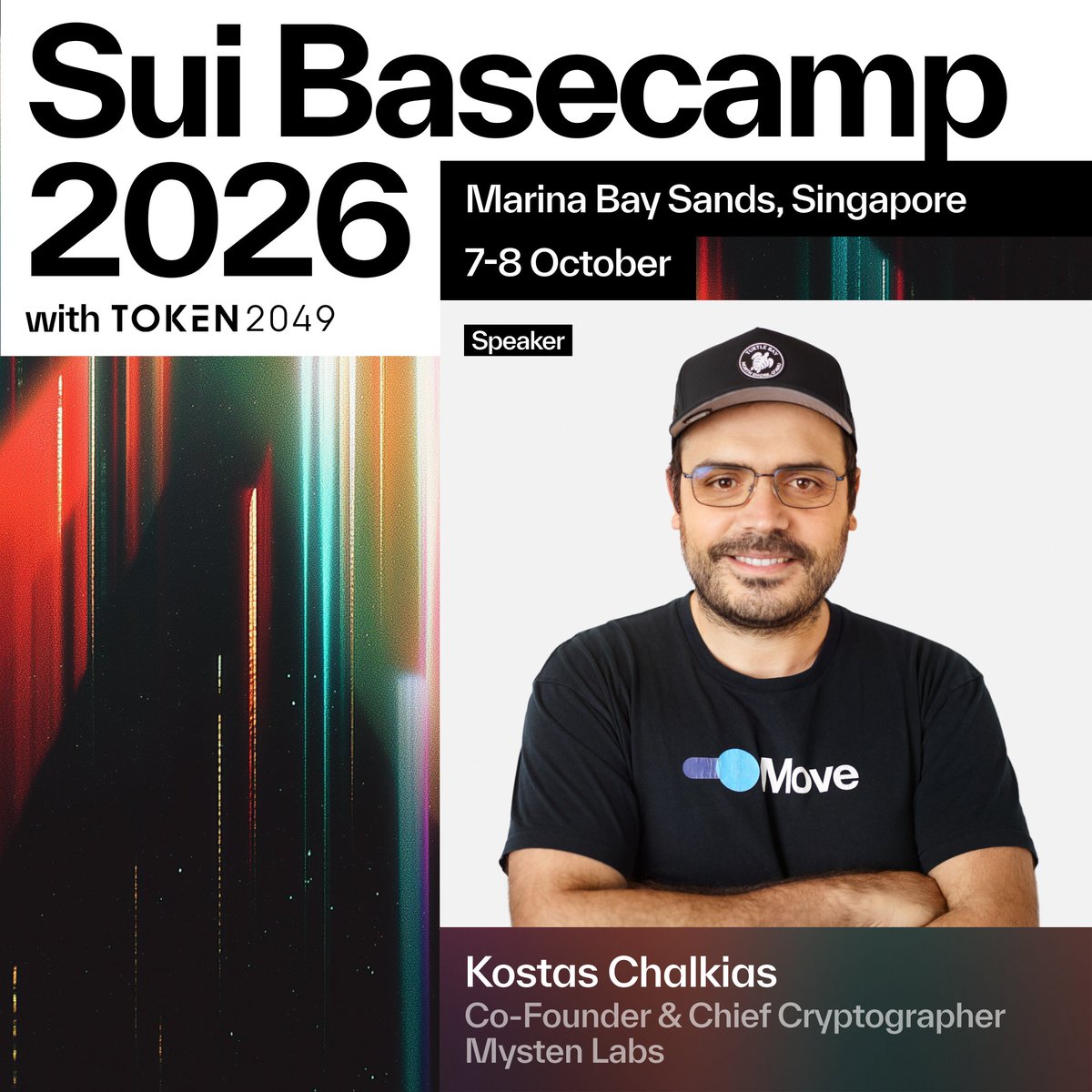
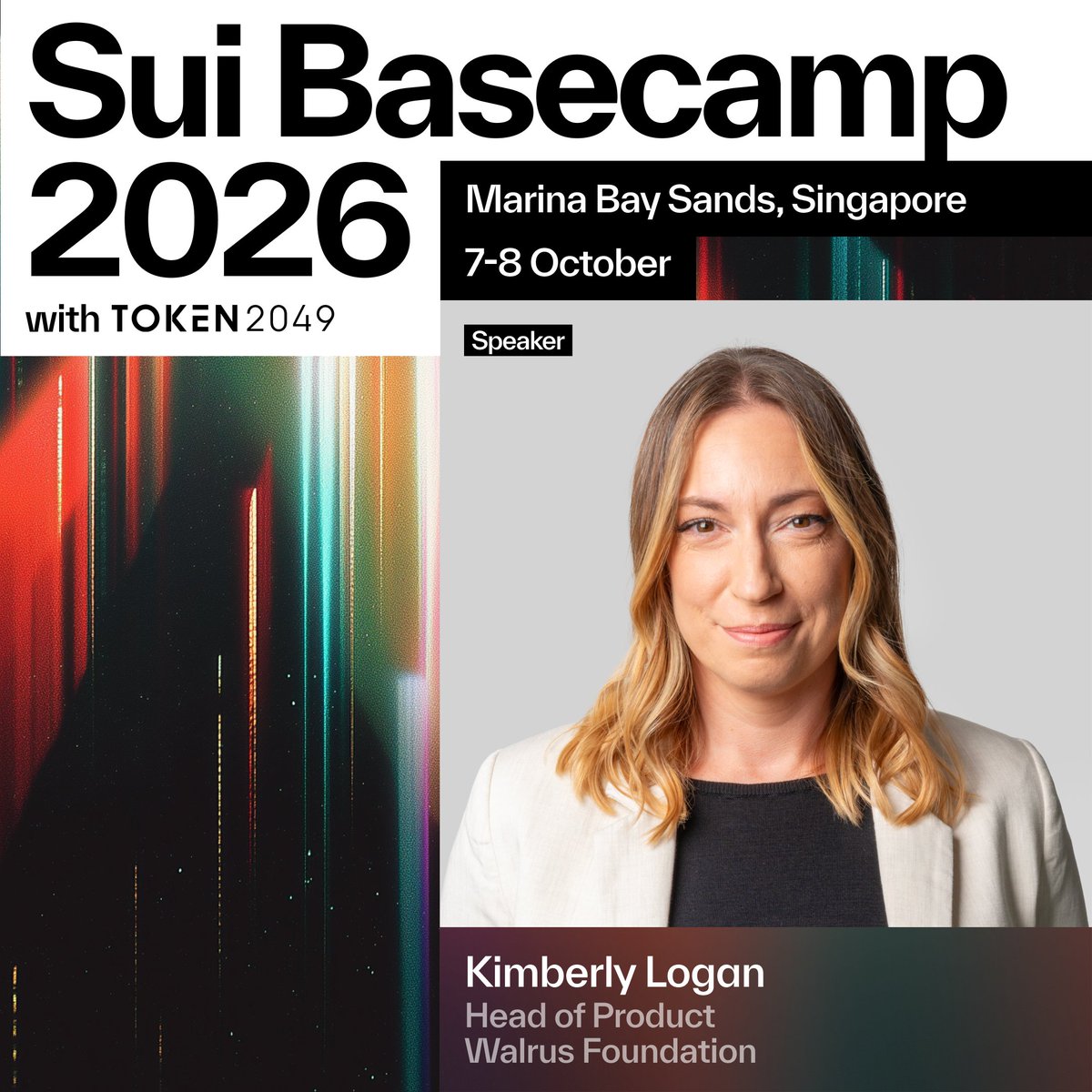
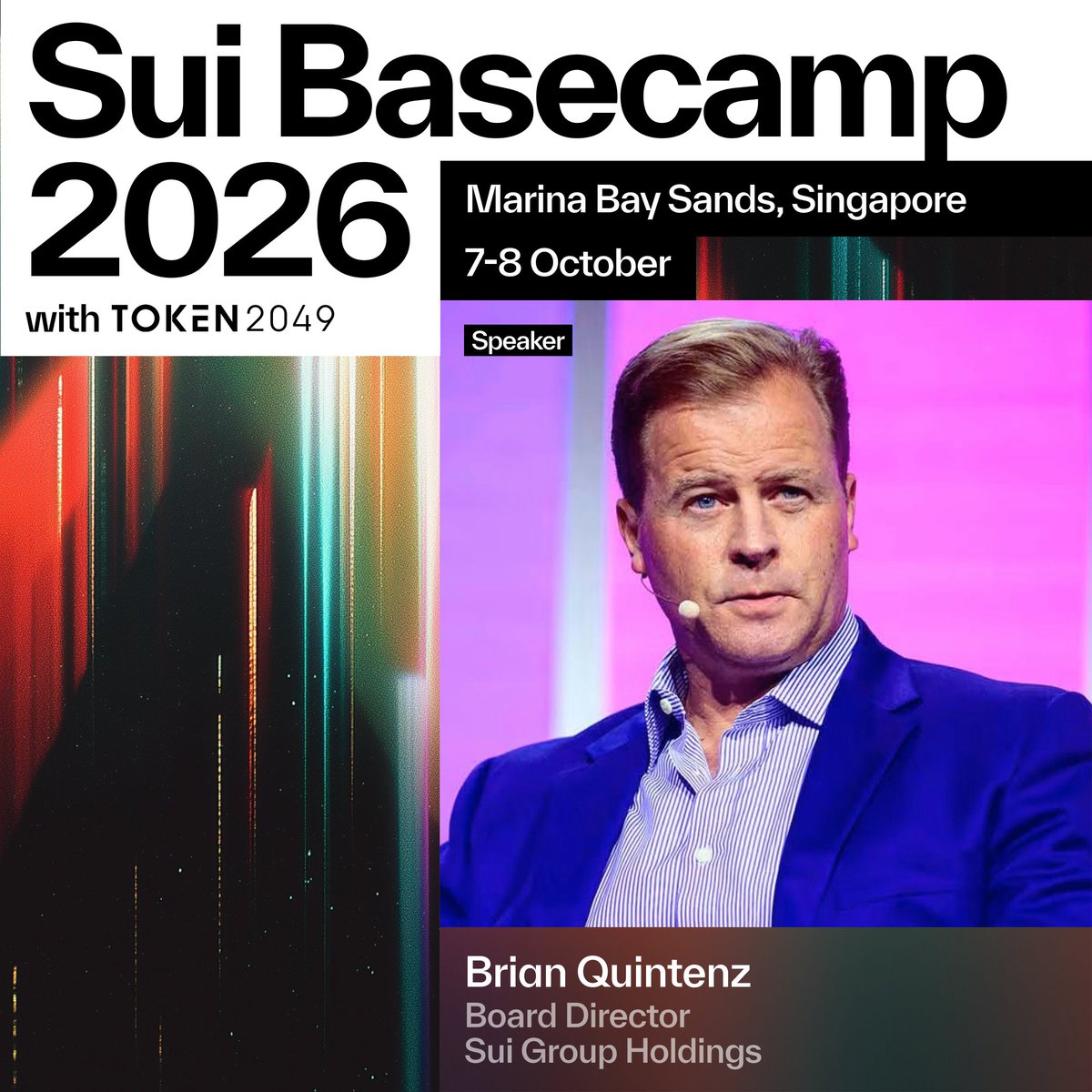
Meet four more speakers tackling these topics at Sui Basecamp:
- @funkii, @audricai / @t2000ai
- @BrianQuintenz, @officialSUIG
- @kimblgn, @WalrusProtocol
- @kostascrypto, @Mysten_LabThe agentic future needs regulation, cryptography, and infra that works for humans and agents.
Meet four more speakers tackling these topics at Sui Basecamp:
- @funkii, @audricai / @t2000ai
- @BrianQuintenz, @officialSUIG
- @kimblgn, @WalrusProtocol
- @kostascrypto, @Mysten_LabThe agentic future needs regulation, cryptography, and infra that works for humans and agents.
Meet four more speakers tackling these topics at Sui Basecamp:
- @funkii, @audricai / @t2000ai
- @BrianQuintenz, @officialSUIG
- @kimblgn, @WalrusProtocol
- @kostascrypto, @Mysten_LabThe agentic future needs regulation, cryptography, and infra that works for humans and agents.
Meet four more speakers tackling these topics at Sui Basecamp:
- @funkii, @audricai / @t2000ai
- @BrianQuintenz, @officialSUIG
- @kimblgn, @WalrusProtocol
- @kostascrypto, @Mysten_Labs
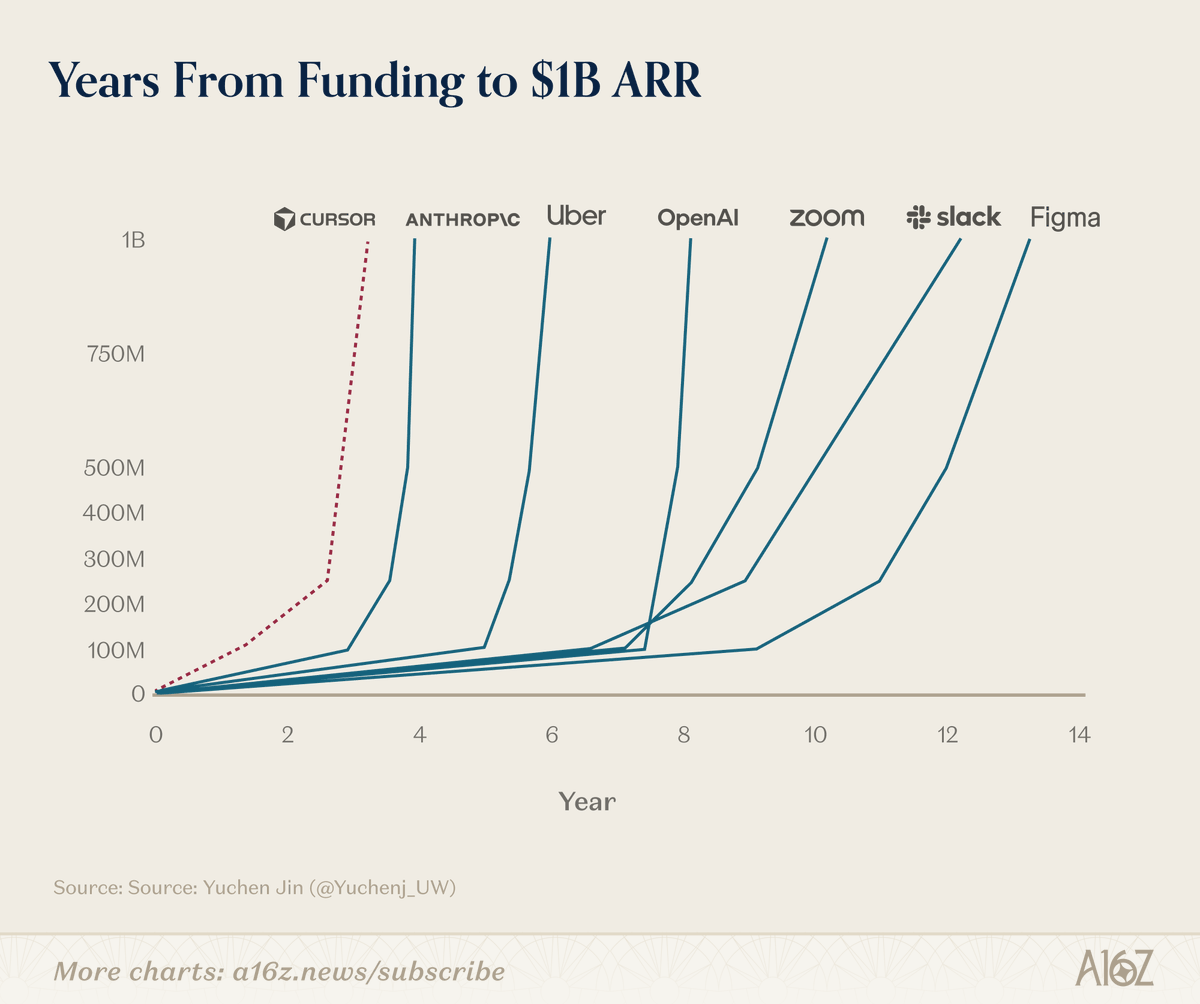
"Anysphere—which most people just called 'Cursor'—became the fastest software company in history to reach $100 million in annual recurring revenue."
"In 2024, things went vertical. Developers discovered the product and loved it, and they told their friends about it, and their friends loved it too."
"At one user meetup, a user from Japan explained that he’d flown in from Tokyo with a book he’d written in Japanese about how to use Cursor. It was honestly like the Beatles for software; we’d never seen anything like it."
Full piece from @sarahdingwang, @BornsteinMatt, and @martin_casado on Cursor + SpaceXAI: https://t.co/jnyXICp1pJ
We’ve written an FAQ to answer some of the questions we've received about watermarking.
In summary:
• We’re implementing watermarking to comply with the EU AI Act. Other major model developers have signed the same Code of Practice and will also be implementing watermarking;
• Our watermarking method doesn’t have any practical impact on the quality or content of Claude’s outputs;
• The difference between watermarked and un-watermarked text will not be distinguishable to readers;
• Nothing is added to the text and there are no hidden characters;
• Watermarking doesn’t require extra tokens, and will not be more expensive;
• Watermarks can’t be traced to a specific person, organization, or chat.
Read more: https://t.co/G76iUOJ7Hu