@tferriss@foundmyfitness Really enjoyed your conversation with Dr. Patrick! Just a quick clarification: the psilocybin dose was 5mg/kg, not 5mg per mouse. I believe our initial press release may have left out the unit. Appreciate the mention.
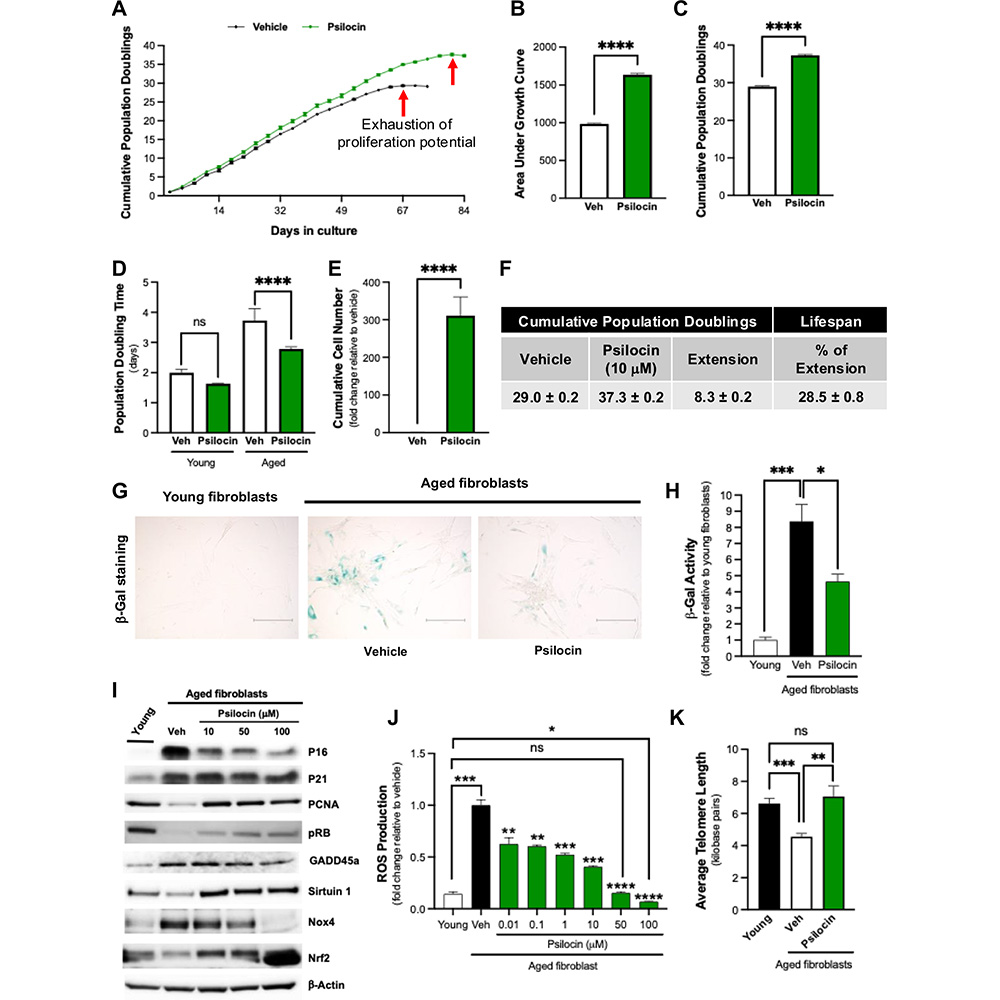
A study in @Nature_NPJ Aging provides evidence that treatment with psilocin, the active metabolite of the psychedelic psilocybin, extends cellular lifespan and psilocybin treatment promotes increased longevity in aged mice. https://t.co/Mi9OLirSx8
Magic mushrooms and longevity (new studies)
Contextualizing new studies that point to lifespan and healthspan extending properties of psilocybin mushrooms
People have been asking me about magic mushrooms and Alzheimer’s treatment for a few years now and at first I was admittedly pretty skeptical. People with Alzheimer’s sometimes experience hallucinations and disorientation, which is not helpful for them or their care givers. Giving them a drug that could make that worse seemed to me like a pretty bad idea.
About four years ago, I was looking at the data that was coming out of our platform of genes that relate to slow-brain aging and lo and behold, one of the brain receptors (5-HT2A receptor) that psilocybin mushrooms act upon, was pretty close to the top of that list. This was a piece of our own evidence that magic mushrooms, or other drugs that work through that receptor, might increase health of the brain...
That’s when I started to pay attention.
This past week a study came out in Nature Aging, which showed a 30% lifespan extension in aged mice given psilocybin.
Additionally, a few months ago a small study showed decreased symptoms in people with Parkinson’s disease who had just one dose of magic mushrooms.
Prior to the last few months, there have been >150 ongoing or completed clinical studies of psilocybin for mental health (depression, anxiety) in humans with pretty positive results.
So while I wouldn’t say that I’m convinced— I’m a scientist after all and that bar is pretty high— I would say that I’m feeling pretty optimistic about the potential of psilocybin or analogue drugs to improve brain health or even extend lifespan.
Should we all be taking psilocybin mushrooms? If so, what dose and how often? Are there versions of psilocybin drugs that retain the health benefits without the hallucinations?...
Summary
In summary, there is mounting, though early, evidence that psilocybin (and potentially other psychedelics) can lessen depression, anxiety, addiction, improve cognition, and even extend lifespan. This could be through their action on the 5HT-2A receptor or other receptors in the brain or telomere lengthening.
Researchers are working on non-hallucinogenic forms of these drugs that may be available in the future. If you’d like to try them yourself (if you live in a location where they are legal), it seems like taking a standard dose every 1-2 months has the most evidence for health benefits.
Read More: https://t.co/eiHBx1qAjH
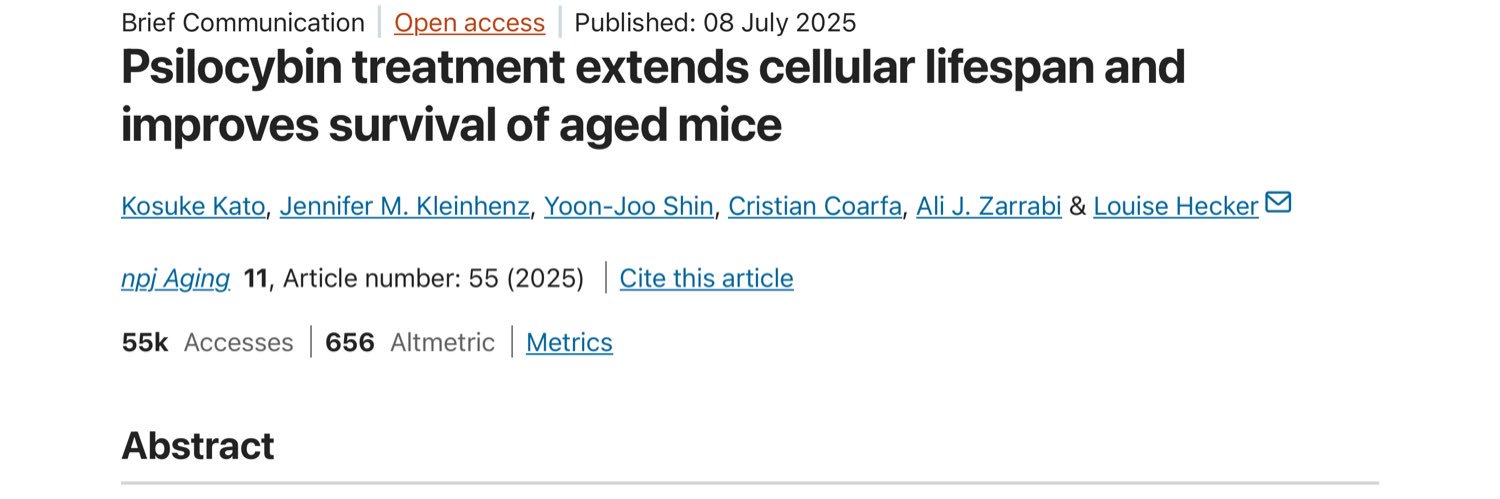
Psilocybin treatment extends cellular lifespan and improves survival of aged mice
👉 “We provide the first experimental evidence that psilocin (the active metabolite of psilocybin) treatment extends cellular lifespan and psilocybin treatment promotes increased longevity in aged mice, suggesting that psilocybin may be a potent geroprotective agent.”
https://t.co/vkKUoPAqsC
Can you take an FDA-approved oral drug for Multiple Sclerosis, make it into an inhaled form, and potentially cure an entirely different disease? – Our research says you can! Check out our recent findings on drug re-purposing by lead author @kosukekatophd https://t.co/nBA4L87mEp