@cboatenreiter@edsuom You are mistaking ensemble probability with time probability. If tails equals death, you can only keep tossing the coin until you get tails. That means your personal probability of getting heads decreases over time even if for each individual toss, the probability remains at 50%.
@HamburgSent@chrisschmitz Not what you said. Try to use your brain or, in the likely case you fail at that, look up some information before jumping to conclusions.
Was mW viel zu wenig thematisiert wird, ist der 28. Punkt:
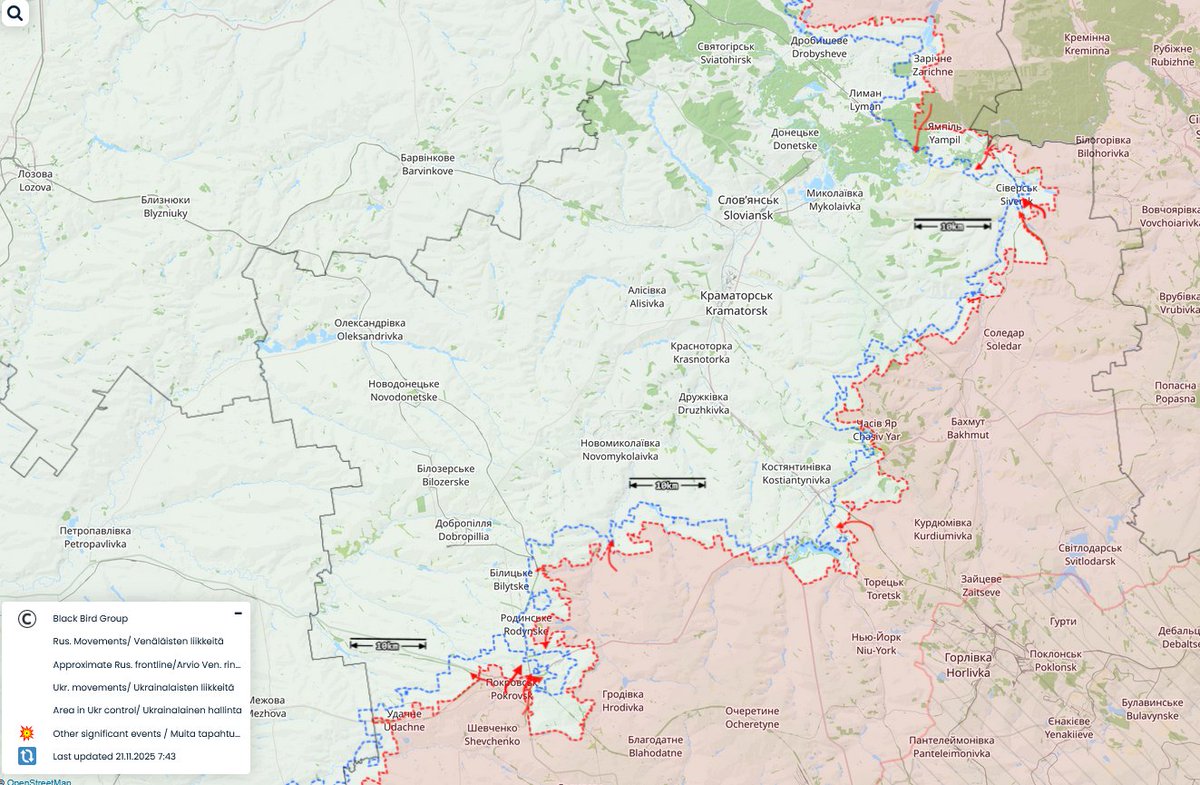
"...the ceasefire will take effect immediately after both sides retreat to agreed points..."
Vollkommen abwegig: nicht Waffenstillstand, damit beide Seiten die vereinbarten Positionen räumen können - umgekehrt
Wozu?
1/2
Hier hatte ich den bekannten Thread zu meinem Solar PV-Zaun gepostet. Inzwischen sind fast 1,5 Jahre vergangen – und wie versprochen: Jetzt gibt’s die Daten!
Ein informativer Thread zum Solarzaun 1/11🧵
https://t.co/kG4EXTiTg5
🧵1/ What did the DoD learn after giving > 1.3 million troops mRNA COVID shots?
Spoiler: the vaccines were safe, highly effective, and kept units mission-ready.
Let’s dive.
super strange to hear "We’re still not sure why this happened." from a top lab
we know exactly why. it's because there is no ego in an llm. whyy would Antrhopic say that. it just confuses normies
LLMs will complete text as anyone and anything by default. it's only ever pretend!
That’s the real issue. Not that AI hallucinate, but that we haven’t specifically designed them to know when precision is life or death, and when innovation is the goal.
The model doesn't know which is which. So when it makes something up, it's not failing exactly.
It's behaving in a way that's useful in some settings and dangerous in others, depending on a real-world context it was never trained to understand.
It's the 1950s. COBOL promises an English-like syntax that will allow non-specialists to program software systems, 10x productivity and not needing to understand the underlying system.
It's the 1970s. SQL promises natural language queries that managers can write themselves, "just tell the database what you want, not how to get it," and "no more dependency on programmers for data access."
It's the 1990s. Visual Programming tools promise "program without coding," "drag and drop your way to enterprise applications," and "development at the speed of thought."
It's the 2000s. MDA promises "design once, deploy anywhere," "business users can modify the models," and "automatically generate perfect code from UML diagrams."
It's the 2010s. No-Code platforms promise "anyone can build an app," "eliminate the middleman between business and technology," and "goodbye IT department!"
It's the 2020s. Vibe Coding promises "just describe what you want in natural language," "no programming knowledge required," and "focus on what your software should do, not how it works."
Der furchtbare Anschlag von Mannheim ist erst 1 Tag her und ab dem Moment, als klar war, dass der Täter Alexander und nicht z.b. Mohammed hieß, war die politische und mediale Debatte mit einem Schlag vorbei. Keine Talkshow, die die Frage stellte, wie man sowas verhindern kann. Kein Politiker, der Konsequenzen forderte. Dabei gäbe es viel zu besprechen: Z.B. über Früherkennung psychisch Erkrankter. Über den Zusammenhang zwischen Männlichkeit und Gewalt oder über Autos als Mordwaffen. Doch nichts geschieht, einfach weil man die Verantwortung zur Abwechslung mal im innern suchen müsste und sie nicht wie sonst üblich auf Andere abwälzen kann. Traurig zu sehen, wie schnell alle das Interesse verlieren, sobald man was nicht mit dem Thema Migration verknüpfen kann.
@ThreshedThought Very shortsighted of US, given how many decades they worked on emasculating the former European powers. Now encouraging them to stop being reliant on the US🤷♂️ If (IF!) Europe re-militarises, which it should, it will be very difficult to reverse that again.
"O! du bist blind mit deinen sehenden Augen!"
(Friedrich Schiller)
Der selbsternannte "Plagiatsjäger" Dr. Stefan Weber @SprachPhilo hat Paul Virilio selbst nie gelesen, geschweige denn verstanden ... https://t.co/KGTUoaDubk, S. 105
@stagerbn@spartyflyboy@BachmannRudi@atomico_alpha@JustusBender Ich verstehe jeden Groll, den man gegen die EU oder auch die aktuelle Version der BRD haben kann – aber politischer Selbstmord ist nun wirklich nicht die Antwort, die irgendein Problem löst. Sie verwandelt nur Groll in Fatalismus, ist nihilistisch.
@stagerbn@spartyflyboy@BachmannRudi@atomico_alpha@JustusBender Eine Oligarchie bedeutet: Sie haben keine Rechte. Sie sind unfrei. Freiwild. Ohne jeden Schutz. Was die Tech-Bros Ihnen vorgaukeln, diese schöne neue Welt, ist doch Rhetorik – wenn Sie für die unnütz sind, aus Gründen, die Sie nicht kontrollieren, enden Sie als Biodiesel.
Yes - blockchain as a technology is very interesting technology. I still believe so. In 2018 I was enamored with the technology itself and not thinking too hard about uses. Blockchain elegantly solves a lot of problems within distributed, zero-trust systems.
The question I kept running into was how many public, distributed, zero-trust systems are there in the world? Many of the attempted uses were missing at least one of these attributes.
For example, a blockchain-based in-game collectible system. One company publishes the game, so decentralization is not necessary and a database suffices.
Event ticketing, online gambling, medical recordkeeping. All are perfectly solvable without blockchain.
Basically cryptocurrency is the perfect (and only) use for blockchain.
But most banking and payment systems don't want to be public, and actually rely heavily on a centralized authority to roll back scams and remove bad actors from a system. With traditional banking, victims may recuperate some losses when a bad actor is caught. With crypto, the money is gone.
Smart contracts are super cool, but usually need to link into the real world at a certain point. For example, prediction markets need a verifier. If you have a third party verifier then you don't really need zero trust contracts at all.
The immutability of cryptocurrencies means obvious flaws (like proof of work, don't get me started on that) can't get patched out and instead currencies fork, further fracturing the ecosystem. No matter how bad real world bureaucracy may be, it's 100x more flexible than the inertia of an existing cryptocurrencies.
And lastly, yes the ability to get rich quick means every project is more likely a rug pull than actually building something useful. It's unsavory and nobody wants to associate themselves with the grifters. I'm pretty sure everyone left in crypto now is some degree of a grifter and can smell the money. which is why people are more straightforward now that their meme coin is exactly that - a speculative asset
I live in Southern California, 75 miles from the fires in Pacific Palisades, and I wasn't able to get home insurance earlier this year when I purchased a home.
That's not exactly true - in most people's minds, you can only get insurance from California's "admitted carriers," which are the carriers who are regulated by the state. Those carriers agree to follow its rules on rates, policy terms, financial solvency and - most importantly - they participate in the state guarantee fund. If an admitted insurer goes bankrupt, policyholders can still get some help from the guarantee fund.
My libertarian friends are fond of talking about how California's limitations on insurance carriers distort the market and artificially cap rates in an environment that logically dictates higher rates to cover higher risks.
It turns out that even if none of the state's admitted carriers will (or can) insure you, you can still get insurance from other carriers - but then you receive none of the protections of the state guarantee fund or the legal limitations it puts on rates and policy terms.
These non-admitted carriers (which you could call "unregulated" carriers - the formal name is "surplus line") effectively price home insurance to account for the real risks they are insuring against.
So when the market is no longer regulated and insurance reflects real risks, how much do you end up paying?
Well, it turns out that my premiums are only about ~2x that of the national average, but wildfire risk here is much higher than 2x the American average - it's MUCH higher. So what else are they doing to make the numbers work in this wildfire-prone area?
Here's how they cover it: my policy has a massive $105,000 deductible on wildfire damage, per covered loss. This means it's a per-event deductible (rather than per-year deductible). If I ever have wildfire-related loss, I'll have to pay the first $105,000 out of pocket before insurance even takes a look. And then if it happens again later the same year, the deductible resets.
Actuarially, this makes sense - the risk is still low that my home is destroyed completely - but there are plenty of instances where a nearby fire event does some damage worth up to $105,000 to the house, and insurance won't be paying for that.
(If you're wondering why I'm here at all, it's because of proximity to medical services for long-covid, and because other than the fire situation, this is a pretty nice area)
If our home is lost in a fire, I'll be out of pocket at least $105,000. I can cover it, but it'll hurt. This isn't true for most people.
So, if you want to know what a true home insurance situation free of market-distorting regulations would look like in a climate-changing and bad-forest-management government world looks like, it's roughly this: in a disaster, everyone who loses their homes will be out at least $100,000. Possibly much more, if the insurance carrier goes bankrupt, because there will also be no pooled state guarantee. It's unclear to me whether after this disaster the state's backstop fund itself will even be solvent.
If you have fire-related home insurance experiences or really just any other useful knowledge about insurance in this brave new world of ours, feel free to chime in!
https://t.co/11BJFJAuM9
Folks, birthright citizenship isn't just some interpretation of a few weirdly phrased passages in the 14th Amendment. We had birthright citizenship BEFORE the 14th Amendment. It's actually one of the oldest and most fundamental principles of American law. 1/
@fwjackets@mswalksalatt@LartinMeff @KrangTNelson I think a lot of what you're trying to say is indeed rooted in good faith, but your data is incorrect and I hope I can change your view on that.
https://t.co/QGJ5H7rdkj
Here is an NIH study stating that suicidal ideation dropped after gender affirming care, however more data--
Of course deep learning models can generalize to unseen data points -- they would be entirely useless if they couldn't. The claim is that they perform *local generalization*: generalization to known unknowns, to degrees of variability for which you can provide a dense sampling at training time.