If it's really a France Argentina final, then Messi nation shouldn't really he worried.
Because if he loses, it's normal and expected. France are super saiyan.
But if 39 year old uncle Messi beats this French team... Then this app won't hold us...
A team been down 2-0 in a football match on 10,318 occasions. Only 16 have come back (0.16%) to win at end of 90 minutes. Argentina only one to do it in World Cup.
Messi in tears after because he knew he was 10 minutes away from end of World Cup career before insane comeback.
I watched Messi’s debut for Barça. I’ve seen more than a thousand of his games. I’ve seen him win everything.
Yet I think this will be the game that defines him forever. It’s the perfect analogy for his entire career.
He never gives up.
Not as a kid who needed treatment to become a professional. Not after retiring from the national team in 2016. He came back, dragged Argentina to the World Cup with a hattrick in the final qualifier, then lost another World Cup in 2018. Then another Copa América in 2019. He just kept going until he won everything. We all know his story by now. It’s the most inspiring story in football.
Today he could barely run, but he kept going and turned the game around through sheer determination. Yes, he’s the most talented football player ever, but he’s also a fighter who refuses to give up.
To play at this level at the age of 39 is absurd. It doesn’t make sense. It doesn’t feel real. Yet here he is, still inspiring all of us to never give up and keep fighting for our dreams.
On Argentina: this side absolutely has its flaws, many of them, but they’re certified winners, especially when faced with adversity.
Thinking back to the sheer amount of times they’ve beaten the odds under Scaloni - from winning that first Copa America vs Brazil, to winning the World Cup after a matchday 1 defeat against Saudi, to everything we’ve seen at this World Cup.
There’s a ‘dog’ in them not many have. And when it comes down to simply putting their head down and grinding out results, no one does it better.
I don’t know guys, sometimes I sit back and think that what we are living is an absolute once in a lifetime privilege to be able to watch Messi’s career from start to finish.
This guy was raised and played for my club for his greatest years, then went on the biggest redemption arc of all time for Argentina.
He embodies the mentality to fight for your dreams and bend reality to your will, Messi is an inspiration for everyone.
Thank you for making the impossible become so casual, so possible.
This paragraph by Haruki Murakami hits hard:
“Once the storm is over, you won’t remember how you made it through, how you managed to survive. You won’t even be sure, whether the storm is really over. But one thing is certain. When you come out of the storm, you won’t be the same person who walked in. That’s what this storm’s all about.”
The most interesting part of the red card saga isn't the ruling. It's how differently Americans and Europeans process the idea that they might have been wronged.
Europeans are fundamentally different from Americans in one particular way: they expect life to be aggravating and at times unfair. It's just a fact of moving through the world. I joke that in Europe, the customer is always wrong. You didn't read the fine print. The only pharmacy in town is closed every other Tuesday for three hours, and even if the times weren't posted, that's still your problem. Too bad if you want the bill, because the waiter's on his union-mandated half-hour smoke break, and you're just going to have to wait.
To quote the great Mark Knopfler: sometimes you're the windshield, sometimes you're the bug. There's something freeing in that. Things are less in your control, so there's less angst in managing your expectations.
In America, things couldn't be more different. We simply can't accept a wrong left unrighted.
The flight attendant sneezed handing you a drink on your one-hour flight? 15,000 frequent flyer miles. Didn't like your appetizer? A replacement is on the way, and the whole course comes off the bill. There's a reason our interstates are lined with trial lawyer billboards.
Europeans have turned complaining into a continental pastime with no expectation that the universe owes them a remedy for their grief. You gripe about the train being late, your friends nod solemnly and everyone goes back to their apéro. In America, we launch a full-blown investigation of the train system, sue the government (and its contractors) that allowed for the tardiness and hold a Congressional hearing on the state of national infrastructure.
So to an objective observer, the red card shouldn't have happened, and VAR was a travesty. To Americans, our star player shouldn't be unfairly banned from a match we couldn't afford to lose for a card he so obviously didn't deserve.
Who cares that FIFA used a little-used reversal to fix it. Who cares that other people are mad about it. We. Were. Wronged. It was unjust. It must be corrected. We would accept nothing less.
Europeans waxing poetic about the sanctity of the game are, of course, talking about a governing body whose last tournament host was decided via confirmed cash bribes — one that imposed dress codes on women, shrugged off widespread allegations of modern slavery and reconfigured the entire tournament calendar to suit the host country. Which is exactly the point. If you've made peace with all of that, at least enough to watch the tournament four years later, a probationary suspension isn't actually a scandal.
Maybe that's the real divide. Over millennia, Europeans have made peace with being the bug. Americans have never once considered it, and apparently, we're not about to start now.
I’m going to take my time with this one. If you’re busy, save this post and read it later. If you’re a night owl like me, this is a good late-night read.
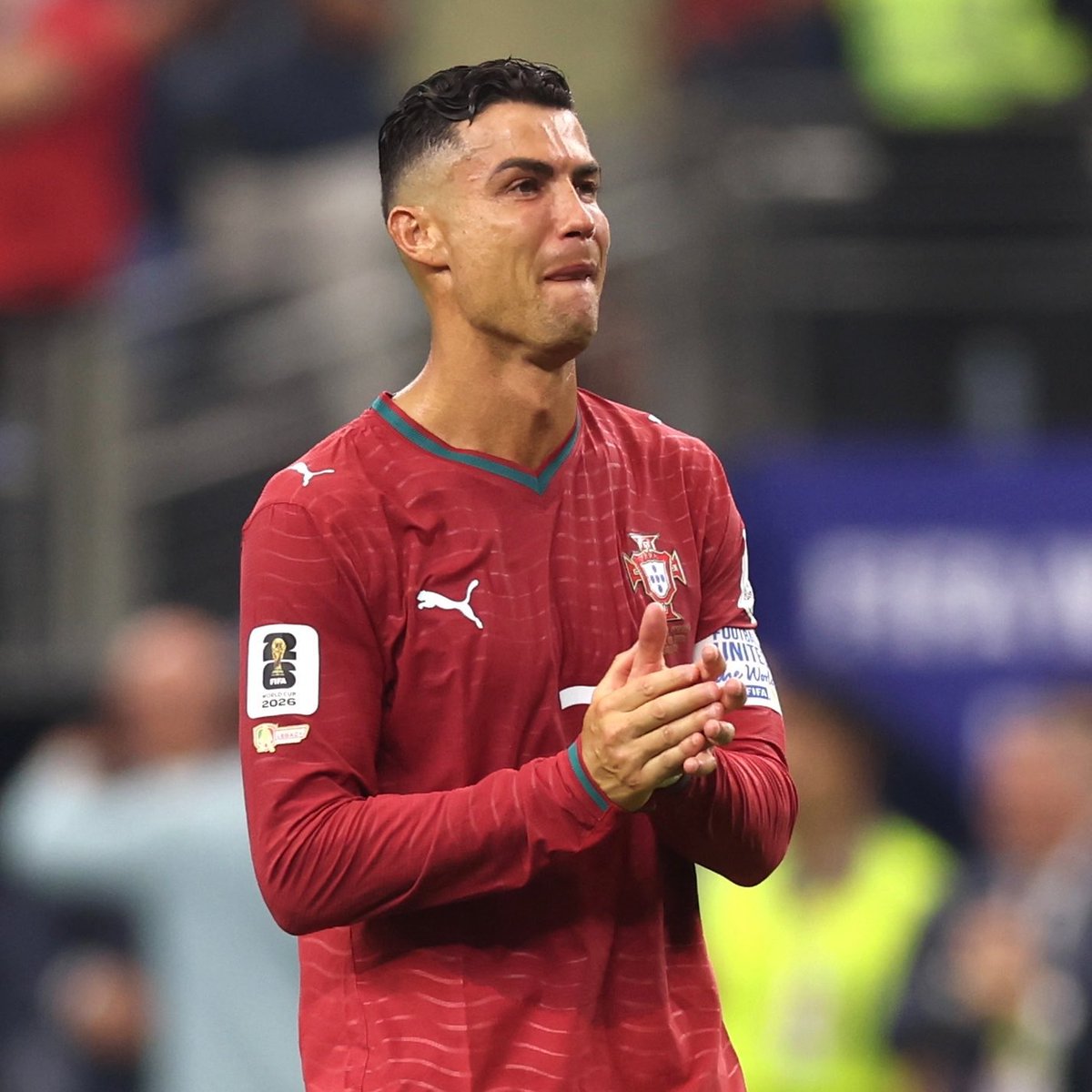
Do you know the worst thing about Cristiano Ronaldo?
It’s that he set the standards for what defines a legend… and in the end, he couldn’t even live up to the standards he created himself.
After winning Euro 2016, Ronaldo said:
“You can’t become a legend until you win a trophy with your national team.”
It was an obvious dig at Messi.
Argentina had just lost the 2014 World Cup final to Germany, and Messi was going through the toughest period of his international career. Those words only added fuel to the fire.
Where was the respect for a rival, Ronaldo?
The surprising part was that social media completely embraced that narrative. Messi was labeled a bottler, while Ronaldo was declared the winner of the rivalry—at least in the media, not on the pitch.
Then Messi retired from international football, came back, won the Copa América, and suddenly they were level in major international trophies.
What happened next?
Ronaldo fans started saying that one Euro is worth more than a hundred Copa Américas, claiming there was no competition in South America. Not true—but that became the excuse.
Then Messi went on to win the World Cup.
This time, the excuses changed again.
They claimed FIFA had fixed the tournament for Messi. That the World Cup was scripted in his favor. They simply didn’t know what else to say.
Then Ronaldo himself came out with one of the strangest quotes imaginable:
“A legend’s career can’t be defined by just seven games.”
At first glance, it sounds reasonable.
But beneath it was another attempt to diminish what Messi had achieved.
Before the World Cup, they insisted it would be Ronaldo’s tournament. On paper, Portugal had a fantastic squad. If the manager couldn’t get the best out of them, that’s Portugal’s problem—not Ronaldo’s.
Yet that same Portugal squad wasn’t any weaker than the Argentina team Messi led to the 2014 World Cup final—the same team people mocked Messi for not carrying to the title.
Just a couple of days ago, Ronaldo said:
“The World Cup doesn’t define my career, whether I win it or not.”
A statement that directly contradicts what he had said years earlier, when he admitted that winning the World Cup would make him feel completely fulfilled.
Now you’re 41 years old, Cristiano.
By your own standards:
* You have 5 Ballon d’Ors, not 8.
* You have one European Championship, not two Copa América titles.
* You never won the World Cup.
* You have four European Golden Shoes, while Messi has six—even though you’re an out-and-out striker.
So what now?
Will you keep playing until the next World Cup and become the first player to appear in one at 45, hoping to finally win it?
If we judged you by the standards you created, you wouldn’t qualify as a legend.
Of course, nobody actually judges you that way. Everyone still recognizes you as one of football’s greatest legends.
The real mistake was comparing Ronaldo to Messi in the first place.
That rivalry was exaggerated from the beginning by the media and figures like José Mourinho.
Messi conquered every major trophy available to him, shattered records that once seemed untouchable, and at 39 years old he’s still competing with Kylian Mbappé and Erling Haaland—the stars of the next generation—for the Golden Boot. And honestly, he could still win it.
What made Messi beloved by so many fans is that he never tried to diminish Ronaldo’s achievements.
Ronaldo, on the other hand, repeatedly made comments that many interpreted as attempts to downplay his greatest rival’s accomplishments—and that’s never an admirable trait.
Cristiano helped create a generation that thinks belittling other people’s achievements while constantly glorifying your own is a way to establish dominance.
Good bye. Ronaldo.
In Germany, a talented 14-year-old earns his club money. In America, his parents pay the club $15,000 a year.
That single inversion explains why "we will not" is the most accurate line ever written about US soccer.
FIFA built a global system for this. Training compensation and solidarity payments send a cut of every transfer fee back to the clubs that developed the player, from age 12 onward. Develop one future pro and your academy gets paid for a decade. Barcelona's La Masia, Ajax, every Bundesliga academy runs on this logic. The kid is the asset.
US Soccer refuses to enforce those rules. When Seattle's Crossfire Premier claimed its $60,000 share of DeAndre Yedlin's transfer to Tottenham, it got nothing. Claims on the Dempsey and Bradley transfers died partly because the federation couldn't even produce the youth training records.
So American clubs earn zero dollars when a kid turns pro. They earn when a kid enrolls. Which makes the parent the customer, and the product is whatever keeps the parent writing checks: travel tournaments, hotel weekends, $500 showcase events, private training at $100 an hour. Elite pathways run $8,000 to $20,000 a year. A comparable academy spot in Italy costs about 120 euros.
Follow the incentive one level deeper and it gets darker. A club dependent on fees can't cut its weakest paying players, so rosters optimize for retention over development. The scouting pool shrinks to families who can afford the cliff, which appears around age 11, exactly when development matters most. The country runs a talent filter sorted by household income instead of ability.
Every four years someone proposes fixing this. The proposal always requires the people profiting from the $15,000 model to vote themselves out of business.
They will not.
Colombia are incredible. Ecuador are usually defensively impenetrable. Uruguay and Paraguay will kick the lumps out of you. Bolivia is the worst away trip in football. And Brazil is Brazil.
Zero pushovers. Every single game is a battle.
I love the World Cup. But the older I get, the more I realise it's about far more than football: each tournament tells us something about empire, migration, identity, power and the changing world. So: a few quick thoughts ! 1/5
Aristoteles yine haklı çıktı:
Daha fazla hazcı davranışlarda bulunanlar tutarlı bir şekilde daha yüksek bir iyi oluş hali bildirmiyorlar; ancak erdem ve anlam odaklı (eudaimonik) eylemler kişinin ertesi günkü psikolojik doyumunu da artırıyor.
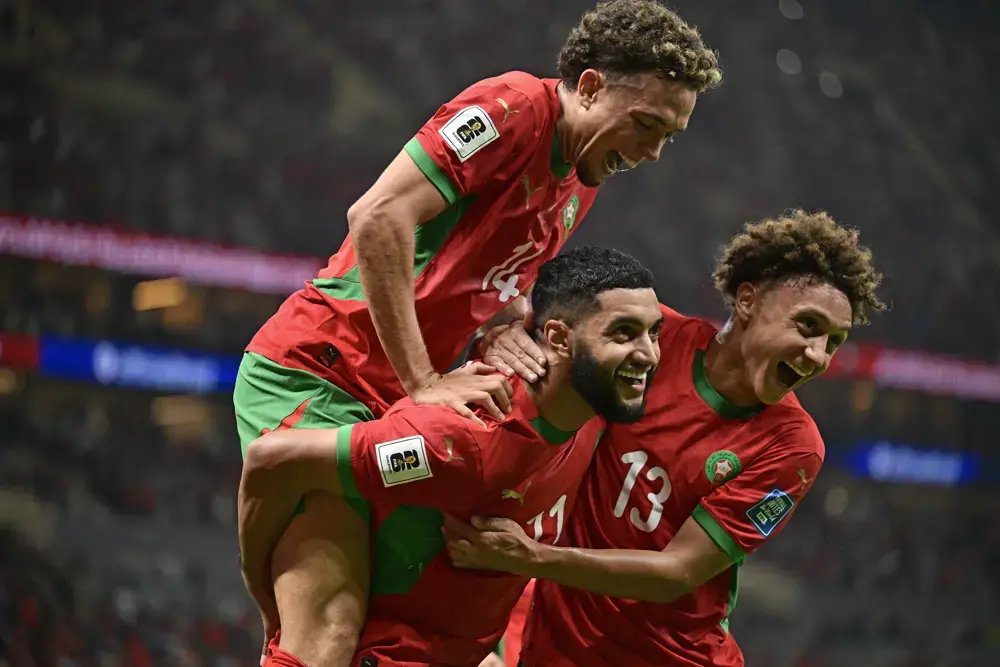
Marco Van Basten in 2016: “These are stupid choices; they are stupid boys who should have had a little patience... How can you be stupid enough to opt for Morocco when you are eligible for the Dutch team?”
10 years on and I think we know who the stupid one was.
Messi man, words don’t begin to describe how utterly ridiculous this is. But simultaneously, it’s completely on brand for the greatest ever.
39, still the best. And it’s not close.
I’m convinced that the most underrated trait in a romantic partner is that they bring peace into your life. Days are filled with enough chaos and uncertainty. Being able to come home to someone who defaults to emotional consistency, who creates a peace, is massively underrated.
Going to leave you with this tonight:
The best thing you can do for yourself is actively increase your surface area for luck to hit you. Go outside, travel more, go to new cates, museums, events, take a new route home, go for hikes, see cities, countrysides, take your notebook, speak to people, ask questions, start businesses - go on more side quests. You can literally just do things, and the more you do, the more serendipity and synchronicity will find you.
High-agency people genuinely believe that reality is negotiable in a "there are always more levers to pull" way. It's about having this bone-deep conviction that if you keep poking at something from different angles, eventually something will give.
someone asked me how i learned to explore a new city alone. here's what two years in nyc taught me:
p0: money
you need to find an income source to have money in your pocket to explore a new city. without it, none of this is possible. on-campus jobs and/or internships are the gateways for it for intl students.
p1: existing interests
find avenues in the city to double on your existing interests since childhood: for me it was cars, movies, and biking. find or rediscover yourself by embracing them. spend sensible amount of money on these: go to that autoshow, cars and coffee on sunday mornings, buy that citi bike subscription, get those hotwheels, or that amc pass.
p2: new interests
immerse yourself in the culture of the city by either meeting people or reading online. watch the knicks game. start running. try kayaking. try out 100s of restaurants. travel around the city on your own to find new things.
p3: embrace individualism
stop waiting for people for life to happen to you. difficult in the start but you’ll get used to it. do all the things mentioned in p2 and p1 by yourself. go to movies, autoshows, running, biking, lunches and dinners all by yourself. embrace this feeling.
p4: document, don't create
put everything you do out there. pictures, videos, thoughts, experiences, and observations on diff platforms in diff capacities.
p5: inbound relations
eventually you’ll find someone who’s aligned with you (individual or group). meeting them will reinforce you to find some hidden or lost interests of yours (p2) and also new interests (p3). repeat the same cycle.
i did this for two years and lived the best two years of my life (so far) in nyc. def difficult to get going, but eventually i found myself.
but most importantly, money is the enabler to all of this. do everything you can to land internships and/or on-campus jobs, save as much money as you can, and don't get pressured into spending money on things you don't care abt. but fully embrace the things that matter to you unapologetically.
captured when i went kayaking in brooklyn heights yesterday (p2).