Stratechery's @benthompson
"I got a fun email from former Apple executive, Nest founder, and one-time Stratechery Interview subject Tony Fadell in response to yesterday’s Update about Apple suing OpenAI (published with permission)"
Assuming you're literate, it's a selfish way of communicating. It saves the sender a small amount of time where they can 'ummm' instead of formulating a point properly. Then the receiver has to sit through it all, spending multiples of the amount of time they'd spend to read it.
A math professor noticed his kitchen sink at home was leaking.
He called a plumber.
The plumber came the next day, tightened a couple of nuts, and the sink worked perfectly again. The professor was delighted. But when, a minute later, the plumber handed him the bill, he was shocked.
“This is a third of my monthly salary!”
“Yeah, I get it…” said the plumber. “Why don’t you come work for our company as a plumber? You’ll make three times more than you do as a professor. Just remember: when you apply, say you only finished seventh grade. They don’t like hiring educated people.”
So the professor got a job as a plumber, and his life really did improve. All he had to do was tighten a nut here and there every so often, and his salary was much higher.
One day, the management of the plumbing company decided that every plumber had to attend evening classes to finish eighth grade. So our professor had to go too.
By chance, the very first class was math.
The evening school teacher, wanting to check what the students knew, asked for the formula for the area of a circle.
They called the professor up to the board, and he suddenly realized he’d forgotten it. He started frantically reasoning it out, covering the board with integrals, differentials, and all sorts of fancy formulas to re-derive the result. In the end, he got:
S = –π r²
He didn’t like the minus sign, so he started again.
Again he got a minus. No matter what he did, it kept coming out negative.
He cast a panicked look at the class, and all the plumbers were whispering:
“Swap the limits of integration!”
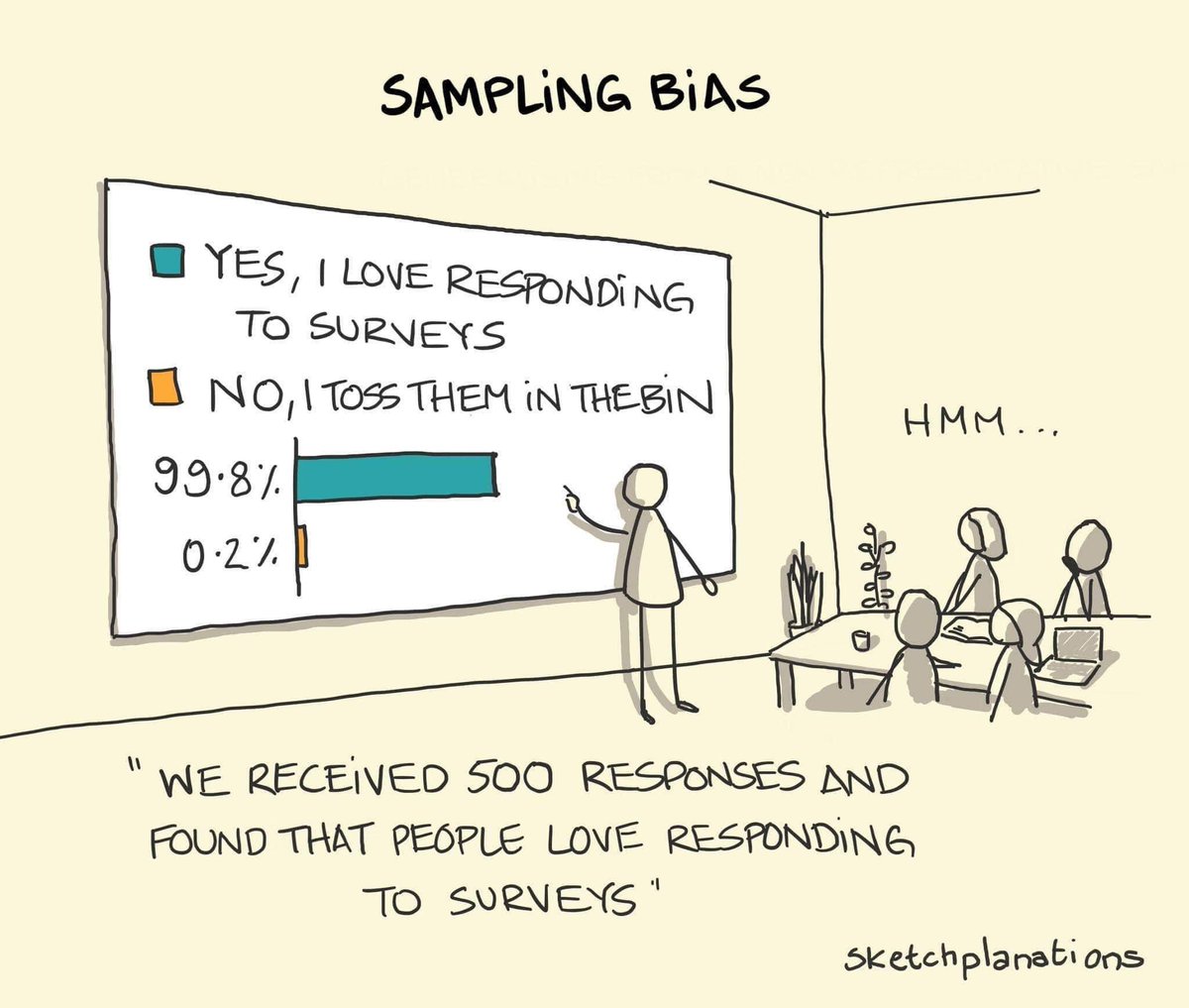
High schoolers think it's funny to self-report being transgender.
This makes estimates of trans percentages and other stats unreliable.
Students who self-report as trans also frequently report being blind 7-foot-tall crackheads who belong to a gang and never visit the dentist.
Here's my conversation with @Yajnadevam (Bharath Rao) about his historic, groundbreaking work on deciphering the Indus script.
The decipherment of this script, and the identification of the language it encodes, is central to the debate surrounding the origins of Hinduism and Sanskrit and the history of India's deep antiquity.
Yajnadevam, who has a background in engineering and cryptography, explains how he approached the problem by modeling the script as a cryptogram, utilizing information theory to validate his findings.
Timestamps:
0:00 Introduction and background of the decipherment
1:15 Early interest in cryptograms during engineering
2:31 Initial approach to Indus script problem
4:30 Understanding regular expressions and patterns
7:41 Timeline of the decipherment work
9:29 History of cryptography and Caesar cipher
13:48 Shannon's theory of cryptography
15:42 Historical examples of code breaking
17:31 Methodology of solving cryptograms
20:27 Pattern matching and set intersection process
28:06 Challenges with Sanskrit vocabulary
34:06 Timeline of symbol decipherment
37:58 Discovery of grammatical readability
40:35 Explaining unicity distance
45:47 Certainty of the decipherment
47:34 Initial expectations and discoveries
51:53 Religious aspects and deity references
54:26 Connection to Gupta era seals
57:41 Iconography and inscription relationships
59:47 Missing information in inscriptions
1:00:24 Religious Content in Inscriptions
1:01:41 Place Names and Cities
1:03:09 Federation of City States
1:04:33 Symbol of Two Blackbucks
1:06:28 Unicorn and Royal Symbols
1:07:51 Ancient Symbols to Modern India
1:09:40 Evolution of Writing Systems
1:12:22 Timeline of Indus Script Usage
1:20:13 Key Findings About Indian History
1:23:26 Types of Sanskrit Vocabulary Found
1:26:01 Language Families in Ancient India
1:28:36 Unity of Ancient Indian Civilization
1:31:24 Future Research Plans
1:34:31 Addressing Academic Criticisms
1:39:40 Plans for Publishing Findings
1:45:04 Origins of Hinduism
1:51:22 Problems with Migration Theory
1:58:50 Indo-European Language Family Discussion
2:08:47 Closing Remarks
A good rule of thumb is that quantum computers are really good at doing stuff that comes naturally to quantum mechanics. Which is *literally* all about randomness.
3/4
@Pepperfry
What should I do to make your customer service understand that I need someone for touch-up and polishing work? All they ever send are carpenters or assembly workers. It would be better to have no customer service at all than one that consistently misdirects requests.