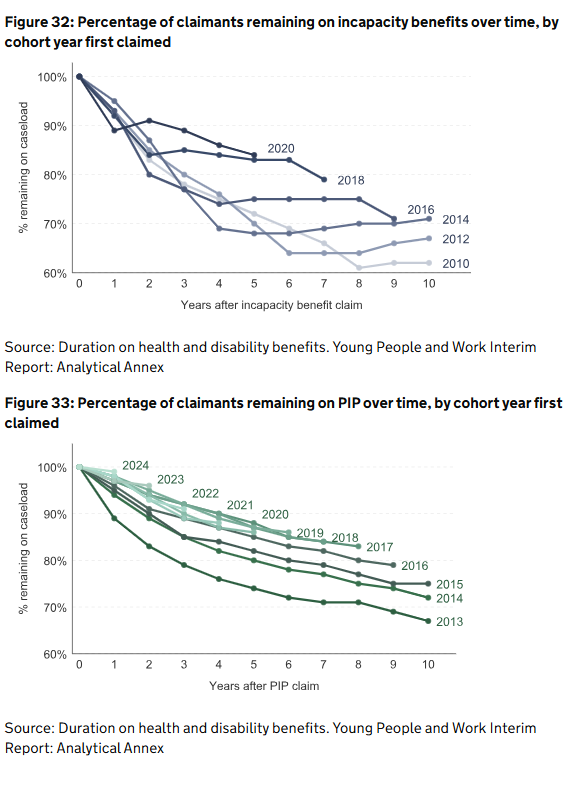
Some new data from Millburn review: Young people are staying on both incapacity benefits (UC health) and disability benefits (PIP) longer than they use to. There has been a focus on the big increase in new claimants for both benefits, but slowing outflows are part of the story.
Caveat: This is based on experimental analysis the Millburn Review team has done, so exact size of this 'hidden NEETs' group is uncertain. But its definitely an important group.
This is most striking figure from Millburn Review. They estimate that around half of the 18-24 population who are not in education, employment or training (NEET) are not claiming any benefits. This limits how effective reforms to the benefit system can be in cutting NEET rates.
I’d expect temporary VAT cut on kids’ meals & days out to lead to savings for families
But these Great British Summer savings are all pretty small
£300m cost of VAT cuts & free bus travel equates to average saving of around £10 per UK household
https://t.co/SUcRqbevE4
These sound like sensible proposals to trial. Vitally important that these trials are set up so they can be rigorously evaluated and then learned from.
GPs in England will no longer issue “sick notes” in NHS trials to reduce the number of people signed off work
Occupational therapists and “social prescribers” who recommend job coaching and therapy like exercise or gardening will be used instead to draw up stay in work plans
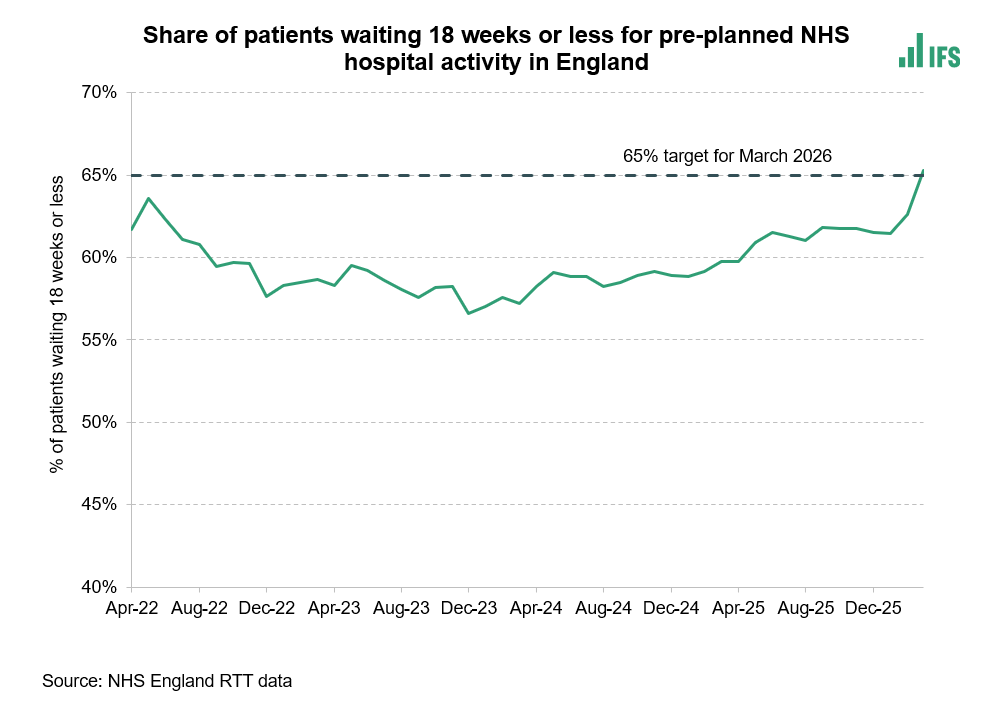
It wasn’t the biggest story yesterday, but the NHS in England hit its intermediate target that 65% of patients should be waiting 18 weeks or less for elective care by Mar26. That’s after big recent improvements from 61.5% in Jan to 65.3% in March. So how was this achieved?🧵
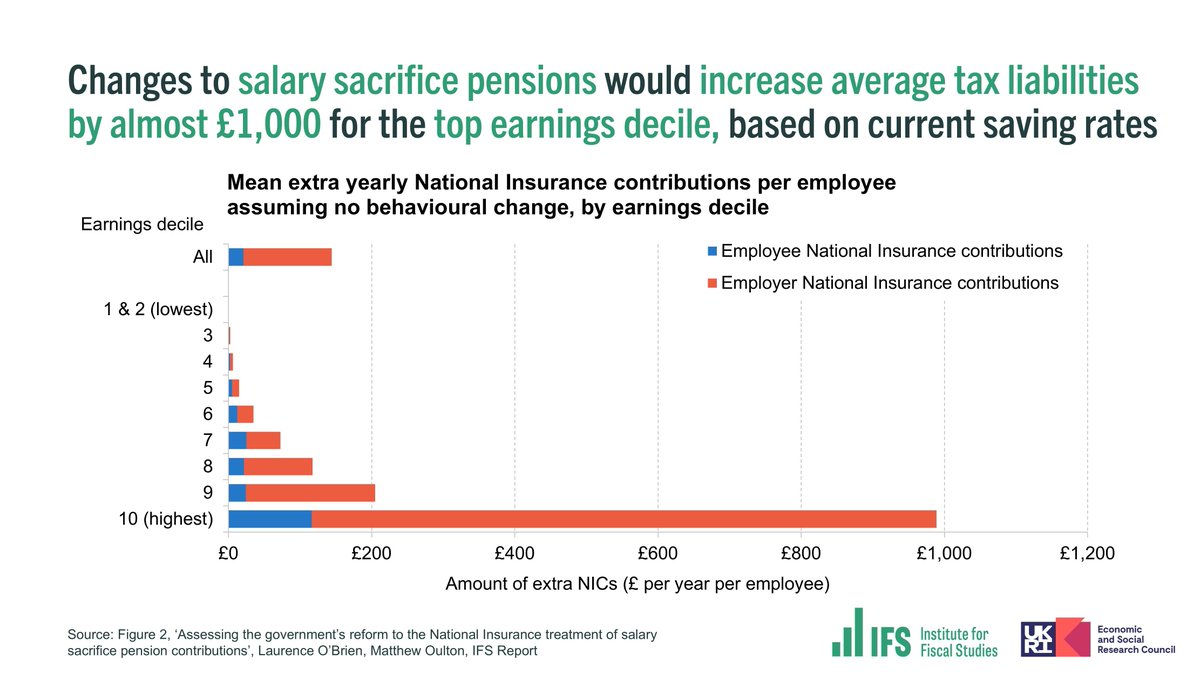
NEW: The new tax on salary sacrifice pension contributions are set to hit higher earners in the private sector the hardest.
📗 @LaurenceOBrien_ and @matthewoulton’s new report examines who will be most affected by changes to how salary sacrifice pension contributions are taxed:
An SSAC report today highlights a huge difference in the treatment by the benefit system of young people aged 16-19 depending on if they remain in full time education or pursue an apprenticeship.
What does this mean for apprenticeships?
THREAD:
@Heidi_Karj and I joined @HelenMiller_IFS last week for an IFS podcast episode about pensioner incomes and wealth:
https://t.co/HxIugYJ6W8
We are going to be back again this week for a discussion about people working into their late 60s (or beyond).
Do tune in!
Coming late to the party on this but @RachelReevesMP has announced plans for 'revenue assignment' for English mayoral authorities - letting local areas share in the risk and reward of growth in tax bases for more taxes, including income tax.
My initial @theIFS thoughts... [1/6]
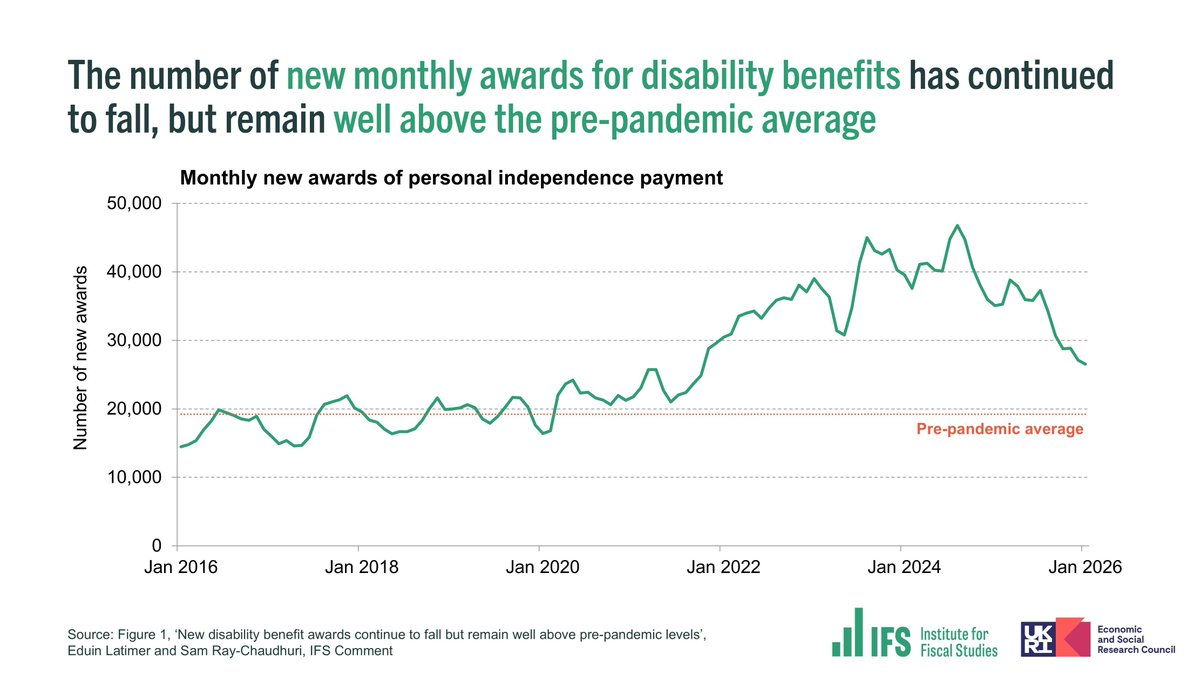
New PIP (disability benefits) data is out and it will be welcome news to the government who have expressed a desire to slow the rise in PIP claims. Monthly new PIP awards have fallen again and are now considerably below their peak although still well above pre-pandemic levels.
NEW: Today’s new statistics show that the number of people starting disability benefits each month has continued to decline.
Monthly awards are still above pre-pandemic levels, however.
📊 @latimereduin and Sam Ray-Chaudhuri’s new comment explains the new data:
A key reason for this is that PIP claims tend to last a long time. Two-thirds of those who started getting PIP in 2017, still received it 5 years later. This means we'll still be dealing with the post-pandemic surge in new awards for many years to come.
However, even with new awards falling, its likely that the total PIP claimant numbers and spending will remain high. Official forecasts expect new applications (and awards) to PIP to fall a bit further, but expect total spending on PIP to increase by another £7 billion by 2029/30
NEW: Welsh health and education systems are performing substantially worse than before the COVID-19 pandemic, and worse than comparative services in England.
📗 Our new Welsh election report, funded by @NuffieldFound, investigates:
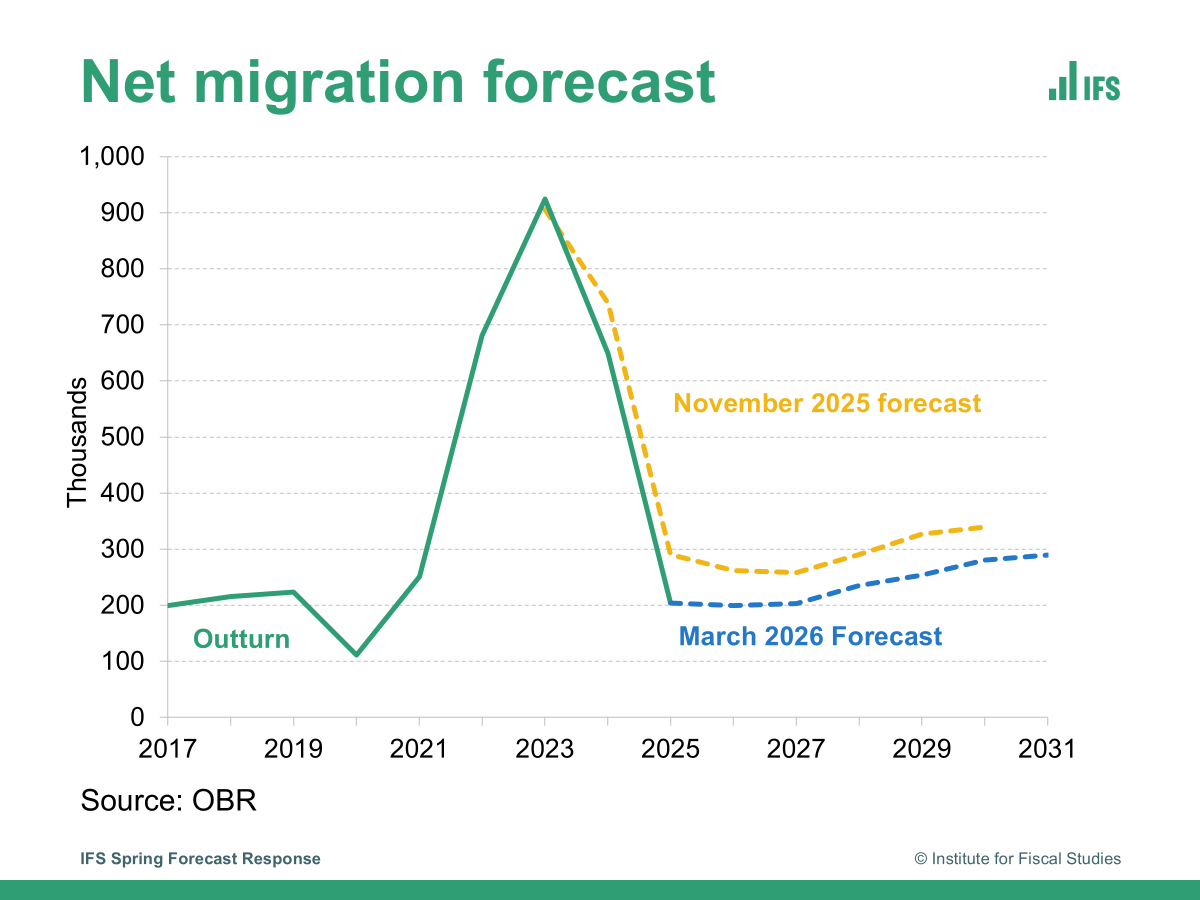
The OBR has revised its annual net migration forecast down by 50-100k, with a small negative impact on forecast tax revenues.
If new ONS data for this year shows lower immigration, the OBR could further reduce their net migration assumption, with larger effects on tax revenues.
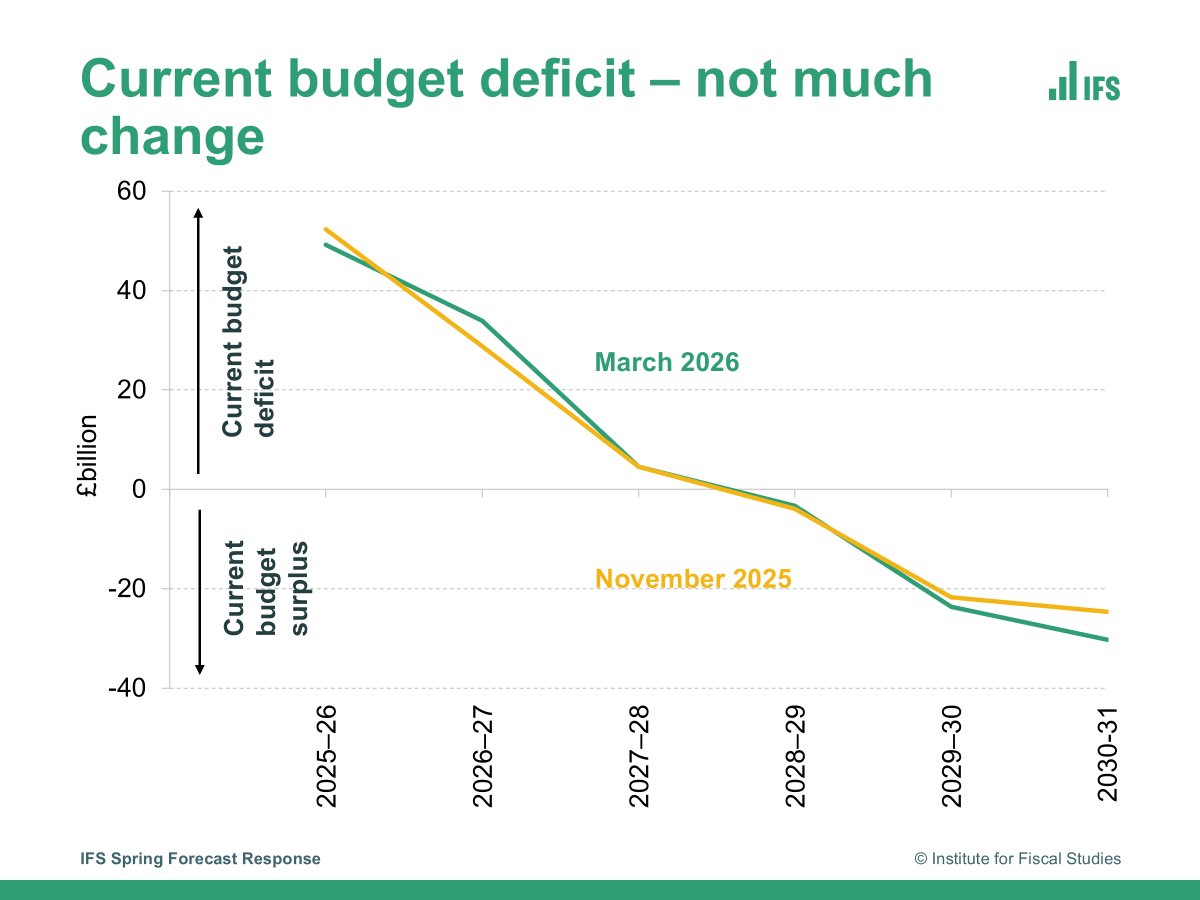
The OBR’s current budget forecast has barely changed, with borrowing still set to fall over the next few years.
Past governments have often set out plans for a current budget surplus, but it’s very rare that they’ve achieved it. That will be the key challenge going forward.
The @lpcminimumwage annual report is out. As always contains lots of insights. This is key chart for me: 20% of jobs are now paid within £1 of the minimum wage, up from 14% in 2015. Whatever you think of the minimum wage, its increasingly important part of pay-setting.
Great to make my first appearance on IFS Zooms In Pod.
@HelenMiller_IFS I were joined by the excellent @alanmanning4 to talk about what's happened to the UK minimum wage, and what impact its having on the UK labour market. Give it a listen.
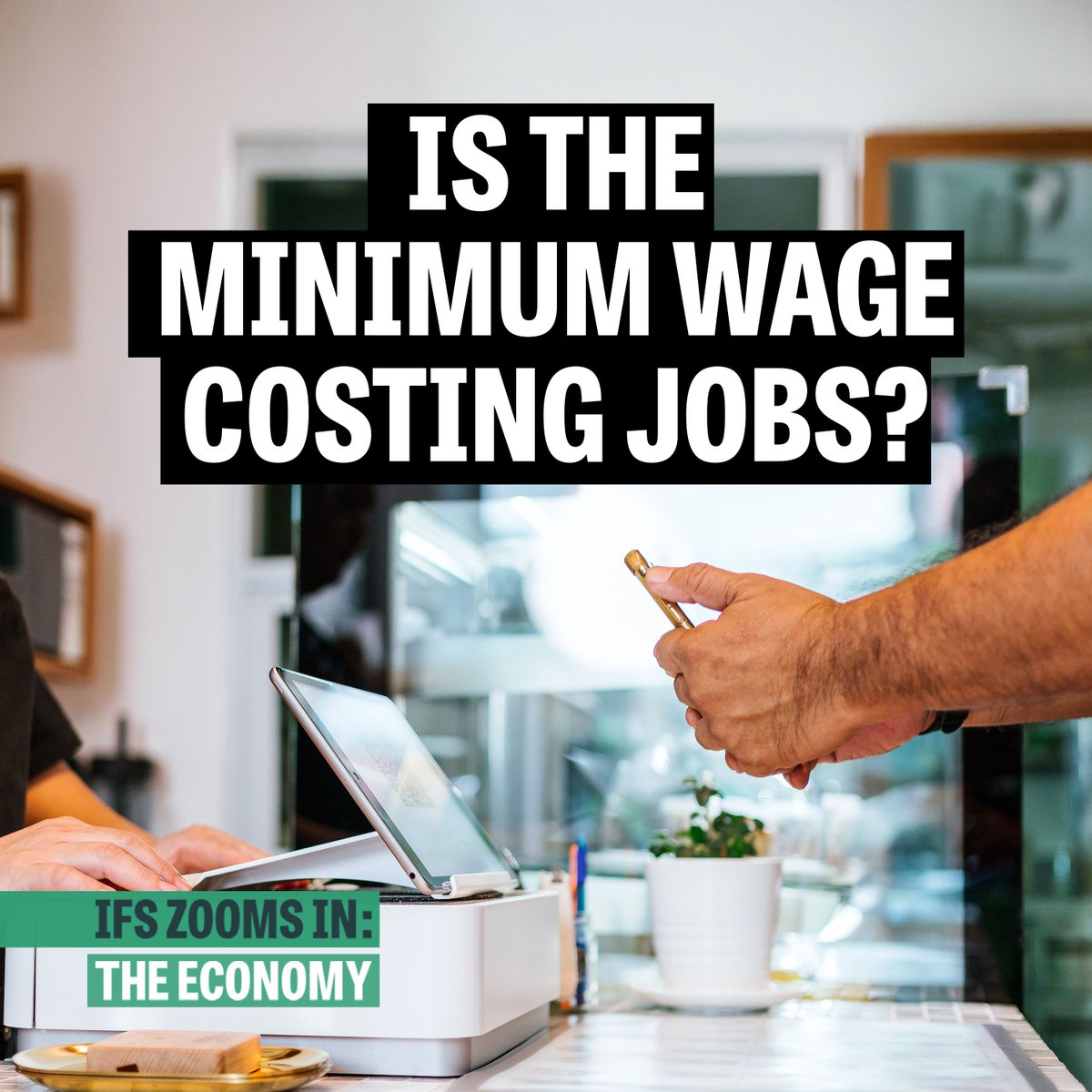
NEW PODCAST: Is the minimum wage costing jobs?
@HelenMiller_IFS, @LatimerEduin and @alanmanning4 discuss what we know and what we don't know about the UK minimum wage in our new podcast.
🎧 Listen here: https://t.co/jo9xObEZk0