GE Aerospace has shipped four F404-IN20 engines for India’s #Tejas programme in Sep 2026.
With the earlier 10 engines already received, the latest shipment takes the total to 14 F404-IN20 engines received by India for #TejasMK1A.
(Ref Pic) @HALHQBLR@indiatvnews
A rare look at the Parker Solar Probe operating in one of the most extreme environments ever explored.
To survive its close approach to the Sun, the spacecraft uses a 4.5-inch-thick carbon-composite heat shield. While the shield’s front surface can reach around 2,500°F, the instruments behind it remain near 85°F.
At just 3.8 million miles from the Sun’s surface, Parker travels at an incredible 430,000 mph, making it the fastest human-made object ever recorded.
Built by Johns Hopkins Applied Physics Laboratory and inspired by Eugene Parker’s work, the mission is giving scientists unprecedented data on the solar corona, magnetic reconnection, and solar wind.
A spacecraft flying through the Sun’s atmosphere at hundreds of thousands of miles per hour, while keeping its instruments near room temperature. That is some incredible engineering.
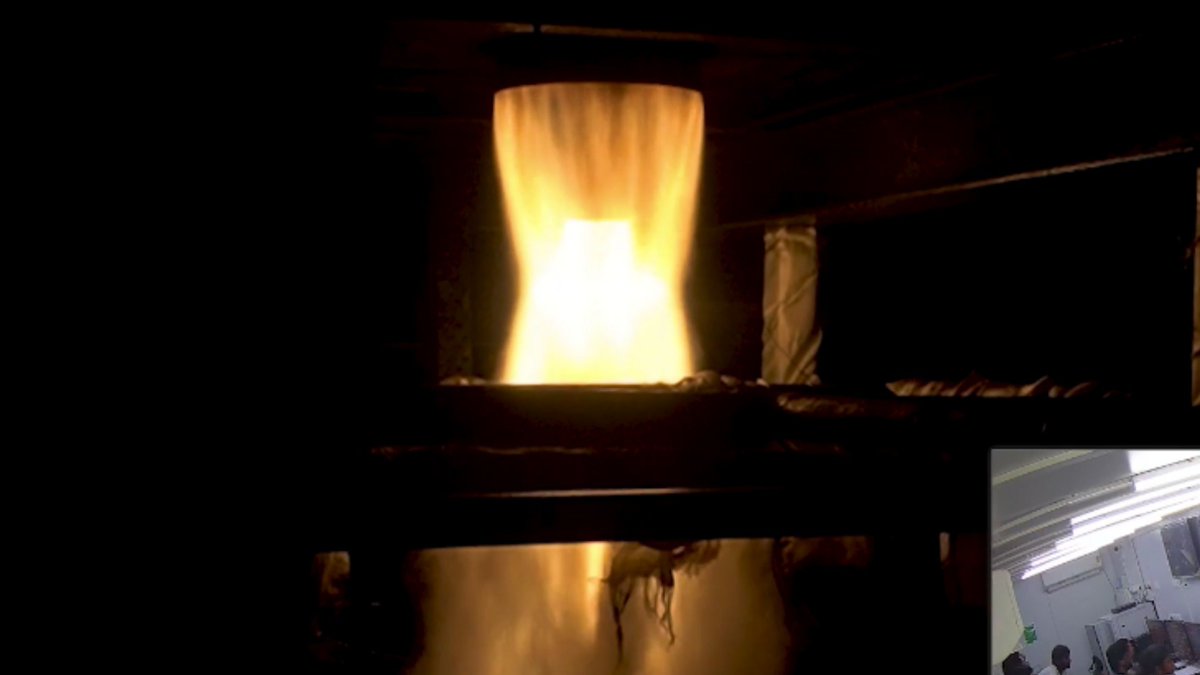
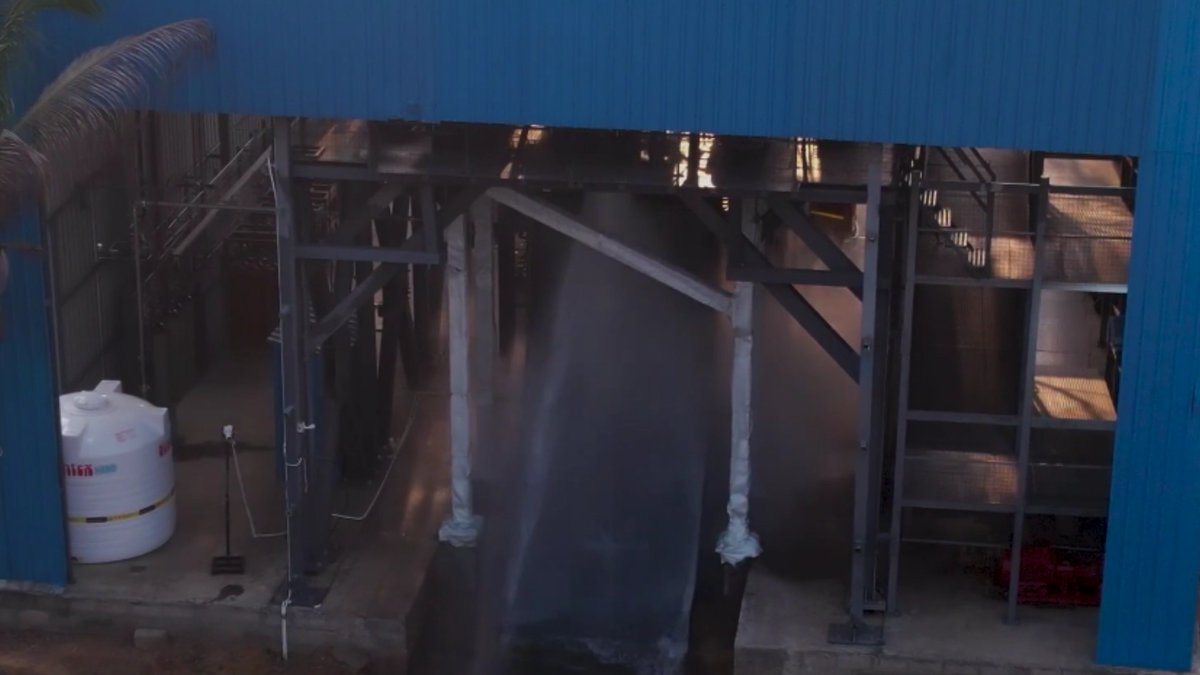
Congratulations! @AgnikulCosmos on another impressive Agnite engine test! 🚀
The 1-metre, fully 3D-printed single-piece semi-cryogenic engine completed 161 seconds of firing with multiple throttling sweeps and striking Mach diamonds.
Mission-02 is getting closer! 🇮🇳
SpaceX's Michael Nicolls just explained the core principle behind Starlink's approach to space safety:
Know where your satellite is. Know where it's going. Share that with every other operator
The bigger goal is to motivate every space operator to do the same
Because keeping space safe is not something one company can solve alone. It only works when everyone shares accurate data, acts responsibly and helps protect the orbital environment for everyone
SpaceX set a new U.S. record for reaching the ISS
Crew-13 docked just 7 hours and 55 minutes after launch
For comparison:
Crew-10 → ~29 hours
Crew-11 → ~14 hours 44 minutes
Crew-12 → ~34 hours
Crew-13 → 7 hours 55 minutes
How did SpaceX do it?
By combining precise mission planning with Dragon’s advanced autonomous rendezvous and docking system
Absolutely incredible engineering
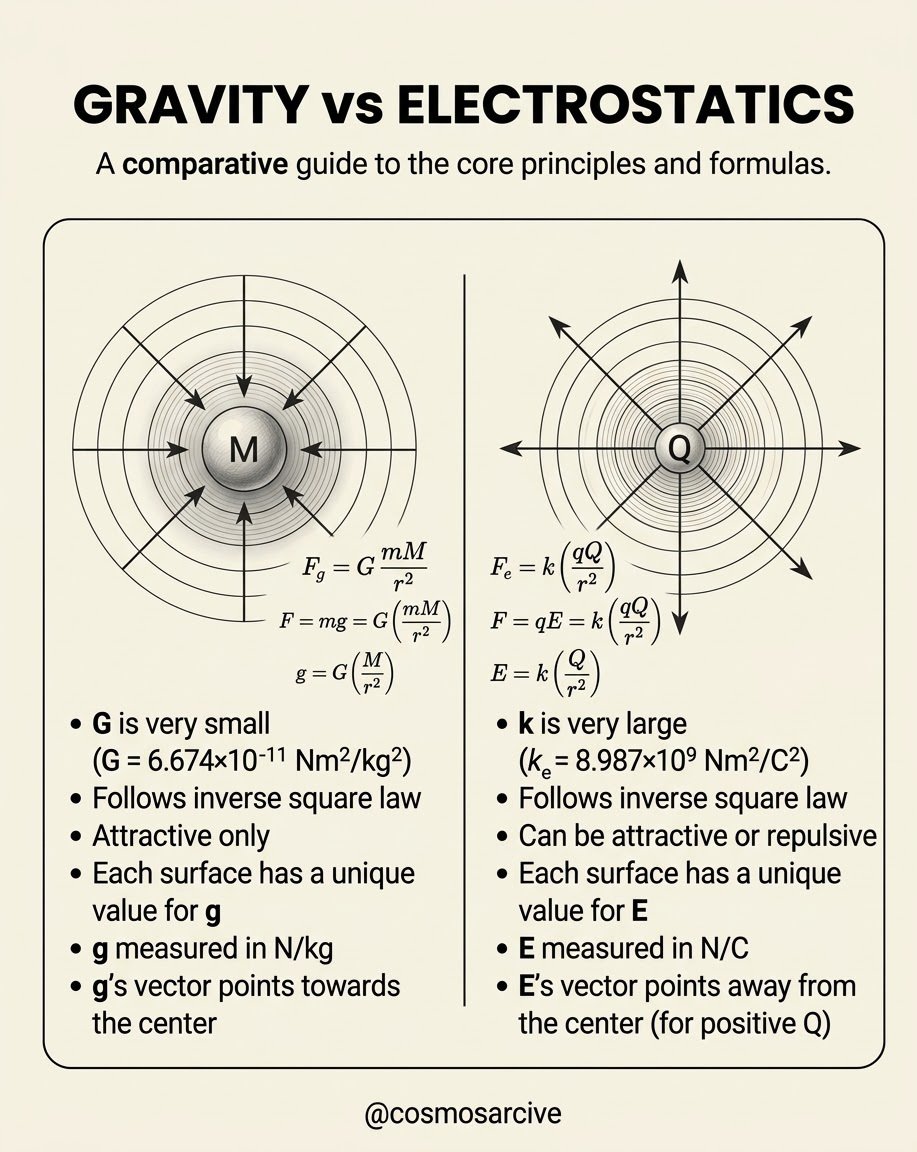
In 1687, Isaac Newton showed that gravity weakens with the square of distance. Nearly a century later, in 1785, Charles-Augustin de Coulomb found the same inverse-square pattern in electrostatic force.
The equations look remarkably similar:
F = Gm₁m₂/r²
F = kq₁q₂/r²
But the forces themselves are vastly different. At the atomic scale, electricity is about 10³⁶ times stronger than gravity. Yet atoms do not fly apart because positive and negative charges largely cancel, leaving gravity to shape the universe on the largest scales.
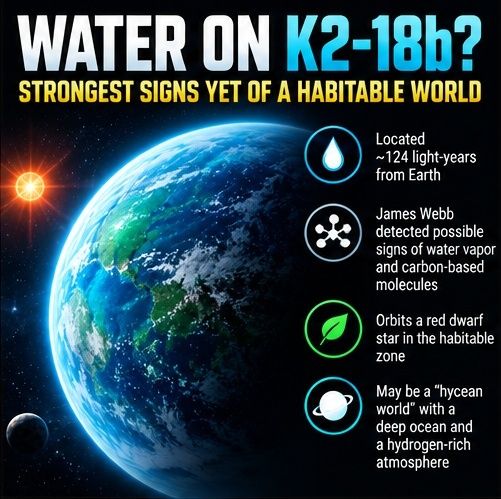
K2-18b — COULD THIS DISTANT PLANET BE HIDING AN OCEAN OF LIFE? 🪐🌌
Imagine a mysterious planet 124 light-years away, where a vast ocean might exist beneath a hydrogen-rich atmosphere!
NASA's James Webb Space Telescope has detected carbon-bearing molecules, including methane and carbon dioxide, in the atmosphere of K2-18b. These discoveries have made it an exciting target in the search for potentially habitable worlds. 🔭
Scientists are investigating whether K2-18b could be a Hycean world, a planet with a hydrogen-rich atmosphere and a possible liquid-water ocean.
However, the presence of an ocean, suitable conditions for life and potential biological activity remain unconfirmed.
✨ Somewhere beyond our Solar System, an extraordinary ocean world may be waiting to reveal its secrets!
💬 Do you think humanity will discover evidence of life on another planet in our lifetime? 👽
#
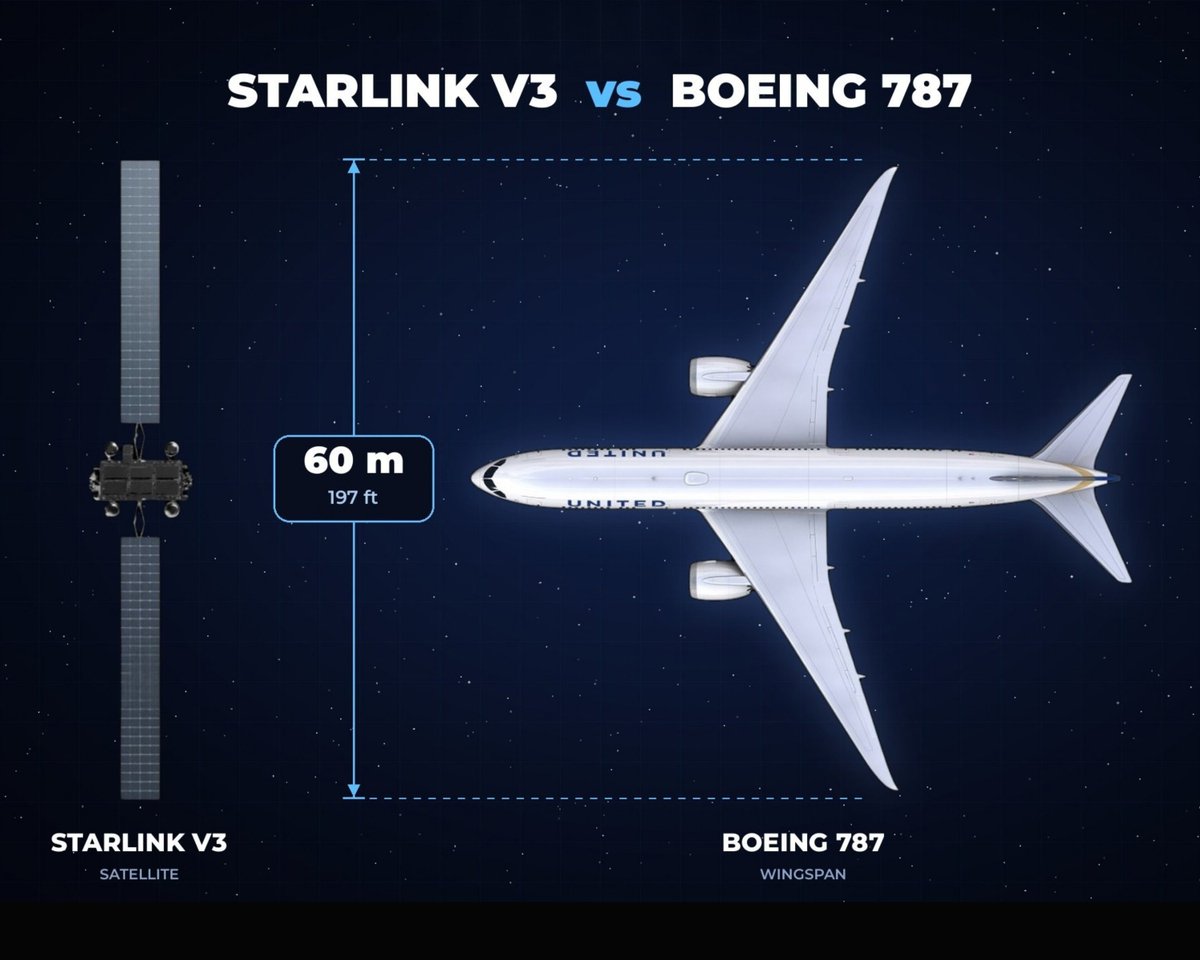
Just to give you an idea of the scale...Starlink V3 satellites are absolutely massive
They stretch roughly 60 meters across when deployed.....about the same as the wingspan of a Boeing 787
JUST IN: The Pentagon is preparing to launch 21 $NOC Northrop Grumman satellites at once on SpaceX early Monday, the next major expansion of its low-Earth-orbit battlefield data network.
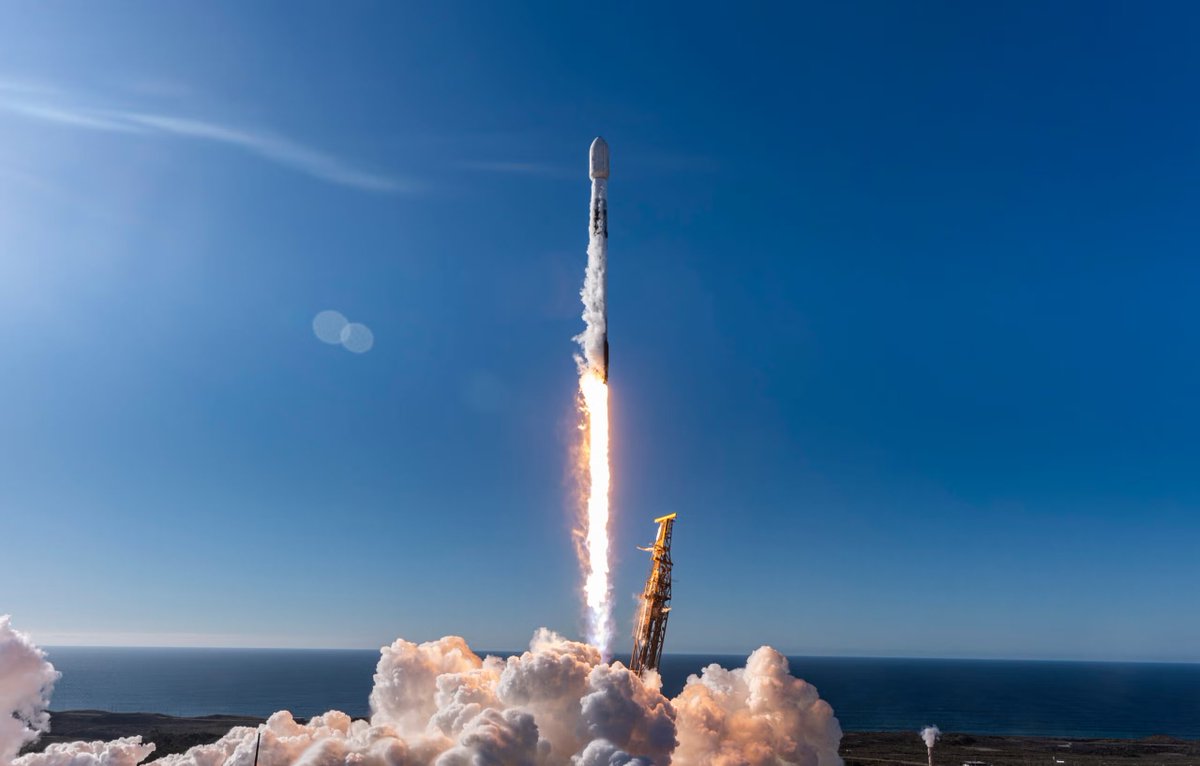
The satellites are part of the Space Development Agency’s Tranche 1 Transport Layer and are scheduled to launch tomorrow at ~4:15 a.m. ET aboard a $SPCX Falcon 9 from Vandenberg Space Force Base.
Once in orbit, they will join 63 existing Tranche 1 spacecraft built by York Space Systems and $LMT Lockheed Martin, expanding the mesh network designed to move targeting, missile-warning and other military data rapidly around the world.
The flight will mark Northrop’s first Tranche 1 launch and its first time deploying and operating 21 satellites simultaneously.
SDA says the biggest challenge so far has not been whether the system works, but whether the Pentagon and its contractors can build, test, launch and operate satellites at this scale.
(ABSOLUTELY-INCREDIBLE)!
SUPER SLOW MOTION OF THE (14TH) STARSHIP (IFT) FLIGHT TEST, (2 OF 2).
SpaceX releases (04) Slow motion video views of Flight (14-LIFTOFF), from the 2nd pad and tower at Starbase Texas, USA.
1)• Credit-(SpaceX).
"The Project Talon portfolio includes Talon IQ, a cutting-edge autonomous testbed operating on the Scaled Composites Model 437 aircraft. Powered by Northrop Grumman’s Prism Mission Autonomy software, Talon IQ offers an accessible government reference architecture that accelerates autonomy maturation while reducing the time and cost to bring new mission capabilities forward. Together, Talon Blue and Talon IQ allow Northrop Grumman and its partners to rapidly develop, test and field autonomous capabilities tailored to meet emerging threats and operational requirements" ~ Northrop Grumman
🚀 Starship’s Flight 14 marks a major milestone, deploying 26 Starlink satellites into orbit and bringing next-generation connectivity closer to reality. A stunning glimpse of the future in motion. 🌎🛰️
What if a high-speed projectile struck the Moon at a shallow grazing angle? 🌕💥 This animation depicts a fast-moving projectile skimming low across the lunar cratered highlands, casting a long shadow across the regolith before impact! Key details in this clip: • Low-Angle Flight: Flying low over terrain creates an elongated shadow that scales with altitude and solar angle. • Vacuum Dynamics: In the Moon's vacuum, there is no atmospheric drag to slow down hypervelocity objects or create smoke trails like on Earth. • Central Peak Target: The terrain below features a classic lunar crater with a 2 km central mountain peak formed by hydrodynamic crustal rebound. Is this advanced CGI or a hypothetical lunar defense simulation? Drop a 🚀 in the comments! 🔬 Scientific & Visual Breakdown * Lunar Shadow Physics: Because the Moon lacks an atmosphere to scatter ambient light, shadows cast by flying objects and terrain feature high contrast with sharp edges. * Hypervelocity Impact Dynamics: Meteorite impacts on the Moon occur at velocities between 12\text{ km/s} and 72\text{ km/s}. At shallow angles (<15^\circ), kinetic energy rapidly vaporizes target rock into expanding plasma plumes without atmospheric resistance. *
This is what Starship’s hot-staging looks like from above. 🔥🚀
During Flight 14 on September 28, Ship 41 fired its six Raptor engines while separating from Super Heavy Booster 21, allowing the upper stage to continue its climb as the booster began its return maneuver.
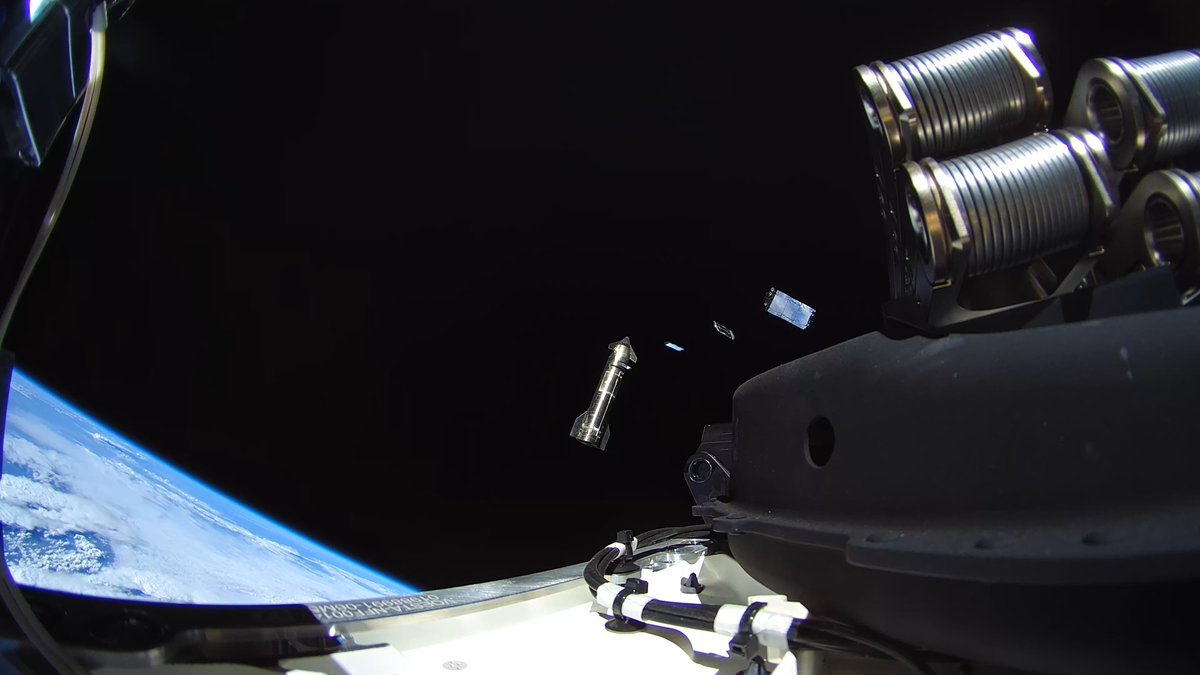
The maneuver happened just 2 minutes 22 seconds after liftoff—and this time, Starship went on to achieve orbit for the first time, deploying 26 Starlink V3 satellites.
Starship has crossed a historic milestone. 🚀
Flight 14 lifted off from Starbase on September 28 and, after passing through Max Q, Ship 41 separated from Super Heavy with a hot-stage at T+2:22. Despite an engine shutdown on the booster and another early cutoff on the ship, the vehicle continued its mission.
A 19-second orbital insertion burn placed Starship on its planned trajectory, where it deployed all 26 Starlink V3 satellites. Nearly 10 hours after launch, Starship completed its first-ever deorbit burn before making a targeted splashdown in the Pacific.
A major step toward a fully reusable spacecraft. 🌎
WATER IS OLDER THAN THE SUN — AND SCIENCE HAS THE EVIDENCE! 🌊☀️🤯
What if the water on Earth existed before the Sun was even born?
Scientists have found evidence that some water molecules formed as ice in cold interstellar clouds, long before our Solar System took shape about 4.6 billion years ago. 🌌
Some of this ancient ice may have survived the birth of the Sun and eventually contributed to the water we have on Earth today.
💧 The most incredible part? Some of the water you drink today may contain molecules with a history older than the Sun itself!
Would you have ever imagined that something so ordinary could have such an extraordinary cosmic history? 🤔
#