🧵2/2 In thermal infrared, Earth's nightside glows in the dark, warmed by its own heat. The Moon, with no oceans or atmosphere to hold in warmth, stays locked at a bone-chilling -280°F.
The images help calibrate ESCAPADE's cameras for its mission to the Red Planet: https://t.co/767zVuHVMs
Say cheese, Earth and Moon! 📸
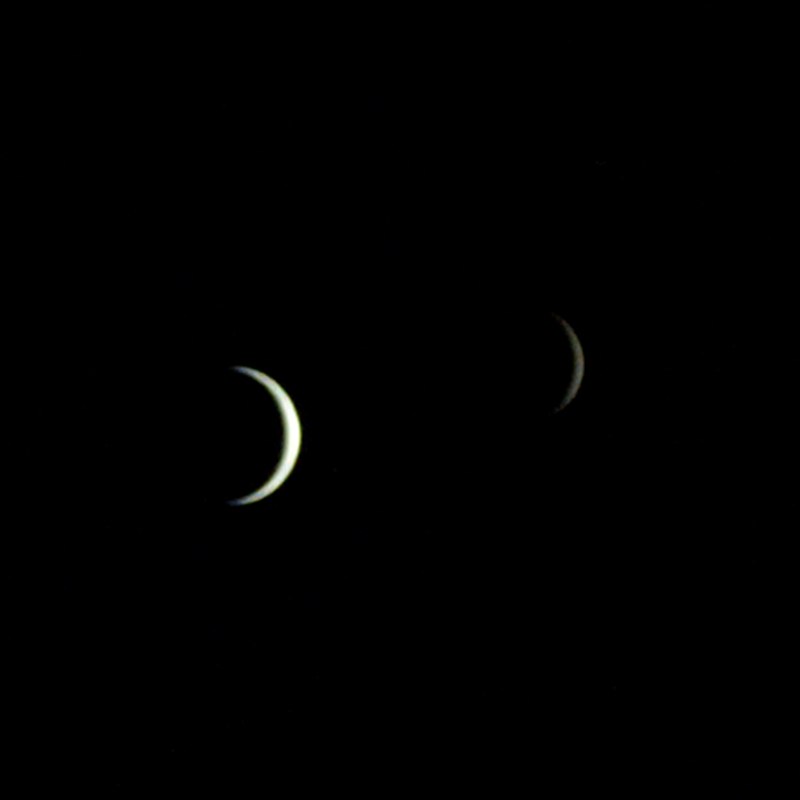
One of our two Mars-bound ESCAPADE spacecraft captured Earth and the Moon from 363,250 miles (584,600 kilometers) away. In visible light, both worlds appear as slim crescents.
But switch to thermal infrared and it’s a different picture 👇 🧵1/2
We see our home planet as a whole, lit up in spectacular blues and browns. A green aurora even lights up the atmosphere. That's us, together, watching as our astronauts make their journey to the Moon.
“First light” for NASA’s ESCAPADE mission! 🚀 📸
These images, taken on Nov. 21, 2025, are ESCAPADE’s “first light,” or first images taken from space. Just about a week after launch, one of the two Mars-bound spacecraft took these images as part of the commissioning process, which checks that all the spacecraft’s instruments are functioning as expected.
The images, captured by the spacecraft's onboard VISIONS cameras, were taken about 550,062 miles (885,240 kilometers) from Earth. The view looks along the spacecraft's solar panel and out into space.
The left-side image shows the view from the visible-light sensor, while the right-side image was taken with the infrared sensor, showing which parts of the array are warmer and cooler. At Mars, the visible-light camera will attempt to capture Mars’ auroras, whereas the infrared sensor will capture the changing temperatures on the Martian surface as the Sun rises and sets.
Learn more: https://t.co/WLWIEiPrLT
🛰️🛰️ The twins are talking!
We have successfully established contact with both ESCAPADE spacecraft, 💙 Blue and 💛 Gold.
We're on our way to Mars to enable @NASA and @ucbssl to study the Martian magnetosphere!
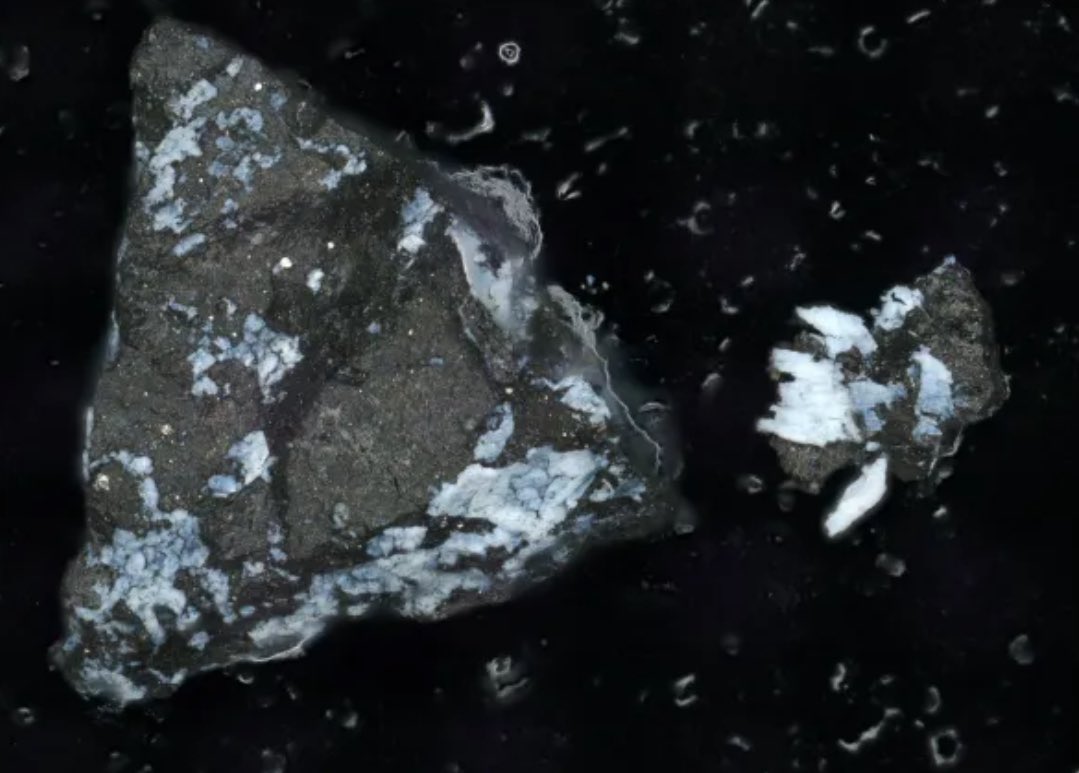
In 2023, we brought a sample of an asteroid called Bennu to Earth, part of a plan to study remnants of our early solar system. These grains of rock have shown that the building blocks of life and the conditions for making them existed on Bennu's parent body 4.5 billion years ago.
📣 We have {double} the exciting news!
Production is complete on our twin spacecraft headed to Mars for @ucbssl and @NASA ESCAPADE mission.
🛰️🛰️ Blue and Gold are now preparing to be packaged and shipped to Cape Canaveral for launch. More: https://t.co/ivxuD64hiv
BREAKING 🚨: An early analysis of the sample from asteroid Bennu revealed essential components for life
And is believed it came from an ancient ocean world
Laura Lee, a @NAU Ph.D. student, is conducting research to map water in the solar system.
Her research has earned her a spot in the prestigious National Science Foundation’s Graduate Research Fellowship Program.
More: https://t.co/wmj2wZUlhT
It’s #NationalTwinDay and what better mission to highlight than ESCAPADE! 🛰️🛰️
ESCAPADE consists of two identical "twin" spacecraft that will study the transfer of solar wind energy through Mars’ unique hybrid magnetosphere. Launching late 2024 on Blue Origin’s New Glenn! 🚀
The planetary community today lost a wonderful scientist who had her whole life in front of her. @jwalsherz was a current PhD student at NAU and was previously a colleague of ours at LROC.
Thanks for sharing in this moment with us!! If you missed the @RedRocksCO live stream last night, you can still watch it today and tomorrow. Go to https://t.co/ts87cHy779
Thanks for sharing in this moment with us!! If you missed the @RedRocksCO live stream last night, you can still watch it today and tomorrow. Go to https://t.co/ts87cHy779