I’d recommend this piece by Foucault. He breaks away from the usual image of the intellectual who is the voice of all, and proposes the ‘specific intellectual’, who intervenes from within a specific institution or profession. Most interesting to me, the idea that one aspect of++
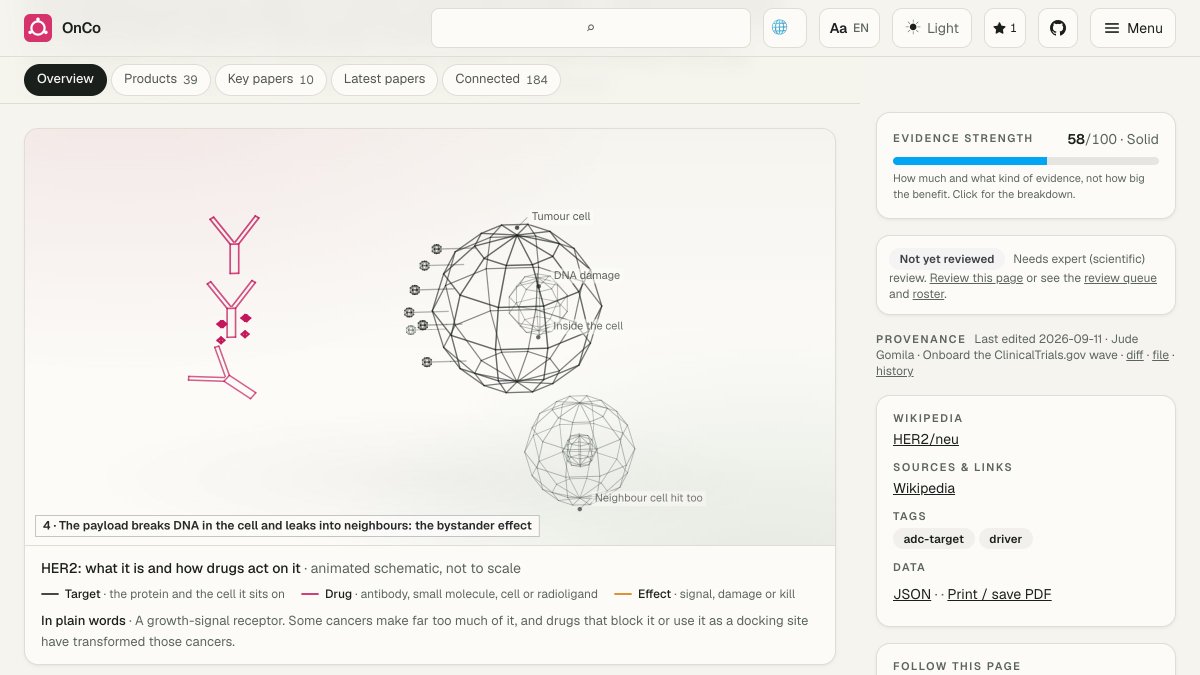
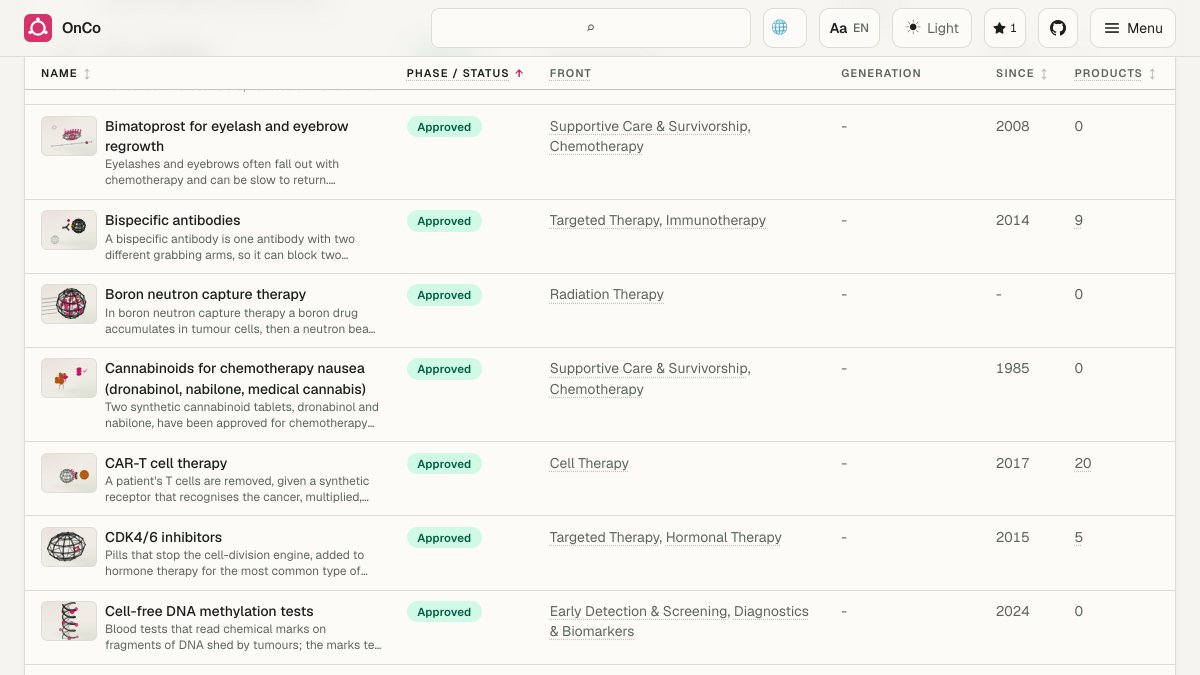
I've attempted to map everything in oncology in a public website and open source repo for all.
The site is trying to get all cancers, products, technologies, bottlenecks, people, startup opportunities with 1000+ ideas for upgrading the field.
If you have a loved one with cancer and you are technical or can engineer, go take a look, file improvement requests or bugs or help with the open repo and make this the best open and free info resource for individuals, researchers and educational use.
This should save people time, aid AI oncology projects and generate positive action. If you are not technical just complain in this thread about broken or annoying or things you want and I'll fix them live.
Some of the interesting pages:
Treatments: https://t.co/EJEOhMppoB
A gallery of the molecules being used https://t.co/EV6ZitrVqm
And targets: https://t.co/CgkjuF8nR2
The technologies in oncology: https://t.co/lNaieWYRKH
1100 ideas for helping oncology: https://t.co/iQA6Z5SvRA
Bottlenecks on oncology: https://t.co/WND44055WD
Open questions (LETS GO RESEARCH PEOPLE) https://t.co/wSbphQ0IBg
Startup requests (LETS GO STARTUP PEOPLE) https://t.co/PphztuLihP
Mechanics of cancer: https://t.co/cMUyVObzZi
Battlefronts: https://t.co/PlSZitVd50
Isotope supply: https://t.co/2Pcl4tTuPv
Key papers: https://t.co/YK0dW1XJj0
Pipeline funnels: https://t.co/xYcbSCSyBg
Cancer by type: https://t.co/d9k8Yyzdk7
Institutional rankings: https://t.co/VepXcKHhaa
The startups: https://t.co/whXKg5dPzb
Heros and heroines : https://t.co/uLDmhRjE36
Key medical people: https://t.co/JWhDZ0rC73
Here is the project roadmap: https://t.co/UtbbuOsdA5
Models and data sets: https://t.co/bim0tjiWOj
There are other views as well, take a browse.
Try making a PR if you have an upgrade to this on the repo here: https://t.co/2Dw0ufEJ3z
If you are biologically/medically minded and something is wrong, file a bug as well or say on the thread and we will get it fixed live.
If this is a useful project star the repo and help get it calibrated.
I've tried to add some other languages but I cannot speak them so tell me if that doesnt work well.
I believe we will crack oncology and having total information dominance is key to the problem.
Let the feedback flow!
Good morning. Please take your time to read this. It is important. I worry for my children and yours too. I waited for a while to tell you the story about this liver.
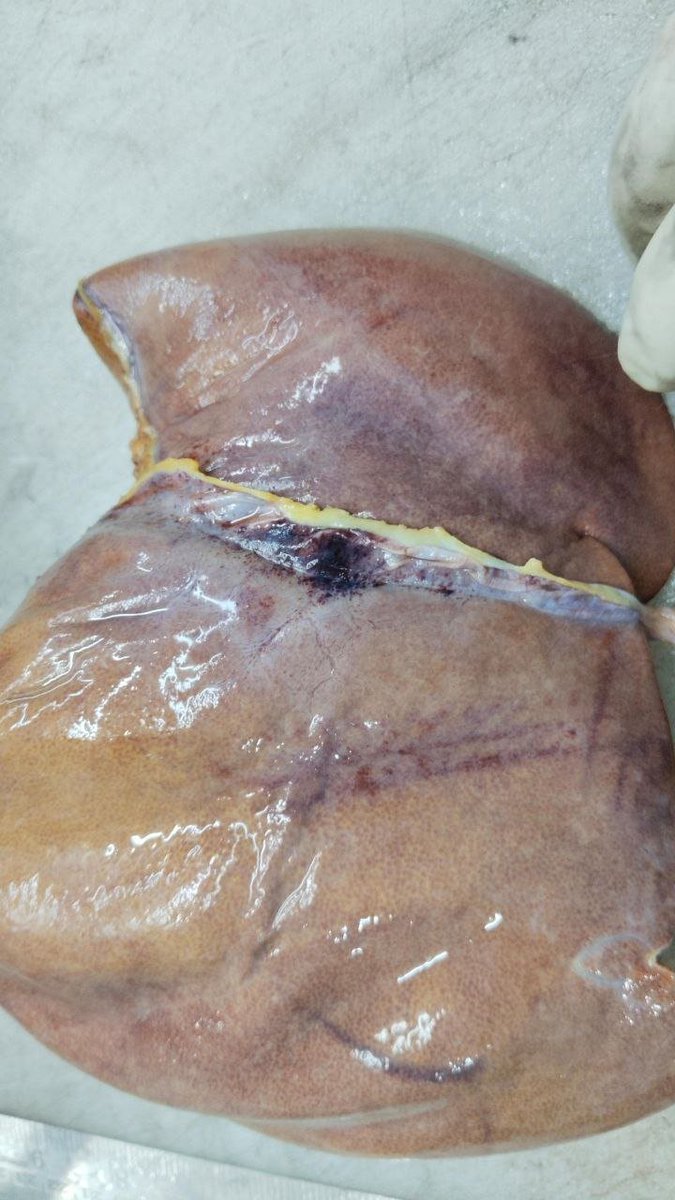
I wanted to make sure it ended well. This is was the liver of a teenager we took out a month back. He was flown in from another State because of an unidentifiable jaundice + hepatitis that was making him sick. Hardly a few days in, he went into a coma because of liver failure and we put him on a ventilator. To help him survive, a parent donated part of the liver. This was the quickest emergency liver transplantation we ever did. Everything happened in less than 24 hours.
On the outside the liver looks pretty normal, just a bit swollen from the hepatitis (liver inflammation). But when we looked at it under the microscope, there was nothing left. Almost all the liver cells were wiped out (a finding known as massive hepatocellular necrosis) with deep inflammation.
The cause remained unknown. We call it indeterminate hepatitis - meaning, something we did not know, caused it.
You may remember post Covid-19 era. There were multiple cases of unknown hepatitis among children which either led to them dying or receiving a transplant. At the time, scientists thought it was due to another virus - Adenovirus, that had changed the way it attacked us due to Covid-19 era restrictions and immune changes. But that theory fell apart because not every kid with indeterminate hepatitis had adenovirus positive.
In the 1980s, some doctors in few hospitals across the world described a handful of single-center cases that first documented liver cell loss and inflammatory infiltrates in unexplained pediatric liver failure. And they kept seeing such cases, here and there, and forgot about it. Some died. Some lived after a liver transplant.
In 1999, with the establishment of the Pediatric Acute Liver Failure (PALF) study group allowed for systematic tracking and larger-scale retrospective and prospective analysis of immune functionand dysfunction in such kids with unknown hepatitis.
In 2022, medical scientists were armed with better technology and more impressive analysis methods. And global attention surged, in the post-Covid-19 era on outbreaks of severe acute hepatitis of unknown origin in children.
https://t.co/ktKVaLQjcQ
They figured it out. Just like we did.
A special stain and a technical advancement known as immunohistochemistry, a lab test that used antibodies to find specific proteins in a tissue sample was deployed. A special type of immune cell, supposed to defend us, was going crazy. Cytotoxic T cells act as the body's security guards to find and destroy cells infected by viruses or those that turned cancerous. There was no cancer in our teenager. And teenagers and children with this disease before him. The most likely culprit was a previous viral infection.
https://t.co/JicKah98a4
Covid-19 probably increased this. The little fcker wrecks havoc on the immune system like no other. It makes the body go wild and attack itself. It has done this before in other other organs too. It is called molecular mimicry.
When you get infected with COVID-19, your immune system creates defenses—like antibodies—to target and destroy the virus. To do this, it memorizes the physical shapes and protein sequences of the virus. However, because some building blocks of the COVID-19 spike protein mimic the shapes of our own healthy human proteins, the immune system can experience "cross-reactivity". Your newly trained antibodies end up attacking both the invading virus and your own healthy organs because they cannot tell the difference.
https://t.co/8baDr9nvJa
Large numbers of children with indeterminate hepatitis have cytotoxic T-cell mediated hepatitis. And it can only be diagnosed through a liver biopsy before the kid got really sick or after a liver transplant when the kid was going to die.
The liver that you see below, is far from normal. Deep within these tissues was a horde of cytotoxic T-cells that were picking of large areas of liver cells, pushing the child towards death.
As a doctor, I was only able to give them a diagnosis, after the liver came out and because they were convinced about this hidden killer of children, we did it in the nick of time. The teenager survived and we found what nearly killed the patient.
Any viral infection can lead to this. Not immediately, but even later on in life. It happens mostly in children, teenagers and young adults. Vaccines prevent/ reduce severity of various viral infections. Please make sure you and your children are vaccinated for age.
I hope Governments everywhere promote annual vaccinations for Covid-19 too along with the flu-shot. Because there is a strong possibility that this is the one virus that can cause this type of damage on the liver, many months after the initial infection and we may never know - becuase Covid-19 can come and go silently.
One of the biggest downsides of upright walking in humans is the so-called obstetrical dilemma. Babies born with big brains—and thus big heads—must fit through a relatively narrow pelvis shaped for bipedal locomotion. These clashing demands, it’s been suggested, have made human births especially grueling compared with other mammals.
But recent studies have questioned the simplicity of this explanation—and whether the phenomenon is even unique to humans. Now, researchers add another wrinkle to the obstetrical dilemma: fetal sex.
Reviewing birth data for 140 species, a new study argues sons are more difficult to birth than daughters for many mammals, including humans and our ancient ancestors. This added risk may be offset by an evolutionary reward: Bigger male babies grow into bigger male adults, who tend to have more grandbabies, meaning more of that mother’s genes are passed down.
Learn more: https://t.co/Iv4xuXffKq
The amount of movement required to blunt a glucose spike is far smaller than almost anyone assumes.
Contracting muscle takes up glucose without insulin. The transporter responsible, GLUT4, moves to the muscle cell surface in response to two separate signals, and contraction is one of them. That is why movement lowers blood sugar in people whose insulin signalling works poorly, and why the effect appears within minutes rather than requiring any training adaptation.
A 2026 trial tested how small the dose could go. Thirty adults completed two evening sessions after a 75 gram glucose drink, one seated and one with a single minute of stair stepping at a self selected pace. Participants rated the effort 1.9 out of 10, which is barely above sitting. The rise in blood glucose from baseline to 60 minutes was 2.5 millimoles per litre after the stairs against 4.3 after sitting, a difference of about 42 percent. Total glucose exposure over the session was lower as well. The evening was chosen deliberately, because the same carbohydrate load raises blood glucose more at night than in the morning.
One minute sits right at the edge of what works, and it does not work everywhere. The same research group ran the identical comparison in the morning with 1, 3 and 10 minute bouts. Three minutes and ten minutes lowered glucose. One minute did not, and the result was nowhere near significant. Then they ran it again after a real mixed meal of 650 calories rather than a glucose drink, and one minute did work, lowering glucose by 14 milligrams per decilitre. So the honest reading is that one minute is enough after a normal meal and enough in the evening, but not reliably enough after a morning glucose challenge. Three minutes worked in every version. If you want a duration that is robust across conditions, it is three, not one.
Timing turns out to matter more than duration. A 2023 meta analysis of eight crossover trials in 116 people, about 40 percent of whom had type 2 diabetes, compared exercising before a meal, after a meal, and not at all. Exercising after the meal beat exercising before it and beat doing nothing. Exercising before the meal was statistically indistinguishable from doing nothing at all. The analysis also found that the gap between finishing the meal and starting to move independently predicted the size of the benefit, with shorter gaps producing larger effects. A short walk taken immediately outperforms a longer one taken an hour later.
What this changes: not whether you exercise, but what you do in the ten minutes after you finish eating. Sitting down is the default and, for some people, it is the worst option available. Stairs if you have them, a walk if you do not, and starting sooner matters more than going longer.
Morales et al., Exp Physiol 2026;111(6):2956 · PMID 39705060
Moore et al., J Exerc Sci Fit 2024 · PMID 38572086
Kressler et al., Nutr Metab Cardiovasc Dis 2022 · PMID 34896000
Engeroff et al., Sports Med 2023 · PMID 36715875
Could a single IV drip permanently lower "bad" cholesterol?
🔸Gene editing is taking a massive leap into preventive cardiology.
🔸A recent report highlights VERVE-102, an experimental single-dose gene-editing therapy designed to permanently silence the PCSK9 gene in the liver, reducing LDL-C (bad cholesterol) by up to 62%.
Key Takeaways for the General Public:
1. It uses base-editing technology to turn off the PCSK9 gene in liver cells, keeping blood LDL levels low permanently.
2. It is not a substitute for lifestyle.
Even with advanced therapies, core preventive habits; a heart-healthy diet, regular exercise, weight management, and avoiding smoking, remain non-negotiable.
3. It is still in development.
While promising, this is currently in early-phase clinical trials to evaluate long-term safety before wider use.
Clinical Pearls for Junior Doctors:
Targeting the PCSK9 Pathway:
1. Monoclonal Antibodies (Evolocumab, Alirocumab):
🔸Block circulating PCSK9 protein (reduces LDL-C ~50–60%, requires dosing every 2–4 weeks).
2. siRNA (Inclisiran):
🔸Prevents PCSK9 protein translation (reduces LDL-C ~50%, dosed every 6 months).
3. CRISPR/Base Editing (VERVE-102):
🔸Permanently alters genomic DNA at the liver level (PCSK9 gene inactivation via lipid nanoparticle delivery to LDLR/ASGR1 receptors).
Safety Considerations:
🟠Permanent DNA editing requires rigorous long-term surveillance for off-target genomic effects, liver enzyme spikes, or immune responses.
✅Statins and existing lipid-lowering therapies remain the standard of care for now.
Dr Sudhir Kumar @hyderabaddoctor
(Source: @TOIIndiaNews)
📚 Open Access (free)
Friederici, A. D. (2017). Language in Our Brain: The Origins of a Uniquely Human Capacity. Cambridge: MIT Press. https://t.co/L9FHn9NLIK
India’s Viksit Bharat Goal: Urban Deficiencies Call for Action Plans
1. Introduction
The article argues that Viksit Bharat cannot be achieved merely through economic growth. India’s cities need reliable public goods, especially sewerage, drainage, sanitation and waste management.
2. Main Facts
Urban flooding is increasingly caused not only by heavy rainfall but also by blocked drains, encroachment and poor maintenance.
Rainwater entering sewage systems can cause sewage overflow and contamination.
Government has announced substantial funding for drinking water and sewerage infrastructure.
However, rainwater drainage remains comparatively neglected.
Urban India also faces informal housing, garbage accumulation, rodents, stray animals and inadequate municipal services.
Municipalities often suffer from weak fiscal capacity, limiting their ability to maintain infrastructure.
3. Challenges
The core problem is the gap between infrastructure creation and infrastructure maintenance.
Other challenges include:
Climate-induced extreme rainfall
Poor urban planning
Fragmented institutional responsibility
Weak municipal finances
Insufficient drainage networks
Poor solid-waste management
4. Constructive Criticism
The author appreciates new government initiatives but argues that urban policy remains largely reactive rather than preventive.
Building new sewage plants is insufficient if existing networks remain clogged. Similarly, urban development without maintenance capacity can create expensive but ineffective infrastructure.
5. Way Forward
India needs:
City-specific drainage master plans
Regular desilting and maintenance
Better storm-water management
Stronger municipal finances
Scientific solid-waste management
Climate-resilient urban planning
Greater state–centre–municipality coordination
6. Conclusion
Viksit Bharat requires liveable cities, not merely growing cities. Reliable public infrastructure, effective municipal governance and climate resilience must become the foundation of India’s urban transformation.
#ViksitBharat #Urbanisation #UrbanFlooding #UrbanGovernance #Infrastructure #ClimateResilience #MunicipalGovernance #WasteManagement #Drainage #IndiaDevelopment #CurrentAffairs
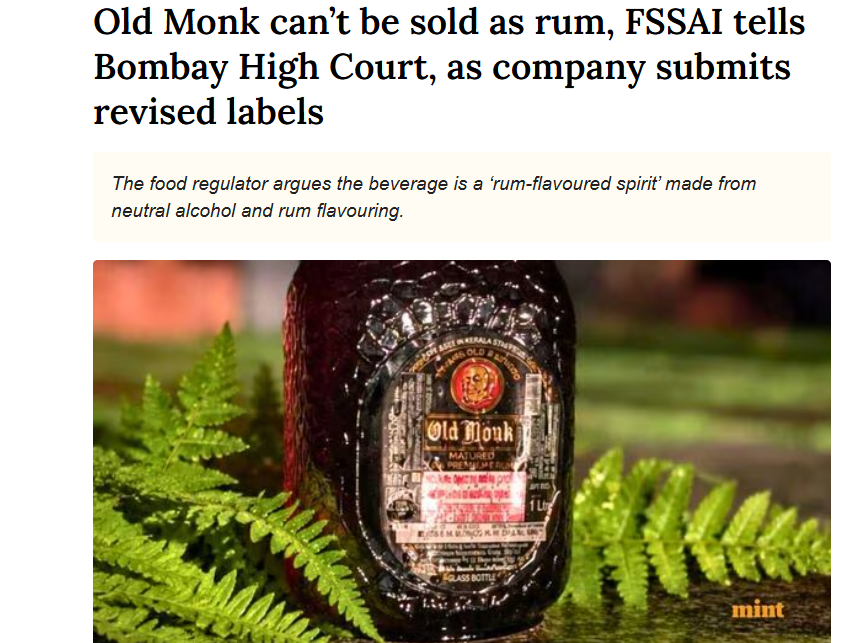
FSSAI told Bombay High Court that Old Monk cannot be sold as rum
Lab tests found it is made from neutral spirit with rum flavoring added on top. Matured rum spirit was less than 5% of blend, while label said 7 Years Old Blended. FSSAI says if you start with tasteless ethanol and add flavoring to mimic rum, you are selling flavored spirit, not rum.
Company loses Rs 1 Cr per day since ban. Diageo agreed to change labels on its brands, Old Monk is contesting in court.
This is not just Old Monk. FSSAI banned 10 variants across 3 makers. McDowell No.1 Rum, Antiquity Blue Whisky, Royal Challenge Whisky, Bagpiper Deluxe all got caught using artificial flavoring to mimic taste of real spirits.
India drinks over 440mn 9-liter cases per year. Most of it starts as ENA, which is cheap, colorless, 96% pure ethanol. Entire mass-market IMFL segment depends on it. FSSAI now says sell it if you want, but call it what it is - Flavored spirit, not rum or whisky
Most Indian whisky sold at mass market level is made from sugarcane molasses, not grain that technically makes it rum by international definition.
India is biggest whisky market by volume on Earth, yet most of what sells as whisky here cannot legally be called whisky in Europe or US. Premiumization is slowly changing this.
Amrut and Rampur use grain-based distilling and win global recognition But they serve high end only. For mass IMFL brands built on cheap neutral alcohol and flavoring shortcuts, FSSAI ruling forces expensive choices.
Reformulate or relabel :(
someone didn't like it and take it personal 😉😉
https://t.co/uFx9Z3O2PO
“It takes something more than intelligence to act intelligently.”
- Dostoevsky
Solomon's Paradox is the tendency to reason more wisely about other people's problems than our own.
It's named after the biblical King Solomon — famous for his wise judgments, but who in his later years is depicted as making increasingly poor choices in his own personal and political life.
The term was introduced in 2014 by psychologists Igor Grossmann and Ethan Kross. In their studies on relationship conflicts, they found that people were better at taking multiple viewpoints into account, acknowledging what they didn't know, and looking for compromise when they were thinking about someone else's problem instead of their own.
They also found a way to counteract it: self-distancing. If you look at your own situation as an outside observer would, or ask yourself, "What would I tell a friend to do if they were in this exact position?" it becomes easier to think more clearly and objectively.