En este contexto lo mejor que puede hacer una persona para su futuro profesional es tener varias profesiones u oficios.
Hoy en día no es necesario que estudiar una carrera por profesión, la misma carrera + especialización autodidacta (y a veces sólo la especialización autodidacta y la experiencia) te abren la puerta a diferentes profesiones y oficios profesionalizados.
Les cuento mi caso como ejemplo, hasta los 25 estudié una carrera de humanidades (antropología) y algunas otras formaciones (como acompañante terapéutica, asistente de rec humanos), a los 21 trabajé en un call de soporte técnico, entre los 22 y 26 ocupé distintos puestos en una pymes tech (administrativa contable, rrhh, etc) mientras era tutora universitaria y hacía prácticas de AT y trabajo etnográfico.
Después me puse a estudiar de manera autodidacta tech recruiting y UX research, y a los 26 empecé a trabajar full time de IT sourcer/recruiter en una agencia pequeña.
Mientras, abrí mi propio emprendimiento de career counseling/asesoría de carrera, usando mi conocimiento como AT, en rrhh, y ahora mi nueva experiencia en recruiting.
Al mismo, tiempo también empecé a usar las redes para difundir mi trabajo y ayudar a la gente gratis con recursos a conseguir laburo, primero LinkedIn, después Twitter, Instagram, Tiktok.
En el medio no dejé de estudiar y capacitarme, aprendí a usar mi conocimiento de la carrera de antropología para aplicar en empresas tech, sobre todo startups, en la parte de cultura organizacional, aprendí más de social media marketing y lo apliqué a mi propia marca personal y a la marca empleadora de mis empleados y después clientes.
Necesite entender cómo gestionar mi dinero cuando fui tomando cada vez más proyectos freelance y a tener clientes del todo el mundo, así que empecé a investigar cómo usar crypto en 2020. En 2021 se acercaron las primeras marcas para que los ayude a promocionar sus productos fintech y/o para reclutar perfiles blockchain. Primero fueron colaboraciones y luego consultorías, proyectos de marketing de afiliados e influencer marketing.
Ahora miro para atrás, y habiendo tenido la oportunidad (buena salud, una formación de base sólida, una familia que me hubiera apoyado si me iba mal), hubiera sido una locura no usar mi juventud en hacer todo esto, porque soy una persona career-oriented y al mismo tiempo valoro mucho mi libertad y mi tiempo.
Tener varias carreras, varios emprendimientos, varias opciones de trabajo, me permitió poder hacer muchas cosas que con un trabajo tradicional nunca hubiera sido posible.
Pero no fue todo mágico y automático. Eso no existe. No hay fórmulas milagrosas. La mayoría de nosotros empezamos desde abajo y con la incertidumbre de si va a salir bien o no.
Hay que enfrentarse al fracasado. Algunas cosas que probe no me funcionaron. En un par de proyectos no me fue bien.
Pero hoy en día, construir una carrera exitosa de manera lineal y tradicional, es cada vez más difícil. No se pueden poner todos los huevos en la misma cesta, como dice el dicho.
Esa es la conclusión que saco de los últimos 8 años.
Also the Pope is talking about Epistemia. AI can “weaken personal judgment.”
This is exactly the point we make in our paper on the epistemological fault lines between human and artificial intelligence.
LLMs and humans do not merely differ in performance.
They differ in their epistemic pipelines.
We identify seven fault lines:
Grounding.
Parsing.
Experience.
Motivation.
Causality.
Metacognition.
Value.
At each step, human intelligence and artificial intelligence process the world in structurally different ways.
And yet, LLM outputs are so fluent and confident that we often treat them as true.
This is how we enter Epistemia: a regime in which epistemic verification is replaced by linguistic plausibility.
A world full of knowledge that we are not able to judge.
A world in which we will be totally lost.
*
Full paper in the first reply.
An English engineer wrote a calculus book in 1910 opening with the line "what one fool can do, another can," and proved that almost everything making math feel impossible was put there on purpose by people who wanted it to stay exclusive.
His name was Silvanus P. Thompson.
He was a physicist, an engineer, a Fellow of the Royal Society, and a professor at the City and Guilds Technical College in London.
He had spent his entire career teaching calculus to working-class engineering students who needed the math to actually do their jobs, and he had watched generation after generation of bright kids walk out of math classrooms convinced they were stupid.
He knew they were not stupid. He knew exactly what was wrong, and he was about to say it in print in a way that would get him quietly hated by every academic mathematician in Britain.
In 1910 he published Calculus Made Easy. He published it anonymously at first, listing the author only as F.R.S., which stood for Fellow of the Royal Society. He did not want his name attached to it until he saw how the establishment was going to respond. Because the prologue of the book was not a polite introduction. It was an accusation.
He wrote that calculus was not actually hard. He wrote that the people writing the standard textbooks were what he called "clever fools" who deliberately took the easiest parts of the subject and presented them in the most complicated way possible, because doing so made them look more impressive.
He wrote that they "seldom take the trouble to show you how easy the easy calculations are" and instead "seem to desire to impress you with their tremendous cleverness by going about it in the most difficult way."
Then he opened the first chapter by telling readers something nobody had been willing to admit out loud. The reason calculus felt impossible was not because calculus was impossible. It was because the symbols had been chosen to feel impossible. The notation looked like ancient ritual on purpose. The Greek letters, the formal epsilon-delta definitions, the abstract limit proofs that opened every standard textbook, were not how Newton and Leibniz had originally thought about the subject. They were a 19th century renovation of the field done by professional mathematicians who wanted calculus to feel like a closed shop.
Thompson refused to use any of it.
He went back to the way Leibniz had thought about it 250 years earlier. The letter d in front of a variable, he told his readers, just meant "a little bit of." That was the whole secret. dx meant "a little bit of x." dy meant "a little bit of y." dy/dx meant "a little bit of y divided by a little bit of x," which is just how steep the curve is going at that exact moment. Integration was the opposite. It just meant adding up all the little bits.
That is calculus. That is the entire subject. Everything else is technique, and the technique only works once you understand what you are doing.
A 12-year-old can follow that explanation. A 12-year-old cannot follow the opening chapter of a typical university calculus textbook. The gap between those two facts is the entire reason most adults walk around believing they are bad at math.
The book became one of the bestselling math books in history. Over a million copies. Still in print 115 years later. Still recommended by physicists, engineers, and self-taught learners as the only calculus book they actually finished. Martin Gardner revised it in 1998 and the foundation of the book did not need to change because Thompson had built it on Leibniz, not on the academic conventions that have come and gone since.
The deeper point Thompson was making is the part that should haunt anyone reading this in 2026.
Difficulty is often a marketing strategy. It is not always a property of the subject. When a discipline is taught in a way that feels impossible, the difficulty is doing a job for someone. It is keeping the field small. It is protecting the salaries and the status of the people already inside it. It is filtering out the kinds of people who would otherwise show up and crowd the room.
This happens in math. It happens in law. It happens in medicine. It happens in finance, in machine learning, in philosophy, in software. Every field has a layer of jargon and notation and ritual sitting on top of a core idea that is usually much simpler than the people inside the field want to admit. The jargon is not there to communicate. It is there to gatekeep.
The way you recognize a real teacher is that they keep stripping the ritual off. The way you recognize someone protecting their priesthood is that they keep piling it on.
Thompson finished his prologue with five words that are the entire spirit of his project. "What one fool can do, another can." He meant it as both a joke and a threat.
If a working-class engineering student in 1910 with no Greek and no Latin and no university privileges could learn calculus from a 200-page paperback, then so could anyone the establishment had been excluding for the previous 200 years.
Most subjects you have given up on were never as hard as the people teaching them needed you to believe. You were not stupid. The course was designed to make you feel that way.
What one fool can do, another can.
A psychologist became the most hated woman in her field for proving that the childhood memories people trust the most are often the ones their brain quietly made up.
Her name is Elizabeth Loftus.
Here's the the experiment that made her famous and its almost insultingly simple.
She gave each subject four short stories about their own childhood, collected beforehand from a parent or older sibling. Three of the stories were true. One was completely invented. The fake one always described the same scene. You were five years old, you wandered off in a shopping mall, you panicked, and an elderly stranger found you crying and walked you back to your family.
None of it had happened.
But after two short interviews, about a quarter of the people in the study didn't just accept the story. They remembered it. They started adding details nobody had given them. The color of the stranger's shirt. How scared they felt the moment they realized their parents were gone.
When Loftus finally revealed that one of the four memories was fake and asked them to guess which, many of them guessed wrong. They picked a real one.
The study was published in 1995. It was called The Formation of False Memories, and it set off a war inside psychology that is still going today.
Here is the thing she had figured out that most people get backward their entire lives.
You think memory works like a recording. Something happens, your brain saves the file, and later you press play and watch it back exactly as it was. That is not what happens. Memory is not storage. It is reconstruction.
Every time you recall something, your brain rebuilds it from scratch out of fragments and whatever information happens to be lying around at that moment. Anything close enough can get stitched into the final cut.
Loftus had proven this years earlier with a car crash. She showed people a video of two cars hitting each other, then asked how fast they were going. For one group she used the word "smashed." For another she used the word "hit." The smashed group estimated the cars were moving about seven miles an hour faster.
A week later she asked everyone whether they had seen broken glass at the scene. There was no broken glass in the video. The people who heard the word "smashed" were more than twice as likely to remember glass that was never there.
One verb. That was all it took to edit what people had seen with their own eyes.
She called it the misinformation effect, and the more she studied it, the worse the implications got.
If a single word could plant broken glass, what could a confident therapist plant over months of sessions? What could a leading question plant in a witness sitting on the stand? She started testifying in court, and across her career she consulted on roughly 300 cases, telling juries that the most convincing testimony in the room might be a memory that had assembled itself out of nothing.
People hated her for it. She got threats. She got accused of protecting abusers. And then something happened that turned her own life into the experiment.
When Loftus was 14, her mother drowned in a swimming pool. Thirty years later, at a family gathering, her uncle told her something she had never known. He said she was the one who found the body floating in the water that morning.
She had no memory of it. But the moment he said it, the memory began to arrive. She could see her mother face down with her arms out. She could feel a fireman pressing an oxygen mask over her own panicked face. The details came one by one, vivid and certain, exactly the way they had arrived for every subject she had ever studied.
Then her uncle called back. He had made a mistake. It wasn't her who found the body. It was her aunt.
The most important memory researcher alive had just watched her own brain manufacture a traumatic childhood memory from a single sentence spoken by someone she trusted. She was, in her own words, a subject in one of her own experiments.
That is the part nobody wants to sit with. Fake memories do not feel fake. They feel exactly like the real ones. There is no internal alarm, no flicker of doubt, no difference in texture between the thing that happened and the thing that was suggested to you.
You are not remembering your life. You are rebuilding it from scratch every single time, and you have no way of knowing which pieces are real.
A man who reads old books cannot be fully captured by modern stupidity. He has dead kings, prophets, poets, killers, saints, drunks, generals, and madmen whispering in his bloodstream. The feed has no chance against this.
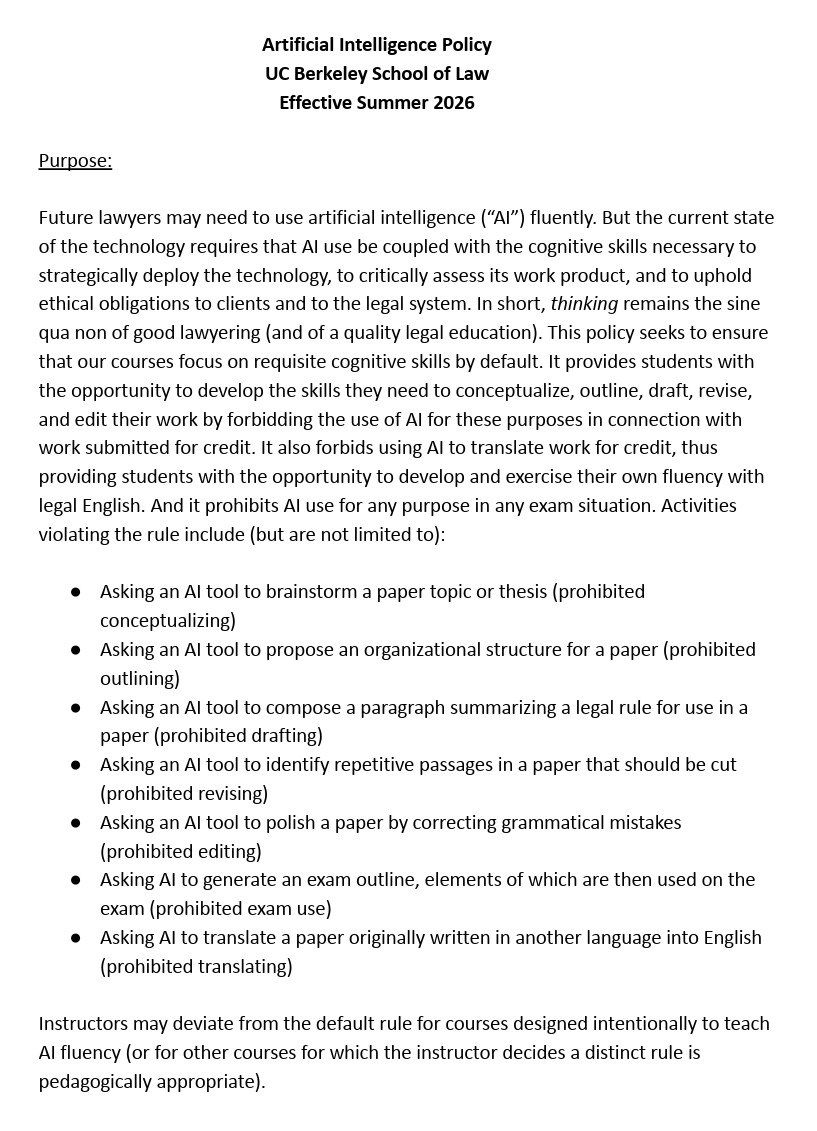
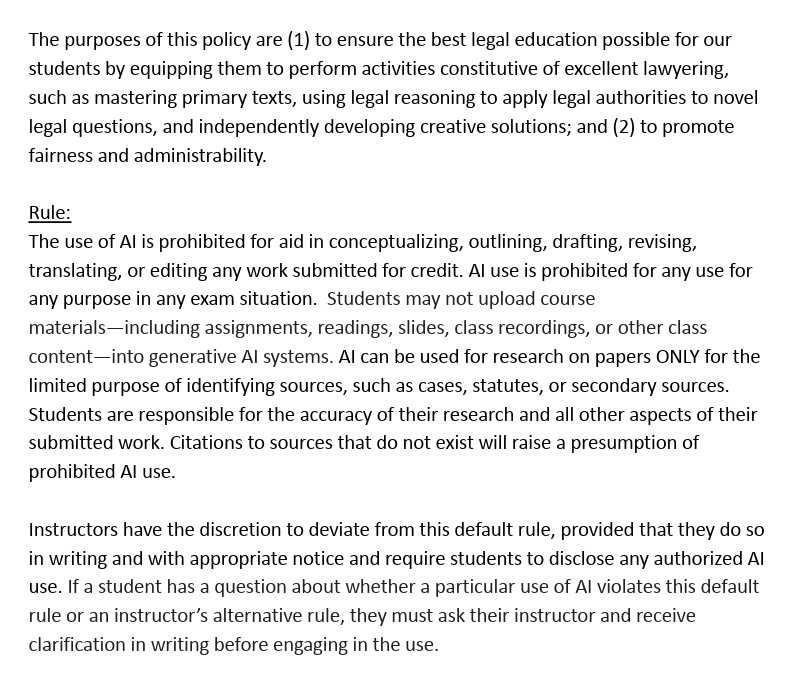
🖥️ The new Artificial Intelligence policy at UC Berkeley School of Law, effective Summer 2026.
📝 Here is the main rule:
"The use of AI is prohibited for aid in conceptualizing, outlining, drafting, revising, translating, or editing any work submitted for credit. AI use is prohibited for any use for any purpose in any exam situation. Students may not upload course materials—including assignments, readings, slides, class recordings, or other class content—into generative AI systems. AI can be used for research on papers ONLY for the limited purpose of identifying sources, such as cases, statutes, or secondary sources."
5 years in data science.
The skill I use most every day isn't Python.
It isn't SQL.
It isn't even statistics.
It's writing.
Nobody told me that in university. I had to learn it the hard way, in meetings where my analysis was technically right and completely ignored.
The model doesn't matter if nobody understands what it's saying.
What's the skill your job actually needs that nobody taught you? 👀
There are two types of time:
1) Kronos
"Kronos is more measurable. It's easy to calculate. You can depend on clocks, calendars, and schedules."
This is the time most of us live by: It's chronological and linear.
2) Kairos
"Kairos is deep time. If you're interested in the stories of nature, maybe the journey of a rock, you can't just measure it with that tiny element of time. You have to look at millennia.
The time used by storytellers is more cyclical, close to the time of nature."
Elif Shafak argues that if we had more words for time, we'd see how much of human history is a cycle, not a straight line.
Engineers don't just build things.
They think differently.
4 mental models that separate engineering thinking from everything else:
1. First principles
Don't assume. Break every problem down to what's physically true. Elon Musk on battery costs: "What are batteries made of? What's the market value?" Start there.
2. Failure mode analysis
Before asking "will this work?" ask "how will this fail?" The best engineers design failure in – slowly, visibly, safely.
3. Order of magnitude thinking
Approximate before you calculate. Being 10x right matters more than being 1% precise too late.
4. Systems thinking
Nothing fails in isolation. Every component has a relationship with everything else. The weak link is almost never where you're looking.
These 4 models built everything that works.
Years ago, I was asked to review 100s of exit interviews. Here's what surprised me: Nobody worth having on your team quits over one bad day. High-performers leave when the small taxes imposed by their manager create a cost too big to endure. Here's are the common culprits:
This is the best preserved medieval street in Europe.
Recorded in the Domesday Book of 1086, The Shambles in York, England has had shops trading on it for nearly a thousand years. It's older than the Crusades.
The Performance Myth reduces individuals to commodities or “performers,” whose value is contingent on meeting predefined metrics.
Read more 👉 https://t.co/dcoZ77fMtQ
Today is a timely reminder that seeming good will never surpass doing good.
Former PM Julia Gillard, who banged on about misogyny for years, turned out to be the greatest practical misogynist of all.
#IStandWithSallGrover#auspol
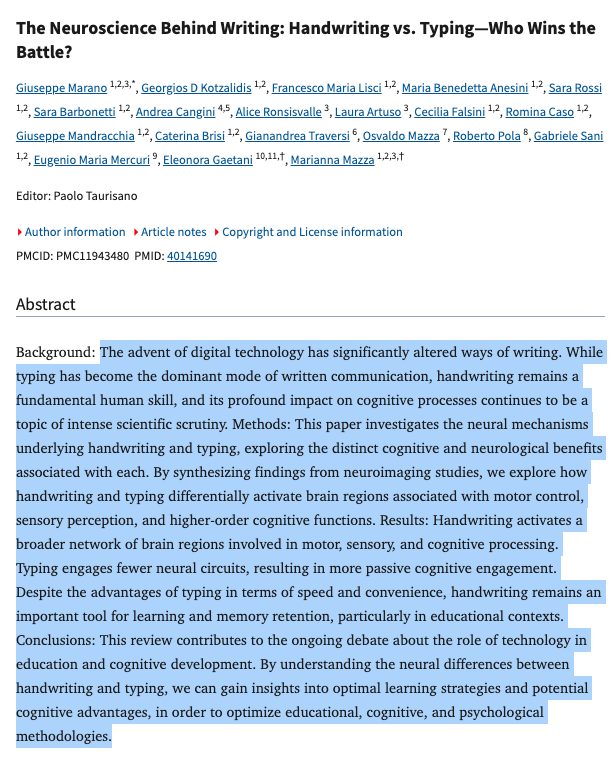
Your brain physically rewrites itself every time you pick up a pen.
Neuroscientists at Norwegian University scanned students' brains while they handwrote letters versus typing the same letters on a keyboard.
The results shattered decades of assumptions about how we process information.
Handwriting activated massive networks in the sensorimotor cortex, the visual processing centers, and the hippocampus simultaneously. Complex neural symphonies lit up across multiple brain regions, creating rich interconnected pathways between motor control, visual recognition, and memory formation.
Typing the same letters? The brain activity looked like someone had dimmed the lights across entire cognitive districts. The neural networks that flourished during handwriting simply went dark.
The difference?
When you form letters by hand, your brain constructs elaborate spatial maps of each character. The motor cortex learns the precise pressure, angle, and trajectory needed to create an 'A' versus a 'B.' Your visual system tracks the ink flowing from pen to paper in real time. Your parietal lobe integrates hand position with eye movement. Your hippocampus encodes not just what you wrote, but how the writing felt, where you paused, which words required more pressure.
Typing activates almost none of that circuitry. You press a key, a letter appears. The motor movement is binary. The visual feedback is uniform. The spatial relationship between thought and symbol gets mediated by a machine that standardizes every character into identical fonts and spacing.
Your brain treats these as fundamentally different cognitive tasks.
The evolutionary context makes this obvious once you see it. Human hands developed for manipulation, creation, and fine motor control over millions of years. We painted on cave walls, carved bone tools, and shaped clay vessels long before we invented written language. When writing emerged 5,000 years ago, it built on top of existing neural infrastructure that already connected hand movement with symbolic thinking.
Keyboards appeared 150 years ago. Touchscreen typing maybe 20 years ago. From an evolutionary timeline perspective, we started using them approximately yesterday. Our brains are still running ancient software that expects physical engagement with symbols.
That software produces dramatically different learning outcomes.
Students who take handwritten notes consistently outperform students who type the same information on memory tests, comprehension assessments, and creative applications of the material. The difference persists even when researchers account for typing speed, note length, and time spent studying.
The act of forming letters by hand forces deeper processing at the moment of information encounter. You cannot handwrite as fast as someone speaks, so your brain must actively filter, summarize, and prioritize information in real time. The motor effort required to form each word creates additional memory traces that typing does not generate.
Children who learn to write letters by hand develop reading skills faster than children who learn letters primarily through typing or screen interaction. The sensorimotor experience of creating letterforms helps their brains recognize those same letterforms when they encounter them in text.
Adults who handwrite shopping lists, daily schedules, or meeting notes remember the information better than adults who type identical lists into phones or computers. The spatial memory of where you wrote something on a page provides retrieval cues that digital text does not offer.
These findings collide directly with how education and work environments have evolved over the past two decades. Schools replaced handwriting instruction with typing classes. Offices converted from paper systems to fully digital workflows. Students take notes on laptops. Professionals draft documents on screens.
We optimized for speed and efficiency while accidentally severing the neural pathways that evolution spent millions of years developing.
The implications reach beyond memory and learning into fundamental questions about human cognition. If the physical act of forming symbols changes how your brain processes ideas, what happens to thinking itself when you remove the physical component?
Digital text is infinitely searchable, instantly editable, and perfectly shareable. But it may be creating brains that process information more superficially, store memories less durably, and connect ideas more weakly than brains that regularly engage in handwriting.
The neuroscience suggests we traded cognitive depth for technological convenience without realizing what we were giving up.
Some of the most innovative thinkers across history were obsessive handwriters. Darwin kept detailed handwritten journals. Einstein worked through complex theories in handwritten notebooks. Virginia Woolf wrote her novels by hand before transcribing them. Steve Jobs famously took handwritten notes during Apple meetings even as he was building the most advanced computers on Earth.
Perhaps they intuited something about the relationship between hand, brain, and insight that we measured in brain scanners but somehow forgot in practice.
Your pen is literally a cognitive enhancement device that activates neural networks digital keyboards cannot reach.
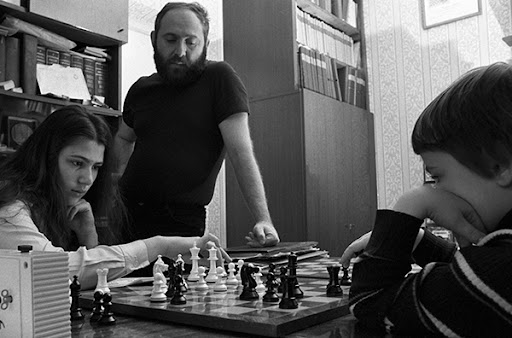
A Hungarian psychologist raised three daughters to prove that any child could become a chess grandmaster through early specialization. He succeeded. Two of them became grandmasters. One became the greatest female chess player who ever lived.
Then a sports scientist looked at the data and found something nobody wanted to hear.
His name is David Epstein. The book is called "Range."
The Polgar experiment is one of the most famous case studies in the history of deliberate practice. Laszlo Polgar wrote a book before his daughters were even born arguing that geniuses are made, not born. He homeschooled all three girls in chess from age four. By their teens, Susan, Sofia, and Judit were dominating tournaments against grown men. Judit became the youngest grandmaster in history at the time, breaking Bobby Fischer's record. The story became the gospel of early specialization. Pick a domain young, drill it hard, and you can manufacture excellence.
Epstein opens his book by telling that story honestly and then quietly demolishing the conclusion most people drew from it.
Chess works that way. Most things do not.
Here is the distinction that took him four years of research to articulate, and that almost nobody who quotes the 10,000 hour rule has ever read.
There are two kinds of environments in which humans develop expertise. Psychologists call them kind and wicked. A kind environment has clear rules, immediate feedback, and patterns that repeat reliably. Chess is the cleanest example. Every game ends with a winner and a loser. Every move is recorded. The board never changes shape. The pieces never invent new ways to move. A child who plays ten thousand games will see most of the patterns that exist in the game, and pattern recognition is exactly what chess mastery is built on.
A wicked environment is the opposite. Feedback is delayed or misleading. Rules shift. The patterns that worked yesterday may be exactly the wrong patterns to apply tomorrow. Most of the real world looks like this. Medicine is wicked. Investing is wicked. Building a company is wicked. Scientific research is wicked. Almost every job that involves a complex changing system with humans in it is wicked.
The Polgar sisters trained in the kindest environment any human can train in. Their success was real and the method was correct. The mistake was generalizing the method to fields where the underlying structure of the environment is completely different.
Epstein's research is what made the implication impossible to ignore.
He looked at the careers of elite athletes outside of chess and golf and found that the pattern was almost the inverse of what people assumed. The athletes who reached the very top of their sports were overwhelmingly people who had played multiple sports as children, specialized late, and often switched disciplines well into their teens. Roger Federer played squash, badminton, basketball, handball, tennis, table tennis, and soccer before tennis became his focus. The kids who specialized in tennis at age six and trained year-round for a decade mostly burned out, got injured, or topped out at lower levels of the sport.
The same pattern showed up everywhere he looked outside of kind environments. Inventors with the most patents had worked in multiple unrelated fields before their breakthrough work. Comic book creators with the longest careers had drawn for the most different genres before settling. Scientists who won Nobel Prizes were dramatically more likely than their peers to be serious amateur musicians, painters, sculptors, or writers.
The skill that mattered in wicked environments was not depth in one pattern. It was the ability to recognize when a pattern from one domain applied unexpectedly in another. That kind of thinking cannot be built by drilling a single subject. It can only be built by accumulating mental models from many subjects and learning to move between them.
The deeper finding is the one that should change how you think about your own career.
Specialists in wicked environments often get worse with experience, not better. Epstein cites studies of doctors, financial analysts, intelligence officers, and forecasters showing that years of experience in a narrow domain frequently produce more confident judgments without producing more accurate ones. The expert builds elaborate mental models that feel comprehensive and turn out to be increasingly disconnected from the actual structure of the problem. They stop noticing what does not fit their framework. They mistake fluency for understanding.
Generalists do better in wicked domains for a reason that sounds almost mystical until you understand the mechanism. They have less invested in any single mental model, so they abandon broken models faster. They are used to being a beginner, so they are not threatened by the discomfort of not knowing. They have seen enough different domains that they can usually find an analogy from one field that unlocks a problem in another. The technical name for this is analogical thinking, and the research on it is one of the most underrated bodies of work in cognitive science.
The single most useful sentence in the entire book is the one Epstein puts almost as a throwaway.
Match quality matters more than head start.
A person who tries six different fields in their twenties and finds the one that genuinely fits them will outperform a person who picked one field at fourteen and stuck to it on willpower alone. The lost years were not lost. They were the search process that produced the match. Every field they walked away from taught them something they later imported into the field they finally chose.
The reason this is so hard to accept is cultural, not empirical. We tell children to pick a path early. We reward the prodigy who knew at six. We treat the late bloomer as someone who failed to launch on time, when the data suggests they were running an entirely different and often more effective optimization process underneath.
The Polgar sisters were not wrong. The conclusion the world drew from them was.
If your environment is genuinely kind, specialize early and drill hard. If it is wicked, and almost every interesting human problem is, then the people who win are the ones who refused to specialize until they had seen enough to know what was actually worth specializing in.
You are not behind. You were running the right experiment all along.