Elon Musk acaba de hacer la pregunta que todo congresista acaudalado espera que nadie se atreva a formular en voz alta.
Musk: "¿Cómo consiguieron 20 millones de dólares si ganan 200.000 dólares al año? Nadie puede explicarlo". 🎯👇🏼
Elon Musk just asked the question every wealthy member of Congress hopes nobody ever asks out loud.
$200,000 salary. $20 million net worth. Nobody has ever had to account for that gap.
Musk: “How’d they get $20 million if they’re earning $200,000 a year? Nobody can explain that.”
Not one committee. Not one hearing. Not once.
Here’s why. The people vote. The bureaucracy decides.
Musk: “We really have here rule of the bureaucracy as opposed to rule of the people.”
And bureaucracy protects itself. The money leaves the Treasury and lands in a nonprofit built the year before.
Musk: “If you have a government-funded nongovernmental organization, you’re simply a government-funded organization.”
Then it crosses a border. It moves through NGOs, other countries, other currencies.
Musk: “NGOs are a way to do things that would be illegal if they were the government, but are somehow made legal if it’s sent to a so-called nonprofit.”
A human tracing that chain gives up around the hundredth transfer.
A machine doesn’t stop at one hundred. Or one hundred thousand.
The Pentagon has failed every financial audit since 2018. Eight years straight. The budget went up anyway. Bureaucracy doesn’t get punished. It gets funded again.
Musk: “Normally, the bureaucracy eats revolutions for breakfast. This is the first time the revolution might actually succeed.”
Not because Washington got honest.
Because something showed up that doesn’t get tired, doesn’t get paid off, and doesn’t stop counting.
Complexity was never a hiding place. It just hadn’t been read yet.
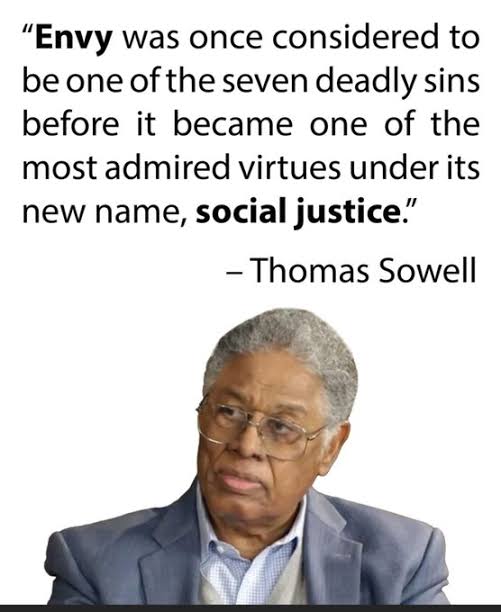
"Envy was once considered to be one of the seven deadly sins before it became one of the most admired virtues under its new name, 'social justice'."
- Thomas Sowell
In 1998, Warren Buffett gave a 1-hour masterclass on how to never lose money investing.
Here are the 22 most valuable lessons from his lecture:
1. You only have to get rich once. If you have $100 million and can make 10% unleveraged or 20% leveraged, the difference between $110 million and $120 million at year-end means nothing to your life, your family, or anything. But the downside, especially with other people's money, is disgrace, humiliation, and facing the friends whose money you lost. The equation never makes sense.
2. To make money they did not need, they risked money they did have and needed. That is just plain foolish, Buffett says, regardless of your IQ. If you hand him a gun with a million chambers and one bullet and offer him any sum to put it to his temple and pull once, he will not do it. There is nothing on the upside that justifies the downside. People do this financially all the time without thinking.
3. The smartest people in finance went broke, and that is the most fascinating story Buffett knows. Long-term Capital Management had 16 people with possibly the highest average IQ of any business in the country, 350 to 400 combined years of experience, and most of their own net worth in the firm. They still went bankrupt. Buffett says if he ever wrote a book, it would be called why smart people do dumb things.
4. Beta and sigmas tell you nothing about the real risk of going broke. The LTCM team relied heavily on mathematics and believed a six- or seven-sigma event could not touch them. They were wrong. History does not tell you the probabilities of future financial events. The real risk is not volatility. It is a permanent, irreversible blind spot in something crucial, often caused by knowing a great deal about something else.
5. Invest only in businesses you can understand. That one rule narrows the field by about 90%, and that is fine. Buffett can understand Coca-Cola. he cannot value an internet company, and he says if a student handed him a valuation of one on a final exam, he would flunk them. People thought Enron was incredible because it had a good track record, but almost nobody understood how it made money. That was the signal to avoid it.
6. You want a business that is a castle with a wide moat around it. Inside the castle, you want an honest, able, hard-working duke. The moat can be low cost, like Geico in auto insurance, or brand, or patents, or location. But a wonderful castle will always be attacked, so the job of every manager Buffett owns is one thing: widen the moat. Throw crocodiles and sharks into it to keep competitors out.
7. Moats change slowly and invisibly, but they change. Thirty years ago, Kodak's moat was as wide as Coca-Cola's. They had share of mind; the little yellow box meant best in everyone's head. Then they let Fuji into the Olympics and narrowed their own moat. Coca-Cola's moat, by contrast, is wider now than 30 years ago. Every time infrastructure gets built in a country that is not yet profitable, the moat widens a little. You cannot see it day by day, but in 10 years, the difference is enormous.
8. Share of mind beats share of market. When you say Disney, every person in the room has something in their head. Say Universal Pictures or 20th Century Fox, and you have nothing. A mother with two kids will pick the $17.95 Disney video over the $16.95 alternative because she knows it will be fine and does not want to preview ten videos to decide. That little bit of certainty in the customer's mind is worth a fortune.
9. The best businesses have pricing power and require little capital. see's candy sold 16 million pounds at $1.95 when Buffett bought it for $25 million. The entire thesis was whether the price could go to $2.25 without hurting sales. It could, because nobody wants to hand their valentine a box of candy and say, "This year I took the low bid." Today, See's makes $60 million on the same formulas and still takes almost no capital. Compare that to GM, which had to reinvest every dollar into better factories and whose stock barely moved over 50 years.
10. The best businesses earn a royalty on other people's capital. Coca-Cola sells a formula and collects a royalty on every drink. American Express takes a few percent of every dollar you spend. You put up the capital, they take a cut. Low capital intensity is one of the most underrated qualities in a business and one of the surest paths to durable wealth.
11. Define your circle of competence and stay inside it. The size of the circle does not matter. Staying inside, it does. If you know which 30 companies out of thousands you actually understand, you are fine. Buffett understood H.H. brown shoes and Frank Rooney, so he closed that deal in five minutes. If you do not know enough to understand a business instantly, you will not understand it in a month either.
12. Ignore the macro entirely. Buffett has never bought or skipped a business because of a feeling about interest rates, the economy, or any macro forecast. If Alan Greenspan and Bob Rubin both whispered exactly what they would do for the next 12 months, it would not change what he pays for anything. You want to focus on what is important and knowable. The macro is important but not knowable, so you ignore it.
13. Inactivity is the strategy, not a flaw. Wall Street makes money on activity. You make money on inactivity. A broker is like a doctor paid by how often he changes your pills. If everyone in a room trades their portfolio with everyone else every day, they all end up broke, and the intermediary keeps the money. Buffett looks for one good idea a year and rides it to its full potential. He measures Berkshire by how little turnover there is, like a church where the same people fill the seats every Sunday.
14. If you understand businesses, diversification is a mistake. For the 99% who will not evaluate businesses, Buffett recommends a low-cost index fund and extreme diversification. But if you bring real intensity to evaluating companies, owning more than six is a terrible idea. Very few people got rich on their seventh best idea. A lot of people got rich on their best one. Buffett keeps about half his money in what he likes best.
15. Buffett's biggest mistakes are mistakes of omission, not commission. The times he understood a business well enough to act and instead sat there sucking his thumb. He passed on healthcare stocks during the Clinton plan and on Fannie Mae in the mid-eighties, each a multi-billion-dollar miss. Accounting never captures these. The $2,000 he put into a Sinclair service station as a young man, money he lost, has an opportunity cost of about $6 billion today.
16. Focus on what will happen, not when. Coca-Cola went public in 1919 at $40 a share and dropped to $19 within a year. There was always a reason not to buy: the great depression, world war, sugar rationing, thermonuclear weapons. But one share bought then and reinvested would be worth about $5 million. If you are right about the business, you will make a lot of money. The timing is the tricky part, so do not focus on it.
17. When hiring, look for integrity, intelligence, and energy. But if the person lacks the first one, you actually want them dumb and lazy. Because a person with intelligence and energy but no integrity will destroy you. Buffett borrowed this from Pete Kiewit. The trait everyone screens for last is the one that matters most.
18. Here is a thought experiment Buffett gives students. Imagine you could own 10% of one classmate for the rest of their life. You would not pick the highest IQ or the best grades. You would pick the person you respond to best, the one who is generous, honest, gives credit to others, and has leadership qualities. Now imagine you also had to short one classmate. You would pick the egotistical, greedy, slightly dishonest one. The qualities that decide both are not talent. They are character.
19. Every quality on the admirable side is achievable, and every quality on the repellent side is removable. The things that make you want to own 10% of someone are not the ability to throw a football or run fast; they are behavior, temperament, and character, all of which anyone can choose. Buffett's point: you already own 100% of yourself, so you might as well become the person worth betting on.
20. The chains of habit are too light to be felt until they are too heavy to be broken. Buffett sees people in their forties and fifties trapped by self-destructive patterns they can no longer change. At a young age, you can choose any habits you want. Ben Franklin and Ben Graham both did exactly this, looking at people they admired and simply deciding to behave like them. There was nothing impossible about it.
21. Take a job you would take if you were already independently wealthy. Buffett told a 28-year-old at Harvard who wanted a consulting job "to look good on his resume" that it was like saving up sex for your old age. There comes a time to just start doing what you love. Buffett offered to work for Ben Graham for free, was told he was overpriced, and kept pestering him for years. Take the job you would jump out of bed for. You cannot miss.
22. You won the ovarian lottery, and that should shape how you think. Buffett imagines a genie 24 hours before your birth letting you design the world's rules, with one catch: you do not know which of 5.8 billion balls you will draw. Born here or in Afghanistan, with an IQ of 130 or 70, male or female, able-bodied or not. If you could put your ball back and draw one of 100 random others, most people would not, because they are already in the luckiest 1%. Buffett knows he is perfectly wired for a market economy that pays him like crazy, while an equally good citizen leading scout troops and teaching Sunday school is not, purely by luck.
Milton Friedman visited China in the 1970s. He sees a massive canal project with hundreds of workers digging by hand. He asks why no machines. An official tells him proudly that the shovels create jobs.
Friedman's reply: then why not give them spoons?
Output is the point, not jobs. If you wanted maximum employment, you'd ban the tractor and hand every farmer a teaspoon. You'd have full employment and an empty stomach. Wealth comes from doing more with less, freeing those hands to build something the spoon-counters never imagined.
Cuantos murieron de COVID en la Argentina, por ideologia, en defensa del socialismo populista, frenando la entrada de vacunas de origen americano, en el año 2020...?
Should not surprise you. Krugman's dogma was/is by definition that of a state interventionist. On the other hand, Trump is a pragmatist. POTUS is trying to solve long standing economic problems that affect the daily lives of the American people, adopting measures that eliminate global economic disruptions
MILTON FRIEDMAN:
“KEEP YOUR EYE ON ONE THING AND ONE THING ONLY: HOW MUCH GOVERNMENT IS SPENDING, BECAUSE THAT’S THE TRUE TAX.”
“IF YOU’RE NOT PAYING FOR IT IN THE FORM OF EXPLICIT TAXES, YOU’RE PAYING FOR IT INDIRECTLY IN THE FORM OF INFLATION OR BORROWING.”
LEGENDARY WORDS.
Elon Musk turns 55 today.
Here are 55 milestones.
Age 54: world's first trillionaire
Age 54: takes SpaceX public
Age 54: SpaceX acquires xAI
Age 54: releases Grok 4
Age 53: launches Robotaxi service
Age 53: xAI acquires X
Age 53: catches Starship booster
Age 53: unveils Cybercab
Age 53: first private spacewalk
Age 53: Colossus supercomputer
Age 52: first Neuralink implant
Age 52: launches Grok
Age 52: rebrands Twitter as X
Age 52: founds xAI
Age 51: launches first Starship
Age 51: buys Twitter
Age 50: flies first all-civilian crew
Age 50: unveils Optimus robot
Age 49: wins NASA moon contract
Age 48: launches crew to orbit
Age 48: ships Tesla Model Y
Age 48: unveils Cybertruck
Age 48: launches Tesla Megapack
Age 47: first Starlink satellites
Age 46: launches Falcon Heavy
Age 46: unveils Tesla Semi
Age 45: starts Boring Company
Age 45: opens first Gigafactory
Age 45: founds Neuralink
Age 45: unveils Solar Roof
Age 45: reflies Falcon 9
Age 44: reveals Tesla Model 3
Age 44: lands a rocket booster
Age 44: co-founds OpenAI
Age 44: ships Tesla Model X
Age 43: unveils Powerwall
Age 43: launches Tesla Autopilot
Age 41: opens first Superchargers
Age 40: ships Tesla Model S
Age 40: Dragon reaches ISS
Age 39: Dragon reaches orbit
Age 39: takes Tesla public (IPO)
Age 38: Falcon 9 first flight
Age 37: Falcon 1 reaches orbit
Age 36: ships first Tesla Roadster
Age 35: co-founds SolarCity
Age 32: co-founds Tesla
Age 31: sells PayPal to eBay
Age 30: founds SpaceX
Age 30: takes PayPal public
Age 27: founds X dot com
Age 27: sells Zip2 to Compaq
Age 24: co-founds Zip2
Age 19: sells PCs in dorm
Age 12: codes video game Blastar
Why does every social issue seem to be reframed as a struggle between oppressors and the oppressed?
It's no coincidence. It's the product of a philosophical method that has shaped the left for more than two centuries: the dialectic.
It originated with Georg Wilhelm Friedrich Hegel in the early 19th century. Hegel argued that history advances through a process of conflict between opposing forces - a thesis and its antithesis - which are then resolved in a higher synthesis. This dialectical movement, he believed, represented the progressive unfolding of human freedom and reason.
Karl Marx took Hegel’s method but stripped it of its idealism. He replaced the clash of ideas with the clash of economic classes. For Marx, history was driven by material contradictions within modes of production. Capitalism contained the seeds of its own destruction through class struggle, which would eventually produce a communist synthesis. The dialectic became a tool not just for understanding history, but for justifying revolutionary action.
When classical Marxism failed to produce the expected proletarian revolution in the West, the Frankfurt School adapted the dialectic once again. Thinkers like Adorno, Horkheimer, and Marcuse shifted the focus from economic base to cultural superstructure. They developed Critical Theory as a form of permanent negative critique, aimed at exposing and undermining the contradictions within liberal capitalist society — in family structures, sexuality, education, and language.
This dialectical framework continues to shape progressive politics today. Identity-based activism often follows the same pattern: identify an oppressive structure (thesis), mobilise a marginalised group against it (antithesis), and demand systemic transformation toward equity (synthesis). Because the dialectic views conflict as the necessary engine of historical progress, it has little interest in stable institutions, incremental reform, or the preservation of existing social order.
This is why progressive movements frequently reject liberal norms of debate and tolerance. Once politics is understood as an endless series of contradictions that must be resolved through struggle, the goal is no longer peaceful coexistence or mutual accommodation, but the permanent transformation of society through continuous agitation. The dialectic has proven remarkably effective precisely because it offers both a method of analysis and a justification for never-ending conflict.
Alan Greenspan, que en paz descanses amigo. Esta semana se fue un gigante intelectual y gran ser humano, en todo sentido. Gracias por todo lo que me hiciste aprender en tus discursos y testimonios (que además imprimía y leía con detenimiento) durante tus casi 19 años (1987-2006) como Chairman de la Reserva Federal de EEUU.
Greenspan wasn't just a thrill to cover as a journalist. Every meeting with him left me smarter. Equilibrium interest rates? Go study Knut Wicksell. Pessimistic about the U.S. potential? Read George Terborgh. He knew the meaning of the 1948 recession because he lived through it. He didn't just devour data: he created more of it. My column on the only celebrity central banker the world has known: https://t.co/AK1nM1mSyt
Communism through (my) ages:
1) When I was 15, a teacher told me "It isn't as bad as they say, and makes a lot of sense."
2) At about 19, college friends, "Socialism isn't communism."
3) At 20, on meeting my grandfather-in-law, "They are evil. We escaped in 1949."
4) At 30, "China is a wonderful developing Democracy"
5) At 35, I was sent to communist China on business. It was a crowded, smelly, dirty, factory of despair and hopelessness. This I saw with my own eyes.
6) At 36, "China doesn't count. Successful socialism is in northern Europe."
7) I moved to northern Europe when I was 40. It was much nicer than China, but also felt like I was living in the past. I had to wait 6 months for a hernia operation.
8) When I was about 45, the migrant crisis began. The socialist/globalist/pacifist allowed them entry into every country, regardless how many crimes they committed along the way. Just 20 minutes from my house, in Calais, I was shocked to see migrants jumping onto trucks, breaking open the doors, scattering the contents across the highway, then climbing in. They went through the Chunnel and got out in England.
9) At 52, the soft socialism around me had transformed into globalism. I was told I had to call people by their preferred pronouns, though it was a lie, and even if I didn't know what the preferences were. I quit.
10) I returned to the US, and am now 60. "Socialism" is no longer a dirty word here. People openly espouse the virtues of it. Politicians run as socialists and win.
Socialism has taken many forms, from the Bolshevism of Russia, to the CCP in China, the Nazis in Germany, Fascists in Italy, and the many forms of it found in Latin America. It is one of the two most destructive ideologies on earth. It is designed to deprive, despirit, and murder everything that comes in contact with it.
Socialism is a great lie at every level. It helps no one, not even those who benefit the most. This is because the cost is the imposition of one's will on everyone else, and that destroys the soul of the usurper and the life of the oppressed.
Socialism always fails on its own, but only after destroying almost everything in its train. It can also be conquered. Those are the options.
“We didn’t seek a world where every supply chain is a pressure cooker and every dependency a potential weapon.” Read more: https://t.co/yumYqdoqLD
#usa#india#tech#ai