There is a lot of drama related to this result but I’m going to abstain from commenting on any of that. Instead I find myself encouraged by the critical role that human intuition and ingenuity played in this discovery. It echos a similar role human insight played in the M23 result by @ivanswzhang et al. Strikes me as even more evidence for human + ai than ai alone
I viscerally feel the pain of context tax for a team using agentic coding tools. Can’t wait to see evals for different multi agent systems for collaborative development.
For over a year, my team has been working with AI agents in a fundamentally different way than most.
All of our Claude/Codex/Pi/etc agents run in the cloud, and any session is joinable by anyone on the team.
Each of our meetings has an agent that launches subagents to do research, draft posts, and implement features as we discuss things.
A Chief of Staff agent lets me know what's waiting for my review, and can talk to any person or agent on the team to resolve bottlenecks.
Working in this fundamentally multiplayer way has given us a preview of the way everyone will work soon, so I wrote up a short manifesto explaining
• the current problems
• principles for a great solution
• some things that are tricky to get right
Check it out, and let me know what you think!
https://t.co/w8tdxxcDuR
i think the explanation for the gemini 3.8 flash terminal-bench gap is much more nuanced than just benchmaxxing.
first, look at gpt-5.6 luna, openai's cheap tier and the right peer comparison. same cliff: 84.7% on TB 2.x, 17.3% on 4.0. flash actually beats luna on both. the frontier models hold up fine, opus 5 goes 89.1 to 51.8 and sol goes 88.8 to 37.3. this definitely points to capacity playing a role here.
also worth knowing the difference between the two benchmarks. TB 2.1 is a verified refresh of the 89-task TB 2.0 "hard" curated set, which frontier models have mostly saturated. TB 4.0 descends from the separate TB 3.0 lineage and tests more general agentic capabilities, especially much longer-horizon reasoning hence much harder tasks.
my hypothesis for the large gap is RL post-training interacting with capacity. RLVR mostly sharpens the output distribution toward stuff the base model could already do and does not add new capability: RL'd models win at pass@1 but lose to their own base model at large k (https://t.co/NWbJA2Cejd). small models also can't turn hard-task exposure into competence anyway (https://t.co/5iYWSd9xlR). this implies the underlying capability for TB 4.0 problems probably is limited in the smaller models like flash and luna so RL could really only sharpen the easier end of the spectrum corresponding to TB 2.1 like tasks.
there is some evidence we can bootstrap up to harder tasks up to a point. RL on low-complexity problems helps at medium complexity but flatlines beyond that (https://t.co/7h0bKk2Krx). adaptive sampling at the edge of the model's competence seems promising. DAPO's dynamic sampling does this implicitly by dropping the 0% and 100% groups (https://t.co/ab3WsGnjPv). curriculum RLVR may even push past the base model's pass@k ceiling (https://t.co/uZKXa6SzJa).
benchmaxxing could still be a part of the explanation but i think rl also contributes. now whether adaptive curricula plus dense process rewards can get small models up this cliff is still tbd.
While the Gemini 3.8 Flash model is not quite at the frontier, the intelligence vs speed profile gives reason to be optimistic about scaling potential of future generations. Speed as a proxy for compute, Gemini has a lot of room to scale compute to try to match fable or sol. Same for muse 1.3. Exciting times!
Data from @ArtificialAnlys
1 trillion data points, 31.25 billion tokens and 330 million parameters for TimesFM-3 to reach SOTA across multiple time series benchmarks. Would be interesting to see more work on scaling laws here.
Introducing TimesFM-3, a state-of-the-art time series foundation model that enables accurate multivariate time series forecasting in a single forward pass, significantly outperforming other forecasting models across major benchmarks.
More on the blog →https://t.co/uSlnIdUJ4Q
No backprop, no global signal. This was basically the precursor to TD learning under a locality constraint.
Look at that beautiful hand drawn diagram! They really don’t make em like this anymore…
Paper: https://t.co/WgijJS98Q6
1990 Schmidhuber: what if credit assignment in neural nets worked like a bucket brigade, where each unit pays whoever set the stage for it one step earlier, so reward seeps backward through local payments alone.
At NeurIPS in SD! We're working on scaling agents for automation at Pokee AI
Love to chat about
- RL post training
- agent systems
- long horizon planning and retrieval
DM to connect!
#NuerIPS2025#NeurIPS
🔥 NEW SOTA OPEN-SOURCE MODEL
Today’s a big one for us at @Pokee_AI .
We’re releasing PokeeResearch-7B, a new state-of-the-art deep-research agent that outperforms every other 7B model in its class.
It’s fully open-source — weights + inference code are now live on @huggingface, and built end-to-end using @vllm_project , @sgl_project , and @verl_project.
Benchmarks, tools, pipelines — everything’s public. 👇
Open. Source. SOTA. Deep. Research. 🚀
Today, we’re releasing PokeeResearch-7B, a SOTA open-source deep research agent that outperforms all other 7B deep research agents. And, we are open-sourcing both the weights and inference code on @huggingface!
We're additionally excited to have partnered with vLLM @vllm_project, SGLang @sgl_project, and verl @verl_project on training and inference pipelines.
We can’t wait to see what you all build with PokeeResearch!
🤗• Hugging Face Model: https://t.co/pFegN55uJ4
🌐• Webpage: https://t.co/17n9Nw8p8F
📋• ArXiv: https://t.co/zTrpC0srGO
🔗• Github Repo: https://t.co/FevODN9oXY
@Pokee_AI is now live with Nano Banana at https://t.co/Do4SAilTYx !
Unparallel consistency in image editing with Pokee's prompt optimization and the fastest AI Agent in social media marketing across the internet!
Publish to any platforms (@instagram, @YouTube , @tiktok_us , @LinkedIn , @X , @facebook , @Pinterest , @Reddit ), completely automatically, with unparalleled quality content, through Pokee AI. Now you never have to hire a big marketing team, it might just be a 1-person job. Maybe even 0-person?
Try it out at https://t.co/Do4SAilTYx today!
#NanoBanana
GPT-5 is here—and Pokee AI is already integrated!
We’ve already built it into Pokee AI to give you next-level performance right now.
But Pokee AI is way more beyond GPT-5!
At Pokee AI, we’ve built a full-scale productivity engine—not just with GPT‑5, but by intelligently orchestrating the entire AI model suite to automate tasks, optimize workflows, and deliver results directly across your favorite platforms:
- Built-in integrations for your favorite tools: we deliver the results directly to your accounts in Google workspace, social media platforms(X, LinkedIn, Instagram, Youtube, Ticktok etc ), Notion, JIra etc.
- Custom Workflows & Automation: based on your prompts, Pokee auto breakdown your task into steps and pick the best model for each step.
- Reinforcement Learning–Powered Intelligence: Unlike LLM-only systems like GPT‑5, Pokee uses proprietary reinforcement learning to select tools and complete tasks—solving the execution problem, not just suggesting actions.
🔗 Learn more and try it today: https://t.co/fNOqcQ0jaL
#ChatGPT #GPT5 #AiAgent #AGI
🚀 Big news! Pokee AI just raised a $12M seed round—3x oversubscribed!
Our mission: Automate every human workflow on the internet with frictionless AI agents.
Public beta now live 👉 https://t.co/vw2SpnfFWz
Here's what we're building and who's backing us 🧵👇
🧵 on surprising revelations from our study of specialized foundation models (FMs beyond vision/text): after evaluating dozens of scientific & time series FMs we found that most weren’t even competitive with simple supervised models, some with as little as 513 parameters.
1/n
Introducing Copilot Arena - Interactive coding evaluation in the wild.
Our extension lets you test top models for free, right in VSCode. Let's vote and build the Copilot leaderboard!
Download here:
https://t.co/Zyc9iL3u9m
Led by @iamwaynechi and @valeriechen_ at CMU. 1/🧵
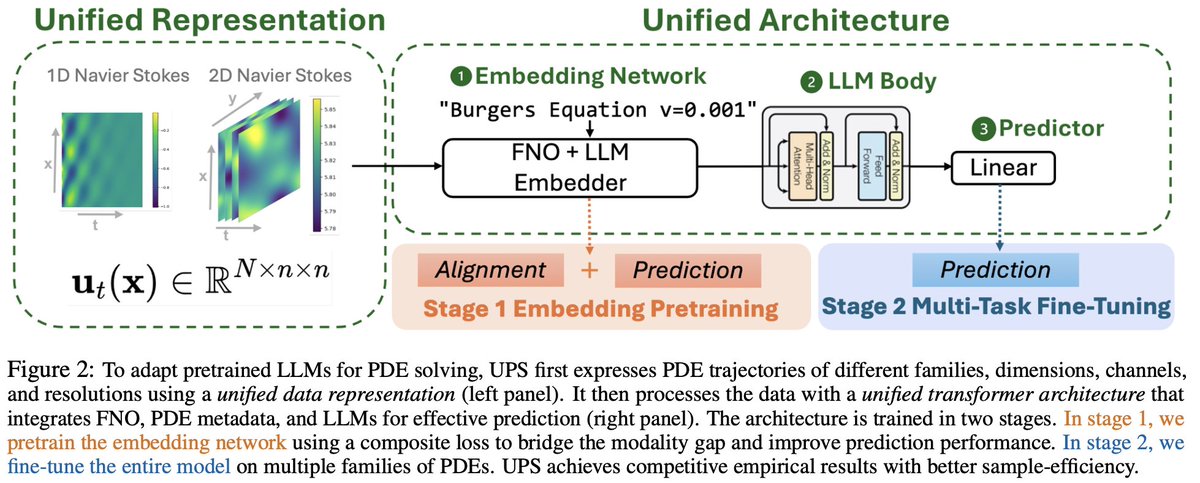
Introducing Unified PDE Solvers (UPS), a step towards efficiently building foundation models for PDE solvers (https://t.co/Akkbf4aZV9)! Starting from a pretrained LM, UPS tackles diverse spatiotemporal PDEs with SOTA accuracy, using ~20x less data and a single A6000! 🧵[1/x]
@boazbaraktcs I really enjoyed your blog post! This paper provides some empirical validation for your intuition in a two stage image task: https://t.co/9w84wDBfFU