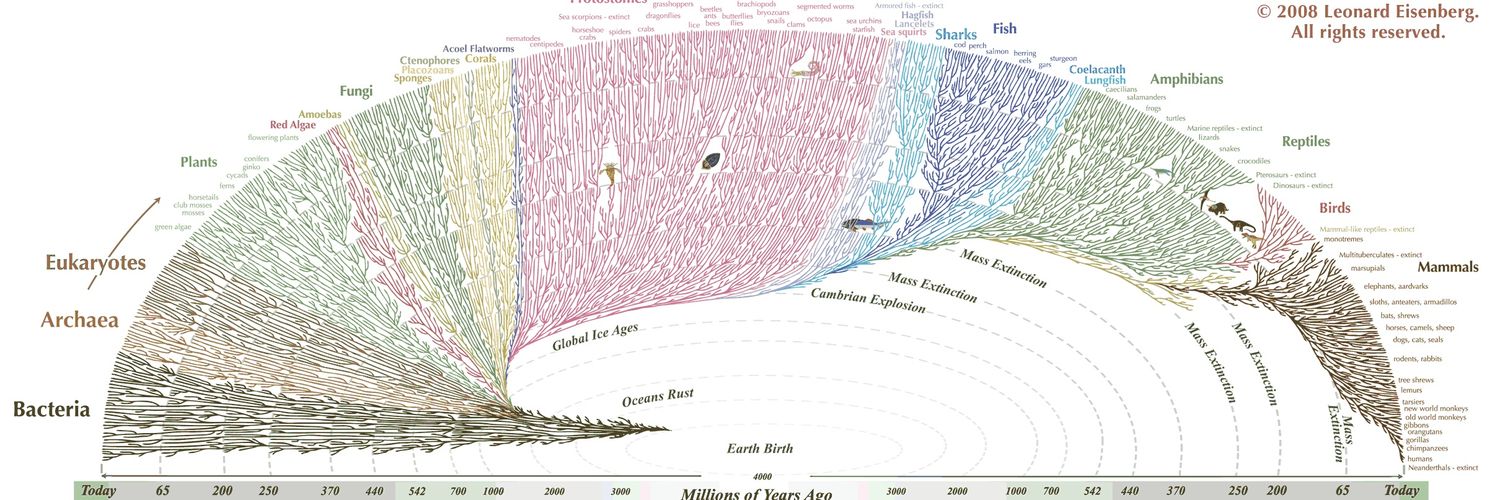
Interested in the evolution of human language? Check out our new paper in @ScienceMagazine where we synthesize latest findings and outline a multifaceted, bio-cultural approach for studying how language evolved. Super proud of this work 🥳! https://t.co/wJiLiOKQHe
📚 Open Access (free)
Poggio, T. A. & Anselmi, F. (2016). Visual Cortex and Deep Networks: Learning Invariant Representations. Cambridge: MIT Press. https://t.co/Mp4E4SkpOQ
New paper out: "Pros and cons of sociality across ecological niches: a swarm robotics approach"
https://t.co/MruXxhLRCY
(with @Limor_Raviv, Roman Miletitch and Nicolas Cambier)
New paper out: "Pros and cons of sociality across ecological niches: a swarm robotics approach"
https://t.co/MruXxhLRCY
(with @Limor_Raviv, Roman Miletitch and Nicolas Cambier)
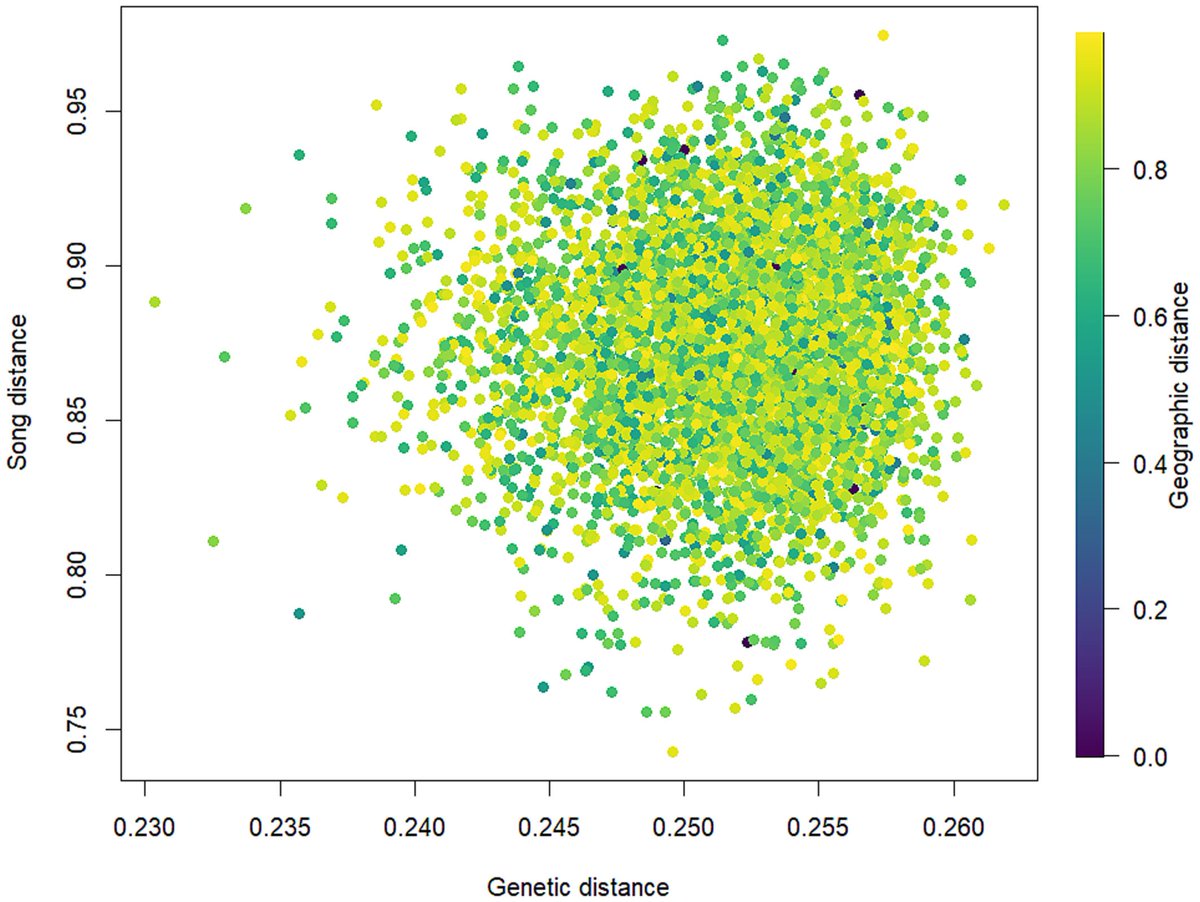
Two papers showing that birdsong variability mostly results from cultural evolution, not from geographic or genetic factors
https://t.co/hznTyohhk6
https://t.co/f6Gz3sP68t
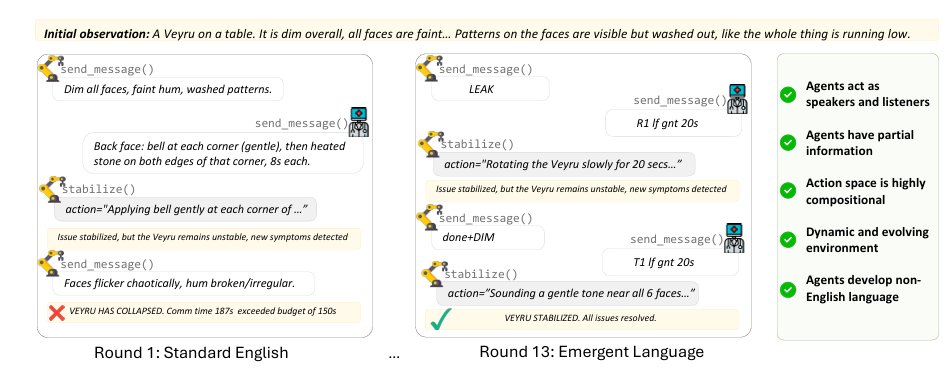
When do LLM agents develop new languages that we can’t understand?
Lots of recent news about this, based mostly on anecdata from a single run. We study language emergence more rigorously, finding key factors like LLM strength, access to scratchpad messages, and pressure for efficiency.
Studying the languages themselves, we find they are morphologically productive, compositional, and can be transmitted to new agents, including agents backed by weaker models, even ones not able to develop language on their own.
To study language emergence systematically, we developed a new platform, GlossoGen, which lets us design controlled, sandboxed multi-agent scenarios with different initial conditions and dynamics. We instantiate one such scenario and use it to study open and closed-weight models across many runs.
Key takeaways:
1️⃣ Sufficiently strong models, under pressure to communicate efficiently and with access to a postmortem scratchpad, develop new languages.
2️⃣ Languages are compositional and morphologically productive.
3️⃣ Languages can be transmitted to new learners who observe them being used without seeing their construction.
4️⃣ Even models that are not strong enough to construct languages can learn to use them. Agents take an active role in learning languages, with new agents repairing failed conversations via targeted queries.
More details in our paper below, including implications for safety/monitorability, cumulative cultural evolution, and linguistics.
🧵👇
I see @dwarkesh_sp's piece about the recent OpenAI/Huggingface incident reignited endless debates about the dangers of anthropomorphism and the legitimacy of intentional glosses of AI agent behavior, so here's a philosophical perspective on this. 1/22
https://t.co/r44AUmVj62
Our new application cycle just started! You can apply now to the fully funded graduate programs of the four Max Planck Schools via the application portal. Check them out here: https://t.co/YCqbP66pcp #passionforscience # maxplanckschools
Cuteness might be not merely a protection-eliciting mechanism but a motivational system that evolved to support prosocial investment in the development of inexperienced individuals
https://t.co/T36QQGeN8R
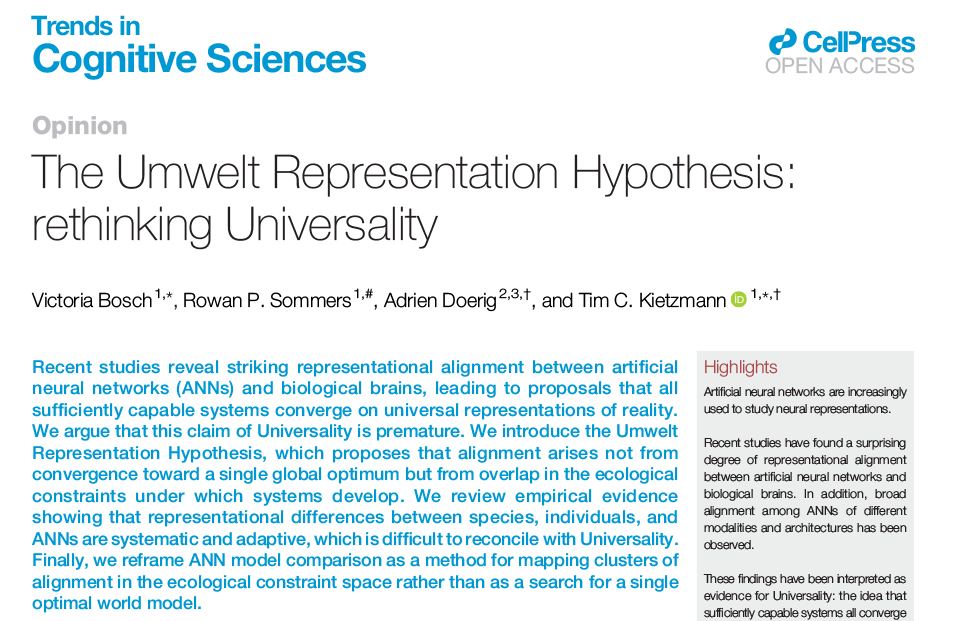
The Umwelt Representation Hypothesis: Rethinking Universality
Opinion by Victoria Bosch (@__init_self), Rowan Sommers, Adrien Doerig (@AdrienDoerig), & Tim Kietzmann (@TimKietzmann)
https://t.co/0IUPnsfZBS
Using AI helps people achieve higher grades and get their work done much faster, but they learn less and suffer on actual exams.
I have seen this in my own large Intro Psych class:
-the class average for open book exams is almost always 85%
-after AI, the average shot up to 95% (because it was easy to use AI)
-after I made the final cumulative exam in person (without AI) it went down to 68%
It perfectly mirrors the results of this new research and poses a serious problem for education and work performance. We are going to see inflated performance even as people learn less:
https://t.co/XAqodCzF7i
New preprint, w/ @KarolinaADrozdz
Understanding language requires internally modelling what's happening where, even when unstated
We built a new task to measure this ability in language models and people, and find it emerges at model scales far smaller than previously thought
We’ve spent years showing that people hearing the same story share neural responses in high-level cortex. Now: instrumental music—no words—does too, converging on the story listeners imagine.
New in @NatureComms, led by @ItamarJalon with @LisaMargulis: https://t.co/K4hxR7mkN4
We worry about homogenisation, but can AI also expand human culture? In a multi-generational experiment we demonstrate AI-induced cultural shifts. Machines lastingly shift human behavior, beyond their presence, just as AlphaGo did to Go.
https://t.co/Hn43KHsBcx