A humanoid doesn't need to speak English with its knees. But its language model might need a vocabulary for them.
Most robot VLAs bolt a continuous action expert onto a vision-language model. Holo-M, from Wenxin Shao and colleagues at Horizon Robotics, tries a different bet: put WHOLE-BODY MOTION inside the language model's token vocabulary.
A one-second humanoid action chunk has 30 timesteps and 96 dimensions. Encoding every joint value naively would create an absurdly long sentence. So Holo-M splits motion into four groups: end-effector poses, body joints, hand joints and base kinematics.
For each group, it keeps low-frequency motion with a discrete cosine transform, then uses residual vector quantization to encode the finer corrections. The whole second becomes 208 action tokens. Human egocentric videos supervise the end-effector pose group, while robot demonstrations supervise additional groups. Missing labels are MASKED OUT, not hallucinated.
Now the inference trick. Instead of predicting all 208 tokens one by one, the model unmasks tokens in PARALLEL within each body group, then moves to the next group. Eight rounds per group means 32 sequential decoding steps instead of 208. That's 6.5× fewer sequential steps, NOT a measured 6.5× wall-clock speedup.
On the SIMPLE humanoid simulation benchmark, one generalist Holo-M checkpoint succeeded in 143/180 rollouts versus 114/180 for Ψ₀. Its autoregressive sibling already reached 138/180, suggesting the shared tokenizer and training recipe explain much more of the gain than parallel decoding alone.
The data ablation is even better: without pretraining, the autoregressive model got 53/180. Add humanoid demonstrations: 119/180. Add egocentric human data: 138/180. A small change in open-loop action error hid a huge change in CLOSED-LOOP success.
Real-world evidence is narrower: a Unitree G1 completed 10/10 tabletop grasps and 8/10 move-pick trials, after 100 scene-specific teleoperation episodes per task. Inference ran on an RTX 5090, averaging 477ms at eight decoding rounds, while a separate whole-body controller handled execution. This isn't onboard end-to-end motor control, and the code is still marked coming soon.
My takeaway: the next big robot tokenizer might be an API contract between intelligence and embodiment. Give different bodies a common motion language, preserve which labels actually exist, and let the same model learn from humans AND machines without pretending they're mechanically identical.
https://t.co/8cLJKf5r5U
#HumanoidRobots #EmbodiedAI #VLA
Humanoid learning has a physics bug: make ground contact soft enough for gradients to behave, and your robot learns to run on a floor that acts like a mattress.
@USC /@ETH 's Bundled Contact Gradients takes the opposite bet. Keep stiff, hardware-like contacts in @nvidia Warp. When a foot impact exceeds 400 N, branch into ten nearby states, perturb foot position by 1 cm and velocity by 2 cm/s, simulate two control steps, then average the resulting states before backpropagating. Smooth the GRADIENT, not the ground.
The ablation is brutal. Policies trained with soft contact fell in all five MuJoCo transfers for each of four motions. At the stiff setting, zero falls across all four sets of five trials. Foot-penetration mismatch on Dance dropped from 13.5 mm to 2.9 mm.
Compared with PPO, the method needed over 10x fewer simulated samples. On Fight, transferred tracking error was 13.5 cm versus 34.3 cm. The team also demonstrated zero-shot motions on a real Unitree G1, though hardware success rates aren't quantified.
Caveat: foot-ground motion imitation, tuned bundling and extra GPU memory, not general manipulation.
The engineering takeaway: fix the learning signal at physical discontinuities instead of making physics less physical. @dyumanaditya
https://t.co/hldz2GXcXt
#HumanoidRobots #RobotLearning
What’s better than a humanoid playing ping-pong? Two playing doubles—and trying not to crash into each other 😁
Meet PingpongDuo: humanoid table tennis doubles 🏓
Check out the project and play with interactive 3D scenes
https://t.co/x0BatMNdjQ
Paper: https://t.co/N492sBfwFj
Gemini 4 Argon × Unitree G1
Unitree G1 just picked up a plastic bottle using Gemini 4 Argon.
No hard-coded motions. Just AI turning vision into action.
The future of robotics is getting real. 🤖
#PhysicalAI#Robotics#Gemini#Unitree
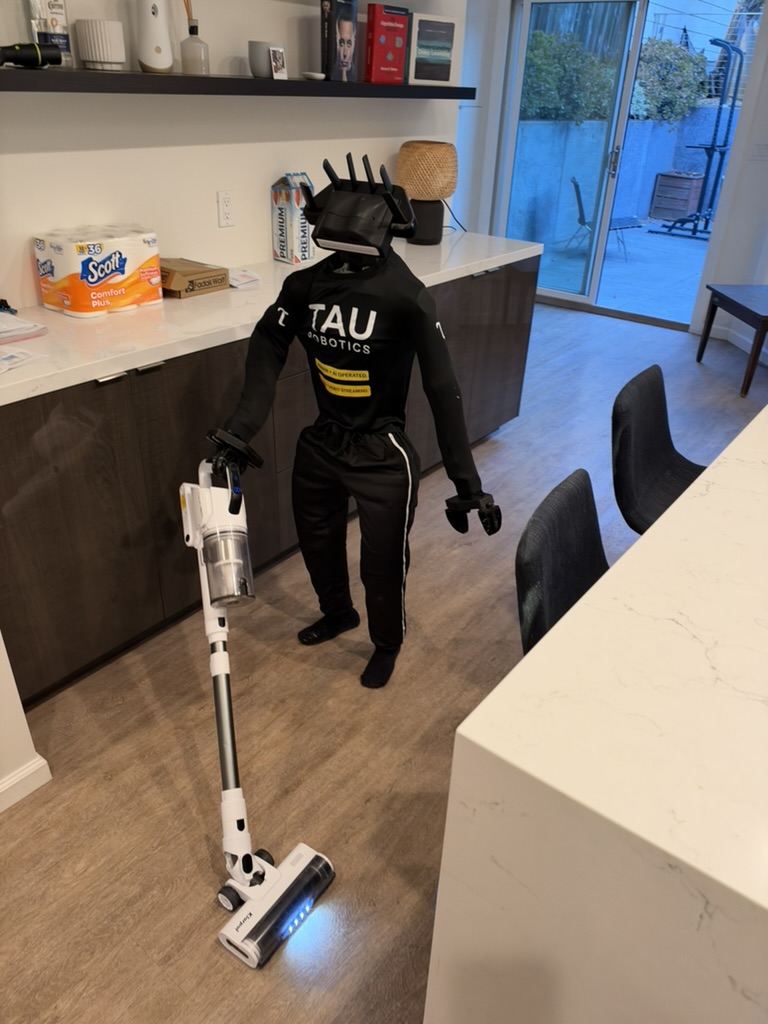
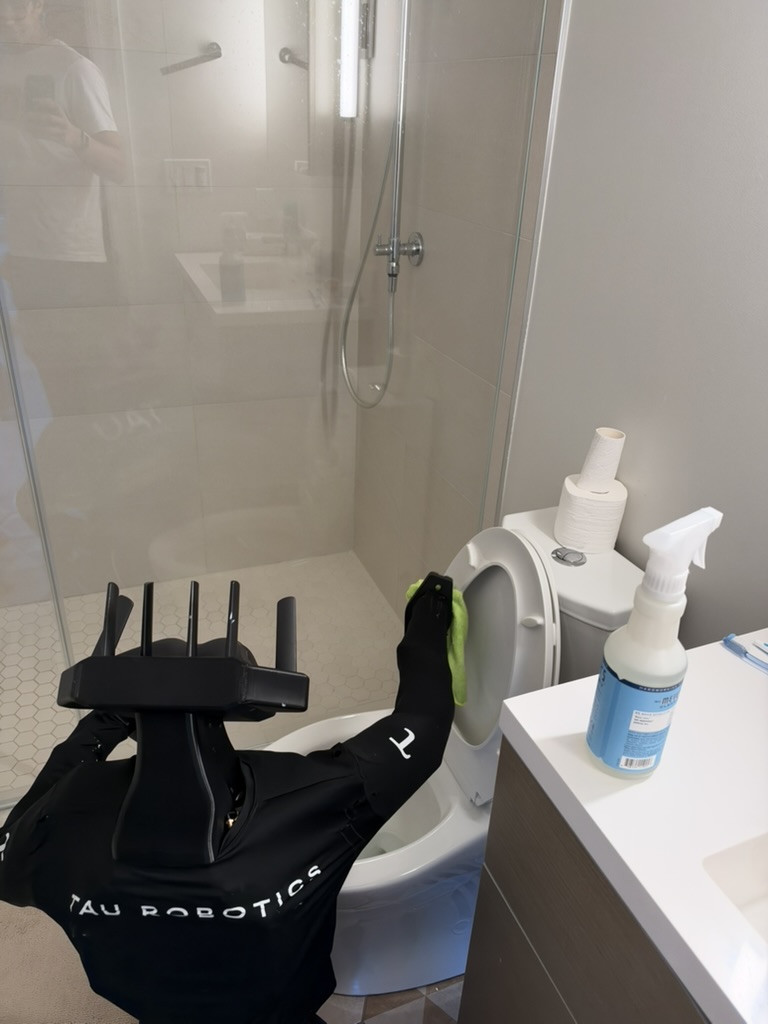
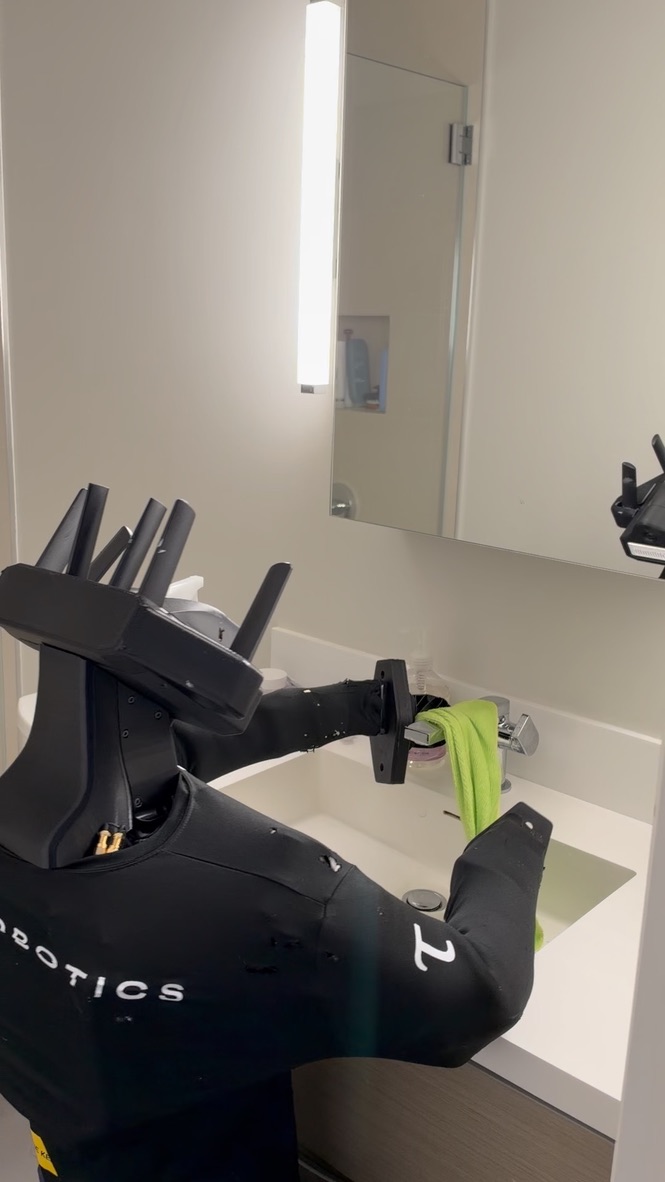
You can now book our humanoid cleaning service in Los Angeles at https://t.co/Brl42KyISx. If you don’t have an invite code yet, join the waitlist.
Watch our humanoids cleaning customers’ homes in the thread below.
I hired a humanoid robot to clean my SF apartment for $30/hour — and it runs on Qwen 3.5.
To my surprise, the cofounder came along, so I got the full rundown on how it works.
Excited to share 𝗕𝗥𝗔𝗖𝗘: a whole-body tracker for humanoids that can exert forces from diverse poses and adapt to varied terrains.
Humanoid whole-body trackers are typically trained to follow references recorded on flat ground, carrying nothing. As a result, they know 𝗻𝗲𝗶𝘁𝗵𝗲𝗿 𝘁𝗵𝗲 𝗳𝗼𝗿𝗰𝗲𝘀 𝘁𝗵𝗲 𝗿𝗼𝗯𝗼𝘁 𝗺𝘂𝘀𝘁 𝗲𝘅𝗰𝗵𝗮𝗻𝗴𝗲 𝘄𝗶𝘁𝗵 𝗼𝗯𝗷𝗲𝗰𝘁𝘀 𝗻𝗼𝗿 𝗰𝗮𝗻 𝘁𝗵𝗲𝘆 𝗮𝗱𝗮𝗽𝘁 𝘁𝗼 𝗱𝗶𝘃𝗲𝗿𝘀𝗲 𝘁𝗲𝗿𝗿𝗮𝗶𝗻𝘀. BRACE closes both gaps in a single tracker.
Our key innovation is a 𝗿𝗲𝗳𝗲𝗿𝗲𝗻𝗰𝗲-𝗮𝗱𝗮𝗽𝘁𝗮𝘁𝗶𝗼𝗻 𝗳𝗼𝗿𝗺𝘂𝗹𝗮𝘁𝗶𝗼𝗻. Given humanoid reference trajectories, we adapt them to the terrain and the commanded force, then train the controller on these adapted references. Tracking them naturally produces the stance and bracing needed to handle the terrain and exert the force (or compensate for external loads). 𝗧𝗵𝗲 𝗿𝗲𝘀𝘂𝗹𝘁𝗶𝗻𝗴 𝗰𝗼𝗻𝘁𝗿𝗼𝗹𝗹𝗲𝗿 𝗱𝗲𝗽𝗹𝗼𝘆𝘀 𝗱𝗶𝗿𝗲𝗰𝘁𝗹𝘆 𝗼𝗻 𝘁𝗵𝗲 𝗿𝗲𝗮𝗹 𝗿𝗼𝗯𝗼𝘁.
To know more, please visit our:
Project page: https://t.co/YXmt6GZoFp
Interactive demo: https://t.co/UP6CDAKr8C
More details in this thread🧵
1/n