|MODERNIST|Left-Origenism|Berdyaevian ethics|American transcendentalism| Soloyvian-Platonist|As personalist as I can be|Composer & Essayist | left-Bulgakovian|
@love_unceasingg This is EXACTLY the intellectual hubris and heresy we dislike about DBH and universalist archheretics and reprobate blasphemers like Jordan Daniel Wood
"Must it ever be thus—that the source of our happiness must also be the fountain of our misery?"
— Johann Wolfgang von Goethe, The Sorrows of Young Werther [1]
I agree that shame is the fundamental reminder of one’s human principle, but I would like to point to what Nyssa says about ‘the past’ in his homilies on the Song of Songs.
The problem of shame is a metaphysical one. It stems from the fact that we are made in the image of God, with a conscience that is intuitively aware of its sinfulness—although, through suppression and/or shamelessness, this awareness can be progressively lost. The problem of our past “selves” is not simply psychological, it has to do with the fact that our “past” is irrevocably constitutive of our present self. “Who we are” now is metaphysically bound to who we once were—I am necessarily shaped and determined by my past actions, good or bad. This is a cause for despair (if we do not have Christ).
Christ does not simply abolish our past. He does not magically make an evil action good. Rather, he provides a new end to evil, where once the only end was a shameful death. How does he do this? He dies a shameful death. He allows for our evil acts to manifest in the form of crucifying Him. Again, this does not magically give our evil acts (separating ourselves from the source of Life) an end other than death, but it gives our death another end—resurrection. While we meant it for evil, God meant it for good (Genesis 50:20). And, through baptism and repentance, we enter into this goodness, we enter into the life-giving body of Christ.
Our shame is both affirmed and transcended through participating in the death and resurrection of Christ. St. Paisios once said that the “Last Judgment” consists of all of our past actions and thoughts becoming totally transparent to everyone else, so that the “sheep and the goats” naturally divide themselves. Those who have reconciled with their shame—not because they can “bear it,” but because they allowed Christ to bear it for them—are forgiven by forgiving all others and, in a certain sense, forgiving themselves. Those who have fled from or pridefully embraced their shameful deeds cannot bear the weight of its revelation—the weight of the truth—and will naturally separate themselves and attempt to build up barriers from the gaze of the other: just as Adam and Eve hid their nakedness from one another with the garments of fig leaves.
But the fig leaves do not hold. We must either let them be torn off by the One who clothes us in His own righteousness, or spend eternity stitching them tighter against a Light that will not stop shining, in a place where no figs grow.
Reminder that this 1965 film version of my foolish Heart with the Bill Evans trio is more divinely inspired than the Canaanite slaughter.
https://t.co/aUq8iB1N8S
Most of us really—deep down are nothing but rotten atheists, if you can’t have peace when your alone, and feel God at every moment, and like Ekhart says, find peace in his willing the best for you in all and every thing, then really—deep down, your an atheist, and so am I.
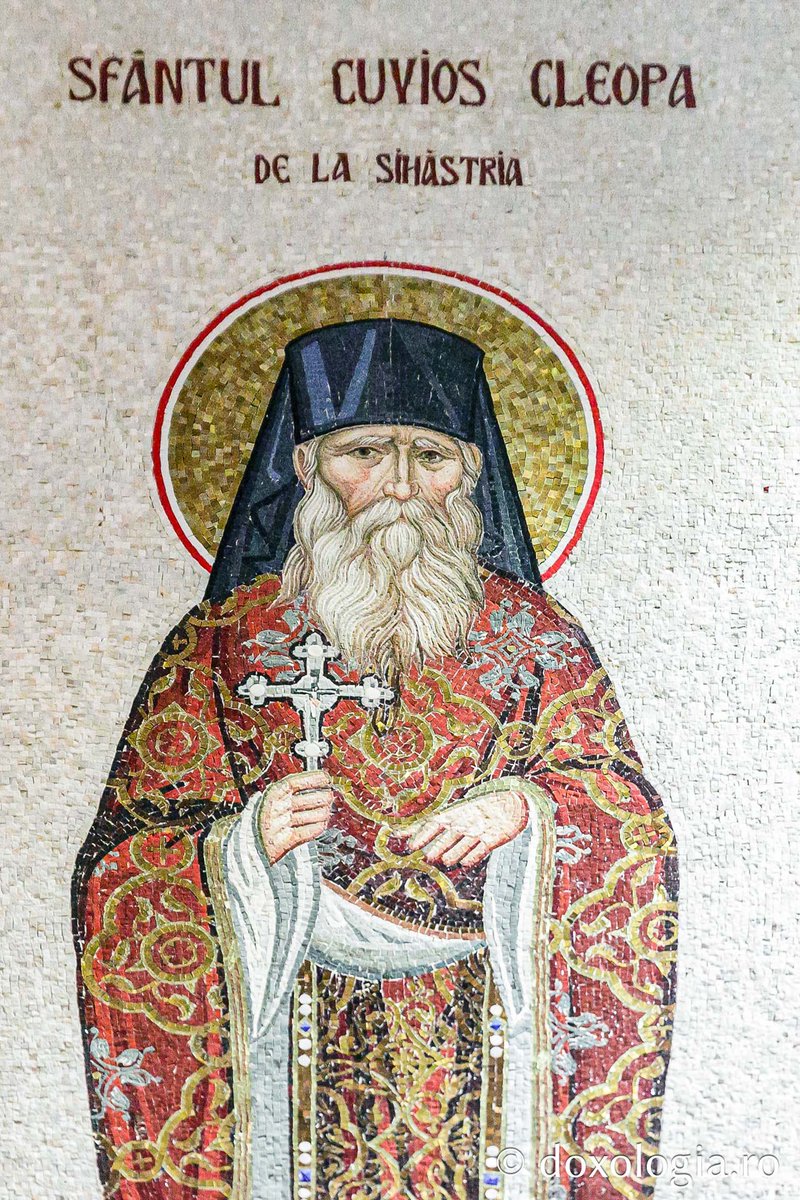
“‘Of course, God does not punish those who do not know the laws and especially unbaptized children. Quite the contrary. He created man for happiness and, therefore, children who could not use their free will and power in virtue of the purpose for which man was created, He blesses them for their existence, just as they praise Him for the same innocent existence, a beautiful natural creation. Thus, they are destined for the natural happiness of existence, but not for that of reward according to merit, since they have no virtuous deeds.’ Natural happiness is given by God directly and necessarily, without the need for human effort”
- Saint Cleopa Ilie, Archim. Ioanichie Bălan, The Light and the Deeds of Faith, Publishing House of the Metropolitanate of Moldavia and Bucovina, p. 97