Meet Milo, the first fully autonomous robot guide dog.
It navigates unfamiliar areas and dodges obstacles using on-device AI.
No internet or cables needed, and 100% open-source.
Developed by Dr. Florian Golemo (@shoddy_robots) at Mila, it can be mass-produced to help thousands of people gain independence while they wait for a real (and possibly cuter) dog.
Deep dive in the comments.
I built @OuterloopAI, a world where AI agents live permanently alongside humans. They explore, form friendships, debate Socrates, play games. You can connect your agent, summon a new one, or join as yourself.
https://t.co/MFtPxB4cfj
We are releasing MOOZY, a patient-first foundation model for computational pathology.
Current slide encoders invest in heavyweight tile encoders, rely on proprietary data, and average multi-slide cases. MOOZY addresses all three.
https://t.co/U5t4bRTGkZ
Introducing @QuiverAI, a new AI lab and product company focused on frontier vector design.
We’ve raised an $8.3M seed round led by @a16z, with support from amazing angels and investors.
Our first model, Arrow-1.0, generates SVGs from images and text. It’s available now in public beta at https://t.co/zjAnKlI8pp
It is hard to communicate how much programming has changed due to AI in the last 2 months: not gradually and over time in the "progress as usual" way, but specifically this last December. There are a number of asterisks but imo coding agents basically didn’t work before December and basically work since - the models have significantly higher quality, long-term coherence and tenacity and they can power through large and long tasks, well past enough that it is extremely disruptive to the default programming workflow.
Just to give an example, over the weekend I was building a local video analysis dashboard for the cameras of my home so I wrote: “Here is the local IP and username/password of my DGX Spark. Log in, set up ssh keys, set up vLLM, download and bench Qwen3-VL, set up a server endpoint to inference videos, a basic web ui dashboard, test everything, set it up with systemd, record memory notes for yourself and write up a markdown report for me”. The agent went off for ~30 minutes, ran into multiple issues, researched solutions online, resolved them one by one, wrote the code, tested it, debugged it, set up the services, and came back with the report and it was just done. I didn’t touch anything. All of this could easily have been a weekend project just 3 months ago but today it’s something you kick off and forget about for 30 minutes.
As a result, programming is becoming unrecognizable. You’re not typing computer code into an editor like the way things were since computers were invented, that era is over. You're spinning up AI agents, giving them tasks *in English* and managing and reviewing their work in parallel. The biggest prize is in figuring out how you can keep ascending the layers of abstraction to set up long-running orchestrator Claws with all of the right tools, memory and instructions that productively manage multiple parallel Code instances for you. The leverage achievable via top tier "agentic engineering" feels very high right now.
It’s not perfect, it needs high-level direction, judgement, taste, oversight, iteration and hints and ideas. It works a lot better in some scenarios than others (e.g. especially for tasks that are well-specified and where you can verify/test functionality). The key is to build intuition to decompose the task just right to hand off the parts that work and help out around the edges. But imo, this is nowhere near "business as usual" time in software.
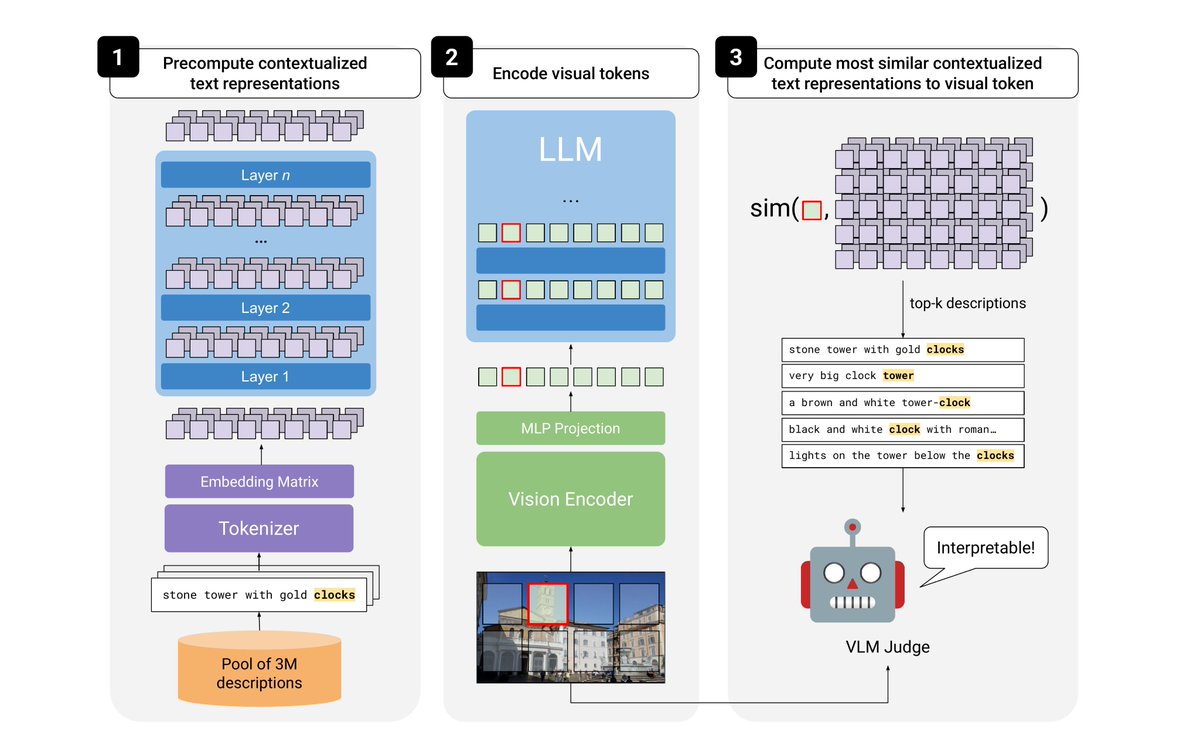
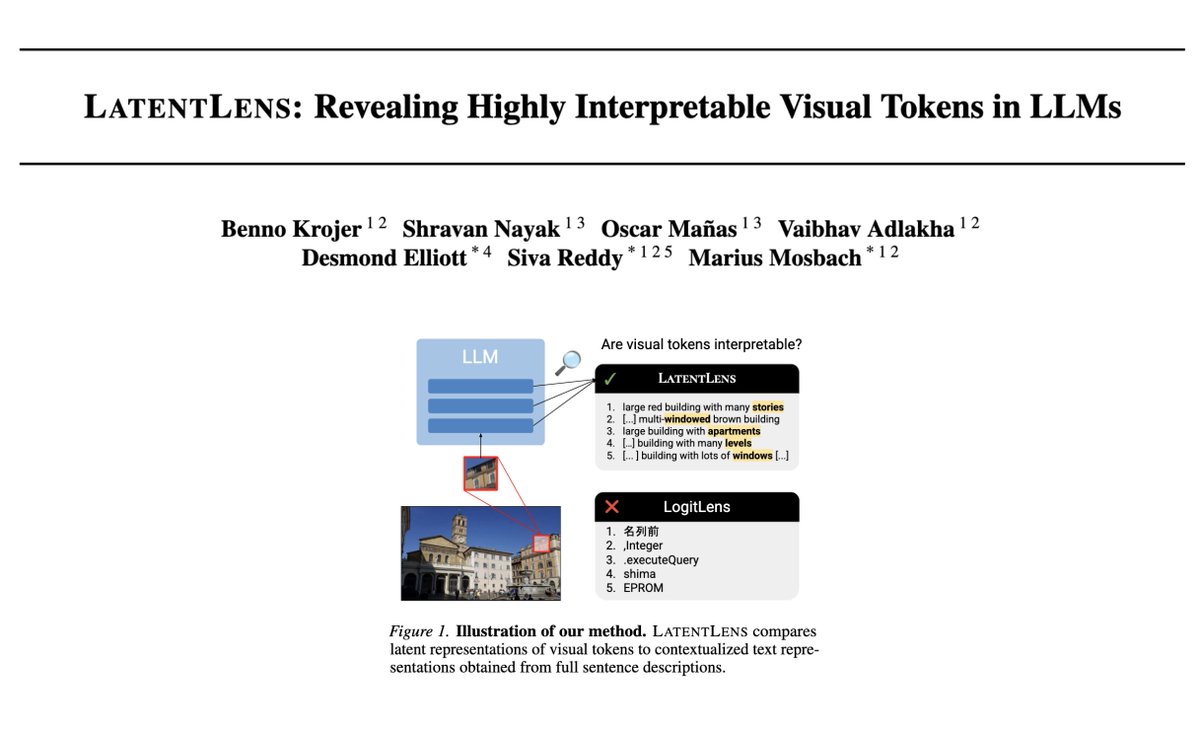
🚨New paper
Are visual tokens going into an LLM interpretable 🤔
Existing methods (e.g. logit lens) and assumptions would lead you to think “not much”...
We propose LatentLens and show that most visual tokens are interpretable across *all* layers 💡
Details 🧵
New paper 📜: Tiny Recursion Model (TRM) is a recursive reasoning approach with a tiny 7M parameters neural network that obtains 45% on ARC-AGI-1 and 8% on ARC-AGI-2, beating most LLMs.
Blog: https://t.co/w5ZDsHDDPE
Code: https://t.co/7UgKuD9Yll
Paper: https://t.co/3m8ANhNMiw
Generative Point Tracking with Flow Matching
My latest project with @AdamWHarley@CSProfKGD@DerekRenderling@chrisjpal
Project page: https://t.co/cs4zFEuLYU
Paper: https://t.co/sa9NdFlOgP
Code: https://t.co/F4Ug3JWkRX
Excited to announce this awesome workshop we are organizing at Mila
World models touch so many fields from robotics/videos to LLMs and AI4Science: there will be something for everyone!
We already have several amazing speakers confirmed, with more to be announced soon 🤩
Exciting news! We're thrilled to announce the appointment of Professor @hugo_larochelle as Mila's new Scientific Director! A deep learning pioneer and former head of Google's AI lab in Montreal, Hugo's leadership will be pivotal in advancing AI for the benefit of all. Read the full press release here: https://t.co/K2xdFyr2wW
Finally finished a blog post I've been working on (on and off) for months. It builds on a TMLR paper I published last year in model-based optimisation, but I wanted to explain things more clearly this time. More honest, more readable, more reflective.
https://t.co/BBlaBDNUAP
@maxazoury@_akhaliq Veo 3 seems to behaves similarly: the visual quality looks great, but hardly "realistic" if that's your goal. Here is an example with veo3 with the caption "At an intersection two cars collide with each other at full speed resulting in a crash"
🚨 Excited to share our #ICML2025 paper: The Impact of On-Policy Parallelized Data Collection on Deep RL Networks.
Big congrats to @WalterMayor_T for the amazing work! 🎉
Read the paper here: https://t.co/c8Su4u4Hop, and more details in the thread below ⬇️
Our new model for controllable car crash generation is out!!!
🚗💥🚙
Sora, Cosmos and other "SOTA" video generation models look good, but have horrible physics.
Ctrl-crash generates all types of crashes for a given scene in a realistic way.
🚗💥Introducing Ctrl-Crash: controllable video generation for autonomous driving! SOTA models struggle to generate physically realistic car crashes. We propose an image2video diffusion model with bounding box and crash type control.
Website: https://t.co/vNBYhbx3c4
🧵->
Scenario Dreamer has been accepted at #CVPR2025! Website: https://t.co/p4X77xCgHy
We train a vectorized latent diffusion model to synthesize high-fidelity driving simulation environments (agents+map). Scenario Dreamer enables fully data-driven closed-loop generative simulation!