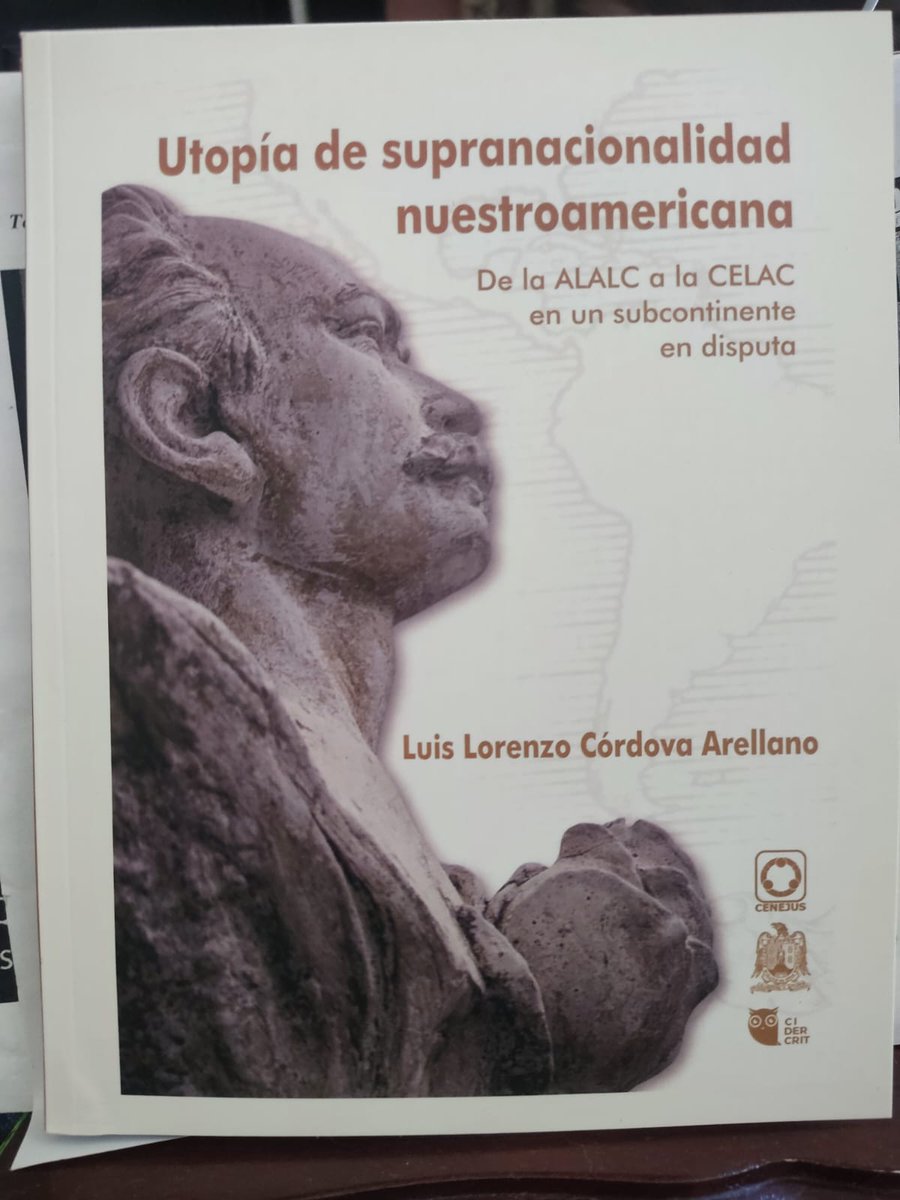
¡Paren todo, ya llegó, ya está aquí el libro tan esperado!
https://t.co/y3ySQDXFGR
Un agradecimiento especial a Alejandro Rosillo que hizo esto posible. 🙌🏾
Back in March I wrote 👇 that Iran was winning, and not only strategically but tactically too, but I genuinely didn't expect it would eventually lead - 3 months later - to a complete US surrender.
Because, make no mistake, this is what the "deal" that was just signed is: a complete US surrender, the likes of which it has never signed in its entire history.
Let's compare it with the 2 other most famous US capitulation agreements: the Paris Peace Accords with Vietnam in 1973 and the Doha Agreement with Afghanistan in 2020.
The most significant difference is that both the Vietnam and Afghanistan deals, despite being documents in which the US effectively conceded defeat, contained at least some face-saving provisions for the US.
For instance, in the Vietnam deal, North Vietnam accepted the continued existence of the South Vietnamese government, promised peaceful reunification, agreed to maintain the 17th parallel as a dividing line, and accepted international supervision. These were real (if ultimately unenforceable and unenforced) concessions.
Same thing with the Taliban: they guaranteed Afghan soil would never again be used to attack America, and agreed to negotiate a political settlement with the then Kabul government. The latter commitment was never seriously pursued - but both existed and gave the US a narrative: at least it could claim its post-9/11 objective had been secured on paper.
The deal with Iran is completely different: it doesn't contain a single meaningful concession from Iran. The reopening of the Strait of Hormuz is merely the reversal of a wartime measure they took in response to the US-Israeli attack. And the "reaffirmation" that Iran won't build nuclear weapons is just this: a reaffirmation of a position Tehran has had for decades.
As a reminder, there is a 2003 fatwa by Khamenei that forbids the production and use of any form of weapon of mass destruction, so "reaffirming" it costs Iran exactly nothing.
Meanwhile, the list of concessions and costs on the US side is staggering:
- Permanent end to the war on all fronts, including Lebanon
- A US pledge to respect Iran's sovereignty and not interfere in its internal affairs
- Full lifting of the naval blockade
- Withdrawal of all US forces from the region within 30 days after the final agreement
- A $300 billion reconstruction and development fund for Iran
- Termination of all sanctions: UN, IAEA, and every unilateral US sanction, primary and secondary
- Immediate Treasury waivers for Iranian oil exports and all related banking, insurance, and shipping services
- Full release of all frozen Iranian funds and assets, to be spent however Iran's central bank sees fit
So very concretely this is the US agreeing to 1) end the war and withdraw its forces, 2) end all hostile measures towards Iran that were in place before the war (the sanctions, the frozen funds, the interference in internal affairs, etc.), and 3) send hundreds of billions of dollars in what are, effectively, war reparations.
If that's not a complete surrender, I genuinely don't know what is.
And, cherry on the cake, in an absolutely perfect touch of historical irony, Trump literally signed this surrender agreement in Versailles (I'm not kidding: https://t.co/VLSduQtRJW).
History rhymes, but rarely this loudly, all the more because the historical 1919 Versailles Treaty was also signed in June!
Of course, it's fair - very fair, even - to suspect that Trump will not honor this deal. If he's proven anything in his political career, it's that he is agreement-incapable. Plus there's the Israel dimension: the document does say that the war should "end on all fronts, including Lebanon," but Israel has already made clear it considers itself unbound by the agreement.
As such, what I suspect will happen - as I wrote the day the MOU was announced (https://t.co/Hbh669Gvta) - is that the deal will split in two. The immediate concessions - blockade lifted, oil flowing, funds unfrozen - will happen (some already have) and probably stick, because reversing them would mean restarting the very war the US humiliatingly lost.
The deferred provisions - the negotiations on nuclear, the sanctions schedule, the reconstruction fund - will probably enter permanent limbo because, as I wrote then, the US won't get better terms on nuclear after showing they couldn't get them on the battlefield. And given sanctions relief and the $300 billion are tied to a final deal that requires resolving the nuclear question, and the nuclear question requires leverage the US no longer has, the whole structure is circular and never-ending.
On the Israel-Lebanon question, things are trickier. Israel, in some way, finds itself in a South Vietnam situation with its patron having negotiated a surrender over its head. The difference is that Thieu was too weak to sabotage the Paris Accords, whereas Netanyahu isn't: his ability to escalate in Lebanon gives him a de facto veto over the deal's most fragile provision.
Realistically speaking though, it's hard to imagine the US willing to restart the war, which is its own form of deterrence: if Israel keeps striking Lebanon in violation of the ceasefire, Iran can now retaliate with far greater confidence that the US won't come to the rescue - which ought to give Israel pause.
In effect, the end result is that the US security umbrella over Israel just got a lot thinner. Which means that, for the first time in a long time, Israel has to calculate the cost of provoking Iran without assuming the US will absorb the consequences. This points towards restraint, at least for any rational actor. But then again, the same government that dragged the US into this war in the first place has not exactly been a model of strategic rationality...
In any case, it's undeniable that Iran has just achieved something no other country has managed, ever: it withstood the full force of the US and Israeli military machines, and extracted a surrender agreement that makes the Paris Peace Accords look like a US victory by comparison.
To refer back to the title of my article below 👇: this was the first multipolar war, and Iran has definitely earned its place as one of the poles.
I fully understand. It is extremely disorienting when Trump actually makes sense. But what he is saying is true. This warning - that the overuse of financial sanctions would cause a rush away from the dollar - was first stated by Jack Lew, under Obama.
In a major 2016 speech, Lew warned against "sanctions overreach," arguing that excessive use of sanctions could encourage countries and companies to avoid the US financial system and the dollar. He said:
"The more we condition use of the dollar and our financial system on adherence to U.S. foreign policy, the more the risk of migration to other currencies and other financial systems grows."
Unreal: the symbolism of Trump signing a surrender agreement at Versailles in which the US agrees to pay massive reparations is just too perfect.
I wouldn't be surprised if Macron weaponized Trump's complete ignorance of history and told him something like: "Mr. President, Versailles is where the most consequential deal of the 20th century was signed. Yours deserves the same stage."
Either that or Macron stumbled into the perfect historical parallel through sheer obliviousness - which, knowing him, is actually even more likely.
Iran and Oman will control the Strait of Hormuz. How can this be spun as anything other than a major US defeat?
‘The Islamic Republic of Iran will conduct dialogue with the Sultanate of Oman to define the future administration and maritime services in the Strait of Hormuz in discussion with other Persian Gulf littoral states in line with the applicable international law and the sovereign rights of coastal states of the Strait of Hormuz.’
(Point 5 of the Memorandum of Understanding published by the USA)
Before Trump started this daft and foolish war for Israel, the Strait of Hormuz was completely free and open, with Iran imposing no restrictions.
After Trump’s daft and foolish war for Israel, Iran and Oman will essentially control the Strait. Iran showed its capabilities in being able to blockade it and upend global capitalism, and now the US is forced to concede.
More staggering failures brought to you by the neocon disasters that make up this administration, and the Israel lobby.
‘If we didn’t do this deal…we could have dropped bombs for another 3-4 weeks or two years…you would never have the Strait of Hormuz open.’
—Donald Trump
The clearest confession that the US had to surrender its red lines to stop global capitalism from imploding.
Prof. Mohammad Marandi just exposed the reality on Al Mayadeen: Iran’s conditions have stayed exactly the same from the very beginning — firm, unchanged, and non-negotiable.
All the bluster, threats, and last-minute demands from Trump — escalations against Lebanon, Iran, and the Strait of Hormuz — were nothing but pure distraction and negotiating theater.
They delayed things but achieved zero.
The US was forced to drop its extra conditions and crawl back to the original framework.
Frozen Iranian assets are being released.
Sanctions relief on our energy exports is happening.
The war on Lebanon is ending.
This deal reflects the understandings Iran has held all along. Iran dictated the terms.
The United States has lost.
The Resistance Axis held strong with zero concessions.
Victory belongs to those who resist.
🇮🇷🇺🇸 BREAKING: Iran's Mehr News Agency has released all 14 clauses of the MoU with the U.S.:
1: Permanent and immediate cessation of war on all fronts, including Lebanon.
2: The US commitment to non-interference in Iran's internal affairs and respect for the sovereignty of the Islamic Republic of Iran.
3: Complete lifting of the naval blockade within 30 days.
4: The US commitment to withdraw its forces from around Iran.
5: Reopening of the Strait of Hormuz within 30 days under Iranian arrangements.
6: Suspension of sanctions on the sale of oil, petrochemical products, and derivatives, and full access of Iran to its financial resources.
7: The necessity for the US and its allies to present reconstruction plans for Iran amounting to at least $300 billion.
8: 60 days of negotiations to reach a final agreement based on nuclear issues and the complete lifting of primary, secondary, US sanctions, and UN Security Council and IAEA Board of Governors resolutions.
9: Reiteration of Iran's commitment under the NPT treaty not to produce nuclear weapons.
10: During the negotiation period, the US has committed not to add forces in the region and not to impose new sanctions.
11: Release of $24 billion of Iran's blocked funds during the 60-day final negotiation period. Half of this amount must be made available to Iran before the start of negotiations.
12: Formation of a supervisory mechanism to implement the agreement.
13: The final agreement will be approved by a UN Security Council resolution.
14: Final negotiations will not begin before the release of half of Iran's blocked funds, suspension of Iran's oil sanctions, and lifting of the naval blockade, and the final agreement will only cover the fate of enriched materials and enrichment, lifting of sanctions, and Iran's economic reconstruction plan. Discussions about Iran's missile program and support for resistance groups are definitively removed from the agenda.
🇷🇺🇨🇳 Russia and China are completing the world’s first trans-border cable car between Blagoveshchensk and Heihe.
The terminal is designed as a giant iceberg surging forward — 26,000 square meters, filled with natural light thanks to Blagoveshchensk’s 300 sunny days a year.
The 976-meter line crosses the border in just 2.5 minutes. The full journey takes only 6 minutes. Twelve passport control booths. Capacity: 5,500 passengers daily — up to 2 million per year. Some cabins will feature glass floors and AI assistants.
While the empire bombs and sanctions, Russia and China keep building bridges — literally.
This is multipolar reality: integration, innovation, and shared progress.
The future belongs to those who build.
TOTAL IRANIAN VICTORY
FAILED U.S GOALS BEFORE THE WAR
❌ Regime Change
❌ Remove all Enriched Uranium
❌ Dismantle all Nuclear Facilities
❌ Reduce Iran’s Ballistic Missiles
❌ Stop Iran’s Support of Resistance
❌ Take control of Iran’s Oil
FAILED U.S GOALS DURING THE WAR
❌ Control Strait of Hormuz
❌ Invade Kharg Island
❌ Take Iran’s Nuclear Dust
❌ Implement a Base near Isfahan
IRANIAN GAINS DUE TO WAR
✅ Unfreezing Assets
✅ Sanction Relief
✅ Israel Leave & Stop Bombing Lebanon
✅ Control over Strait of Hormuz
✅ U.S Leave Middle East
The most brutal part is not that China is using AI to sort garbage.
It is that China has pushed waste management so far that the old problem has reversed.
China used to worry about having too much garbage to process.
Now some waste-to-energy plants are facing the opposite problem:
not enough garbage.
Previously sealed landfills may even have to be reopened, not because China failed, but because waste has become fuel, feedstock, data, and part of an industrial recycling loop.
This is what China does best.
It takes the ugliest, dirtiest, most ignored corner of urban life — garbage — and turns it into engineering, automation, energy recovery, environmental governance, and industrial optimization.
Even trash gets absorbed into the machine.
In many countries, garbage is where governance collapses.
In China, even garbage becomes a system.
💢 Iranian Foreign Minister Abbas Araghchi says that under a final U.S.-Iran agreement, services provided in the Strait of Hormuz “will no longer be free of charge,” adding that the future administration of the strategic waterway “will never be the same as in the past.”
Araghchi said international law does not permit the collection of transit tolls, but that charging for services is legal and that a final agreement will formally establish a new framework governing the strait. He said the deal would clarify Iran’s role in administering Hormuz and require payment for services that were previously provided free of charge.
He added that there may different arrangements for traffic through Hormuz during the initial 60 days while a final deal with the US is negotiated. Iran would guarantee the safe passage of all commercial and civilian vessels, while military ships would be subject to separate arrangements.
Those are good examples to raise, but I think they actually support the original point rather than undermine it, depending on what we mean by "empire."
China has had unbroken civilizational continuity for thousands of years, yes. But not as one empire.
The Han fell.
The Tang fell.
The Song fell to the Mongols.
The Yuan fell.
The Ming fell to the Qing.
The Qing collapsed in 1912 after a century of humiliation, foreign occupation, and internal collapse.
What persisted was a civilization, a writing system, a cultural continuity, not a single unbroken imperial structure.
Each dynasty rose, expanded, became rigid, faced internal contradiction or external pressure, and fell. Then something new was built on the ruins, sometimes by outside conquerors who were themselves absorbed.
That's not a counterexample to "empires end."
That's the pattern repeating itself for three thousand years, with remarkable consistency.
Persia is the same story.
The Achaemenid Empire fell to Alexander.
The Parthian Empire fell to the Sassanids.
The Sassanid Empire fell to the Arab conquest in the 7th century, one of the most total imperial collapses in history.
Then Safavid Persia, then Qajar, then Pahlavi, then the 1979 revolution.
Iran as a continuous cultural and linguistic identity is real and remarkable. But it has been through more total imperial collapses than almost anywhere on earth.
The Ottoman Empire, six centuries, collapsed completely after World War I, redrawn entirely by outside powers.
India: the Mughal Empire, one of the largest empires in human history, was reduced to a figurehead by the British East India Company and formally ended in 1858. Before that, the Maurya, the Gupta, dozens of regional empires, all rose and fell.
So I'd actually push back gently: I don't think these examples show empires lasting forever.
I think they show something more specific: civilizations can persist for millennia through cycles of imperial rise and collapse, often by absorbing their conquerors, rebuilding, and continuing under new political forms.
Which is actually a more interesting point than mine, because it suggests the relevant question for the American case isn't just, "Does the empire end?"
It almost certainly does. Nothing has shown otherwise.
The real question is:
What civilizational continuity, if any, persists through that ending, and what gets built on the other side?
China, Iran, and India all have answers to that second question that go back millennia. They had deep cultural, linguistic, religious, and institutional continuities that outlasted any individual dynasty or empire.
Does the United States have an equivalent?
Does it possess a civilizational core that exists independently of the imperial structure, one capable of surviving its end and rebuilding into something else?
That is a much harder question than, "Will the empire end?"
And I think it's the more important one.
Every empire in history has ended.
Not one has been permanent.
Not one has successfully convinced history to make an exception for it.
Not one has found the formula that converts sufficient brutality or sufficient prosperity into permanence.
They end because the contradictions they generate, the inequality, the extraction, the violence required to maintain the distance between what the system promises and what it delivers, accumulate past the point that management can contain.
The American empire is not different.
It is not exempt.
The signs of what historians recognize as late-stage imperial stress are not subtle right now.
The question is not whether it changes.
The question is whether the people inside it are organized enough, clear-eyed enough, and committed enough to shape what it changes into.
Or whether they remain passive long enough that the changing is done for them, by the chaos that fills the space that organized people failed to occupy.
History doesn't wait for people to be ready.
It rewards the ones who decided to be ready anyway.
The trillion-dollar project bought them time.
The time is running out.
What you do with what's left is the only question that has ever mattered.
“Las resoluciones de la AG-ONU demuestran que el mundo entero apoya a Cuba y repudia el régimen de sanciones expresamente prohibidas por el derecho internacional, al igual que la interferencia de un Estado en los asuntos internos de otros Estados.”
@mylaibm@crivlugo
🔴🇨🇺 DECLARACIÓN URGENTE POR CUBA
"Solidarizarse con Cuba hoy es hacerlo también con el respeto al derecho internacional [...] Sencillamente, la humanidad tiene mucho que perder".
🇵🇷 Más de 200 personalidades de Puerto Rico —entre académicos, periodistas, artistas y líderes políticos— han dado su firma para mostrar su rechazo a las amenazas de una agresión militar por parte de Estados Unidos contra Cuba.
En una "declaración urgente" publicada hoy en @ElNuevoDia, la iniciativa, que busca llegar a las 2,000 firmas, expresa además su repudio a las políticas de bloqueo contra la mayor de las Antillas.
🇮🇷🇺🇸 University of Chicago political scientist Robert Pape says “we’re about to enter the period of maximum leverage for Iran.” He told CNN that as global oil inventories hit a projected “cliff” in late July and early August, Tehran’s bargaining power will surge. “Why would it cut a deal when its leverage is about to grow?” he asked.
@ProfessorPape
FIFA ha rechazado la camiseta de la Copa Mundial de Haití, argumentando que era demasiado "política".
En la camiseta, Haití conmemora la liberación de su pais del colonialismo, el establecimiento de la primera nación negra del mundo y la abolición de la esclavitud.
El imperio occidental nunca perdonará a Haití por ser la primera nación en liberarse del colonialismo y dar ejemplo revolucionario a todas sus demás colonias.
¡Viva el pueblo de Haiti, vivan los libertadores anticoloniales Toussaint Louverture y Jean-Jacques Dessalines!
Trump is once again talking about Kharg Island and saying we can take it "at a time of our choosing."
He's not wrong. We can get troops on that island.
But he's not telling you what happens next.
Kharg Island is 16 miles off the Iranian coast. Iran has every square foot of it registered for artillery and rocket fire. They've spent the last three months laying anti-personnel mines on the beaches, pre-deploying shoulder-fired surface-to-air missiles, and moving IRGC troops into hardened positions. They know we might be coming.
Every one of our ships in our assault force is 47 seconds from an Iranian anti-ship cruise missile. Every Marine on that island is within rocket artillery range of a coastline that runs 1,500 miles. We can't suppress that effectively even if we used all of our forces
I flew CH-53E helicopters in Desert Storm, and I know what it means to put troops in a fixed position on a small island with no room to maneuver and no friendly territory within reach. The military term for that is a kill box. The political term is leverage. The human term is a body bag.
The analysts are being careful in how they are framing it. Ryan Brobst and Cameron McMillan of the Foundation for Defense of Democracies, which is about as hawkish as think tanks get, wrote in March that a seizure and occupation "is more likely to expand and extend the war than it is to deliver any sort of decisive victory." Former CENTCOM commander Joseph Votel said troops on the island would be "very vulnerable" and would require massive logistical backup. Malcolm Davis of the Australian Strategic Policy Institute put it more plainly: "I think the Iranians can probably sit back and attack Americans on Kharg Island, and casualties will mount up."
That's the politically correct version.
Here's what they're not saying out loud: Iran has FPV drones. The same camera-equipped drones being used by the millions in Ukraine. If our troops land on that island, Iranian drone footage of American casualties will be on every screen in the world within hours. Trump will own every frame of it.
Iraq bombed Kharg Island for four straight years during the Iran-Iraq War. From 1982 to 1986, but they never put a single soldier on it. They couldn't. The Iranians rebuilt and kept exporting oil. That's the historical record on what "taking Kharg" actually means.
And here's the part that makes even less sense: seizing the island doesn't open the Strait of Hormuz. Kharg is 300 miles from the strait. The Iranians mine the strait from their southern coastline. You'd have to suppress 1,500 miles of Iranian coast to fix that problem. Kharg is just a political symbol, not a solution.
We can bomb it into rubble. We've already struck over 90 targets there. Trump can destroy every oil facility on that island from the air, permanently. That's a real option with real consequences for Iran's economy and real consequences for global oil markets.
But putting Americans on the ground 16 miles from the Iranian coast, surrounded by water, within range of everything Iran has left?
That's not a strategic or tactical military operation. That's just a sacrifice of American lives.
Are you OK with that?
🇨🇳China advirtió con claridad a la UE.
“No somos un país pequeño al que podéis disciplinar desde Bruselas.”
La Unión Europea quiere sancionar a empresas chinas, turcas o indias que no sigan su guion anti-Rusia. China responde con hechos: tiene capacidad industrial, cadenas de suministro y mercado para que cualquier sanción duela en ambos lados.
Mientras Europa sigue actuando como si controlara la economía mundial, China recuerda una realidad simple: el mundo ya no gira alrededor de Bruselas.
Esto no es amenaza.
Es la nueva realidad multipolar.
¿Crees que la UE aprenderá la lección o seguirá con sanciones que solo se disparan en el pie?
When Obama bombed Libya, the justification was "humanitarian intervention." "Protection of civilians." "Responsibility to protect." The language of international law and moral obligation.
Libya was subsequently destroyed. It has open slave markets today. The humanitarian outcome was catastrophic.
But the language was immaculate. The syntax was perfect. The suits were pressed and the speeches were moving and the Nobel Peace Prize sat on the shelf while the drones flew.
Trump bombs things and says it's about the oil.
In terms of honesty, pure, raw, unmediated honesty about what American power actually does, Trump is more accurate than any of his predecessors.
This is not a defense of Trump.
This is an indictment of everyone who made the polished version seem acceptable.
The lie was always more dangerous than the liar currently in office.
Because the lie had good manners.
Empires in decline tend to drop the mask, not because they become more honest, but because maintaining the mask requires resources, coordination, and a functional ruling class capable of sustained strategic thought.
Late-stage empires get cruder.
Not more evil. Cruder.
Less able to sustain the complexity of the justificatory architecture.
Less able to recruit the talented people needed to build and maintain it.
Less able to coordinate the allies needed to give it international legitimacy.
Trump is not the cause of that crudeness.
He is its symptom and its accelerant.
The empire was already losing the capacity to sustain the mask when he arrived.
He simply has no interest in trying.
What you are watching is not a uniquely dangerous man seizing control of a healthy institution.
You are watching a hollowed institution find the leader it deserved.
The man and the moment are perfectly matched.
That is what makes it, in the most grim possible sense, historically coherent.





![ldejesusreyes's tweet photo. 🔴🇨🇺 DECLARACIÓN URGENTE POR CUBA
"Solidarizarse con Cuba hoy es hacerlo también con el respeto al derecho internacional [...] Sencillamente, la humanidad tiene mucho que perder".
🇵🇷 Más de 200 personalidades de Puerto Rico —entre académicos, periodistas, artistas y líderes políticos— han dado su firma para mostrar su rechazo a las amenazas de una agresión militar por parte de Estados Unidos contra Cuba.
En una "declaración urgente" publicada hoy en @ElNuevoDia, la iniciativa, que busca llegar a las 2,000 firmas, expresa además su repudio a las políticas de bloqueo contra la mayor de las Antillas.](https://pbs.twimg.com/media/HKnpjk6bMAAMnkR.jpg)


