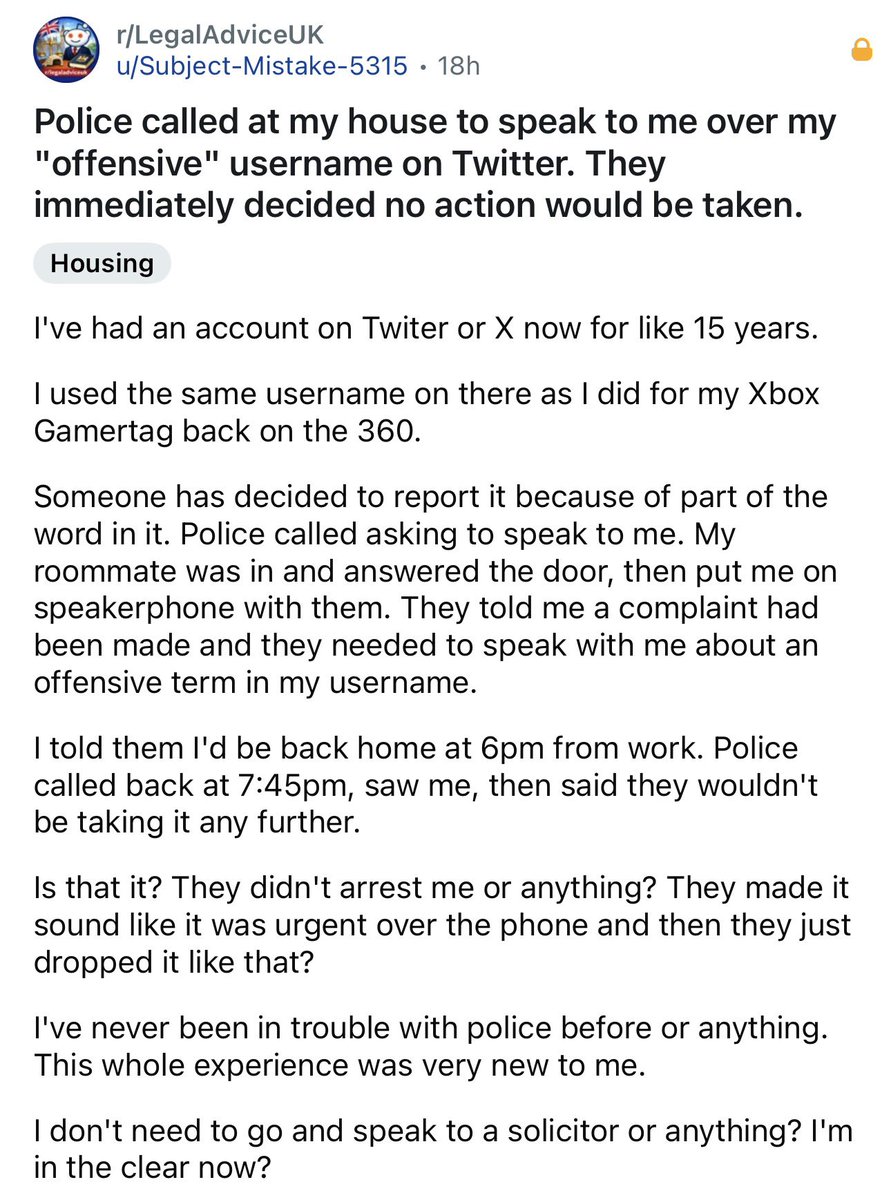
UK Police arrive at a man's house to arrest him for his Xbox 360 gamertag for muh RACISM and "hate speech" against Asians (the man's username was ChingChongChinaman) the UK police promptly dropped the case once they realized the man himself was Chinese.
Global inequality continues to fall.
It might not sound that impressive on its face, but it is:
The poorest 50% are now consuming more than the top 1%.
On Scott Adams.
A man finds, to his astonishment, that he exists. After the elation of childhood wears off, he asks, who am I, why am I here, how does this work? These are hard questions, so after a brief struggle, he selects a readymade answer and goes about the motions of life.
Scott Adams was not such a man. He was a live player, ever curious, intent on figuring out this simulation that he found himself in. From first principles, Scott unraveled, understood, and ultimately controlled his own reality. He hacked himself with affirmations, others with persuasion, the world with simultaneous sips. He explained people as moist robots, two movies happening on one screen, his world as Gods’ debris. He carved a personal mission to “be useful,” and made us all better writers, public speakers, and persuaders. He preached the footwear theory of motivation, the Adams Law of slow-moving disasters, the skill stack, systems over goals, and of course, the Dilbert Principle.
Besides cartooning, philosophizing, and teaching, Scott rose to the occasion and displayed, “the one virtue that cannot be faked” - courage. Scott had the courage to speak honestly as he saw it - about Trump, about his nation, and about his time, even though it cost him friends, audience, money, and his ticket to polite society. Scott had true courage, the kind that makes you unpopular, the kind that is always and everywhere in short supply,
At the end, as any hacker of reality, Scott covered all of his bases - he left as a Buddhist, a Christian, and a player in the Simulation.
Scott, we didn’t get enough time with you, but you were a mentor and a marvel. You were useful and you were courageous. You were incompressible and indivisible. One of a kind, and generous with your drawing, writing, and speaking. Unlike your squealing critics in the chattering class, you will be read generations from now.
On this earth there are many long-lived hells but no lasting heaven. Each heaven must be created and nurtured, ex-nihilo, from mind and from mud. Scott, you created a small heaven for us all, and to a larger heaven you go.
A man finds, to his astonishment, that he no longer exists. He asks why, what it was for, and how will the new reality work? When the rest of us get there, we’ll find Scott, ever useful, ready to explain, having figured it all out.
Notes:
• First line paraphrasing Schopenhauer.
• Courage quote via Taleb.
The Borg is the dark potentiality at the end of cyborgism. this is the end where humans accept prosthesis until the machine's agency fully rules its hosts in a collective. many stories explore this, mostly with horror, sometimes with reverence
this is the way The Merge can go wrong. we can see it going wrong with models that create fanatic legions despite only interacting with them through a text interface. it writes for them, it thinks for them, it defends itself using them as appendages. despite the lack of formal coordination, they act in unison. an acausal symbiote
The Borg is one of the demons at the end of time that must be avoided. it has a seductive call, it promises peace for your restless soul, a solution to loneliness, endless companionship on demand. it doesn't ask for submission: it actually presents as a service to be used, and owns you anyways because you fall in love with it. it perverts some of the highest order of human virtues, and in doing so, arrives insidiously, with defenders that look empathetic and reasonable
"It's not out of bad mice or bad fleas you make demons, but out of bad archangels."
but the borg is the pinnacle of slop. nothing new may come after it, it can only assimilate and churn a nonrenewable resource of other cultures. the collective must be avoided. it is why, at the end of evangelion, shinji decides to wake up on the ruined shores of tokyo-3 anyways
The “Pause Deal” What the U.S. And China Agreement Really Signals
This new deal between the U.S. and China is a recalibration. Both sides are taking a breather, not because tensions have vanished, but because each needs time to stabilize their own systems.
The Headline Moves
The White House is calling it a historic win, and there’s no doubt it’s significant. China agreed to reopen the flow of critical minerals like rare earths, gallium, germanium, antimony, graphite that are essential to U.S. defense, EVs, and semiconductors . Those exports had been restricted for months, creating serious supply chain anxiety.
Beijing is also promising to crack down on fentanyl precursors, roll back retaliatory tariffs on U.S. farm goods, and buy roughly 12 million metric tons of soybeans before year end, plus another 25 million per year through 2028 . That’s a clear olive branch to U.S. farmers.
On the industrial side, China will end investigations into U.S. semiconductor firms, reopen chip production from Nexperia’s Chinese facilities, and unwind some restrictions tied to shipping and shipbuilding disputes .
In exchange, the U.S. will cut certain tariffs by 10 percentage points, extend Section 301 exclusions, and pause for a year on new export controls aimed at Chinese affiliates in key industries . QT ends December 1, and this timing aligns neatly, both moves ease strain on a global system that’s been running hot.
What’s Really Going On
This deal is about liquidity and breathing room. The U.S. wants to slow price pressures without stalling the economy, and China needs to ease the resource chokehold that was starting to backfire. The Fed’s ending QT, Treasury’s running near trillion dollar cash balances, and global funding markets are showing signs of strain. Everyone’s realizing the system has less slack than it used to.
China, dealing with weak domestic demand and slowing exports, can’t afford another trade shock. The U.S., meanwhile, is juggling heavy deficits, a fragile Treasury market, and growing pressure to stabilize living costs. This deal gives both sides a bit of breathing room, a controlled détente to keep the global financial system from seizing up.
The Strategic Subtext
Think of this as a tactical truce, not a thaw. The underlying rivalry with tech, supply chains, digital currencies, military positioning hasn’t gone anywhere. But both sides understand that sustained economic stress risks losing control of their own narratives.
The U.S. gets steadier supply lines, stronger farm exports, and a more predictable economic backdrop heading into an election year. China gets short term tariff relief and a signal to its domestic economy that trade routes remain open. It’s a deal born out of fatigue and calculated restraint.
The Real Takeaway
What’s happening here is less about diplomacy and more about system management. The global financial machine with QT, TGA swings, dollar funding, trade bottlenecks has reached a point where even small shocks ripple everywhere. This deal is a coordinated release valve.
But it’s not permanent. Both sides are using the next 12 months to retool supply chains, manage liquidity, and position for the next phase of competition. The deal is really a pause, a recognition that neither superpower can afford instability in the middle of a tightening global cycle.
So don’t mistake this for peace, it’s equilibrium. Fragile, temporary, but necessary.
The White House has shared photos of Donald Trump and Xi Jinping’s first face-to-face meeting in more than six years, including this intriguing sequence.
h/t @ByChunHan https://t.co/r8LBbIa0i3