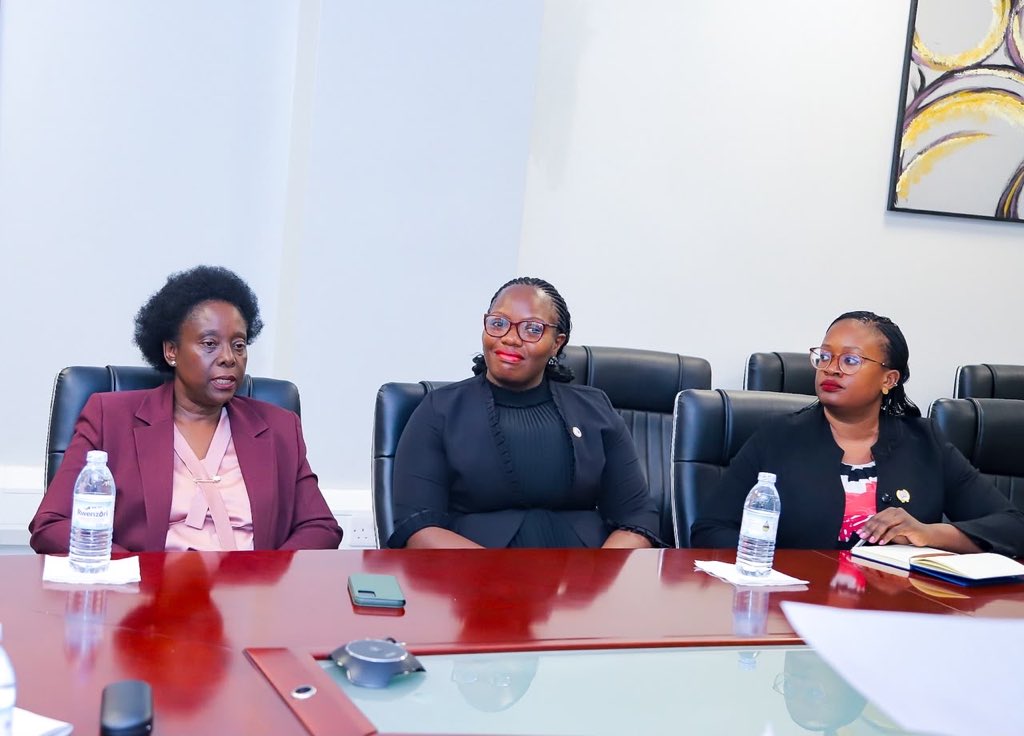
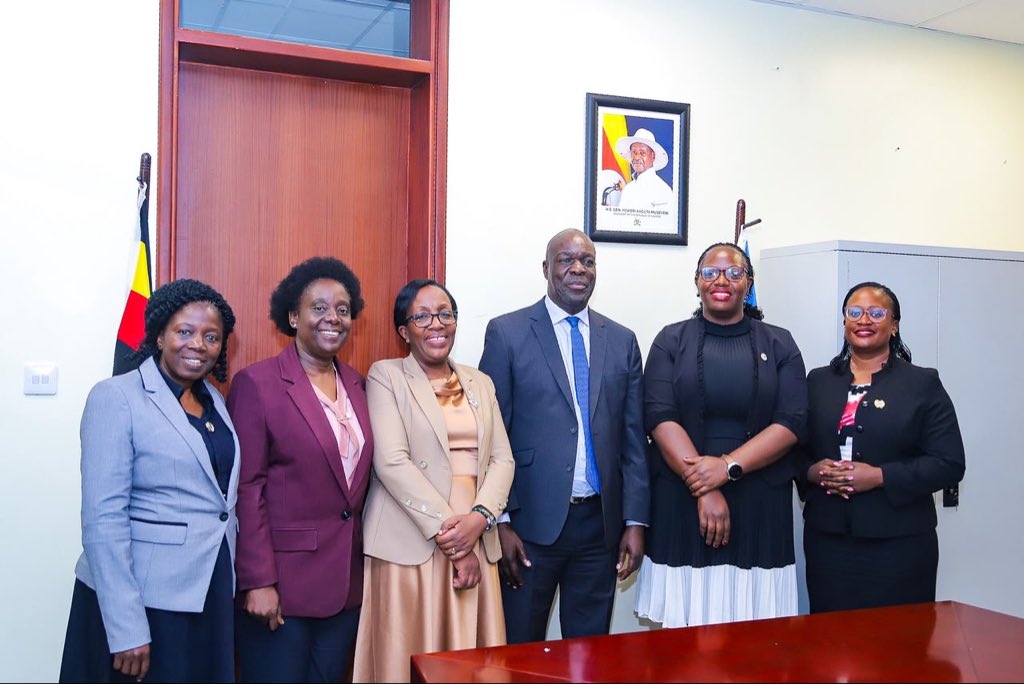
The Deputy Chief Justice, Justice Moses Kazibwe Kawumi, has pledged financial and institutional support to the International Association of Women Judges – Uganda Chapter (IAWJ-UC) to strengthen its initiatives aimed at bringing justice closer to marginalised communities and addressing Sexual and Gender-Based Violence (SGBV).
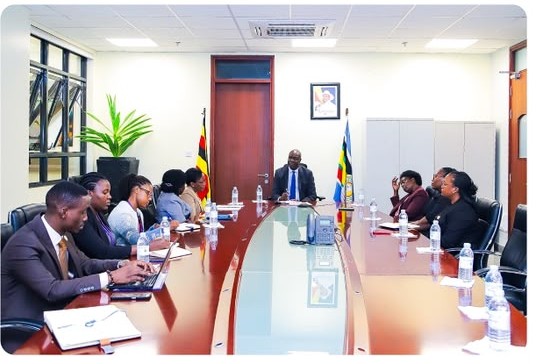
Justice Kazibwe made the commitment earlier today when he met a delegation from IAWJ-UC, led by Justice Olive Kazaarwe Mukwaya, at the Deputy Chief Justice’s Boardroom at the Court of Appeal Building in Kampala.
The Deputy Chief Justice commended the Association’s progress since its recent launch and emphasised that the fight against SGBV must extend beyond the courtroom into communities.
He encouraged the Association to strengthen its grassroots engagement and suggested partnerships with female Members of Parliament to amplify SGBV prevention and awareness initiatives across their respective regions.
“The Judiciary’s mandate is aligned with these interventions, and we are committed to providing the necessary financial support to see them succeed,” Justice Kazibwe said.
He also pledged to formally subscribe to the Association.
*A 1,000-Day Vision for Justice*
At the centre of the briefing was the Association’s flagship campaign, “Reaching 1,000 Families in 1,000 Communities in 1,000 Days.”
Justice Mukwaya reported that 127 Judicial Officers have already subscribed to the Uganda Chapter. She outlined several interventions targeting institutional reform, survivor empowerment and community engagement.
These include establishing a permanent secretariat at Nakawa Court to house the IAWJ-UC Chronicles, supported by the Judiciary’s provision of sitting space; equipping 1,000 SGBV survivors with vocational skills; and integrating 1,000 affected families into the commercial value chain of the “Uganda Pancake” for local consumption and export.
The Association also plans to strengthen legal capacity through the development of a Land Justice Bench Book and a Court User Manual for Vulnerable Litigants, as well as roll out gender-responsive adjudication training for Judicial Officers and provide pro bono moot mentorship for law students.
Under its community-based interventions, IAWJ-UC plans to take Alternative Dispute Resolution (ADR) to schools through “Rotary Peace Clubs of Justice,” where students will be equipped with basic case-management and peaceful conflict-resolution skills.
Looking ahead, the Association plans to host the first National SGBV Baraza at Kasangati Court as a platform to launch its seven priority intervention areas. It also plans to produce and distribute a National Anti-SGBV Film aimed at empowering communities to break the cycle of violence.
The delegation further sought the Deputy Chief Justice’s administrative guidance on decentralising the Association’s work plan to strengthen its reach in rural communities.
They also advocated for the formal inclusion of judicial wellness programmes on the Judiciary’s official calendar, in recognition of the demands faced by Judicial Officers handling heavy dockets involving sensitive and trauma-intensive cases.
In attendance were Justice Eva Luswata of the Court of Appeal, HW Dorothy Ssempala Lwanga, HW Ayebare Daphine and HW Sumaya Kasule.
Also present were HW Faisal Mulalira Umar, Private Legal Secretary to the Deputy Chief Justice, and HW Mwanja Brian, Personal Assistant to the Deputy Chief Justice
As IAWJ-UC expands its grassroots work, Lady Justice Olive Kazaarwe Mukwaya also sought institutional guidance on decentralizing the Association’s work plan and strengthening its reach in rural communities, ensuring the fight against SGBV reaches beyond the courtroom.
#IAWJUganda
"You can swim in the ocean, and drown in a bathtub. You can skydive casually and safely from an aircraft hundreds of times and then stumble down the stairs. Like celebrated General James Kazini, you can negotiate battlefields all over the Great Lakes region for decades and survive hundreds of bitter battles... then die in a domestic quarrel at the hands of a woman," writes @gawayategulle.
https://t.co/Mu9IJNSJmX
#MonitorUpdates
The International Association of Women Judges – Uganda Chapter (IAWJ-UC) has taken its “1000 Families, 1000 Communities, 1000 Days” campaign to the High Court Land Division, rallying Judges and Registrars behind an ambitious programme to take the fight against Sexual and Gender-Based Violence (SGBV) beyond the courtroom and into communities.
The IAWJ-UC President, Lady Justice Olive Kazaarwe Mukwaya, led the courtesy engagement with judicial officers at the Division as part of the Association’s ongoing institutional outreach and Anti-SGBV campaign.
During the engagement, Lady Justice Kazaarwe sensitised the judicial officers about the Association’s new strategic programme, “Reaching 1000 Families in 1000 Communities in 1000 Days,” which seeks to combine judicial interventions, community mobilisation and economic empowerment to address SGBV.
She explained that the programme is anchored on nine strategic interventions aimed at strengthening the capacity of judicial officers, supporting vulnerable court users and SGBV survivors, and expanding community awareness and prevention.
The interventions include documenting and publishing the IAWJ-UC Chronicles and establishing a functional Secretariat to strengthen the Association’s institutional capacity and visibility.
The Association also plans to provide customised Leadership and Management Training to equip judicial officers to serve as Anti-SGBV Champions, alongside rolling out Gender Responsive Adjudication Training to judicial officers.
Another intervention directly linked to the work of the Land Division is the proposed development of a Land Justice Bench Book and an Unrepresented Court User Manual, intended to support vulnerable litigants and strengthen access to justice.
IAWJ-UC also intends to train judicial officers to serve as pro bono Moot Judges for the Law Development Centre.
A significant component of the strategy focuses on families and communities affected by SGBV.
Under the programme, IAWJ-UC plans to facilitate 1,000 SGBV survivors to acquire vocational or entrepreneurial skills as part of efforts to strengthen their economic independence and resilience.
The Association also proposes supporting 1,000 SGBV-affected families to participate in value-chain production of Uganda’s _kabalagala_ for local consumption and export.
At community level, the Association plans to produce and distribute a National Anti-SGBV Film aimed at empowering 1,000 communities with information and encouraging them to take action to break the cycle of SGBV.
The interventions reflect IAWJ-UC’s wider approach of extending its contribution beyond adjudication by addressing some of the social and economic factors that can increase vulnerability to SGBV.
Judges and Registrars of the Land Division commended IAWJ-UC for the initiative and pledged their support and continued participation in the programme.
The engagement forms part of a wider court outreach campaign through which IAWJ-UC is engaging judicial officers and staff, growing its membership and building partnerships around a coordinated response to Sexual and Gender-Based Violence.
Through the campaign, the Association is seeking to reinforce the role of judicial officers not only in determining SGBV-related cases that come before the courts, but also as champions for justice, dignity and positive change within communities
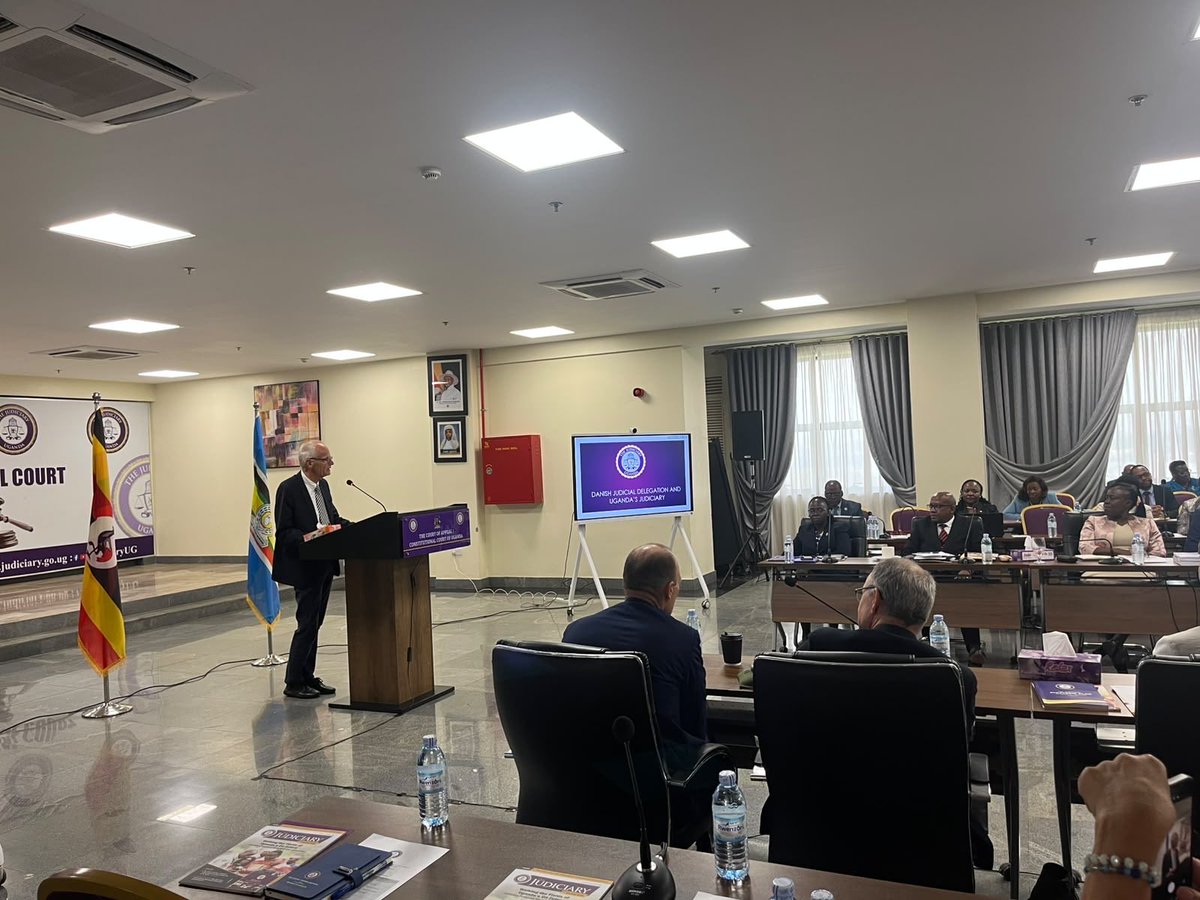
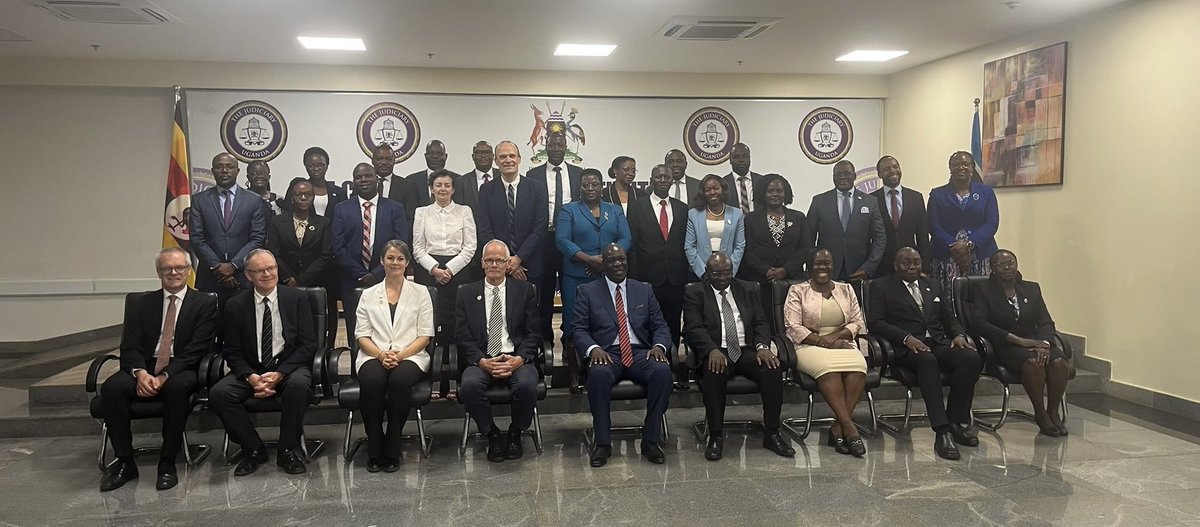
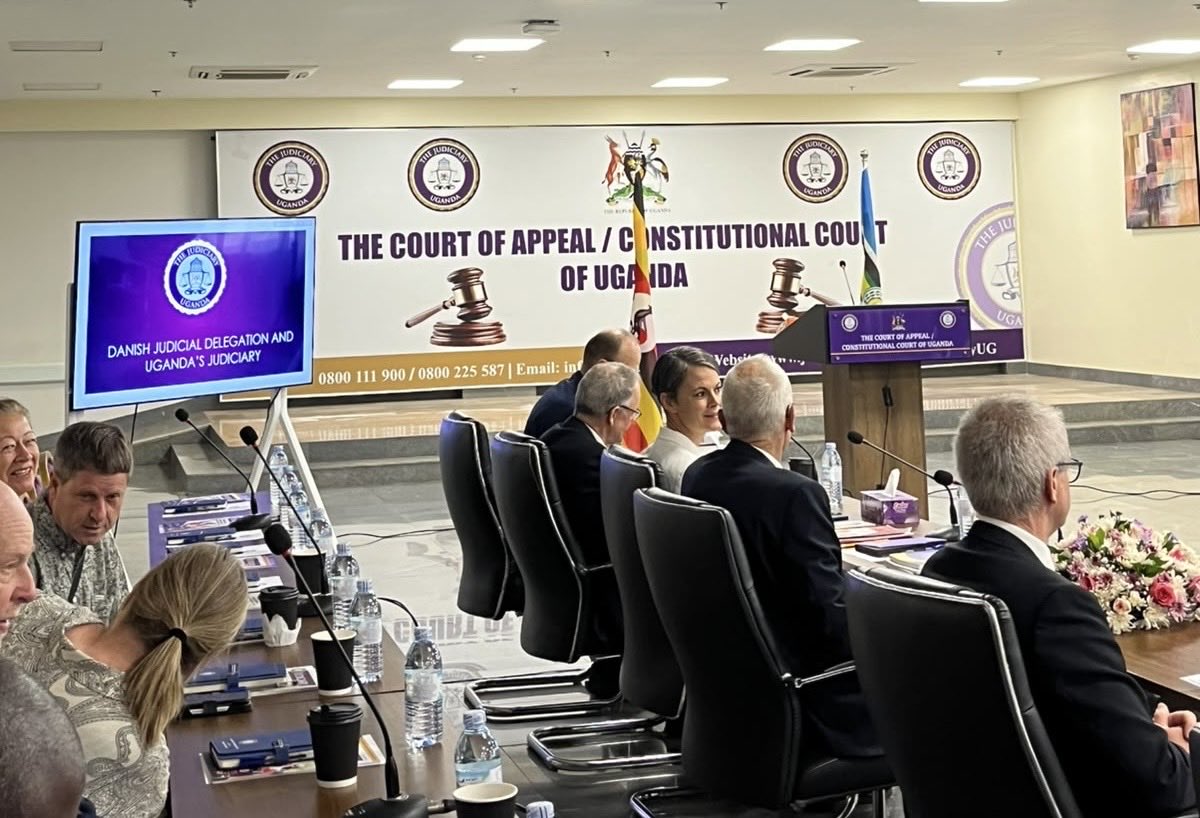
Delegation of Danish judges visited Uganda’s Judiciary for a judicial exchange.
The visit brought judges from the two jurisdictions together to exchange experiences and learn from one another on the administration of justice, access to justice and other issues facing the courts.
When you stop reading books, you start losing verbal dexterity, depth of thought and imagination. A closed book is a closed mind. Don't EVER stop reading.
When drinking starts getting in the way of everything, even your career.
Hear Martin’s story and his journey to turning his life around.
Full conversation on our YouTube channel: https://t.co/qUALt136pz
I used to work for a company where commercial sales were lagging dramatically. The product was good but somewhat complicated. Targets were missed. I talked about the situation to a friend that can literally sell anything and who has built massive sales team:
"Your product is too cheap. Increase your price"
It was the first time someone told us to go up, not down...
"How much commission do you give to your sales team?"
I can't recall probably UGX 5 to 10k per unit ($2-3). It was a $50-$100 product depending of the models...
"Increase your price if you have to and give them 50k or 100k ($15 to $30). Chop their fixed salary, cut their facilitation and bump up the comission."
I was quiet
"You see for commission based sales to work, people need to genuinely feel like "they can easily get rich" from selling your product"
Imagine your guy in Jinja selling your product. That's probably how he's thinking:
"So you mean if I go out there and sell 2 products per day, I get 100k. If I sell 2 per day from Monday to Saturday for a month, I can get UGX 2.6m (700$). Then they start dreaming ("wow if I sell 4 or 10 or 40 I am loaded"), that's what you want. What dreams does he have if his commission can't beat the salary of the askari down the road?"
Too often I see companies give sales staff a fixed salary and a per diem (which they eat) and low commission as if the bosses don't want them to be "too rich". Why should they even work hard at this point? Eat the per diem and chill...
"Structure your sales incentives so your sales team feel they can easily get rich from this"
Bingo
A lawyer’s career often moves through three stages.
You work hard and earn little.
You work hard and earn well.
Then, after years of building knowledge, reputation and relationships, your name starts doing some of the work for you.
The early years are an investment. The later years are the return.
In less than five minutes, economist Dr Fred Muhumuza clinically dismantles our so-called devt schemes: PDM, Emyooga, NUSAF – all of them. He called them "political instruction" – not economics!
One is then forced to ask, who are the economists behind them?
https://t.co/nmZrRqxlc3
Justice cannot be meaningful if it is available only to those with greater financial means, social influence, educational advantage or geographical access.
Justice must be accessible to every person. It must be available to the rich and the poor; to the powerful and the vulnerable; to those who live in urban centres and those residing in remote areas; to women, men, children, persons with disabilities and other vulnerable groups.
Our duty is to administer justice. A Court may dispose of a case statistically, but the true measure of justice is whether the person who came before that Court feels that the process was fair, impartial, accessible and worthy of public confidence — Chief Justice Hon. Justice Dr. Flavian Zeija
Yesterday, I addressed the UK-Africa Summit at White Hall in London. I spoke about peace and security in Uganda, opportunities for both Foreign Direct Investment and Portfolios supported by macro-economic stability and strong monetary policy implementation.
Five judges deployed to handle 21 election petitions in Masaka.
Masaka, which comprises nine districts and a city, is one of the sub-regions that registered the highest number of election petitions #MonitorUpdates https://t.co/jSUvlBxctK
Yesterday PLO Lumumba was stopped midway through his addres to welcome the chief guest the governor of Kisumu Prof Anyang Nyong. A furious Lumumba walked off stage saying "This is the problem with Africa, the governor knew and should have come early" 🙌
Ishepai Vicent v Muhoozi Kainerugaba (Civil Suit No. 0306 of 2022) [2026] UGHCCD 278 (21 April 2026)
The plaintiff alleged that the defendant’s tweets breached the UPDF Code of Conduct, undermined Kenya’s sovereignty, and caused public anxiety, but the court dismissed the suit because the plaintiff failed to serve the summons within the mandatory 21-day period.
👉:https://t.co/jWkww4VmUR @BorninAfrica6@HonTwallafadil@kamukamafredie@LillianAber
















![Uganda_LII's tweet photo. Ishepai Vicent v Muhoozi Kainerugaba (Civil Suit No. 0306 of 2022) [2026] UGHCCD 278 (21 April 2026)
The plaintiff alleged that the defendant’s tweets breached the UPDF Code of Conduct, undermined Kenya’s sovereignty, and caused public anxiety, but the court dismissed the suit because the plaintiff failed to serve the summons within the mandatory 21-day period.
👉:https://t.co/jWkww4VmUR @BorninAfrica6 @HonTwallafadil @kamukamafredie @LillianAber](https://pbs.twimg.com/media/HRYkIznbAAAD7y6.jpg)





