Tl:dr version: giving MDs financial bonuses for controlling their patients’ blood pressure paradoxically worsened blood pressure treatment because incentivized doctors were more likely to re-measure elevated BP until “normal” (rather than treat), resulting in many more strokes.
People report similar levels of muscular symptoms and symptom reductions when starting or stopping a placebo or a statin.
Most of the reported side effects of statins are just people being afraid of drugs.
Why all wearables (Whoop, Oura ring, Levels, etc.) stop being used over time. The value to burden ratio inverts as there's no further useful insights generated after the initial learning period.
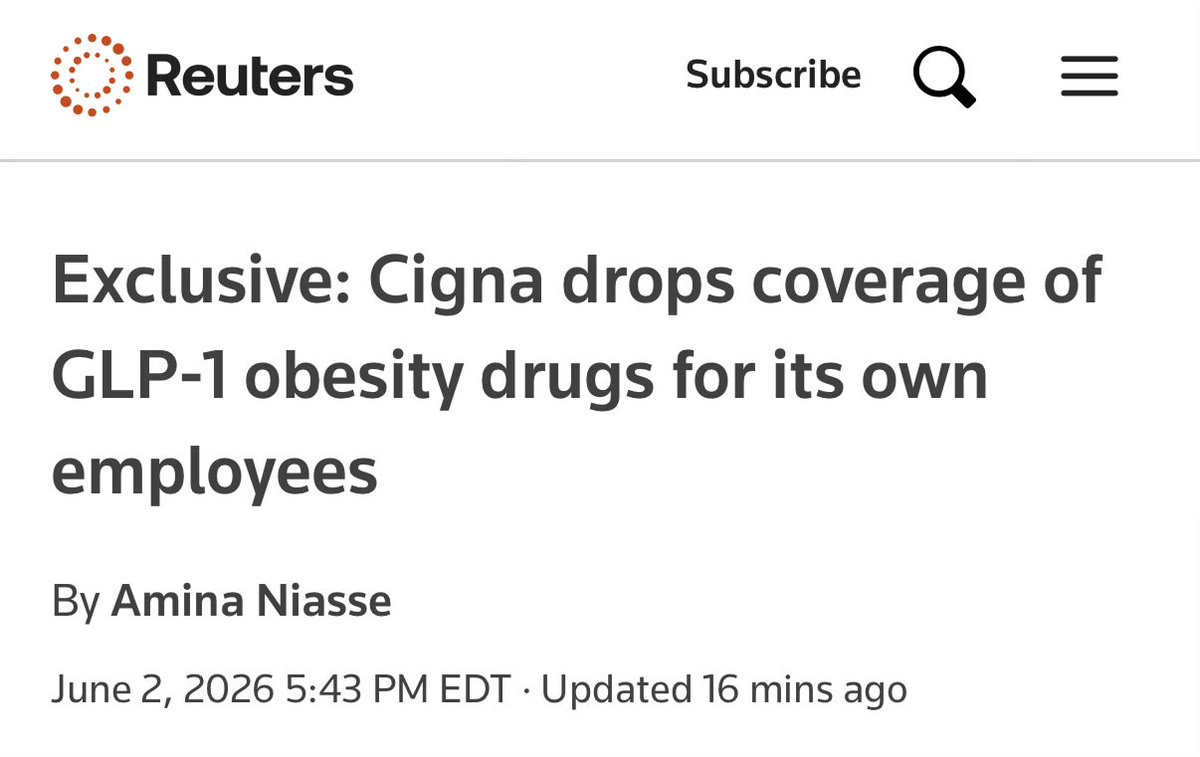
🚨 BREAKING: CIGNA TO DROP COVERAGE OF GLP-1s FOR OWN EMPLOYEES ON JULY 1
Impacts $NVO Wegovy and $LLY Zepbound
"As availability has increased and new options have emerged, we've made the decision to end our plan's coverage for GLP-1s for weight loss."
$HIMS
Screwworm control might be the quintessential example of how the government actually does numerous things that directly benefit all of us, yet they get ~zero credit for.
From NIH grants and weather forecasting models to FDIC and Pell Grants, we all reap the benefits.
Nintendo reported ~$975M in lost revenue due to a similar hardware x software exploit back in 2007 (the R4 flashcart culture)
This was definitely Whoops kryptonite and I hope they prepared
Hardware is fkin hard
I feel like I am often too negative here (sometimes for good reason), but I want to give people a sense for why we might be 10 years away from a paradigm shift in cancer outcomes.
This year, we have proof of concept for all of the following:
mRNA vaccine success against low antigen burden cancers (i.e. PDAC): https://t.co/3mCykQLKDH
Immune activation by non-specific antigens (COVID Vaccines): https://t.co/MmoJZhpG9n
Successful drugging of undrugable driver genes: https://t.co/SR2lnKnJJz
Successful drugging of hard to drug driver genes: https://t.co/Ize0nigQFo (this presentation data was admittedly noisy so I'm holding off on this for now),
Next generations target-specific CAR-T/T cell engagers: https://t.co/9XlCUVZTJN
Antibody-drug conjugates for more targeted therapy: https://t.co/V8wS1Agc9r
https://t.co/yD63glK6jY
Melanoma mortality rates cut in half (not new but new data supporting durable treatment effect): https://t.co/DUscZg5qow
Transformative improvements for patients with Multiple myeloma: https://t.co/aMbfjM7xIg
https://t.co/gKNl97UKVy
https://t.co/qcFrAENQtR
GLP1s as potential anti-cancer agents (lots of mechanisms possible here, no clinical data, so hold off on any conclusions and appreciate the multiple reasons why this may not pan out-- i.e. cachexia concerns): https://t.co/to6JH78Et5
And, of course, AI for diagnostic radiology.
Still a long, long way to go, especially for the average, non-trial-enrolling patient. But there is reason for hope in the coming years for cancers that were death sentences as recently as 5 years ago. All of this on top of proven efficacy of checkpoint inhibitors, existing antibodies and small molecules, and the emerging technologies like adoptive cell therapies and tumor-specific mRNA vaccines.
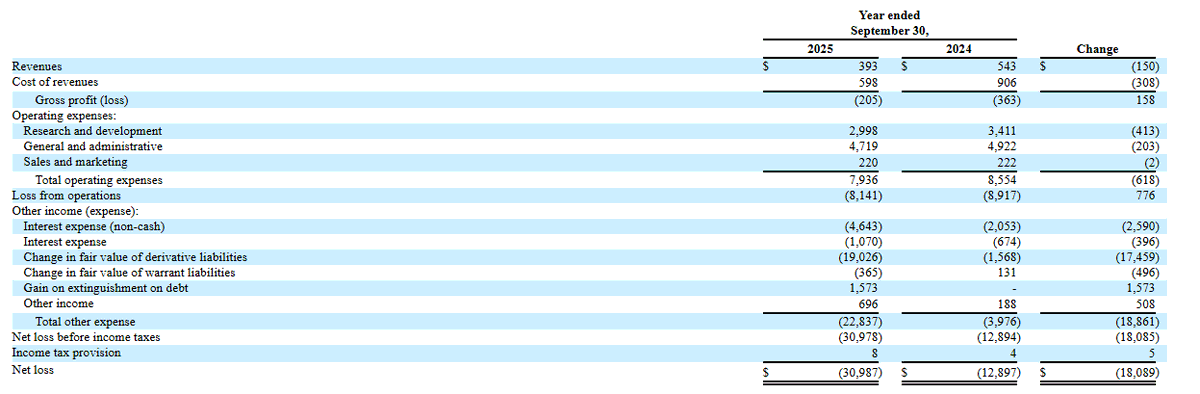
The commercial drone business is brutally hard. Fifteen years after it was founded, drone delivery company @matternet is still doing less than $300k a year in revenue, with a loss of more than $14m and a "going concern" warning from its auditors. So to raise more money and stay in business they're doing a reverse merger with a blank-check company, which will net them another $33m in funding.
Last year they did $393k in revenue and lost $31m
Links in comments
Another major advance vs cancer! @ASCO#ASCO26
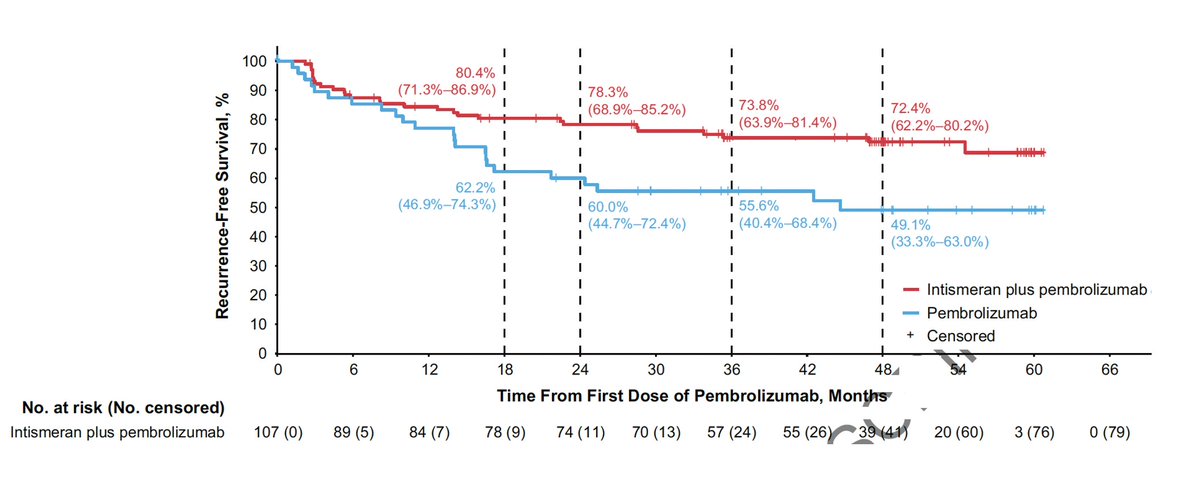
Personalized neoantigen mRNA vaccine 5 year follow-up vs metastatic melanoma reduced recurrence and death by 49% (on top of Keytruda)
https://t.co/NadITTYIT2
My colleague @adamfeuerstein once had a profile written about him in which he was called the most feared man in biotech. Well, this is how he opened his story on these data:
"Rachna Shroff, a physician and pancreatic cancer expert, was seeing patients at the University of Arizona Cancer Center in April when she heard the striking clinical results about an experimental pill called daraxonrasib. Patients taking the targeted drug lived nearly twice as long as patients offered standard chemotherapy — an outcome never seen before in the pancreatic cancer field.
'Having treated pancreatic cancer for 16 years, I actually started crying in the clinic,' Shroff said at a media briefing. 'This is such an incredibly impactful study for our patients.'"
Patients with advanced pancreatic cancer who received daraxonrasib as a second-line treatment achieved a median overall survival of 13.2 months, compared to 6.7 months for patients offered standard chemotherapy. Statistically, daraxonrasib reduced the risk of death by 60% compared with chemotherapy. If you want to follow the business story here, check out the stock chart of the company that makes this drug, $RVMD.
This is GREAT news. Adam's story is here:
https://t.co/wtspMqbkqE
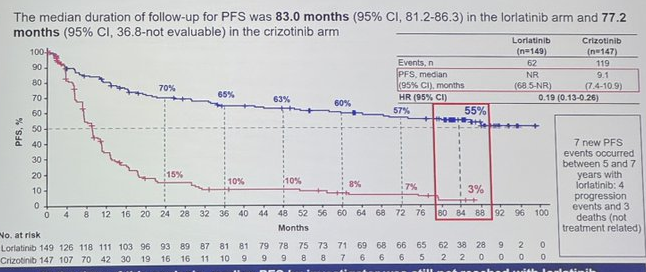
This is actually insane.
97% of people taking the standard of care for metastatic solid tumor got worse by seven years.
But with lorlatinib, that number was only 45% in the same time!
This is an ENORMOUS jump in the quality of cancer care.
good post from @JTLonsdale on what could be done by the FDA to increase American biotech competitiveness. Top of the list: streamline Phase I regulations.
Our current Phase 1 trial regulations require 12–18 months of preclinical work that Australia’s version of an IND (in Australia called a CTN) have shown unnecessary; the US regulations are a top-down, Soviet legacy of the mid-20th century that is straitjacketing us and delaying innovation. If we implement the Australian learnings, including 3rd party or medical center trial oversight (who review the IND instead of the FDA) we can speed up patient access to novel drugs while saving FDA reviewers’ time and taxpayer dollars.
The leading research institutions of the world like MD Anderson Cancer Center and Memorial Sloan Kettering should be empowered to decide when and how they launch Phase 1 trials, within regulatory frameworks.
https://t.co/blVgJWyz5i