As promised, here's my Mega Airdrop Farming List that I'm personally using and might retire me come next bull.
I'll spare you all the details of what those projects aim to achieve; we'll hop straight into actionable alpha.
CC2's MASTODON OF ALL AIRDROPS THREAD
1/30 🧵
It's time to seriously make it – bear market or not.
LayerZero, zkSync, Linea, Base, StarkNet, Aptos.
26 Tokenless Projects.
$2.6B cumulative funding.
ALL IN 1 concise route.
Entirely for free.
One thread to rule them all.
CC2s MASTODON OF ALL AIRDROPS: PART 2
🧵⬇️
It’s time to vote on moving Starknet v0.13.0 from testnet to mainnet! Delegates, cast your votes between January 4th at 12pm UTC- January 8th at 12pm UTC on the Starknet Governance Hub🗳️
https://t.co/JAqLNt1K7v
We encourage ALL members of the Starknet community to join the discussion and voice opinions on the proposed update on the community forum. 👇
https://t.co/hoW0PP94tR
As promised, 1k$ giveaway (100$ × 10)
Simple rules : Like, Retweet, tag 3 friends and must be following me @CryptoVikings07
Winners will be selected on 25th December via tweet picker for transparency.
Also will do another 1k$ giveaway in telegram channel on 1st January.
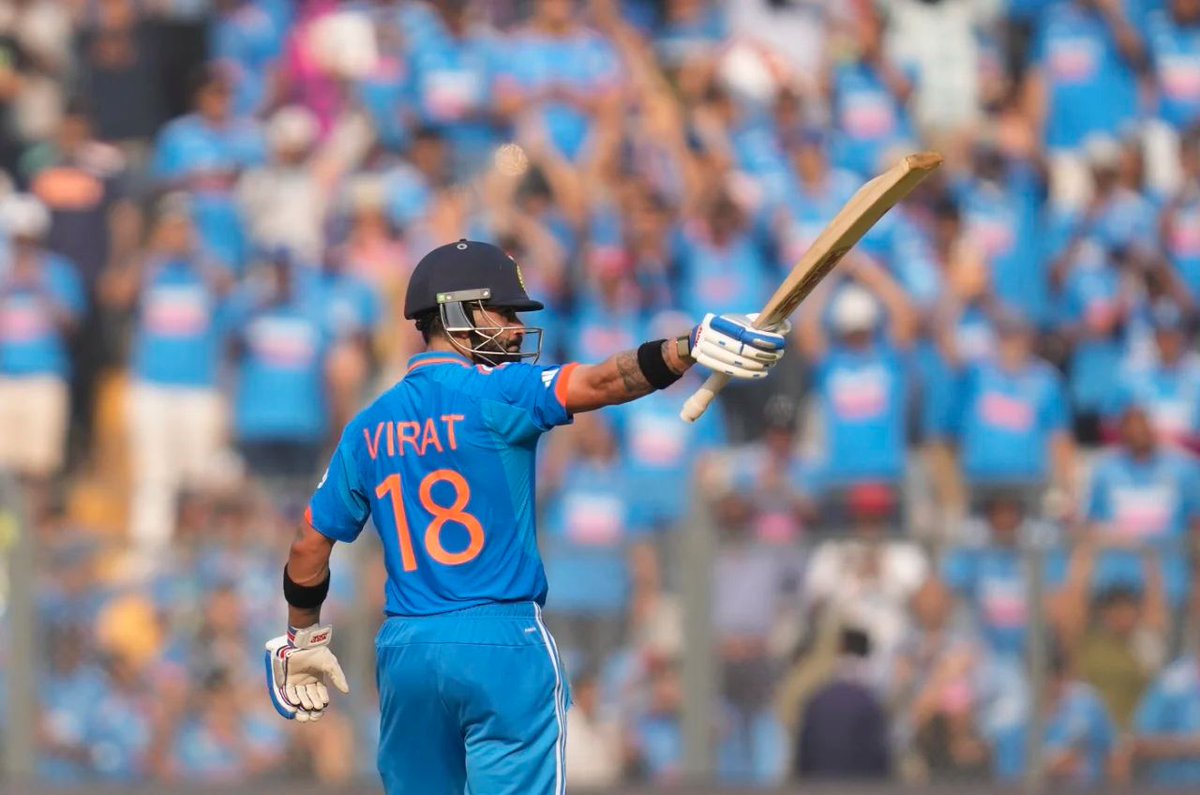
The first time I met you in the Indian dressing room, you were pranked by other teammates into touching my feet. I couldn’t stop laughing that day. But soon, you touched my heart with your passion and skill. I am so happy that that young boy has grown into a ‘Virat’ player.
I couldn’t be happier that an Indian broke my record. And to do it on the biggest stage - in the World Cup Semi-final - and at my home ground is the icing on the cake.
#INDvNZ
1/ A year ago today was the beginning of the end for FTX, a failure that triggered the failures of both Genesis and BlockFi. Let's briefly cover the timeline of what happened in a thread 👇
$SOL had its first major unlock on January 7th, 2021, and $SOL's circulating supply increased by +553.49% on that day.
Such a huge unlock, right?
Many thought $SOL would crash by 20-30%, similar to what you're thinking might happen with $DYDX and $ARB.
And you're so confident about that, too.
But do you know what the effect of that huge $SOL unlock was?
Some VCs got $SOL at around $0.20, and they could have easily made 10x profits if they chose to sell $SOL on the first major unlock day.
Surprisingly, they didn't. Most of these VCs are still holding a large bag of $SOL, even though they're now 200x at the current price. VCs often play the long game, looking at 5-10 years of potential growth. They are smart and patient, and sometimes they spread FUD so they can buy cheap and exit when others FOMO buy.
To your surprise, $SOL's price moved up by 85% in the 7 days after the first major unlock, and it rallied around 25% in the 7 days leading up to the unlock.
So what does this mean?
Token unlocks can be good, but not always. Sometimes they have no effect on the price if the project does certain things right.
Token unlocks tend not to have a major impact when the project has achieved significant milestones in terms of partnerships, user growth, on-chain growth, product releases, and community development.
They aren't bad when you see a project planning significant growth catalysts to create demand around token unlock dates.
Sometimes projects postpone token unlock dates when they see a bearish market or lack demand-side catalysts.
But in crypto, 99% of the projects are basically "shitcoins," and it's easy to differentiate between them and projects with valid goals and growth.
Token unlocks are problematic in the context of "shitcoins."
Token unlocks are concerning when you see that the project is already stagnant, falling behind the roadmap, lacks transparency regarding growth, and provides no data validating their development, product progress, or adoption.
They are worrisome when you see that the project was funded by low-tier VCs who typically dump their tokens as soon as they receive distribution.
They are problematic when you see project founders remaining anonymous and not actively communicating with the community.
Now, let's discuss $DYDX and $ARB
$DYDX will have a major token unlock on December 2nd, increasing the circulating supply by 82%. DYDX had previously rescheduled the same unlock for December but decided to proceed with it. They played it smart by scheduling the DYDX launch just before the token unlock to avoid unnecessary selling pressure from retail investors.
When it comes to VC unlocks, they are currently 7x profitable with their DYDX investments, which isn't a substantial ROI for any VC. DYDX is backed by top-tier VCs, so a significant pullback before the unlock is unlikely, and DYDX could even surge after the first unlock.
$ARB is facing a major VC token unlock on March 16th, with around 22% of investor tokens becoming available. Arbitrum plans to introduce significant growth catalysts like staking, orbit chain launches, and stylus to absorb any potential sell pressure before the unlock date.
VCs have substantial stakes in Arbitrum, and they are unlikely to dump their Whole ARB holdings because ARB has yet to witness a bull run. Price discovery could be quite remarkable in this case, especially considering the utility of ARB is improving, particularly after the staking launch.
I hope you got the gist. Save this post as a bookmark, read it again, and share it with others so they can gain some insight into token unlocks.
Don't forget to like, share, and retweet this tweet if you enjoyed reading it.
𝐓𝐡𝐞 𝐫𝐢𝐜𝐡𝐞𝐫 𝐲𝐨𝐮 𝐠𝐞𝐭, 𝐭𝐡𝐞 𝐦𝐨𝐫𝐞 𝐩𝐚𝐭𝐢𝐞𝐧𝐜𝐞 𝐲𝐨𝐮 𝐡𝐚𝐯𝐞.
This exact reason why big players win, and retailers lose, especially in crypto.
What the herd fails to understand is that investing is a waiting game.
They pretend to buy a random projects and make millions overnight.
They want a specific event to happen but disregard the whole process behind that event.
Spoiler:
It’s not as easy as it seems.
That’s why, as I said above, they always lose.
Don’t be like them.
Understand that the real investing isn’t exciting.
It’s a strategic PVP game that requires precise skills and a lot of patience.
Work hard in these two categories, and you will be a step ahead of your competition.
P.S.
They will call you lucky one day.
Be prepared to gently tell them to fuck off.
❤️🔥
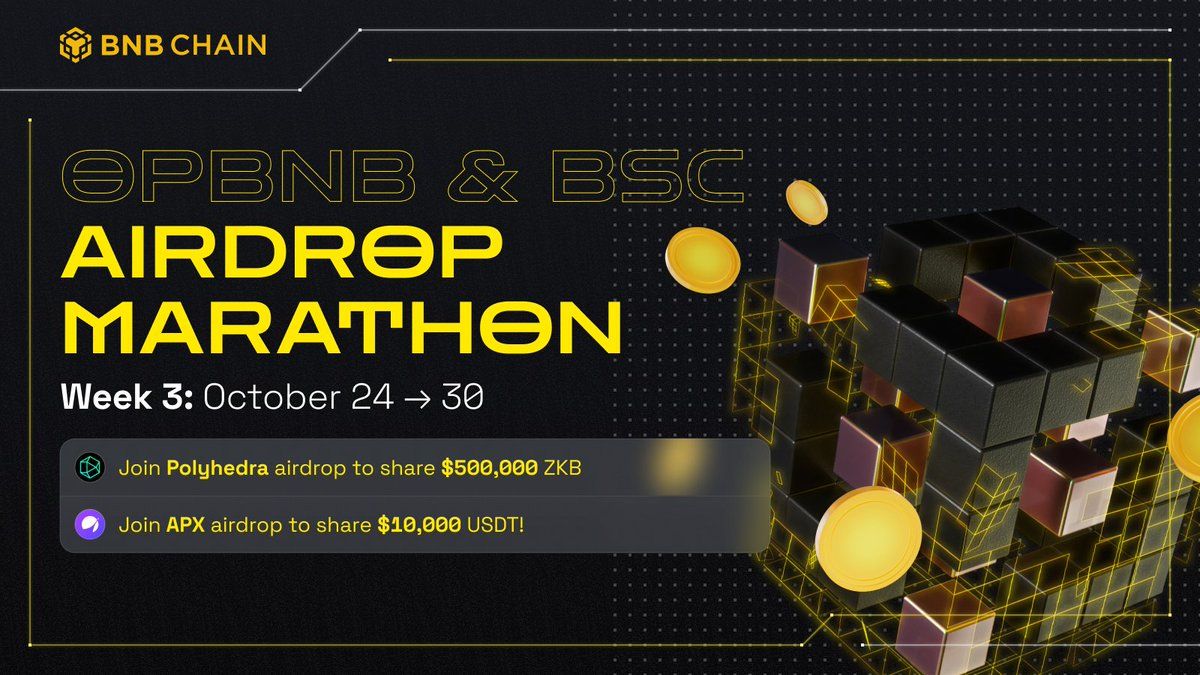
🚀 Get ready for Week 3 of the #BNBChainAirdrop Marathon!
🔥 The excitement continues with two projects joining the journey, @PolyhedraZK and @ApolloX_Finance.
Don't miss out on this incredible opportunity to be part of the action.
https://t.co/5JtjfZWou8
Last year, petrol prices hit historic high of ₹120/L
Because India now fulfils 88% of its needs through imports
But to everyone’s shock, Nitin Gadkari said that petrol prices will lower to just ₹15/L in sometime
Here's all you need to know about India's Ethanol Revolution:
Petrol was around ₹70-75/litre pre-lockdown and touched ₹120/litre in some parts of India post the lockdown phase.
It's been 2 years since things have gotten back on track, but the petrol and diesel prices seem far from even dropping close to the pre-lockdown prices!
It's not like India has suddenly discovered a bed full of oil reserves. So, the claims made by Nitin Gadkari just sound unreal.
But what is also unreal is that India has increased ethanol blending in petrol from 1.5% back in 2020 and achieved the 10% blending target last year in 2022. In a matter of just 2 years!
So it's visible that India is giving great importance to Ethanol.
But why?
See, India imports over 88% of its oil. The country's net petroleum import in 2020-21 was 185 million tonnes at a cost of USD 551 billion.
Ethanol blending could reduce this dependency and save us billions of dollars.
So, India launched the Ethanol Blended Petrol (EBP) program to mix the biofuel with petrol to reduce the consumption of fossil fuels.
It has already saved India up to ₹53,894 crore in foreign exchange and also benefited our farmers.
From "annadata" to now becoming "urjadata", our farmers will finally be able to earn what they truly deserve!
The government now aims to target 20% ethanol blending
— a goal which has been preponed from 2030 to 2025, following the success of E10!
Ethanol is a biofuel which is naturally made by fermenting sugar. In India, distilleries generally produce ethanol from molasses which is the by-product of sugar.
Since the sugar route for production of ethanol was the main route taken by government in the past years, sugar sector has become self-sufficient.
But with just the sugarcane route it will be difficult to achieve the 20% blending target. However, sugercane is not the only source for ethanol production.
Globally, maize is a primary feedstock for production of ethanol. It is preferred more as it consumes less water and is more economical.
Therefore, the government of India is now turning towards the use of maize as a feedstock.
India is the 6th largest producer of maize.
Ethanol from food-grains such as maize, damaged food grains (DFG) and rice available with FCI has gained momentum to achieve the 20% ethanol blending target.
Now, ethanol will support maize farmers in increasing their income and bringing growth with stability on the lines of sugarcane farmers.
This program is heavily beneficial for both India and its farmers.
Though this will reduce the exports of the feedstocks (particularly sugarcane, maize and rice), it will also reduce the import of oil.
Ethanol is way more sustainable and benificial than pure gasoline.
The use of E20 leads to a reduction in carbon monoxide emissions by 50% in two-wheelers and 30% in four-wheelers, compared to pure gasoline.
It is a less polluting, more efficient, and a renewable fuel since it is derived from plants. Additionally, it is a lower-cost alternative to petrol.
Mixing 20% ethanol with petrol could reduce India's yearly auto fuel import bill by ₹30,000 crore!
Hence, the cut in consumer prices that Nitin Gadkari was talking about.
However, there are obstacles to widespread adoption, such as feedstock supply issues and technological limitations.
But we are sure India will find its way. Kyunki-
In fact, this is exactly why Global Biofuels Alliance was launched by Prime Minister Narendra Modi at the G20 Summit in New Delhi.
To not just reduce our import dependence, but to also promote biofuel R&D and technological collaboration as well as improve its adoption.
See, the need for fuels cannot be completely eradicated. This is why India is trying to push towards ethanol blends.
But it’s also important to keep looking for more environmental friendly alternatives. That's where the search ends on EVs and Hybrids.
EVs have gained traction for their environmental benefits.
But in a study conducted by IIT Kanpur, it was revealed that EVs are not entirely sustainable.
👉 Most electricity needed for EV charging originates from coal-powered plants.
👉 The production and manufacturing of EVs requires substantial amounts of metals which contribute to greenhouse gas emissions during mining and refining processes.
👉 Hybrid vehicles emit the least CO2 overall but still remain the most expensive alternative.
Hybrids utilize a smaller battery and do not solely rely on external charging.
They can regenerate electricity through regenerative braking, thus boosting mileage.
Additionally, hybrids can utilize this ethanol blended fuel, further reducing their environmental impact.
But, hybrid vehicles currently face unfavorable taxation in India. The Centre currently imposes only a 5% tax on EVs.
On the contrary, mild hybrids attract 29% tax and strong hybrids attract a massive 43% tax!
In order to achieve the bold claims, it is crucial for the government to consider providing incentives and support for hybrid vehicles as well, making them a viable and attractive alternative in the Indian automotive industry.
If you liked this read do RePost🔄 and follow us @FinFloww
for more such reads every Monday, Wednesday, and Friday!