“Beneath the armor that so many teenagers build around themselves to avoid suffering lies the desire to love and be loved,” Pope Leo XIV said on October 22 to participants in the International Congress for Pastoral Care in Schools and Universities, taking place at the Vatican.
In his address he urged those present to encourage young people and help them “become protagonists of a new way of inhabiting the world, builders of fraternity and of a more just society.”
Patrick Collison's advice to people in their 20s: find where the highest standards are, and go experience them firsthand.
"When I talk to people in other domains, this is so frequently the thing that I hear from them."
"That when they worked with X person or Y organization or in Z environment, they learned what great actually is, and that just permanently changed their sense for what their own standard for their work ought to be."
"Maybe one version of what people in their twenties should do is... figure out, where can you learn the highest standards? Where are the highest standards embodied, and where can you go and experience that firsthand?"
@patrickc w/ @dwarkesh_sp (Feb 2024)
We need video editors!
We have hours of Founders School content from week one and our Head of Media is looking for two people to join his team.
(Both remote!)
A dedicated long form editor: https://t.co/MmENSJgeam
And a dedicated shorts editor: https://t.co/Q2r7Aj50IR
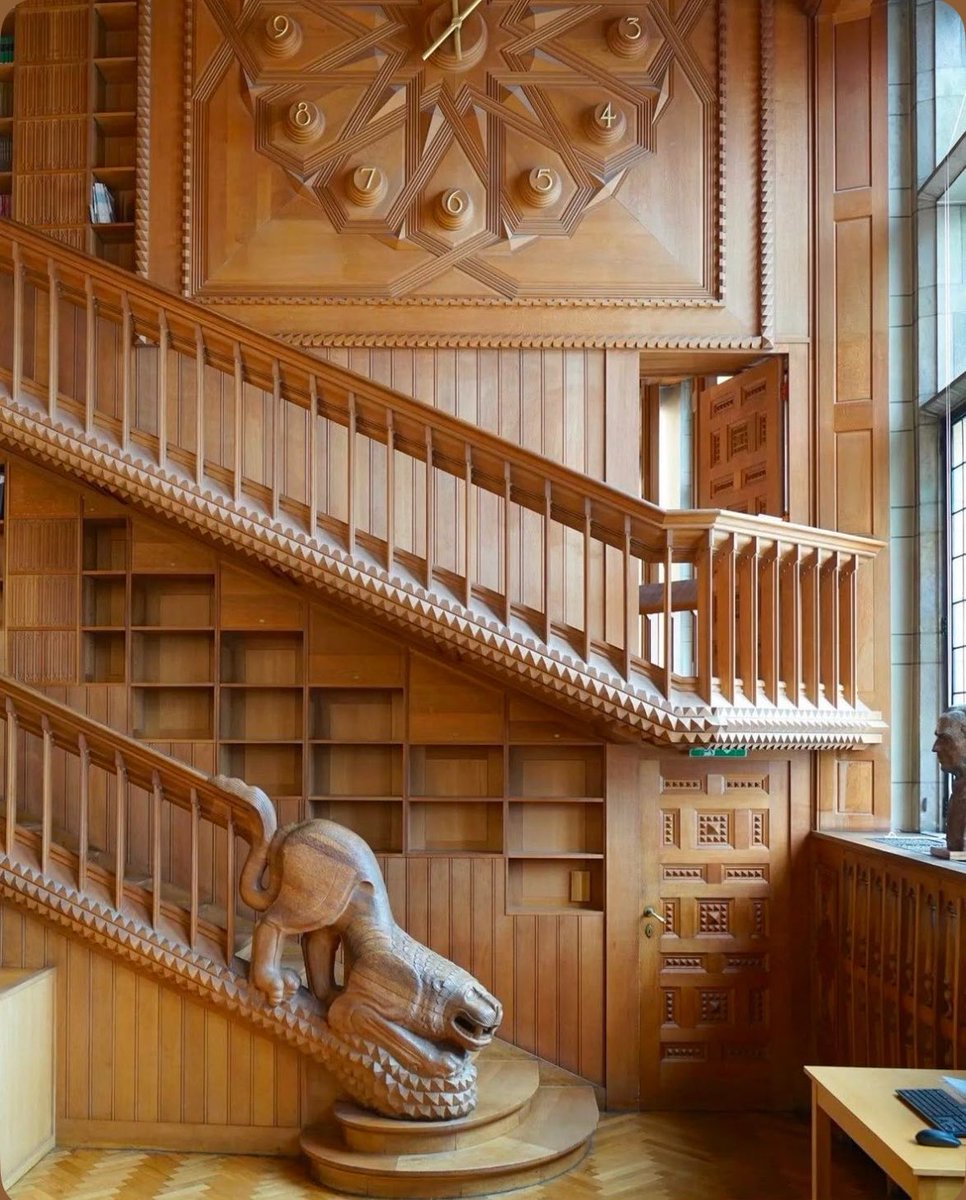
This is what you can do if you become an absolute master with wood. The owner and patron did more for art in the world than all the postmodern painters combined.
Saw and stepped on these “spoon carved” wood floors in Japan. They feel absolutely phenomenal on the feet.
I think we will see a return to varied tactility in our built environment. Industrialization delivered quality and scale at a low cost, but also sterility.
i suspect demand for labor-intensive aesthetics will go up over the coming decades.
furniture with wood carving, stone masonry, architecture that incorporates sculpted structure, and other deep crafts.
and there will be a talent shortage. we need more schools of lost crafts.
Can you comfortably sit in a deep squat? Millions have discovered they cannot.
Experts say modern lifestyles are causing many people to lose this basic movement, despite it being a key marker of mobility and flexibility
Why have buildings gotten less beautiful? A few theories:
1) The world wars: Something in the human spirit changed after World War I. Art is always a reflection of its time period, and the paintings people made in 1913 looked nothing like the ones they made in 1923. The acceleration of new styles like dadaism, surrealism, constructivism, and art deco was the byproduct of the introspection we had to do after millions of people died during World War I and the introduction of mechanized warfare. Whatever hope was left in the traditional way of doing things was shattered with World War II, when we almost committed civilizational suicide again. The shadow of the world wars still hangs over the modern world.
2) The professional class: In aesthetic fields, highly trained people often develop tastes that are uncorrelated with the tastes of the masses to signal that they're part of the in-crowd. In the world of architecture, this is known as "the design disconnect." Studies have shown that the tastes of architecture students are diametrically opposed to the tastes of the general public. The same pattern holds in other artistic mediums.
3) Regulation: Many of the things people love are illegal to build now. There is a restaurant I like to eat at in New York with two exit signs. On the bottom is the classic one, which is beautiful. On top is what looks to be a city-mandated one, which is boring and generic. I've shared a photo below. And there are good reasons for these regulations: exit signs save lives, fire risks in cities have gone down, and modern cars are safer than old ones. Zooming out, you can see how thousands of little regulations like this slowly add up to a more boring world. Like a collection of pebbles in a river, adding a few regulations is no big deal, but everything changes if you add enough. Regulations are also why we can no longer build the kinds of neighborhoods people love, such as Beacon Hill in Boston or the West Village in NYC. That said, I'm not against regulation! I'm grateful for the preservation movements that've protected these neighborhoods from the wrath of modernism.
4) Changing values: Efficiency and convenience rule the day now. We want things fast and cheap. We increasingly see the world through the lens of a spreadsheet, which gives disproportionate weight to things that can be measured. And the more bureaucratic our world becomes, the more people need to justify their decisions using "rational" numbers-driven language.
5) Profit maximization: This is the answer most people jump to, and I've deliberately kept it away from the top of the list because people overestimate its importance. They'll look at objects like the beautiful dolphin lampposts on the London Embankment and say, "we can't afford to decorate things like this anymore." But those lampposts were mass-produced. My point is that many things are ugly because of bad taste, not a lack of funding. Like the Obama library in Chicago. I don't think it's crazy to say that we could've done better with the $850 million it cost to build it. But on the profit maximization point, I'll concede one thing: designing something beautifully is rarely the cheapest way to do things. But that doesn't mean you have to break the bank to make something beautiful.
6) It was a deliberate choice: In 1910, the architect Adolf Loos wrote an essay called Ornament and Crime where he famously argued that culture progresses with "the removal of ornamentation from utilitarian objects." He believed that austere designs were rational, honest, and modern. This is the world we live in today. Almost everything, from our lampposts to our benches to our buildings has been stripped of texture and decoration.
So indeed, "ugly is a choice." Our society is immensely wealthy and technologically capable, and we can build more beautifully if we want to.
Chicharito reveals the mistake EVERY young footballer makes.
"It might not be a popular answer, but don't try to eat the whole cake in one bite.
So many players arrive thinking they have to prove immediately why they were signed.
I looked at it differently.
My first objective wasn't to impress everyone overnight.
It was to show the club they had made the right decision by bringing me in.
I wanted to fit into the team first, understand my role, and earn everyone's respect.
I watched everything around me, learned from the experienced players, and stayed humble.
Back in Mexico I was a big name, but when I arrived at Manchester United, none of that mattered.
Six months earlier I was playing video games with these guys. Now I was training alongside them.
First, earn your place. The time to shine will come later."
3D printers are cool, but we're in the midst of a wave of innovation with 2D plotters.
There's a cottage industry of vibe-coded G-code generators giving artists new tools.
What a fascinating modern age we live in.
Someone asked me recently why I’ve become interested in aesthetics after having spent most of my life more interested in STEM-adjacent topics. I hadn’t really considered the question consciously before, but I’m certainly thinking about aesthetics more than I used to. I think it’s a confluence of things:
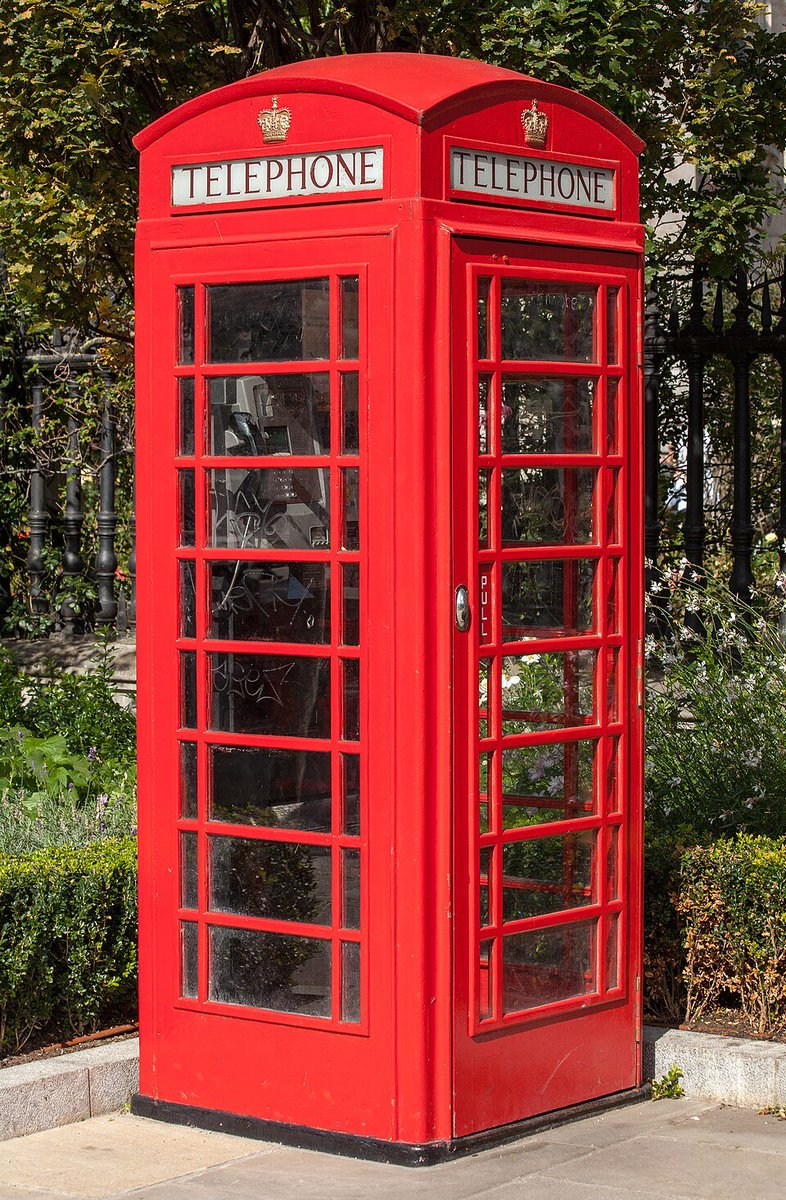
• Many things today are ugly and far uglier than they used to be or need to be. Once you see this, it’s kinda hard to stop perceiving it. (Early twentieth century phone boxes versus modern phone boxes; old water fountains versus new water fountains; etc.) As someone with a naively meliorist assumption that most things should be getting better rather than worse, it’s all a bit perplexing: why did we stop doing things nicely? Is it a choice? Was there a malevolent spell cast upon us? This vein led me to think more about modernism and why much of art became more intentionally "challenging", grotesque, opposed to prettiness, rebarbative, dissonant, etc. Can or should anything be done about this? Is this just how things ought to be?
• Relatedly, much of modernism involved a kind of explicit repudiation of cultural continuity and represented a schism with prior practices. This is maybe most evident in American architecture, where the International Style exhibition in 1932 initiated the displacement of a rich tapestry of prior styles. This cultural break seems important and interesting to me, and I suspect that the rejection had important consequences outside of the aesthetic domain. Samuel Hughes has been exploring this question in his recent writing at @WorksInProgMag; @RuxandraTeslo is also pulling on this thread. Elaine Scarry wrote about how beauty inspires creation. If so, the inverse may also be true: ugliness inhibits it.
• It’s clearly the case that changes in the aesthetic domain can at least inspire progress in other places. Petrarch helped set some of the preconditions for the Renaissance which in turn fostered the scientific revolution and Enlightenment. Things like World Fairs (the 1851 Fair at the Crystal Palace recorded 6 million admissions when the population was 21 million) reflect the popular interdependency that used to exist between aesthetics and material development.
• @tedgioia and others have written about stuck culture and how so many domains seem to have ceased to straightforwardly advance in the way that they did up until the nineties or thereabouts. This is obviously peculiar and interesting. What changed, and what does it mean? Is it about the internet and fragmentation? Is it about a loss of supply? Is it just about having reached the zenith of various mediums?
• I’m generally interested in markets and the dynamics of creation. In aesthetics broadly, I find the reflexivity between supply- and demand-side factors to be very thought-provoking. There’s a natural desire to view satisfaction of individual preferences as the yardstick to measure market success, but things get interesting and even a bit unsettling when we start to think about how the supply might start to shape the demand. I often think about this in the context of food. Why is food so much worse in Germany than many of its neighbors? Germany certainly doesn’t have less material ability to produce good food; indeed, Germany is richer than the countries around it. There’s probably something about German food supply chains that is impoverished relative to France and Italy, but the Germans themselves don’t seem too upset about it. It just seems that the Germans are stuck in an objectively worse market equilibrium than their neighbors: the food is bad and they’ve gotten used to it. The obvious question then is where else these kinds of reflexive patterns apply, and where else we’re stuck in some objectively inferior equilibrium, even if preferences are in some superficial sense being sated.
• While this is an extremely banal and obvious point, I hadn’t until recently thought much about or internalized how much one can study reasonably objective things ("the status of women in society", say) through artwork. (Thanks to @_alice_evans for opening my eyes here.) In this vein, I’m pretty excited about the possibilities over the coming years in computational art analysis. I want something that’s conceptually similar to Google Ngram timelines but for the visual arts.
• We've always tried to do things well at Stripe. I've come to see that attempting to do them beautifully is often a helpful way to break out of standard practices and to do something with greater novelty and in a way that might have other benefits besides. (Also, excellent people want to do great work because it is intrinsically satisfying. Explicitly allowing aesthetic considerations to carry weight avoids having to justify every assessment with some kind of torturous empiricism.)
• In his Nobel Lecture, Solzhenitsyn said that, among the Platonic virtues of goodness, truth, and beauty, that beauty is special, for it possesses a unique kind of irrefutability. He notes that arguments, writing, and philosophical systems can all be predicated on misapprehensions, but that “a true work of art carries its verification within itself.” He proceeds to observe that when goodness and truth are threatened, the “ever surprising shoots of beauty will still force their way through.” There is a lot of specious and motivated reasoning in the world today and plenty of questionable value systems. I don’t think that beauty directly reflects any definitive trait, but I’m intrigued by the idea that it can be a marker of deeper metaphysical coherence.
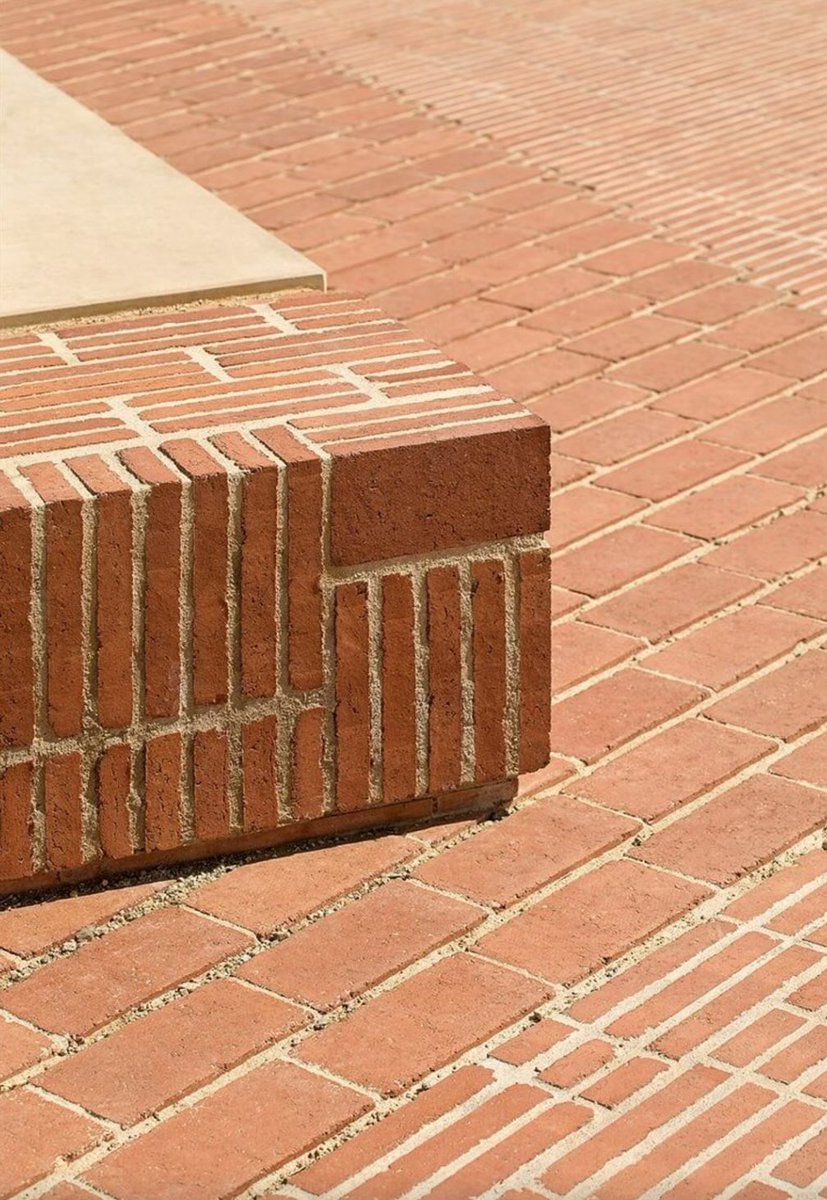
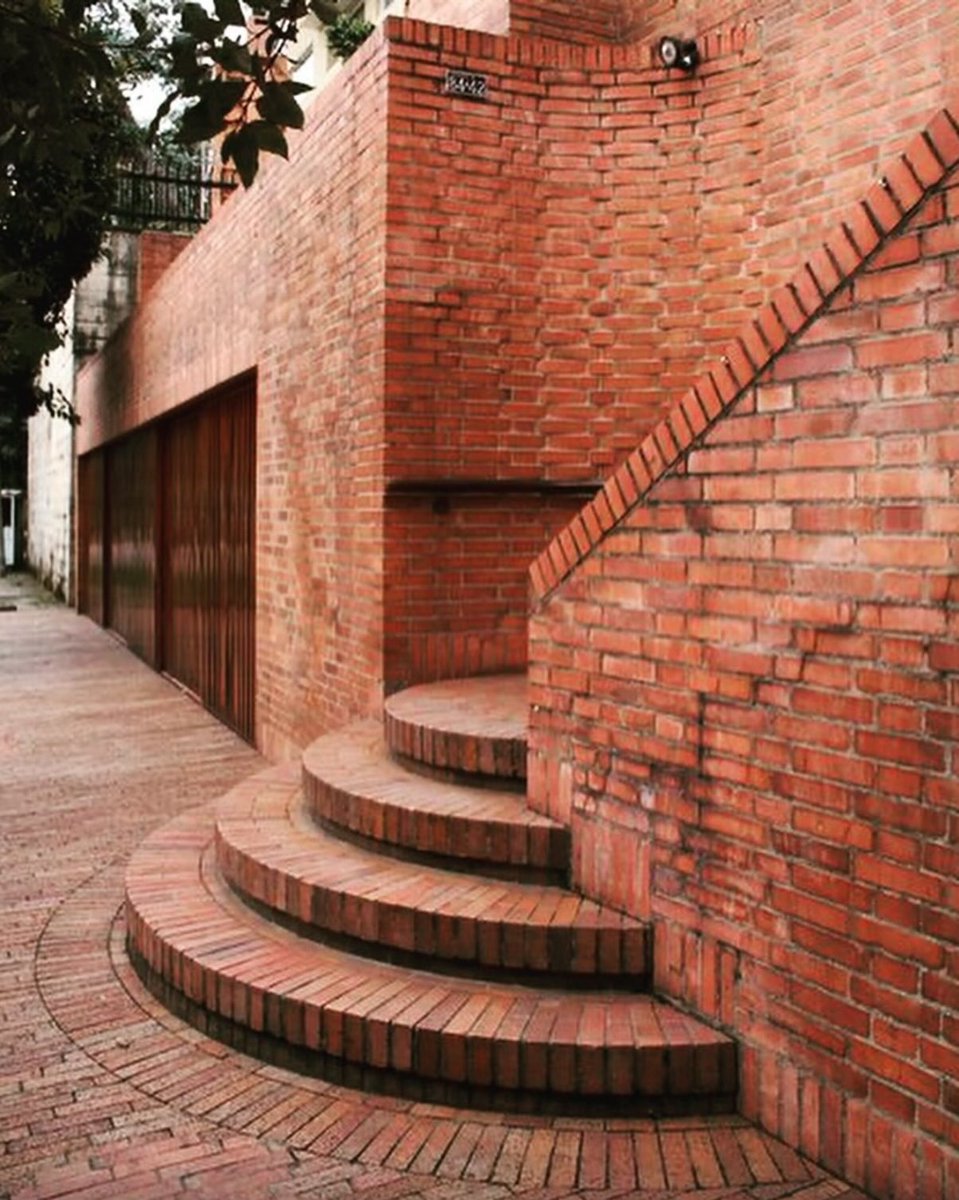
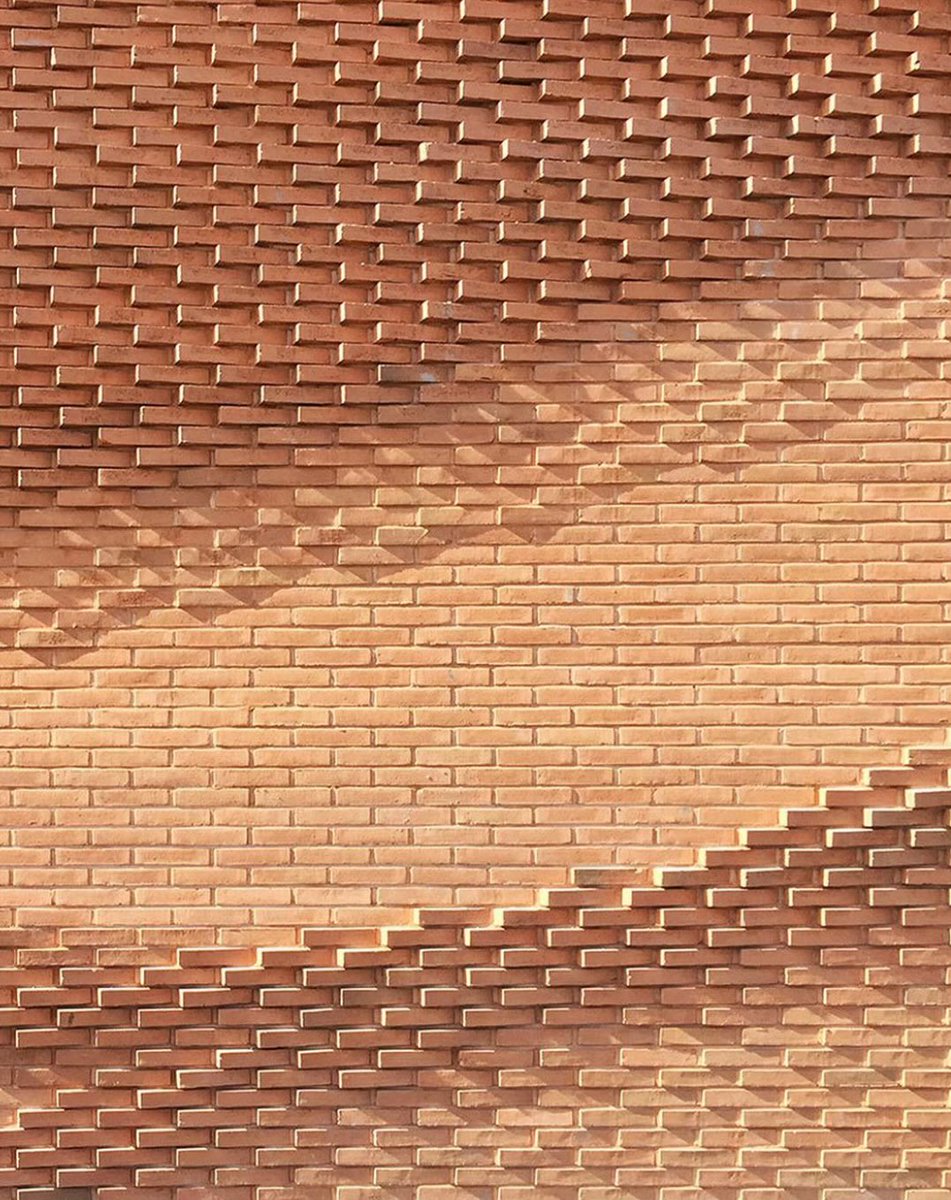
People say it’s too expensive to build things beautifully, but look at all the beautiful things you can do with bricks.
Effort and creativity are the ultimate constraint, not money.
And the extra work is worth it because life is so much lovelier and more delightful when our streets are filled with craftsmanship.
They say that a star shines the brightest before it goes dark forever
Lionel Messi, I want you to shine one last time against England
One Last kick of the Game
One Last Performance
One Last Memory
Our school space is currently filled with a bunch of random furniture, desks, and equipment from Alpha K-8 life skills workshops (~about 20 bikes, etc.)
Instead of having our facilities team taking care of it, we were thinking Founders School students should show up day 1 and whip this place into shape like they're inheriting an abandoned Series A startup office. Assemble their own desks while they're at it.
What do you think?