Majlis Nusrat Jehan physician, father, Infectious Diseases, (Love for All, Hatred for None) #Ahmadi#Muslim DP ~ Ather Ahmed, Muneef Rehan & Daniya Rehan
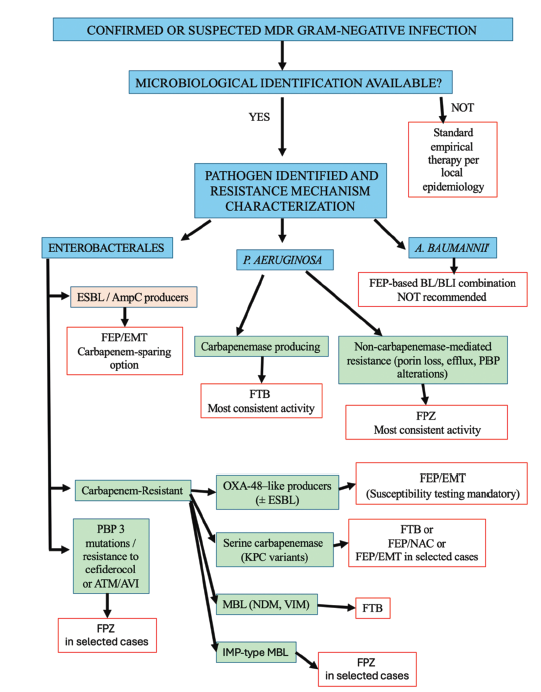
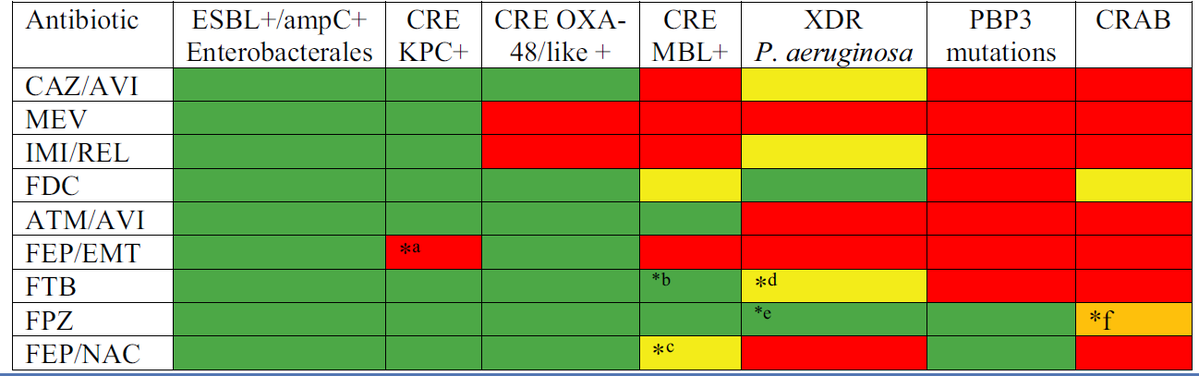
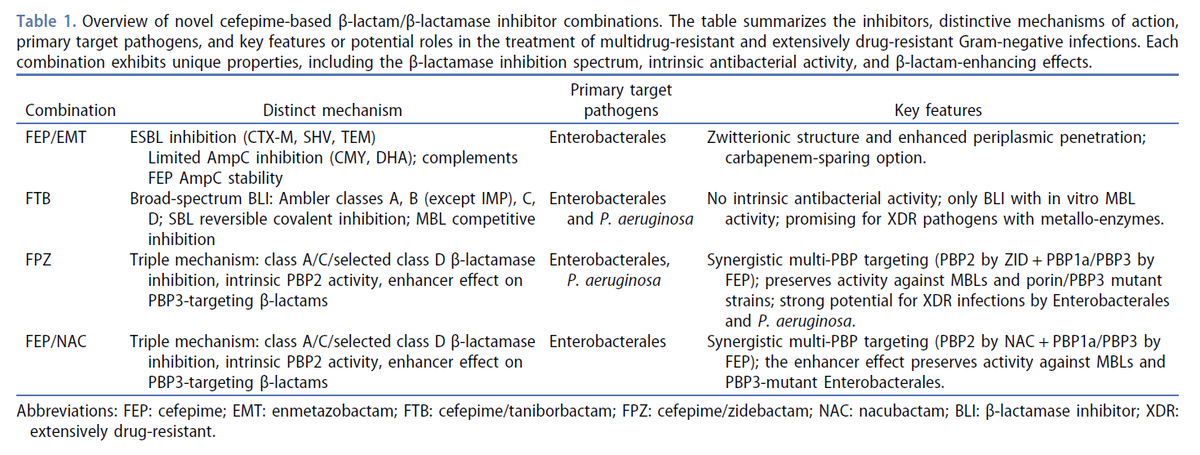
📄Revisión narrativa 2026: Combinaciones de cefepime aprobadas y en investigación
👉Cefepime asociado a enmetazobactam, taniborbactam, zidebactam y nacubactam
👉Cambio paradigma: alta afinidad a PBP2 y PBP3
👉Algoritmo de decisión y tabla comparativa
https://t.co/RP4mWMaPFi
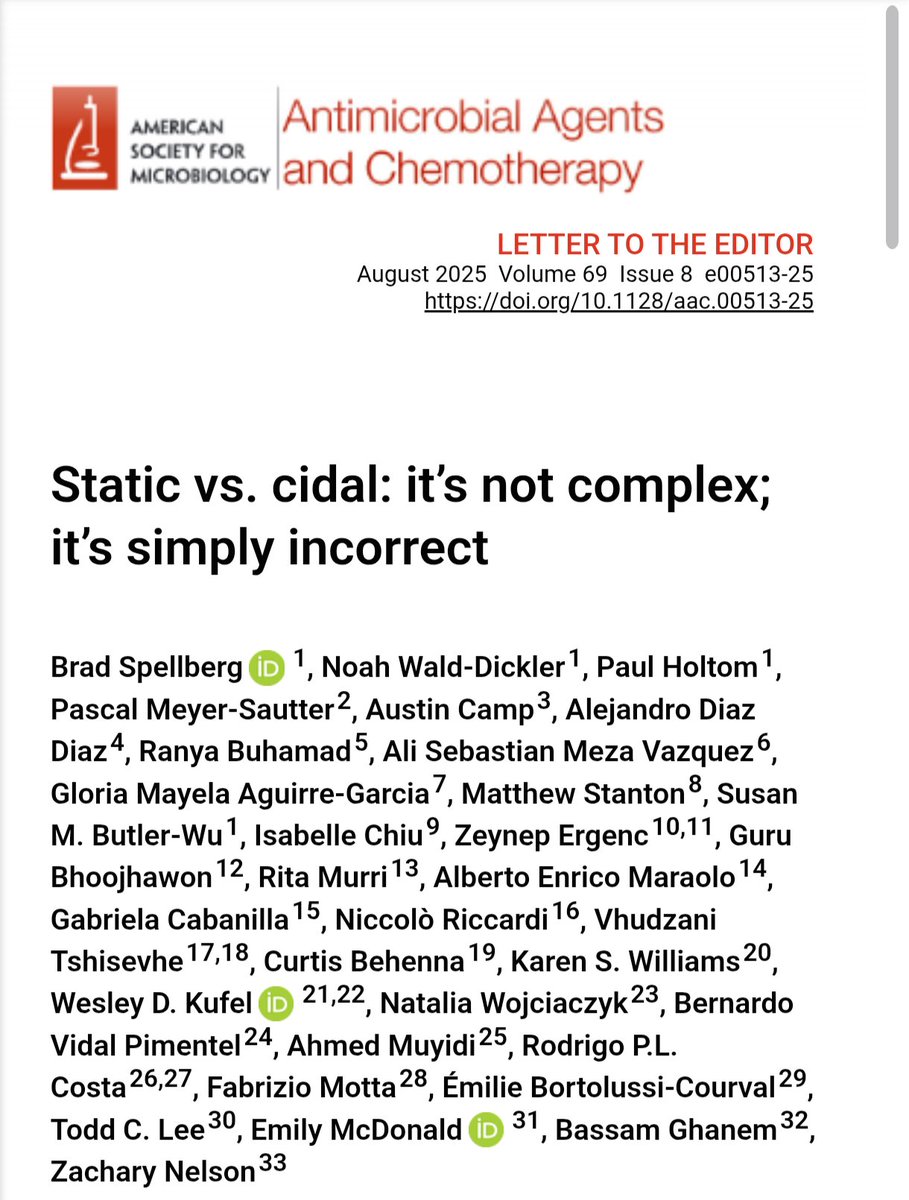
Static vs. cidal: it’s not complex; it’s simply incorrect
@BradSpellberg et Al
Honored to be part of this amazing group who challenges dogmas and debunk ID myths #idxposts
https://t.co/4bldEnYTK5
Understanding MICs and CLSI breakpoints is one of the most important skills in infectious diseases and antimicrobial stewardship.
A culture report should never stop at:
“Susceptible.”
Instead, we should ask:
• What is the MIC?
• Is it close to the breakpoint?
• Is the dosing optimized?
• Does the patient’s condition affect clinical success?
A great reminder that not all “susceptible” results are equally strong clinically.
#ClinicalPharmacy #InfectiousDiseases #AntimicrobialStewardship #CLSI #MIC #IDPharmacist #PharmacyResidency #CriticalCare #HealthcareEducation
🆕💥🔴 Multicenter Cohort Study
Antibiotic Duration after Debridement and Implant Retention for Early Postoperative Spinal Implant Infections #IDXposts https://t.co/vjO05KSeca
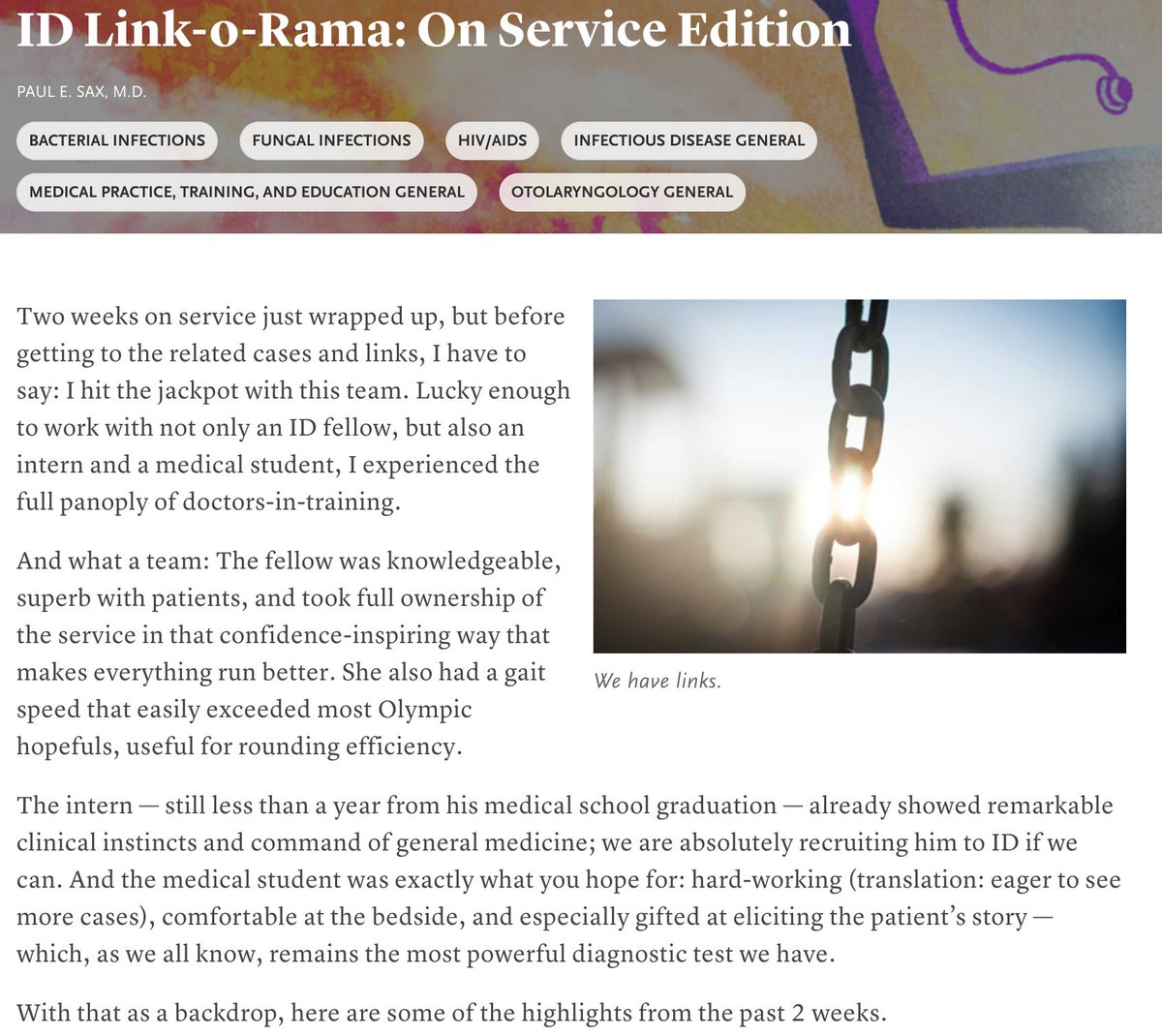
Two weeks on ID consults → some highlights:
• Staph aureus from the urinary tract (yes, really)
• “Explosive pleuritis” (still a great name)
• Sinus fungal balls that aren’t so scary
• Poor CD4 recovery in HIV
• And why strep taxonomy = chaos
Link in reply ...
In vitro activity of β-lactams (amoxicillin piperacillin, imipenem, meropenem and ceftobiprole)against contemporary Enterococcus faecalis clinical isolates France
Amox: 100% S
PiP: 91% S
MER: 97.5% S
MER: 75.5% S
Cefto: 86% S
https://t.co/FSKSKQXooU
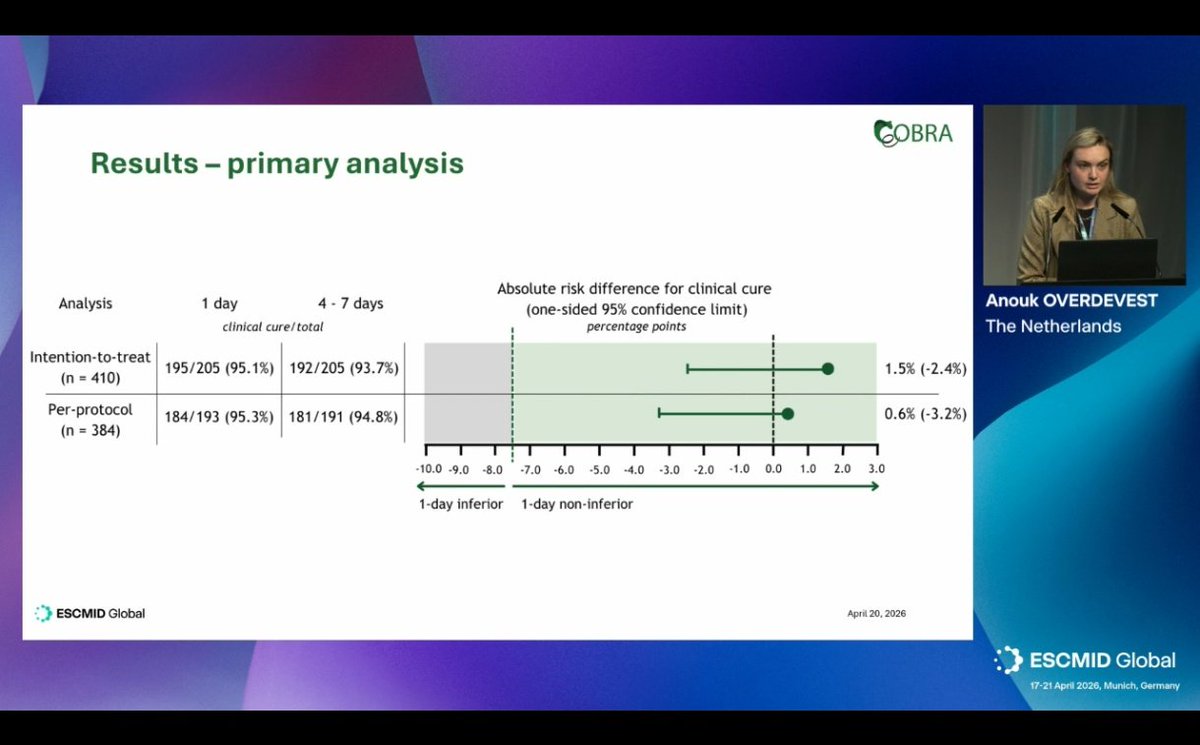
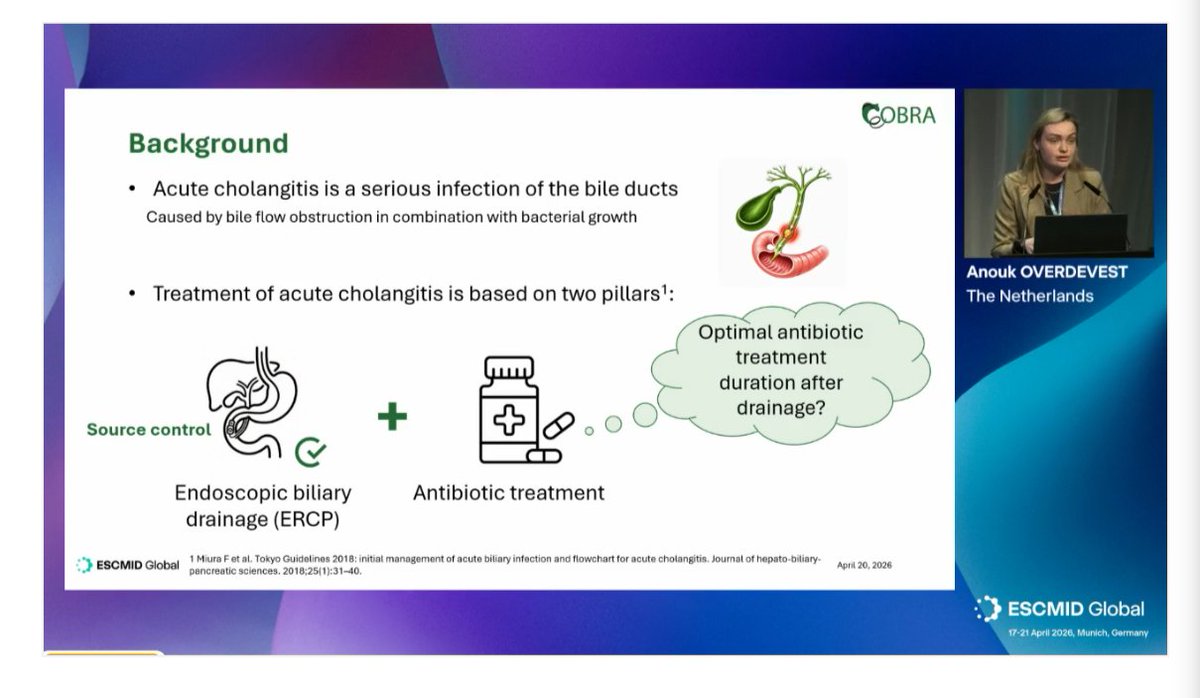
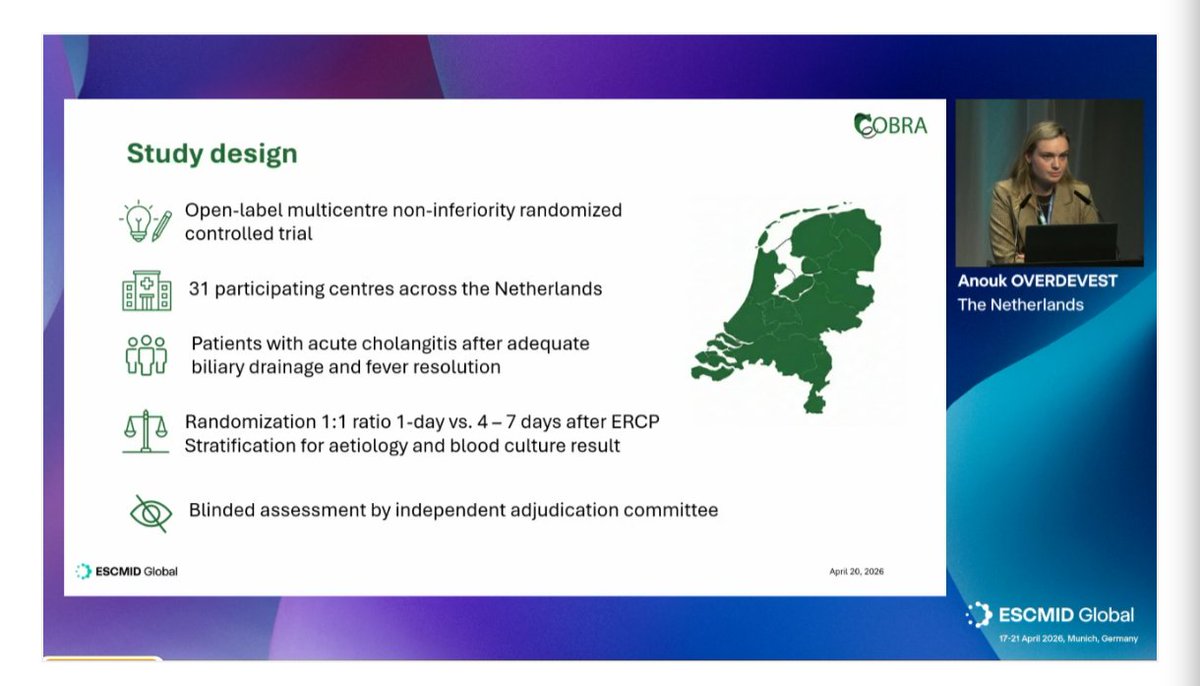
🔥 💥Late-Breakers |COBRA RCT
1-day of antibiotic treatment after adequate endoscopic biliary drainage is non-inferior to 4-7 days in adults with acute cholangitis.
💡 Shorter is better+source control
Practice-changing? #ESCMIDGlobal2026
There is no role for adjunctive clindamycin in SAB
No sub-cohorts with benefit shown
Clindamycin likely to be harmful in patients with SAB
Microbiome impact on gut anaerobes? #ESCMIDGlobal2026
🆕🔥SCOUT RCT*
The RCT found that Nitrofurantoin was the most effective treatment and single-dose fosfomycin the least effective treatment for UTIs #ESCMIDGlobal2026
https://t.co/gNtrZZXKfl
Hot 🔥 in ID
Macrolides for hospital treatment of CAP: to add or not to add ?!
CAP-START RCT ❌
ACCESS RCT ✅
Awaiting REMAP-CAP,the debate continues! #IDXposts
𝗧𝗵𝗲 𝗘𝗳𝗳𝗲𝗰𝘁 𝗼𝗳 𝗚𝗟𝗣-𝟭 𝗥𝗲𝗰𝗲𝗽𝘁𝗼𝗿 𝗔𝗴𝗼𝗻𝗶𝘀𝘁𝘀 𝗼𝗻 𝗚𝗹𝘆𝗰𝗮𝘁𝗲𝗱 𝗛𝗲𝗺𝗼𝗴𝗹𝗼𝗯𝗶𝗻 𝗟𝗲𝘃𝗲𝗹𝘀
Randomized, placebo-controlled trials of the glucagon-like peptide-1 (GLP-1) receptor agonists have provided strong evidence to support their use — in fact, they have presaged a mini-revolution in how type 2 diabetes is managed. 👉 https://t.co/D0XSLv7U8n
Tirzepatide was the first dual GLP-1 and glucose-dependent insulinotropic peptide receptor agonist approved for the treatment of type 2 diabetes on the basis of the SURPASS-1 (Tirzepatide [LY3298176] in Participants with Type 2 Diabetes Not Controlled with Diet and Exercise Alone) trial, a randomized, placebo-controlled trial of tirzepatide (administered in weekly doses of 5 mg, 10 mg, or 15 mg) paired with metformin for treatment of type 2 diabetes (seen in figure). Tirzepatide reduced glycated hemoglobin levels by as much as 2 percentage points and was superior to placebo at all dose levels. At 40 weeks, nearly 90% of participants had glycated hemoglobin levels of less than 7.0%, a change that was associated with profound weight loss.
Read the Review Article “GLP-1 Receptor Agonists” by Clifford J. Rosen, MD, and Julie R. Ingelfinger, MD, from @TuftsMedSchool and the Maine Medical Center Institute for Research: https://t.co/D0XSLv7U8n
Instead of watching an hour of Netflix, watch this 2-hour Stanford lecture on AI careers. It will teach you more about winning in the AI race than all the AI content you’ve scrolled past this year.
It remains unclear if CzIE based on in vitro testing translates to cefazolin treatment failure for patients.
🆕⚡🟢 Multi-center retrospective cohort study
Cefazolin inoculum effect and cefazolin microbiological treatment failure in serious MSSA infections
In this multi-centre retrospective cohort study of 259 patients with serious MSSA infection treated with cefazolin, the CzIE prevalence was 35.5%. Although all-cause mortality was similar between CzIE positive and negative group, CzIE was associated with a higher risk of microbiological treatment failure with adjusted sHR of 3.12 (95% CI 1.38 to 7.08, p=0.0065). https://t.co/yGo1uuRzqN
Pertussis, or #WhoopingCough, is a common cause of severe and prolonged cough in adults in the US.
💡 Learn more about the epidemiology, transmission, and risk factors for pertussis in this JAMA Insights: https://t.co/6a5gP0ZcAK
Missed the biggest ID research of 2025?Here’s your chance to catch up!
🆕🔥Year in Review –Top ID Articles from 2025!
All the most important infectious diseases research in one place!
🤝Huge appreciation to @IDstewardship for helping bring this together!
🔗https://t.co/UCe9OgYpzQ
Why am I not surprised?
IDSA has just endorsed the Surviving Sepsis Campaign (SSC) 2026 guidelines (adult & pediatric). @BradSpellberg@PulmCrit#IDXposts https://t.co/Ejysq7jkOh











![NEJM's tweet photo. 𝗧𝗵𝗲 𝗘𝗳𝗳𝗲𝗰𝘁 𝗼𝗳 𝗚𝗟𝗣-𝟭 𝗥𝗲𝗰𝗲𝗽𝘁𝗼𝗿 𝗔𝗴𝗼𝗻𝗶𝘀𝘁𝘀 𝗼𝗻 𝗚𝗹𝘆𝗰𝗮𝘁𝗲𝗱 𝗛𝗲𝗺𝗼𝗴𝗹𝗼𝗯𝗶𝗻 𝗟𝗲𝘃𝗲𝗹𝘀
Randomized, placebo-controlled trials of the glucagon-like peptide-1 (GLP-1) receptor agonists have provided strong evidence to support their use — in fact, they have presaged a mini-revolution in how type 2 diabetes is managed. 👉 https://t.co/D0XSLv7U8n
Tirzepatide was the first dual GLP-1 and glucose-dependent insulinotropic peptide receptor agonist approved for the treatment of type 2 diabetes on the basis of the SURPASS-1 (Tirzepatide [LY3298176] in Participants with Type 2 Diabetes Not Controlled with Diet and Exercise Alone) trial, a randomized, placebo-controlled trial of tirzepatide (administered in weekly doses of 5 mg, 10 mg, or 15 mg) paired with metformin for treatment of type 2 diabetes (seen in figure). Tirzepatide reduced glycated hemoglobin levels by as much as 2 percentage points and was superior to placebo at all dose levels. At 40 weeks, nearly 90% of participants had glycated hemoglobin levels of less than 7.0%, a change that was associated with profound weight loss.
Read the Review Article “GLP-1 Receptor Agonists” by Clifford J. Rosen, MD, and Julie R. Ingelfinger, MD, from @TuftsMedSchool and the Maine Medical Center Institute for Research: https://t.co/D0XSLv7U8n](https://pbs.twimg.com/media/HFFUNt8akAAaW_D.jpg)