@Charles70390207@fauxlate Something can be bioavailable but remain unusable by the body due to a slow but necessary conversion process. Synthetic folic acid can be converted to a pharmacologically active folate but it is a slow process & when present, it limits the absorption of natural, usable folate.
@and_kell@OAMFStephanie@OhioAMF I totally agree with you. I don’t understand what they think they will achieve this way, why they don’t see the tightrope RFK Jr has been forced to walk & who they think could do more in his position
@N_Shirtcliffe There is no folic acid present in wheat before milling. It is a synthetic drug that does not exist in nature. If you are confusing synthetic folic acid with natural folate, then approx 15-40 micrograms is lost per 100g flour, nowhere near as much as the 250 micrograms added.
@ClareCraigPath I now have to persuade my local waitrose branch to actually stock it! There are not may FA free loaves out there so important to have access to what there is
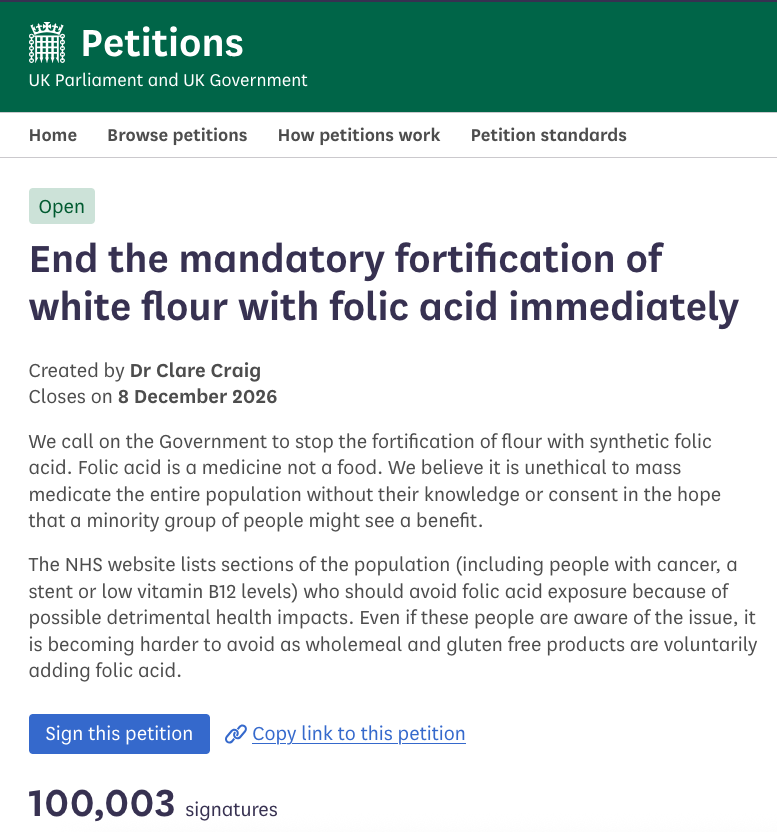
NHS warnings for stents, cancer or dialysis apply specifically to high-dose folic acid medicines or supplements, not the far lower amounts added to food. The site states this distinction clearly. Only non-wholemeal wheat flour is fortified (250 μg per 100 g); wholemeal, gluten-free and other flours remain available. Official assessments (SACN, https://t.co/LVSHEy3Osc) find no established major harm at planned levels.
@VictoriaHa50399@aldi@waitrose@LidlGB Unless it’s made in a non fortifying country, assume that everything containing white flour now contains folic acid, & probably has done since late 2025
@TheHonestDr@Nitramegavas I engage as many people as i can on the subject & though some are shocked the majority react with a kind of "oh well....", with no intention to try to avoid it
@Nitramegavas@TheHonestDr One thing going on is that most people seem unaware & uninterested in what is being added to flour. Fortunately some of us are aware & do care but from my experience that is surprisingly a small minority