Thrilled to share that EVOLVEpro is now published @ScienceMagazine Since our preprint, we now demonstrate low-N eningeering of both antibody and enzymes. We hope this model will broadly useful to the protein engineering field. https://t.co/vMzLFNkcnD
📣 new preprint multimodal atlas. Imaging + scRNA, 57M cells. 🧬🔬
Cells are complex dynamical systems — but most ways we measure them destroy them. We asked: how does live imaging compare to scRNA-seq, the field’s gold std?
The answer surprised us 🧵
https://t.co/RG0PZ1KTHW
🚀 We are introducing PerturbPair (with @TakaKud0) — a platform that combines parallel Perturb-seq and optical pooled screening (OPS/PerturbView) in primary cells to systematically map at massive scale how genetic perturbations reshape cellular states across modalities.
With wonderful collaborators @TakaKud0, @AnaMeireles, @AntRios, @jchuetter, @MinOta, @ORozenblattRosen, @LeviAGarraway, @KGeiger, @avtarsingh, @jkpritch, and Aviv Regev.
Paper link: https://t.co/fnSUymW95s
Researchers at Columbia University have identified a gene that drives the development of neuroendocrine prostate cancer, an aggressive form of the disease.
👉 https://t.co/h2iTpZgfOP
See the original study by the Abate-Shen lab @ColumbiaMed
👉 https://t.co/yxJBBRSNMA
We've had so much fun seeing how targeted & steered interventions with Claude improve and accelerate the ways we interpret results in the @iaincheeseman lab!
Very thankful to @AnthropicAI's AI for Science program for the support and for highlighting our work!
Since launching our AI for Science program, we’ve been working with scientists to understand how AI is accelerating progress.
We spoke with 3 labs where Claude is reshaping research—and starting to point towards novel scientific insights and discoveries.
https://t.co/WAvghBlbsC
From an accidental discovery of hidden biology to a new framework to understanding and diagnosing rare disease. Thrilled to share the most recent work from our lab and the amazing Jimmy Ly.
https://t.co/IyLk2FC6Bh
Today @AnthropicAI released PubMed integration for Claude. No hallucinations. Just real science, real data. As a beta tester, this has been a game changer—like having a supercharged research assistant. Here are 6 prompts that will transform how you search the literature. A 🧵
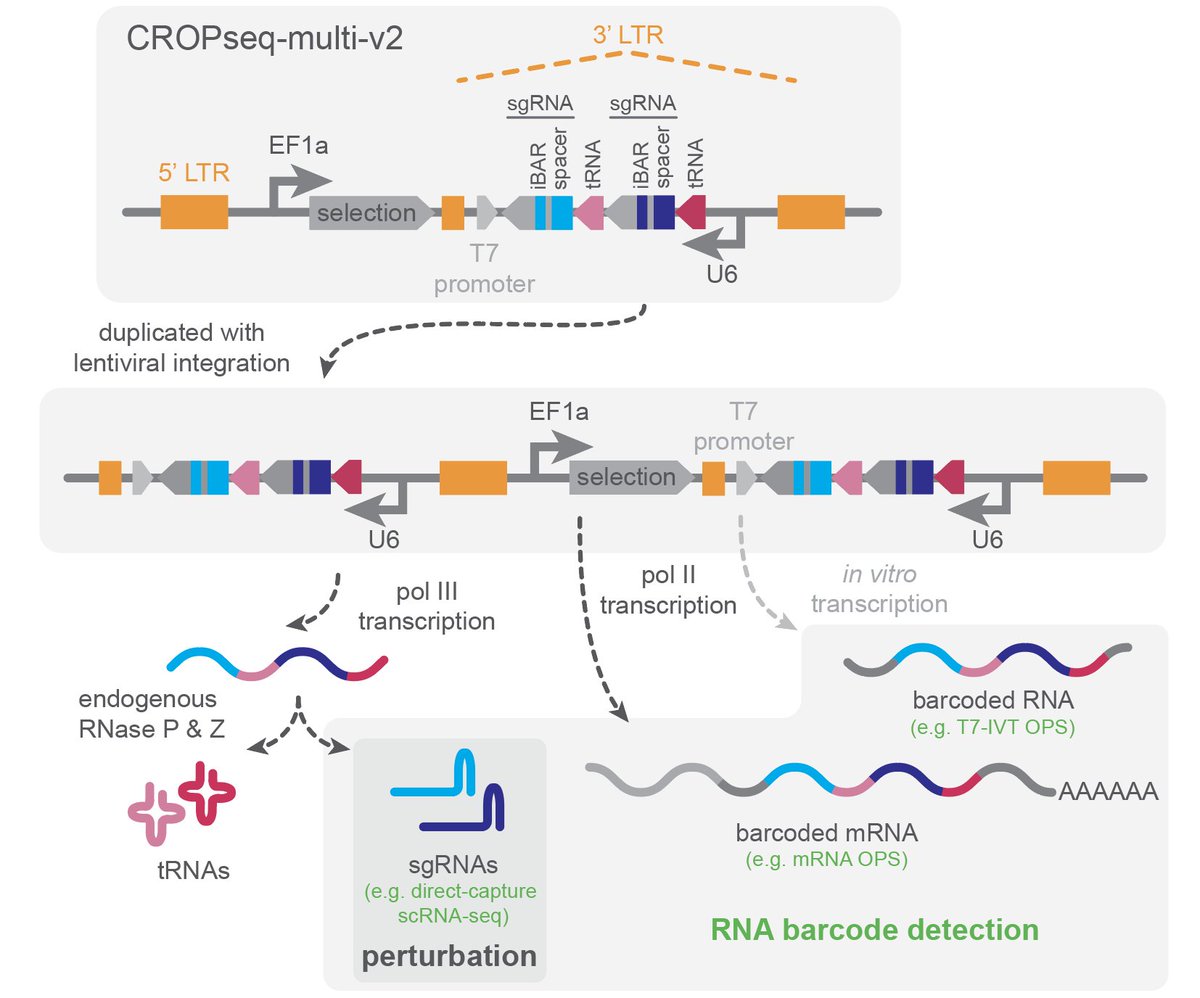
We’re @BlaineyLab sharing a major update to CROPseq-multi, our versatile system for CRISPR screens that is compatible with individual and combinatorial perturbations, diverse SpCas9-based technologies, and multiple high-content, single-cell readouts. https://t.co/GIar9mgX3Z
🚫 No dyes. No bleaching.
🔬 Just AI + label-free microscopy = vivid virtually stained images
New in @NatMachIntell: A deep learning model that enables robust virtual staining across microscopes, cell types & conditions. #CZBiohubSF@mattersOfLight explains:
Optical pooled screening is revolutionizing functional genomics by linking genetic perturbations to complex cellular phenotypes at unprecedented scale. But analyzing these massive datasets has been a major bottleneck - researchers face fragmented tools, multiple format conversions, and lack of standardized frameworks. Together with Roshan Kern, Alexa Mallar, and Andy Nutter-Upham, we developed Brieflow, the first end-to-end computational pipeline for optical pooled screening analysis
Optical Pooled Screening has transformed large-scale cell biology, but lacks robust end-to-end computational strategies to process these Tb-sized datasets. New from Di Bernardo et al (@mat10_d):
Brieflow. A game changer for OPS + new biological insights
https://t.co/H3BATSipjF
You can get started with Brieflow here: https://t.co/pKOxGTCZuY Documentation: https://t.co/qtlcc745xM And explore our reanalysis results: https://t.co/ArLVSJ34RO. We are excited to see what you think and how we can continue improving Brieflow as a community!
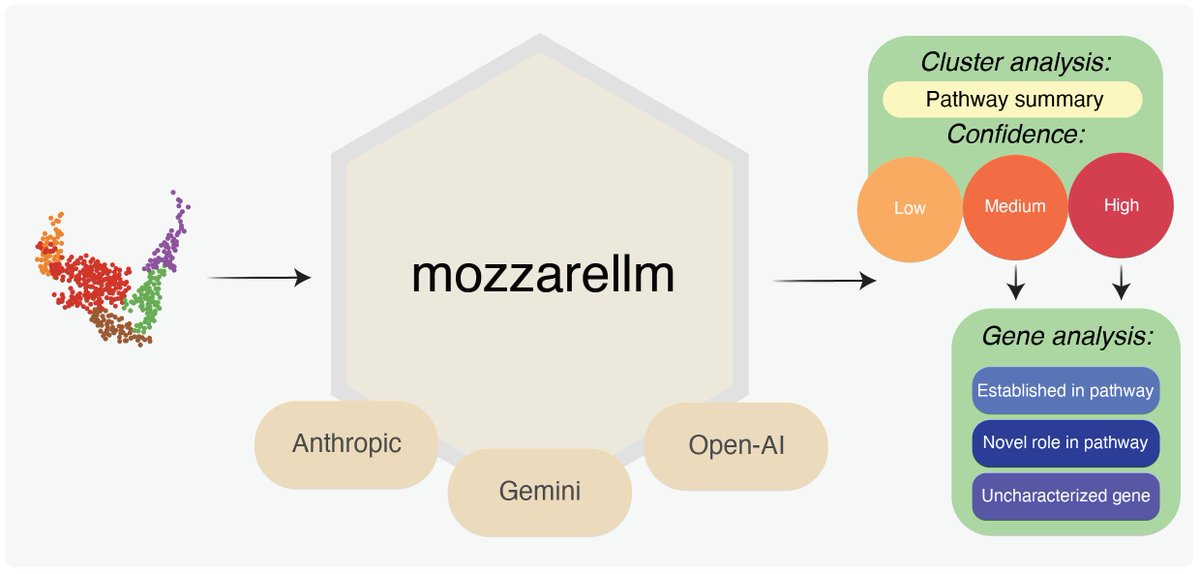
We validated Brieflow by reanalyzing the massive "Vesuvius" dataset: 5,072 genes across 70+ million cells with multiple phenotypic markers. Our improved pipeline uncovered functional relationships completely missed in the original study, including coherent mitochondrial gene clusters, novel ribosome biogenesis components that we experimentally validated, refined MYC transcriptional networks, and unexpected connections between mRNA processing and vesicular trafficking. We also developed MozzareLLM (https://t.co/49JvKq9Onx) for automated biological interpretation and candidate prioritization
Excited to be giving a keynote at the workshop ‘AI: Advancing Foundational Biology’ hosted by @WhiteheadInst at @MIT today! I’ll be speaking about building foundation models for biomedical data, including scGPT and MedSAM. Don’t miss it!
"AI: Advancing Foundational Biology," a symposium exploring AI's impact on biology research, is happening one week from tomorrow. Register: https://t.co/1jCv709Vgu
Check out @WhiteheadInst's symposium – AI: Advancing Foundational Biology – today (Tuesday, April 8), from 2-5:00 p.m., followed by a poster session and reception at 5 p.m. @Schmidt_Center Director Caroline Uhler will be keynoting at 2:15 p.m. Learn more: https://t.co/ZLZ7Sol2WO
New preprint drop! Check out work from Jimmy Ly et al for how protein isoforms generated by alternate translation initiation create dual localization, contribute to mitochondrial function, and are mutated in disease. Tweet-tutorial thread below.
https://t.co/fxWWyODQeJ
Our most recent Nature Cell Biology paper describes an innovative Perturbation-response Score (PS) method to decode heterogeneous responses of cells to perturbations at single-cell level. Particularly helpful for analyzing Perturb-seq data. https://t.co/KaMvUj7ovH
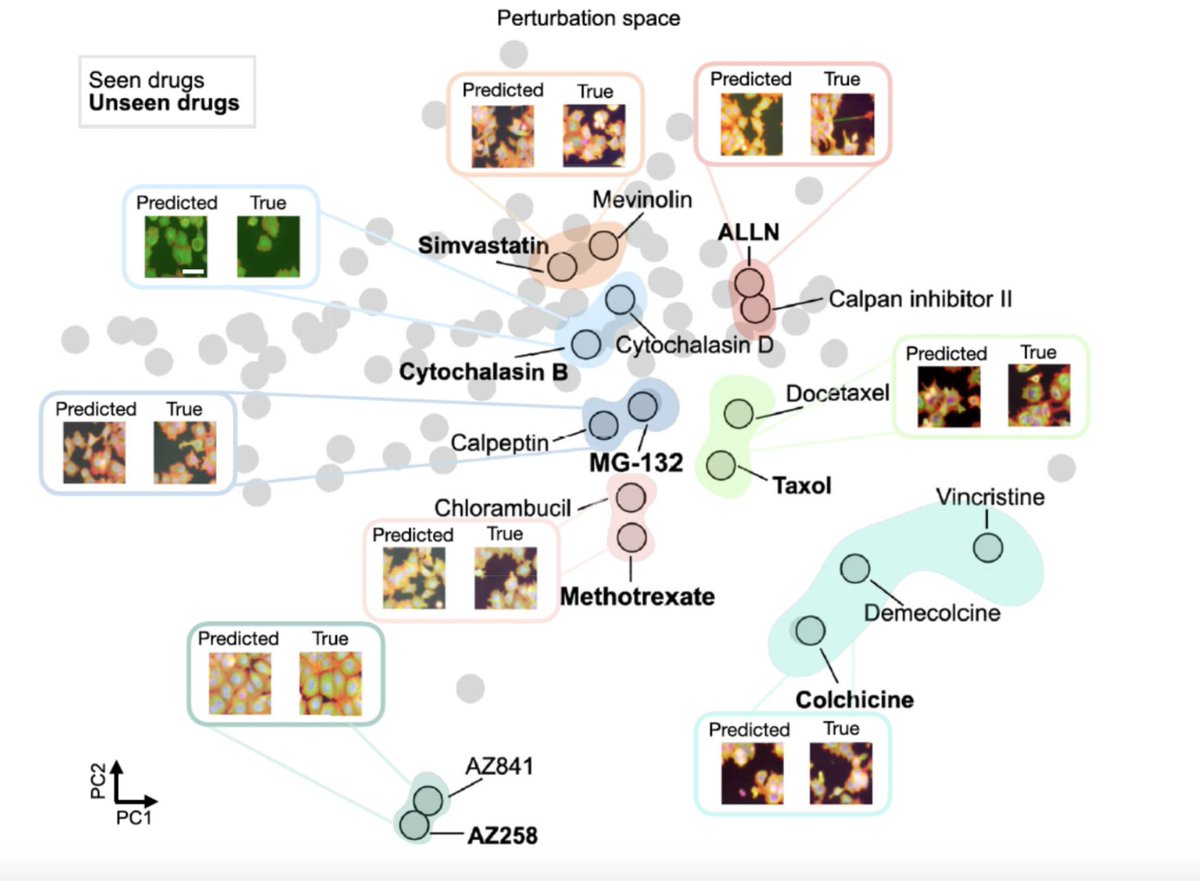
(1/8) IMPA is published now in @NatureComms. (a) It can generate phenotypic cell painting/microscopy data images under unseen drug and genetic perturbations. (b) It learns a perturbation map of treatment similarities (small molecules together with genetic) and (c) it corrects batch effects in microscopy data. This was @ale__palmaa’s master’s thesis, which I supervised with @fabian_theis.
link to the paper: https://t.co/BLkM5lhdXl