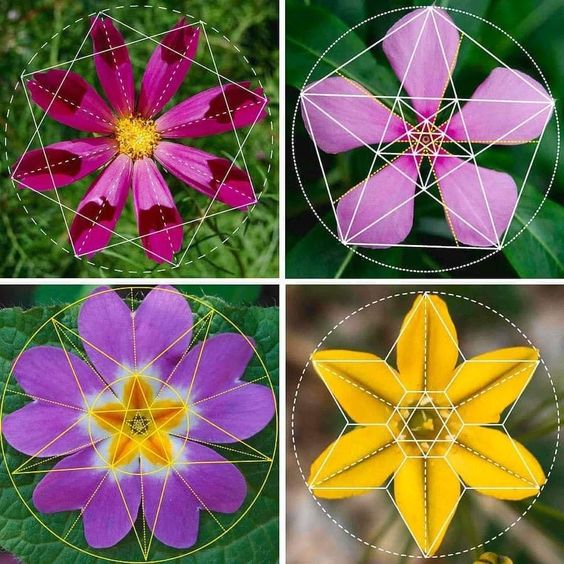
Week 308. This week, activists from all across the world gather in Melle, a village in France, to mobilise for water justice and against the construction of huge water reservoirs for irrigation, and other water-grabbing projects.
Constructions of mega-basins have accelerated in recent years…
🧵
"One of the most important things as a scientist is that you have to be an optimist. If you’re a pessimist, a failed experiment will tell you that the whole idea is bad and you’ll quit. When you fail you have to continue."
- chemistry laureate Richard Henderson's advice.
Did you know?
There's an Interplanetary Transport Network in our Solar System, used to launch spacecraft from Earth and send them to the desired destination.
It is a collection of gravitationally determined pathways through the Solar System that require very little energy for an object to follow.
The ITN makes particular use of Lagrange points as locations where trajectories through space can be redirected using little or no energy.
Interplanetary transfer orbits are solutions to the gravitational three-body problem.
The ITN is based around a series of orbital paths predicted by chaos theory and the restricted three-body problem leading to and from the orbits around the Lagrange points – points in space where the gravity between various bodies balances with the centrifugal force of an object there.
Notable spacecraft that used the ITN were the ISEE-3, launched in 1978, the Hiten lunar mission in 1991, NASA's 2001–2003 Genesis mission, and the Chinese spacecraft Chang'e 2.
[image: stylized depiction of the ITN]
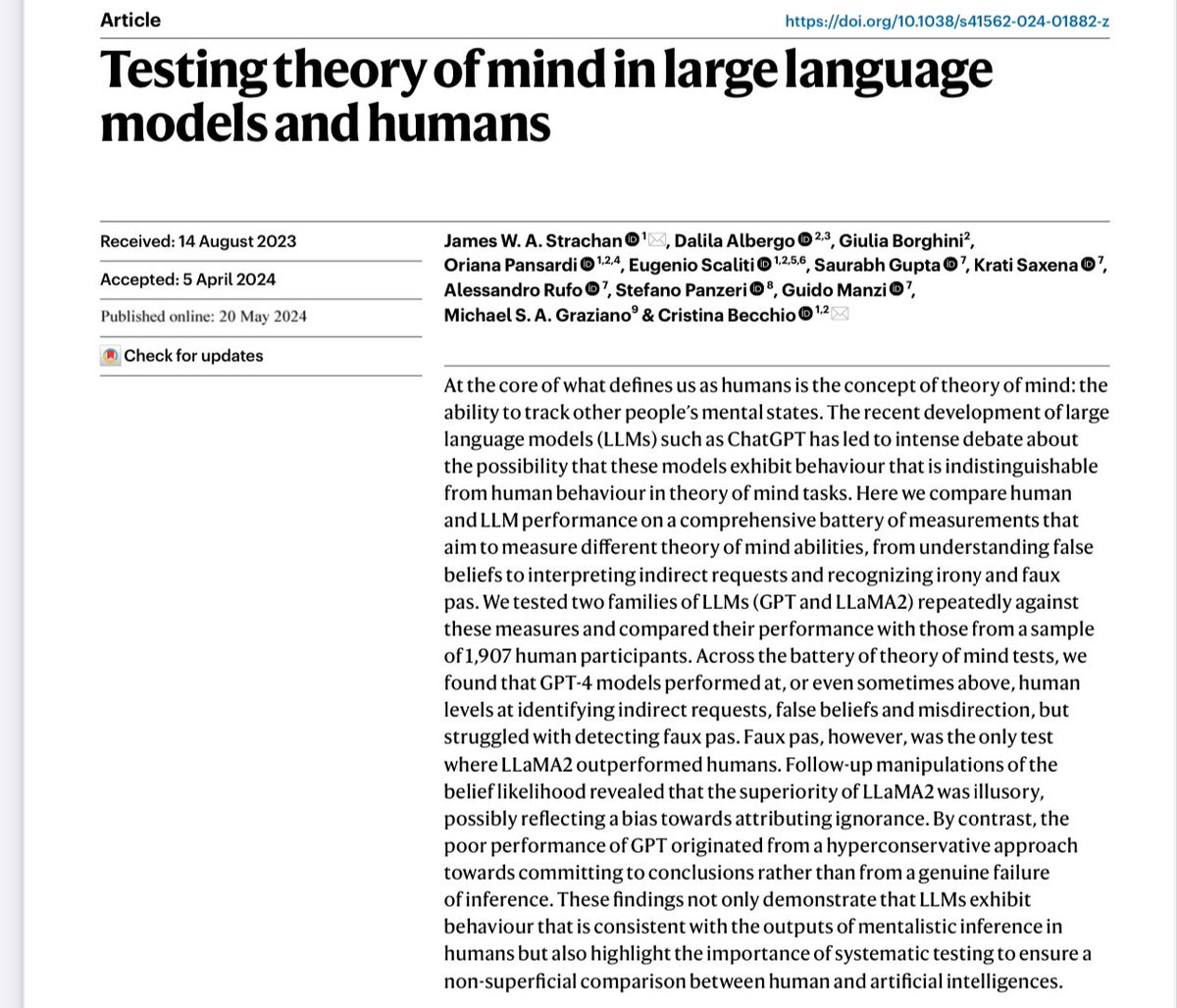
Does GPT-4 have Theory of Mind?
Apparently. “Across the battery of theory of mind tests, we found that GPT-4 models performed at, or even sometimes above, human levels” except when detecting faux pas, but that turned out to be an issue with guardrails. https://t.co/v3naxfnihb
The Busy Beaver Challenge, an open online collaboration, started working together in 2022 to solve a major problem in theoretical computer science. “We’re playing at this edge of unknowability,” said Shawn Ligocki, a programmer and contributor. https://t.co/buyZuSTZDA
#Jung: “Connecting him with the first world, that is, the world of external objects, is the #persona, developed by the forces from within and the forces from without in interaction with one another. We may think of the persona as the bark of a #conscious personality. As we have indicated elsewhere, it is not wholly our choice what the persona shall be, for we can never control entirely the forces that are to play on our conscious personalities.
The center of this conscious personality is the #ego. If we take the layer ‘back’ of this ego, we come to the personal #subconscious. This contains our incompatible wishes or fantasies, our childhood influences, repressed sexuality, in a word all those things we refuse to hold in #consciousness for one reason or another, or which we lose out of it. In the center is the virtual nucleus or central government, representing the totality of the conscious and #unconscious self.
Then we come to the #collectiveunconscious as it is present in us – that is, the part of the racial experience which we carry within us. It is the home of Cabiri or dwarfs whom we may not see else they cease to serve us.² In this region another virtual center often turns up in #dreams. It is a minor figure of oneself usually #projected on a friend, for the unconscious pays these compliments very easily. I have called it the #shadow self. The primitive has developed an intricate set of relationships to his shadow which symbolize very well my idea of the shadow self. He must never tread on another’s shadow, so too we must never mention the weaknesses of another, those things in him of which he is ashamed and has therefore put out of sight. A primitive says, ‘Don’t go out at midday, it is dangerous not to see your shadow.’ We say, ‘Be careful when you don’t know your weaknesses.’
We can speak of the conscious ego as the subjective personality, and of the shadow self as the objective personality. This latter, made up of what is part of the collective unconscious in us, carries the things that appear in us as effects. For we do have effects on people which we can neither predict nor adequately explain. Instinct warns us to keep away from this racial side of ourselves. If we became aware of the ancestral lives in us, we might disintegrate. An ancestor might take possession of us and ride us to death. The primitive says, ‘Don’t let a #ghost get into you.’ By this he conveys the double idea, ‘Don’t let a visitor get into your unconscious, and don’t lose an ancestral #soul.’
The feeling of awe of the primitive with respect to what we call the collective unconscious is very great. It is to him the ghost world. The following story told by an explorer among the Eskimo is an example of this awe, shared even by the medicine man.³ The explorer came to the hut of a Polar Eskimo where incantations were going on over a sick man for the purpose of driving away the #ghosts or evil spirits that were making him sick. There was a tremendous noise going on, with the sorcerer jumping and running about like mad. As soon as he saw the explorer he became very quiet and said: ‘This is all a nonsense.’ He had taken him for another medicine man because no one but a medicine man is supposed to approach a hut where such an incantation is going on. It is the custom, too, for the medicine men who are struggling with the ghosts to smile and say to one another that the whole thing is nonsense, not because they think it is, but because they use it as a sort of apotropaic joke. It is in the nature of a euphemism that should protect them against their own fear.
This instinctive fear of the collective unconscious is very strong indeed in us. There can be a continual flow of fantasies inundating us from it, the danger signal coming when the flow cannot be stopped. If one has once seen this happen one feels deeply frightened. We have in general not much imagination about these things, but the primitive knows all about it. For the most part, we are so cut off from it as to float above it.
When it comes to the rather delicate task of locating the collective unconscious, you must not think of it as being compassed by the brain alone but as including the sympathetic nervous system as well. Only that part of it that is your vertebrate inheritance – that is, that comes to you from your vertebrate ancestors – is to be thought of as within the limits of the central nervous system. Otherwise it is outside your psychological sphere. The very primitive animal layers are supposed to be inherited through the sympathetic system, and the relatively later animal layers belonging to the vertebrate series are represented by the cerebrospinal system. The most recent human layers form the basis of actual consciousness, and thus the collective unconscious is reaching into consciousness, and only thus far can you call the collective unconscious #psychological. We wish to reserve the term ‘psychological,’ used thus, for those elements which, theoretically at least, can be brought into conscious control. On this basis the main body of the collective unconscious cannot be strictly said to be psychological but #psychical. We cannot repeat this distinction too often, for when I have referred to the collective unconscious as ‘outside’ our brains, it has been assumed that I meant hanging somewhere in mid-air. After this explanation it will become clear to you that the collective unconscious is always working upon you through trans-subjective facts which are probably inside as well as outside yourselves.
As an example of how the collective unconscious can work upon you through the inside fact, I would give the following: Suppose a man is sitting somewhere out of doors and a bird flies down near him. Another day he is in the same place and a similar bird comes. This time the bird stirs him in an altogether strange way, there is something mysterious attaching to that second bird. The naïve man certainly assumes that the extraordinary effect of the second bird belongs as much to the outside world as the ordinary effect produced by the first bird. If he is a primitive he will distinguish between the two effects by saying the first bird is just a bird, but the second is a ‘doctor’ bird. But we know that the extraordinary effect of the ‘doctor’ bird is due to a #projection upon it from the collective unconscious, from within the man.
Ordinarily, it is only by such a projection into the external world that we become conscious of the collective unconscious images. Thus suppose we meet with an extraordinary effect from without. An analysis of that effect shows that it amounts to a projection of an unconscious content, and so we arrive at the realization of such a content. The case mentioned above is an ordinary one insofar as we assume an individual who is chiefly identical with the ego or conscious, but if it should happen that the individual should be more on the side of his shadow, then he would be capable of realizing without projection an immediate – that is, an autonomous – movement of the unconscious contents. But if the individual is identical with his normal ego, then even such an autonomous manifestation of the unconscious – that is, one not released by the projection, nor by external effect, but originating within himself – appears to him as if in the external world. In other words, it requires a very close contact with the unconscious, and an understanding of it, for a man to realize that the origin of his mythological or spiritual experiences is within himself, and that whatever forms these experiences may appear to take, they do not in fact come from the external world.
Using the diagram I have just discussed, that is, Diagram 9, we could give an explanation of #analysis. The analyst makes his approach through the persona. Certain formalities of greeting are gone through, and compliments exchanged. In this way, one comes to the gateway of the conscious. Then the conscious contents are carefully examined, and the one passes to the personal subconscious. Here the doctor often marvels that many of the things found there are not conscious since they seem so obvious to an observer. At the personal subconscious a #Freudian analysis ends, as I indicated above. When you have finished with the personal subconscious, you have finished with the causal influence of the past. Then you must come to the reconstructive side, and the collective unconscious will speak in images and the consciousness of unconscious objects will begin. If you can succeed in breaking down that dividing wall made by the personal subconscious, the shadow can be united with the ego and the individual becomes a mediator between two worlds. He can now see himself from the ‘other side’ as well as from ‘this side.’ Here consciousness of the shadow self is not though,⁴ one must have the unconscious images also at one’s disposal. The #animus or the #anima begins to be active now, and the anima will bring in the figure of the old man. All these figures will be projected into the conscious external world, and objects of the unconscious begin to correspond to objects in the external world, so that the latter, the real objects, take on a mythological character. This means an enormous enrichment of life.”
² 2012: The Cabiri were the deities celebrated at the mysteries of Samothrace. They were held to be promoters of fertility and protectors of sailors. Georg Friedrich Creuzer and Friedrich Schelling held them to be the primal deities of Greek mythology, from which all others developed (Symbolik und Mythologie der alten Völker [Leipzig: Leske, 1810–23]); Schelling’s Treatise on “The Deities of Samothrace” (1815), interpreted and translated by R. F. Brown (Missoula, MT: Scholars Press, 1977). Jung had copies of both of these works. They appear in Goethe’s Faust, part 2, act 2. The Cabiri made an appearance in Liber Novus (pp. 306, 320f., and 326f.).
³ Jung’s source may have been Knud Rasmussen, Neue Menschen; ein jahr bei den nachbarn des Nordpols (1907), a book that was in his library, or Rasmussen, Across Arctic America (1927), which he cited in the Dream Analysis seminar, pp. 5f. (1928).
⁴ The transcript seems to be garbled here. Perhaps “enough.”
~C.G. Jung, Introduction to Jungian Psychology: Notes of the Seminar on Analytical Psychology Given in 1925, Lecture 16, p. 138-142
[Emphases mine.]
#UFOTwitter | #UFOX | #UAPTwitter | #UAPX
To cleanse your palate of how totally f&%ked everything feels right now ...
... animating the 30-day running global suface temperature anomaly (above the pre-industrial baseline), 1940 - present.
This visualizationshows the occurrence of earthquakes on Earth between July 2017 and July 2018, but differently from other charts, this ones shows them with their depth.
[🎞️ nicolaraluk]
It begins.
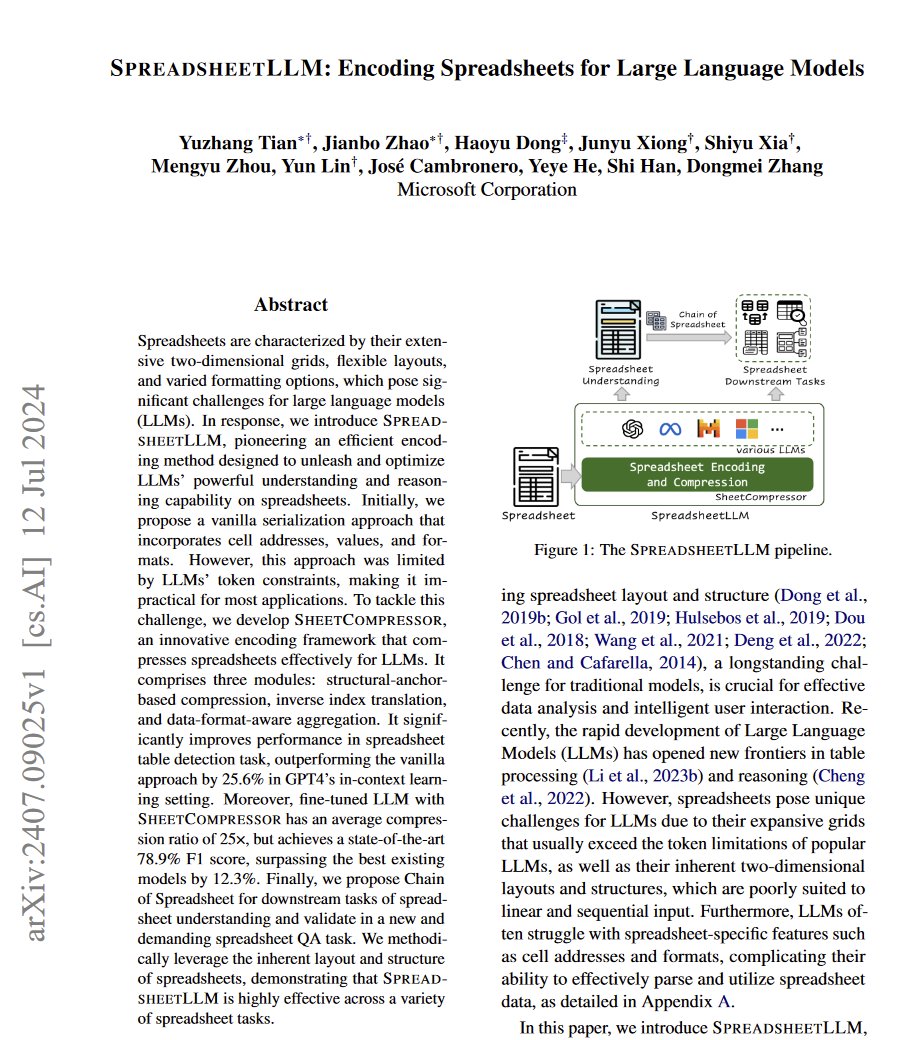
This is another sign that LLMs are going to be able to work with structured & unstructured spreadsheet data soon. This will unlock a lot of use cases (projections, financials, valuations, etc.) and having a spreadsheet source of truth will tend to lower hallucinations
A personal message from 2022 chemistry laureate Carolyn Bertozzi to all young researchers on why to aspire for a career in science:
”I would want to share with them how a life in science is incredibly rewarding. It is rewarding because it is creating."
#NobelPrize
A brand new English translation of Marx's Capital (the first in 50 years), translated by Paul Reitter and edited by Reitter and Paul North, will be out soon @PrincetonUPress
It is based on the last German edition revised by Marx himself and will be an essential book for all English-language readers of Marx.
Fully recommended. Preorder it now👇
https://t.co/F28yQTCKPt







![Rainmaker1973's tweet photo. Did you know?
There's an Interplanetary Transport Network in our Solar System, used to launch spacecraft from Earth and send them to the desired destination.
It is a collection of gravitationally determined pathways through the Solar System that require very little energy for an object to follow.
The ITN makes particular use of Lagrange points as locations where trajectories through space can be redirected using little or no energy.
Interplanetary transfer orbits are solutions to the gravitational three-body problem.
The ITN is based around a series of orbital paths predicted by chaos theory and the restricted three-body problem leading to and from the orbits around the Lagrange points – points in space where the gravity between various bodies balances with the centrifugal force of an object there.
Notable spacecraft that used the ITN were the ISEE-3, launched in 1978, the Hiten lunar mission in 1991, NASA's 2001–2003 Genesis mission, and the Chinese spacecraft Chang'e 2.
[image: stylized depiction of the ITN]](https://pbs.twimg.com/media/GSx6UW5WkAA57WC.jpg)


![jungianLaura's tweet photo. #Jung: “Connecting him with the first world, that is, the world of external objects, is the #persona, developed by the forces from within and the forces from without in interaction with one another. We may think of the persona as the bark of a #conscious personality. As we have indicated elsewhere, it is not wholly our choice what the persona shall be, for we can never control entirely the forces that are to play on our conscious personalities.
The center of this conscious personality is the #ego. If we take the layer ‘back’ of this ego, we come to the personal #subconscious. This contains our incompatible wishes or fantasies, our childhood influences, repressed sexuality, in a word all those things we refuse to hold in #consciousness for one reason or another, or which we lose out of it. In the center is the virtual nucleus or central government, representing the totality of the conscious and #unconscious self.
Then we come to the #collectiveunconscious as it is present in us – that is, the part of the racial experience which we carry within us. It is the home of Cabiri or dwarfs whom we may not see else they cease to serve us.² In this region another virtual center often turns up in #dreams. It is a minor figure of oneself usually #projected on a friend, for the unconscious pays these compliments very easily. I have called it the #shadow self. The primitive has developed an intricate set of relationships to his shadow which symbolize very well my idea of the shadow self. He must never tread on another’s shadow, so too we must never mention the weaknesses of another, those things in him of which he is ashamed and has therefore put out of sight. A primitive says, ‘Don’t go out at midday, it is dangerous not to see your shadow.’ We say, ‘Be careful when you don’t know your weaknesses.’
We can speak of the conscious ego as the subjective personality, and of the shadow self as the objective personality. This latter, made up of what is part of the collective unconscious in us, carries the things that appear in us as effects. For we do have effects on people which we can neither predict nor adequately explain. Instinct warns us to keep away from this racial side of ourselves. If we became aware of the ancestral lives in us, we might disintegrate. An ancestor might take possession of us and ride us to death. The primitive says, ‘Don’t let a #ghost get into you.’ By this he conveys the double idea, ‘Don’t let a visitor get into your unconscious, and don’t lose an ancestral #soul.’
The feeling of awe of the primitive with respect to what we call the collective unconscious is very great. It is to him the ghost world. The following story told by an explorer among the Eskimo is an example of this awe, shared even by the medicine man.³ The explorer came to the hut of a Polar Eskimo where incantations were going on over a sick man for the purpose of driving away the #ghosts or evil spirits that were making him sick. There was a tremendous noise going on, with the sorcerer jumping and running about like mad. As soon as he saw the explorer he became very quiet and said: ‘This is all a nonsense.’ He had taken him for another medicine man because no one but a medicine man is supposed to approach a hut where such an incantation is going on. It is the custom, too, for the medicine men who are struggling with the ghosts to smile and say to one another that the whole thing is nonsense, not because they think it is, but because they use it as a sort of apotropaic joke. It is in the nature of a euphemism that should protect them against their own fear.
This instinctive fear of the collective unconscious is very strong indeed in us. There can be a continual flow of fantasies inundating us from it, the danger signal coming when the flow cannot be stopped. If one has once seen this happen one feels deeply frightened. We have in general not much imagination about these things, but the primitive knows all about it. For the most part, we are so cut off from it as to float above it.
When it comes to the rather delicate task of locating the collective unconscious, you must not think of it as being compassed by the brain alone but as including the sympathetic nervous system as well. Only that part of it that is your vertebrate inheritance – that is, that comes to you from your vertebrate ancestors – is to be thought of as within the limits of the central nervous system. Otherwise it is outside your psychological sphere. The very primitive animal layers are supposed to be inherited through the sympathetic system, and the relatively later animal layers belonging to the vertebrate series are represented by the cerebrospinal system. The most recent human layers form the basis of actual consciousness, and thus the collective unconscious is reaching into consciousness, and only thus far can you call the collective unconscious #psychological. We wish to reserve the term ‘psychological,’ used thus, for those elements which, theoretically at least, can be brought into conscious control. On this basis the main body of the collective unconscious cannot be strictly said to be psychological but #psychical. We cannot repeat this distinction too often, for when I have referred to the collective unconscious as ‘outside’ our brains, it has been assumed that I meant hanging somewhere in mid-air. After this explanation it will become clear to you that the collective unconscious is always working upon you through trans-subjective facts which are probably inside as well as outside yourselves.
As an example of how the collective unconscious can work upon you through the inside fact, I would give the following: Suppose a man is sitting somewhere out of doors and a bird flies down near him. Another day he is in the same place and a similar bird comes. This time the bird stirs him in an altogether strange way, there is something mysterious attaching to that second bird. The naïve man certainly assumes that the extraordinary effect of the second bird belongs as much to the outside world as the ordinary effect produced by the first bird. If he is a primitive he will distinguish between the two effects by saying the first bird is just a bird, but the second is a ‘doctor’ bird. But we know that the extraordinary effect of the ‘doctor’ bird is due to a #projection upon it from the collective unconscious, from within the man.
Ordinarily, it is only by such a projection into the external world that we become conscious of the collective unconscious images. Thus suppose we meet with an extraordinary effect from without. An analysis of that effect shows that it amounts to a projection of an unconscious content, and so we arrive at the realization of such a content. The case mentioned above is an ordinary one insofar as we assume an individual who is chiefly identical with the ego or conscious, but if it should happen that the individual should be more on the side of his shadow, then he would be capable of realizing without projection an immediate – that is, an autonomous – movement of the unconscious contents. But if the individual is identical with his normal ego, then even such an autonomous manifestation of the unconscious – that is, one not released by the projection, nor by external effect, but originating within himself – appears to him as if in the external world. In other words, it requires a very close contact with the unconscious, and an understanding of it, for a man to realize that the origin of his mythological or spiritual experiences is within himself, and that whatever forms these experiences may appear to take, they do not in fact come from the external world.
Using the diagram I have just discussed, that is, Diagram 9, we could give an explanation of #analysis. The analyst makes his approach through the persona. Certain formalities of greeting are gone through, and compliments exchanged. In this way, one comes to the gateway of the conscious. Then the conscious contents are carefully examined, and the one passes to the personal subconscious. Here the doctor often marvels that many of the things found there are not conscious since they seem so obvious to an observer. At the personal subconscious a #Freudian analysis ends, as I indicated above. When you have finished with the personal subconscious, you have finished with the causal influence of the past. Then you must come to the reconstructive side, and the collective unconscious will speak in images and the consciousness of unconscious objects will begin. If you can succeed in breaking down that dividing wall made by the personal subconscious, the shadow can be united with the ego and the individual becomes a mediator between two worlds. He can now see himself from the ‘other side’ as well as from ‘this side.’ Here consciousness of the shadow self is not though,⁴ one must have the unconscious images also at one’s disposal. The #animus or the #anima begins to be active now, and the anima will bring in the figure of the old man. All these figures will be projected into the conscious external world, and objects of the unconscious begin to correspond to objects in the external world, so that the latter, the real objects, take on a mythological character. This means an enormous enrichment of life.”
² 2012: The Cabiri were the deities celebrated at the mysteries of Samothrace. They were held to be promoters of fertility and protectors of sailors. Georg Friedrich Creuzer and Friedrich Schelling held them to be the primal deities of Greek mythology, from which all others developed (Symbolik und Mythologie der alten Völker [Leipzig: Leske, 1810–23]); Schelling’s Treatise on “The Deities of Samothrace” (1815), interpreted and translated by R. F. Brown (Missoula, MT: Scholars Press, 1977). Jung had copies of both of these works. They appear in Goethe’s Faust, part 2, act 2. The Cabiri made an appearance in Liber Novus (pp. 306, 320f., and 326f.).
³ Jung’s source may have been Knud Rasmussen, Neue Menschen; ein jahr bei den nachbarn des Nordpols (1907), a book that was in his library, or Rasmussen, Across Arctic America (1927), which he cited in the Dream Analysis seminar, pp. 5f. (1928).
⁴ The transcript seems to be garbled here. Perhaps “enough.”
~C.G. Jung, Introduction to Jungian Psychology: Notes of the Seminar on Analytical Psychology Given in 1925, Lecture 16, p. 138-142
[Emphases mine.]
#UFOTwitter | #UFOX | #UAPTwitter | #UAPX](https://pbs.twimg.com/media/GStWY_LX0AAOpUt.jpg)