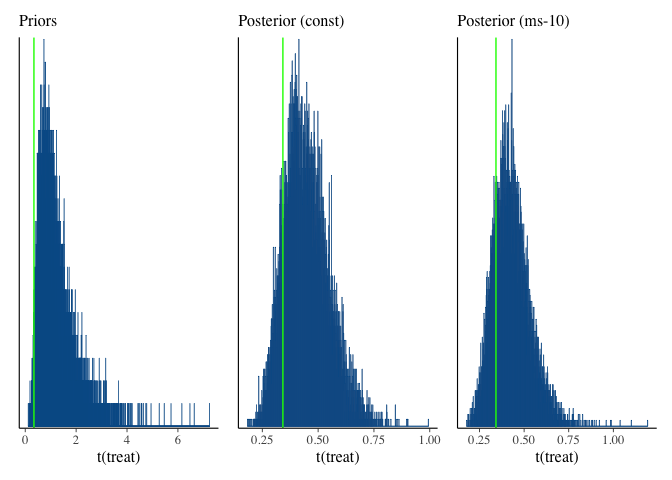
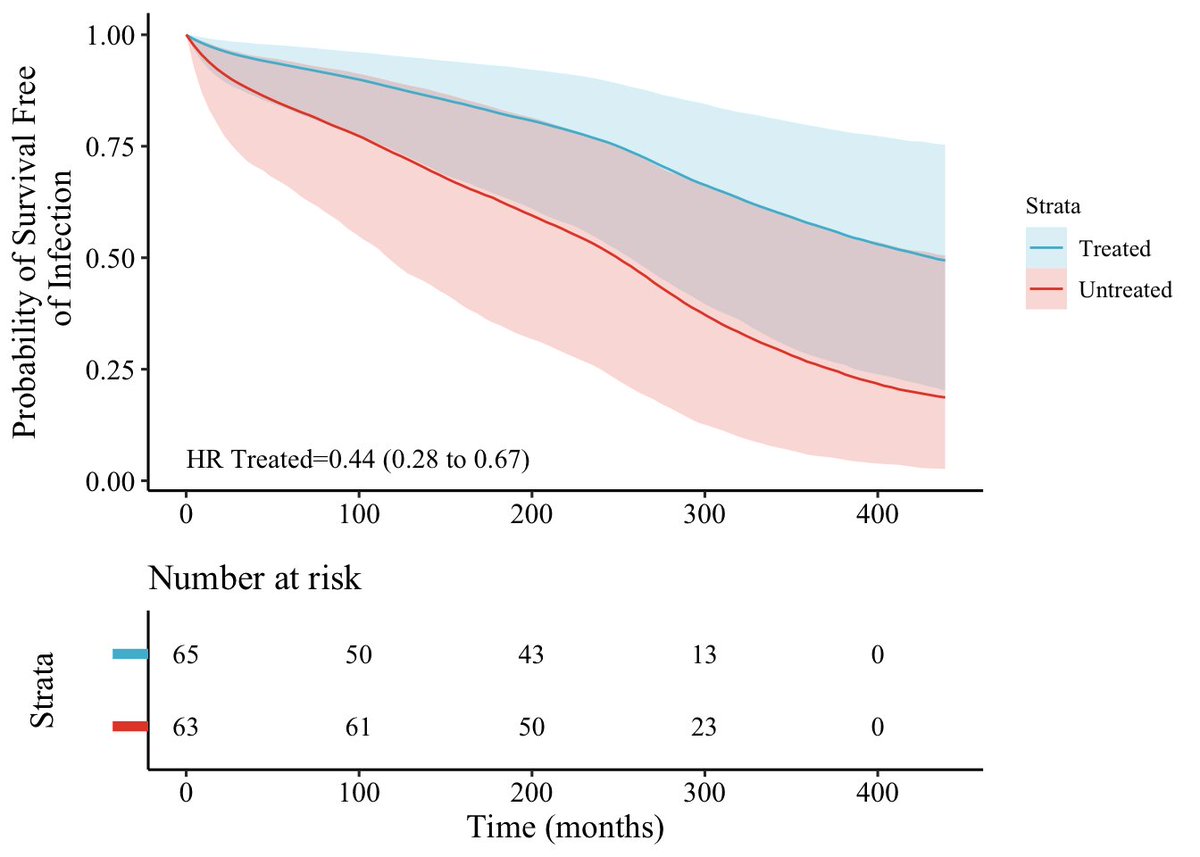
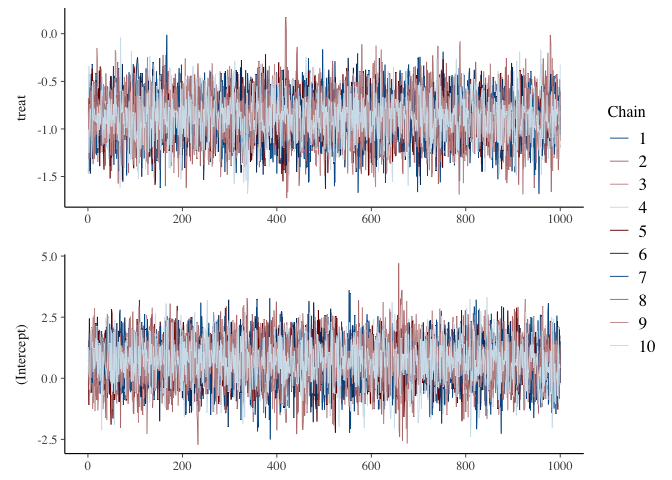
Hello X community! let's delve into a fascinating statistical concept known as Survival Analysis using @mcmc_stan in #rstats
The blogpost covers a survival workflow in bayes (model+splines,priors,visualization,validation and deployment in Shiny)
https://t.co/5CJWZC562A
interesting position paper throwing cold water on autoresearch/ai scientist: LLMs can't jump.
The thought experiment is this: Take an LLM with a 1905 knowledge cutoff. Feed it every paper, every dataset, every equation of that era. Could it invent general relativity?
No.
Discovery isn't one thing. It's three. You can induce — generalize from data, which lands you at Newton plus some epicycles to explain Mercury's weird orbit. You can deduce — derive rigorously from axioms you already have, which never gives you new axioms. Or you can jump — invent the frame itself, decide that spacetime curves. That third move is the one that matters, and it's exactly the one induction and deduction can't reach.
Penrose put it as three worlds: Physical, Mental, Platonic. Data flows from the world into a mind fine. But the new law has to be discovered into the Platonic world first — and that step is the jump. LLMs are induction machines running over what already exists. Structurally, they don't take it.
I think it’s a warning to AI scientists/autoresearch against collapsing two very different things into one word.
Hill-climbing: LLMs are already superhuman here, and autoresearch in this sense is real and moving fast.
Abduction/leap/jump: a new frame that reorganizes the field, that is a different act entirely, and nothing about scaling induction suggests you get there.
Most of what Autoresearch ships today will be spectacular hill-climbing. The jump is still ours for now.
🚨 ANOTHER MASTERCLASS FROM @3BLUE1BROWN
The compressibility of language isn’t just a math curiosity, it’s the hidden engine behind every LLM you use.
Grant’s new video reframes Shannon’s entropy through one elegant lens:
Prediction IS compression.
→ The better you predict the next word, the fewer bits you need to store it
→ Shannon measured English at ~1 bit per character: astonishingly compressible
→ This is exactly what GPT-style models optimize
→ Intelligence, in this framing, is compression
FUN FACT: Von Neumann told Shannon to name it “entropy” because nobody truly understands it anyway 😄
Decades later, that same concept became the bedrock of modern AI.
Deep-dive resources in the 🧵 ↓
Two math olympiad champions wrote a training manual in 1993 on two old Macintosh computers, and every American kid who has won a major math competition in the last decade learned to think from it.
Their names are Sandor Lehoczky and Richard Rusczyk. The book is called The Art of Problem Solving. Most people in math know it as AoPS.
Since 2015, every single member of the US International Math Olympiad team has been an AoPS student. Not most of them. Every one.
That statistic sounds impossible until you understand what the book actually does.
Lehoczky and Rusczyk were not professors. They were competitors. Lehoczky earned the sole perfect AIME score in 1990 and led the national first place team. Rusczyk was a USA Mathematical Olympiad winner and a perfect AIME scorer in 1989. They had both survived the same brutal selection process the book was designed to train students for.
And the first thing they decided was that almost every existing math textbook was teaching the wrong thing.
School math gives you formulas. You memorize them. You apply them. You pass the test. Then you sit down in front of a real competition problem and the formula does not apply, and you have nothing underneath it.
That is the gap. The gap is not knowledge. It is thinking.
The entire premise of AoPS is that problem-solving is a transferable skill, not a bag of memorized tricks. A student who genuinely understands why a technique works can adapt it, combine it with something else, and deploy it in a context they have never seen before. A student who only memorized the technique freezes the moment the problem looks different.
The book teaches the difference between a formula and a method.
A formula tells you what to compute. A method tells you how to see. The students who win olympiads are not the ones who know more formulas. They are the ones who have trained themselves to look at an unfamiliar problem and recognize its structure. To see that this problem is secretly asking the same question as a problem they solved three weeks ago, just dressed differently.
Rusczyk calls this "learning to read the problem." Not reading the words. Reading what the problem is actually asking underneath the words.
The second thing they built into the book is tolerance for being stuck.
Most students treat confusion as a signal to stop. The book treats confusion as the starting point. Every chapter pushes students past the point where the obvious approach runs out. That moment of running out is not failure. That is where the actual thinking begins.
Lehoczky once described it this way. If you can solve a problem quickly, you are not learning. You are performing. Learning only happens when you are past the edge of what you already know.
The book was written on old Macintosh computers in 1993. Rusczyk launched the AoPS website in 2003. Today the community has over one million users. Thousands of students enroll in AoPS online courses every year. Most winners of every major American math competition are AoPS alumni.
A platform built by two kids who were good at math competitions has become the infrastructure that produces the next generation of mathematicians, engineers, and scientists who are good at thinking.
The formulas you memorized in school will eventually be obsolete.
The thinking you trained will not.
What is one problem in your life right now that you have been avoiding because you do not yet know the right formula to solve it?
These are so cool. We need a new kind of benchmark for visual IQ applied to these kinds of graphics. I’m still in complete disbelief that we can do this now.
We implemented @karpathy 's MicroGPT fully on FPGA fabric.
No GPU.
No PyTorch.
No CPU inference loop.
Just a transformer burned into hardware, generating 50,000+ tokens/sec.
The model is small, but the idea is not: inference does not have to live only in software 👇
🧵1/ Our new study on AI and physician reasoning just came out in @ScienceMagazine. As co-senior author, I'm excited about our findings, and I do think AI will reshape medicine. But after seeing some of the discussions, I'm also worried about how our findings may be misinterpreted.
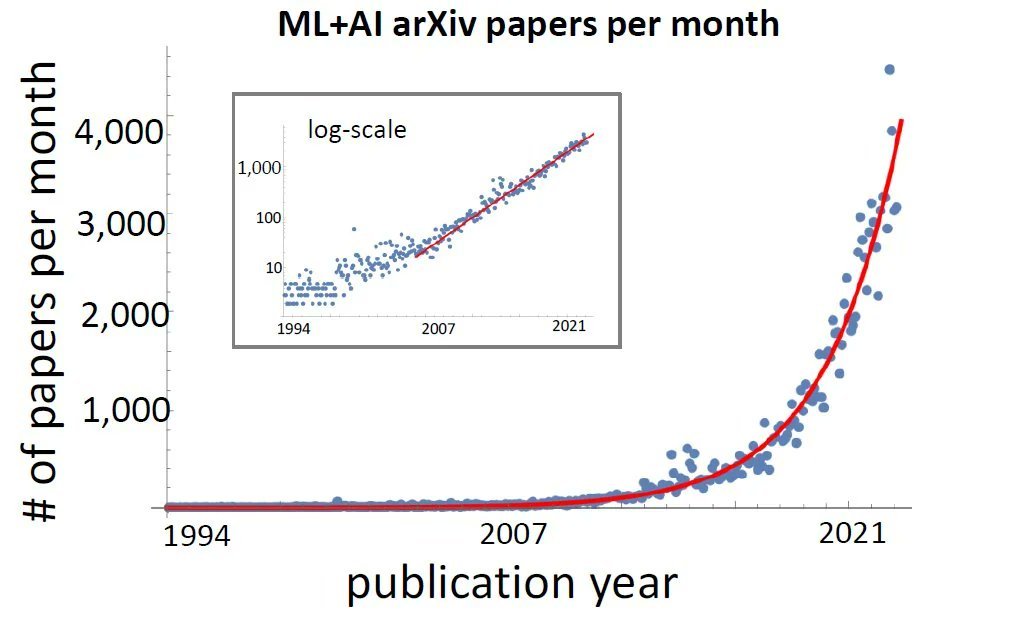
2/ Millions of papers a year, growing faster every year. Most aren't reproducible. Peer review is buckling. And every paper is a lossy compression of the work behind it — months of dead ends, judgment calls, and configuration tricks flattened into a clean story. The format was designed for a world where every reader was human. That world is ending.
This paper demonstrates that neural networks are surprisingly poorly calibrated and presents a simple yet highly effective post-processing method (temperature scaling) to address this critical issue for practical applications.
ChapterPal: https://t.co/9Ho1Azpdkj
PDF: https://t.co/Aq58HfmbRd
Barbacid ocultó sus intereses empresariales cuando anunció una supuesta 'curación' del cáncer de páncreas, como revelamos en EL PAÍS el 6 de febrero. La Academia de Ciencias de EE UU acaba de retractar su estudio por esa turbia maniobra:
https://t.co/ToMju4YGEl Por @Nunodomin
If you don't understand this, you will not understand why LLM-based agents are irreparably failing for a general-purpose problem solving.
An agent (by the way it was the topic of my PhD 20 years ago) to be useful, must be rational. Being rational means to always prefer an outcome that results in the maximal expected utility to its master/user.
Let’s say an agent has two actions they can execute in an environment: a_1 and a_2.
If the agent can predict that a_1 gives its user an expected utility of 10, and a_2 gives an expected utility of -100, then a rational agent must choose a_1 even if choosing a_2 seems like a better option when explained in words. The numbers 10 and -100 can be obtained by summing the products of all possible outcomes for each action and their likelihoods.
Now here is the problem with LLM-based agents.
The LLM is not optimizing expected utility in the environment. It is optimizing the next token, conditioned on a prompt, a context window, and a training distribution full of examples of what helpful answers are supposed to look like.
Those are not the same objective.
So when we wrap an LLM in a loop and call it an “agent,” we have not created a rational decision-maker. We have created a text generator that can imitate the surface form of deliberation.
It may say things like:
“I should compare the expected outcomes.”
“The best action is probably a_1.”
“I will now execute the optimal plan.”
But the internal mechanism is not selecting actions by maximizing the user’s expected utility. It is generating a continuation that is statistically appropriate given the prompt and prior context.
This distinction matters enormously.
For narrow tasks, the imitation can be good enough. If the environment is constrained, the actions are simple, and the success criteria are close to patterns seen in training, the system can appear agentic.
But for general-purpose problem solving, the gap becomes fatal.
A rational agent needs stable preferences, calibrated beliefs, causal models of the world, the ability to evaluate consequences, and the discipline to choose the action with maximal expected utility even when that action is boring, non-linguistic, or unlike the examples in its training data.
An LLM-based agent has none of that by default.
It has fluency. It has pattern completion. It has a remarkable ability to compress and recombine human text. But fluency is not rationality, and a plausible plan is not an expected-utility calculation.
This is why these systems so often fail in strange, brittle, and irreparable ways when given open-ended responsibility.
They are not failing because the prompts are insufficiently clever.
They are failing because we are asking a simulator of rational agency to be a rational agent.
Software engineering fundamentals are more important now than ever. I don't care what any influencer or CTO has said.
Good fundamentals means you can direct AI to write more productive code for you.
Bad fundamentals means your AI-written code will be a liability.
Someone built a Chromium browser that runs entirely in your terminal.
It's called Carbonyl, and it renders actual web pages in your command line. The best part is it runs with 0% CPU usage when idle.
- Full Chromium engine in the terminal.
- dles at exactly 0% CPU.
- Fast, lightweight, and completely terminal-native.
100% Open Source.
Statistical Rethinking 2026 is done: 20 new lectures emphasizing logical & critical statistical workflow, from basics of probability to causal inference to reliable computation to sensitivity. It's all free, made just for you. Lecture list & links: https://t.co/jFpoiNC6oW
SoccerData es una librería de Python desarrollada por Peter Robberecht que centraliza datos de fútbol procedentes de múltiples plataformas (FBref, Understat, WhoScored, Sofascore, ESPN, Club Elo, SoFIFA) y los entrega directamente como DataFrames de Pandas listos para trabajar. Su principal fortaleza es la normalización: columnas, identificadores y estructuras unificadas entre todas las fuentes, lo que permite combinar información de competiciones, equipos y jugadores sin complicaciones.
Con SoccerData puedes obtener: calendarios y resultados de partidos, estadísticas de equipos por temporada, métricas detalladas de jugadores (passing, shooting, standard, etc.), datos descargados bajo demanda y con caché local.
Es una herramienta perfecta para análisis, dashboards y modelos avanzados. Desde estudios tácticos o procesos de scouting hasta visualizaciones en Power BI o modelos predictivos, ofrece una base robusta para trabajar con datos reales del fútbol actual. Eso sí, como ocurre con cualquier herramienta basada en scraping, exige un uso responsable y tener en cuenta que las fuentes pueden cambiar con el tiempo.
https://t.co/c9Jvy9HUl8
Anthropic had 16 AI agents build a C compiler from scratch. 100k lines, compiles the Linux kernel, $20k, 2 weeks.
To put that in perspective GCC took thousands of engineers over 37 years to build. (Granted from 1987 - however) One researcher and 16 AI agents just built a compiler that passes 99% of GCC's own torture test suite, compiles FFmpeg, Redis, PostgreSQL, QEMU and runs Doom.
They say they "(mostly) walked away." But that "mostly" is doing heavy lifting.
No human wrote code but the researcher constantly redesigned tests, built CI pipelines when agents broke each other's work, and created workarounds when all 16 agents got stuck on the same bug.
The human role didn't disappear. It shifted from writing code to engineering the environment that lets AI write code.
I don’t know how you could make the point AI is hitting a wall.
I recommend both books, to be read simultaneously. The first, for breadth of coverage, the second, for clarity -- free of the cognitively opaque notion of "potential outcome". @KirkDBorne