Excited to share that our map of the genetic interaction network of the DNA Damage Response is out in @NatureBiotech! Led by Sam Hayward, @vaitsiankova and @tlmdz_.
https://t.co/hIV5BLcJuQ
Cells mitigate damage to DNA in surprising ways. Using a series of CRISPRi chemogenomics screens, we identified a PRDX1-dependent iron–damage axis in the DNA damage response.
Congratulations to Tom, Abe, Shaheen, Josep and all co-authors!
https://t.co/TrtzP2T9Bw
As I have pointed out many times publicly, single cell foundation model performance will scale with the number of perturbations, not the number of cells.
We barely have ~100k perturbations in the public domain and it is reasonable to expect we need millions to truly go OOD. Factor in also: modalities, time points, combinations etc.
Short term, there is little to do using public data.
Best medium term option, consider semi-mechanistic modelling: https://t.co/iBGyWpDrlw
Long term, …, wait for the press release ;)
We’re hiring in Bonn! 📢
The University of Bonn seeks applications for a W2 Professorship in Mathematics in Medical Sciences.
📅 Deadline: July 5, 2026
https://t.co/ud9XdIrOmH
🚨Publication alert🚨 My first-author PhD paper is out today in Nature Genetics https://t.co/pq2Nocftsx
Tumors aren’t one entity — they’re made of coexisting cell states with distinct vulnerabilities. We show that targeting complementary states simultaneously in DMG is key.
Great to the see the flurry of single gene knockdown Perturb-seq like atlases from cell-lines, mouse brain etc over the last few days. These are undoubtedly very valuable datasets. I just want to re-iterate a few other very important expt. design considerations 1/
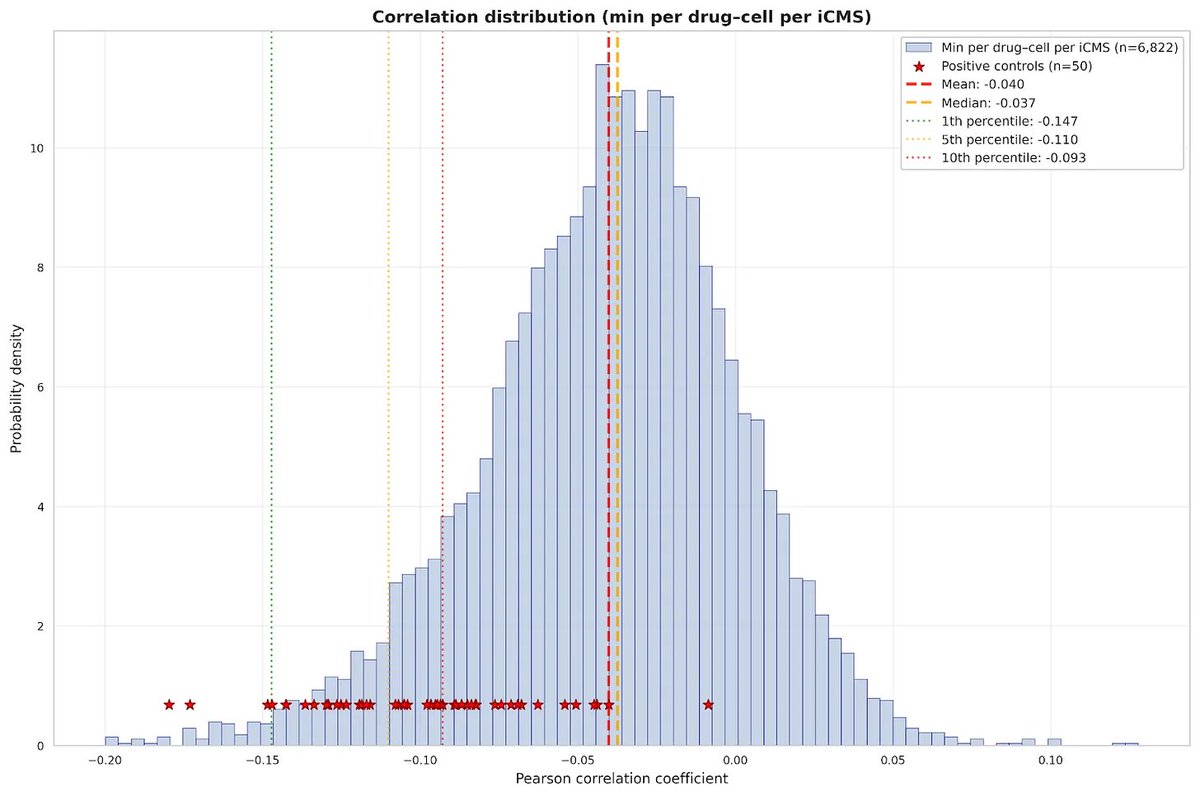
How much value will virtual cell models add compared to querying the training data with DeSeq2 and Pearson correlations? Have people seen virtual cell demos with better enrichment of positive controls than Fig. 1?
🆕@Nature
Genome sequencing of >800,000 people finds Epstein-Barr virus reads and their association with other autoimmune diseases besides multiple sclerosis, including type 1 diabetes, inflammatory bowel disease, and hypothyroidism
https://t.co/FKCV4OInT5
Happy to share that my postdoctoral work is now out in @ScienceMagazine. We show that the RNA-programmable bridge recombinase ISCro4 can insert, delete, or invert multi-kilobase DNA fragments at defined genomic sites in human cells.
Study link: https://t.co/CFBOiQvhAf
CRISPR-Cas has transformed genome editing, but many diseases involve diverse patient-specific mutations within the same gene. A mutation-agnostic alternative is to insert a healthy gene copy at a defined genomic locus, but gene-sized, site-specific insertions remain a major challenge.
Main findings of our work:
(1) ISCro4 is highly active in human cells and can be delivered by plasmid or all-RNA formats
(2) Proof-of-concept programmable multi-kb insertions, deletions, and inversions
(3) Structural insights into the basis of enhanced ISCro4 activity
(4) Specificity and off-target characterisation
(5) A framework to support future development and adoption of bridge recombinases
The work was made possible through a close collaboration between the Jinek Lab, @schwanklab, and @jcornlab. I am deeply grateful to all of my co-authors for the team spirit, hard work, and dedication that went into this publication: @talasandris, Javier Fernández Carrera, @nicopmat, Lilly van de Venn, Charles Yeh, @p_kulcsar, @marquark, @YanikWeber, @SaskiaGerecke, Isabelle Harvey-Seutcheu, Dominic Mailänder, @MorPfl, and @ChrisChanez89. Special thanks to my supervisor, Prof. Martin Jinek, for his outstanding mentorship, and to Prof. Gerald Schwank and Prof. Jacob Corn for their generous support throughout. Finally, I would like to thank everyone in the Jinek lab for creating a supportive work environment, and @EMBO for funding my postdoctoral work.
In parallel, independent work led by @ntperry13, @SKonermann and @pdhsu also reported ISCro4 activity in human cells, reinforcing the robustness and momentum of this direction.
Please reach out if you would like to test the system or discuss potential applications. Relevant plasmids are now available via @Addgene.
🚀 Excited to share new paper in Nature Genetics: Human Retina Cell Atlas (HRCA) with ~4M cells, >130 retinal cell types, deep scRNA/ATAC integration. Enables cross-species comparisons & GWAS cell-type enrichment. Huge thanks to Ignacio Ibarra & Chen lab.
https://t.co/WM58pjTJCX
Our paper is published in @CellReports! We apply a multi-omic framework to analyze nearly 2,000 noncoding variants at risk loci for age-related macular degeneration and nominate 59 variants as pathogenic. A great collab w/ @Jiaying_Gia@suragnair@anshulkundaje and @HowardYChang!
Amazing new data set by @thenormanlab, congrats! Not sure about the 'biggest GI map in human cells' though. I guess it depends how you count, but we covered quite a number of gene pairs too: doi: 10.1101/2025.06.30.662193
Using PORTAL with an AP-1 reporter, we measured 665,856 pairwise perturbations across 612 genes and 46 million clonal lineages.
To our knowledge, this is the largest exhaustively measured GI map in human cells, and the first at this scale with a non-fitness phenotype.
🚀 Announcing the Official @OpenTargets MCP!
We've partnered with @AnthropicAI to provide AI with seamless access to high-quality genetics and target-discovery data. Open for the entire community to accelerate therapeutic development
https://t.co/bwuw9udxwV
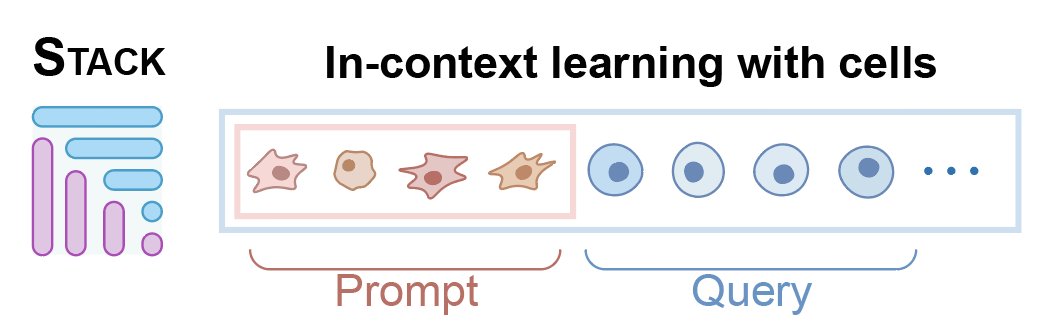
Why define conditions, donors or even *tasks* when we can just use cells themselves to guide model output
Presenting Stack, in-context learning using just cells!
Use cell context -> enhance its embedding
Engineer cell context ->modify its state
Led by the brilliant @Mingze7316
Together with Emma Dann, we are thrilled to present a massive new Perturb-seq atlas of 22M primary CD4+ T cells, from 4 donors, across 3 timepoints – the result of a decade-long collaboration between the Marson (@MarsonLab) and Pritchard (@jkpritch) labs.
🧵👇