This week Violet YJ Chen highlights the development of a manufacturing process for a key intermediate of orforglipron (a non-peptide GLP-1 receptor agonist) by the team at Lilly!
Key papers:
@OPRD_ACS
https://t.co/zTUko9MBpb
https://t.co/p89HEjJNFw
https://t.co/r1Dzw5TxUv
Today we are excited to release our August ChemDev poster, showcasing the development of a manufacturing process for the COVID-19 antiviral ensitrelvir!
This poster comes from our Associate Editor of ChemDev Posters, Violet YJ Chen!!
@ACSCentSci https://t.co/rO9QKGQhhK
We are very proud to share our new work on the Appel fluorination of alcohols to alkyl fluorides using simple KF-now out in Science! Congrats to Ani, Job, Caleb, the entire team, and to our fantastic collaborators @pfizer@GroupAldridge@bobbypaton 🍾👨🔬
https://t.co/h6JuK2WLyb
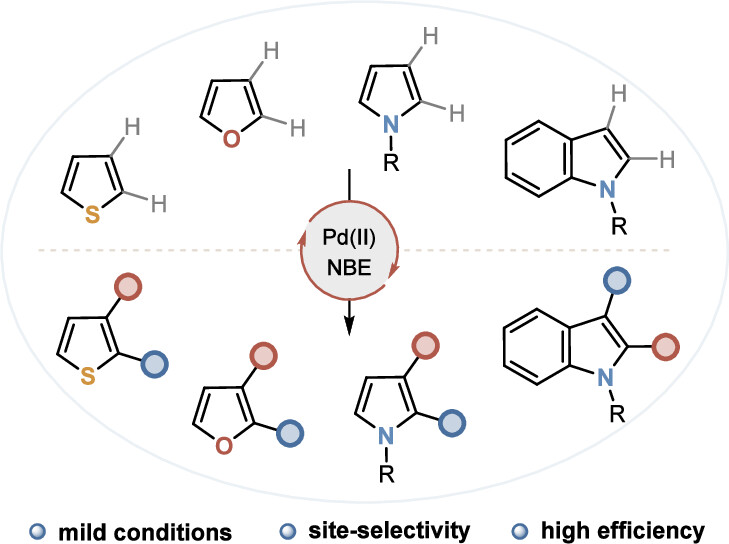
Check out our new Account in Accounts of Chemical Research! We summarize our work on Pd/NBE-catalyzed vicinal difunctionalization of heteroarenes via double C–H activation—from catalyst design and mechanism to total synthesis.
https://t.co/KOUSVABZlu
Check out our recent work on @angew_chem ! We developed a transition-metal-free “cut-and-sew” reaction that formally inserts five-membered heteroarynes into benzocyclobutenones, providing rapid access to fused heteropolycycles. Congrats to Cole!
https://t.co/QM7B3TgBkr
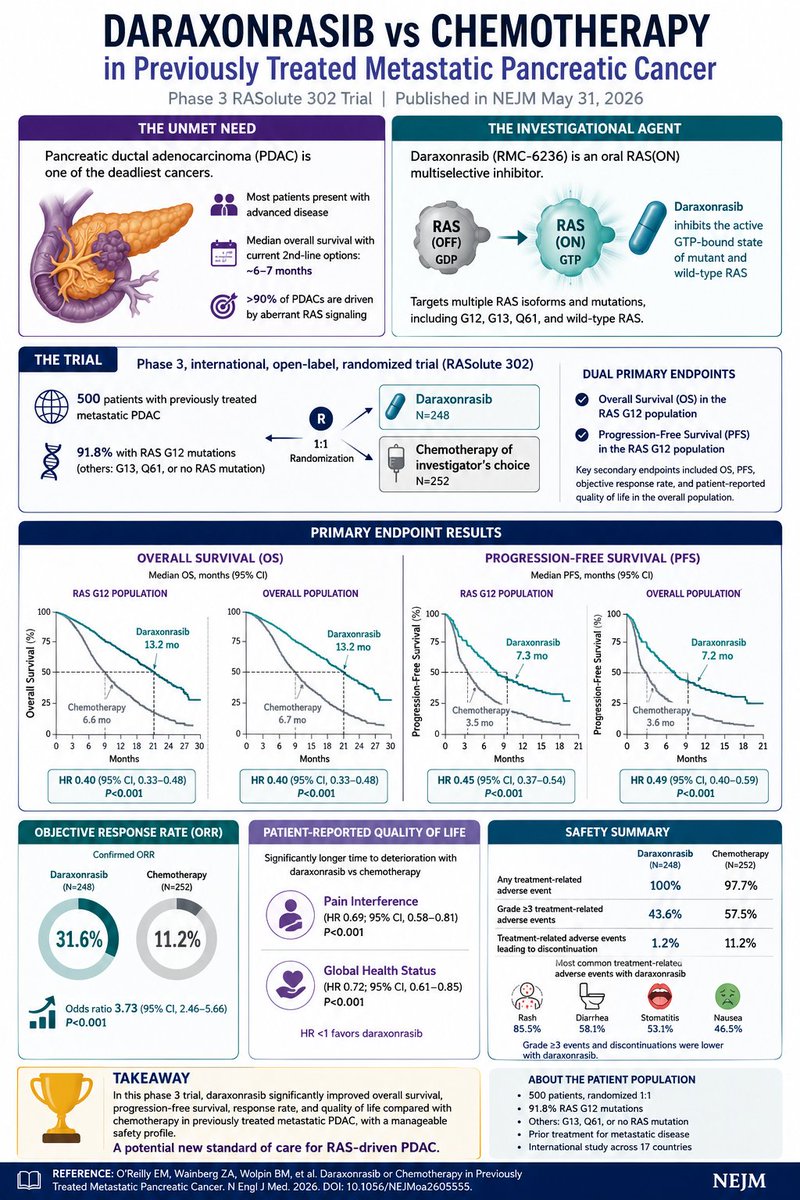
Daraxonrasib Changes the PDAC Landscape
Pancreatic ductal adenocarcinoma (PDAC) remains one of the deadliest solid tumors, and outcomes after first-line therapy have historically been dismal. A new phase 3 study published in the New England Journal of Medicine reports that the oral pan-RAS(ON) inhibitor daraxonrasib (RMC-6236) significantly improves survival compared with standard chemotherapy in previously treated metastatic PDAC.
Key Findings
✅ 500 patients randomized (248 daraxonrasib vs. 252 chemotherapy)
✅ 91.8% carried RAS G12 mutations
✅ Overall Survival (primary endpoint)
Daraxonrasib: 13.2 months
Chemotherapy: 6.7 months
HR 0.40 (60% reduction in risk of death, P<0.001)
✅ Progression-Free Survival
Daraxonrasib: 7.2 months
Chemotherapy: 3.6 months
HR 0.49 (P<0.001)
✅ Objective Response Rate
Daraxonrasib: 31.6%
Chemotherapy: 11.2%
✅ Quality of Life
Patients experienced significantly longer time before deterioration in both pain and global health status.
Why This Matters
More than 90% of pancreatic cancers are driven by KRAS/RAS signaling. Previous efforts focused on mutation-specific KRAS inhibitors, but most PDAC patients harbor diverse KRAS variants that are not addressable by current allele-specific drugs.
Daraxonrasib is a RAS(ON) multiselective inhibitor, targeting the active GTP-bound state of RAS across multiple mutant and wild-type isoforms. This broader mechanism may explain its activity across a heterogeneous PDAC population.
Safety Profile
The most common treatment-related adverse events were:
Rash (85.5%)
Diarrhea (58.1%)
Stomatitis (53.1%)
Nausea (46.5%)
Despite frequent toxicities, treatment discontinuation due to adverse events was remarkably low:
Daraxonrasib: 1.2%
Chemotherapy: 11.2%
Grade ≥3 treatment-related adverse events were also lower with daraxonrasib than chemotherapy (43.6% vs. 57.5%).
Takeaway
The RASolute 302 trial delivers one of the most significant survival improvements ever reported in second-line metastatic PDAC. A median overall survival of 13.2 months, coupled with improved quality of life and manageable toxicity, positions daraxonrasib as a potential new standard of care for previously treated RAS-driven pancreatic cancer.
For decades, KRAS was considered "undruggable." This study suggests that broad RAS(ON) inhibition may finally be translating into meaningful clinical benefit for one of oncology's toughest diseases.
Reference
O'Reilly EM, Wainberg ZA, Wolpin BM, et al. Daraxonrasib or Chemotherapy in Previously Treated Metastatic Pancreatic Cancer. N Engl J Med. 2026. DOI: 10.1056/NEJMoa2605555.
#PancreaticCancer #PDAC #KRAS #RAS #Daraxonrasib #RMC6236 #CancerResearch #PrecisionOncology #ClinicalTrials #NEJM #Oncology #CancerTherapy
Benzo-Fused Medium-Sized Heterocycles with a Chiral C–N Axis from Asymmetric Cycloaddition and Skeletal Rearrangement | Journal of the American Chemical Society https://t.co/XlitHuGIqj
Streamlining the synthesis of valuable amines, researchers in Science present a new method that can selectively insert nitrogen into specific carbon–hydrogen bonds.
According to the study, the approach could simplify drug development by enabling more efficient, scalable, and late-stage construction of carbon–nitrogen bonds from common chemical feedstocks.
📄: https://t.co/tqsGHAO1hi
#SciencePerspective: https://t.co/3YWb6kcq3j
Enantioconvergent Chan–Evans–Lam C(sp3)–O Coupling: Cu-Catalyzed Asymmetric Benzyl- and Allylborane Oxidation | Journal of the American Chemical Society https://t.co/SRNCHM49o4
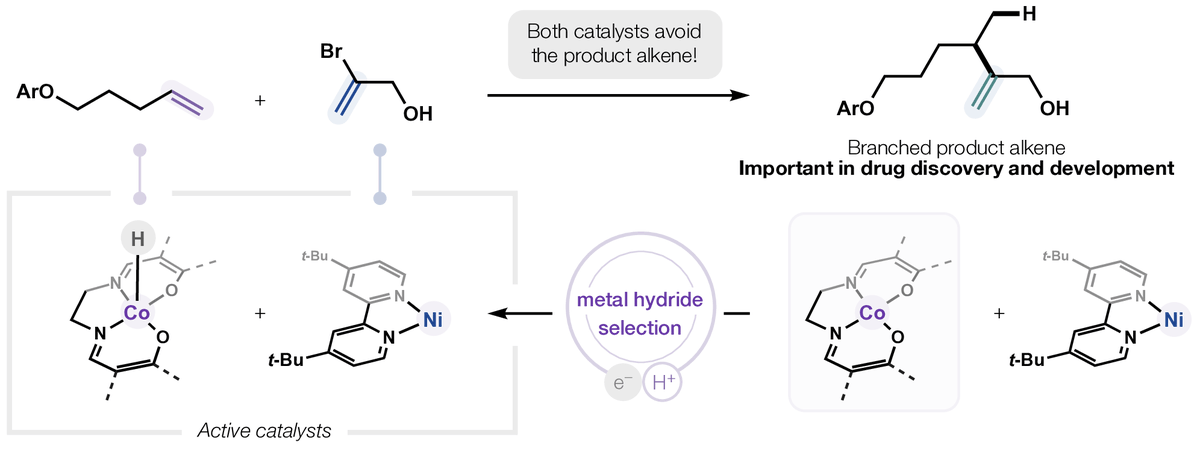
A new method from the @Shenvi_Lab enables the construction of branched molecular frameworks from simple alkenes via controlled MHAT chemistry, resolving a longstanding selectivity challenge and accelerating access to drug-relevant structures, as reported in @ScienceMagazine. More: https://t.co/40ETE5Wv63
Induced proximity-based therapeutic modalities
https://t.co/qZN4f9FWtT
https://t.co/hzBGTQEnIV
This Review in the March issue covers the range of therapeutic modalties that act by inducing interactions between biomolecules, including molecular glues and bifunctional molecules
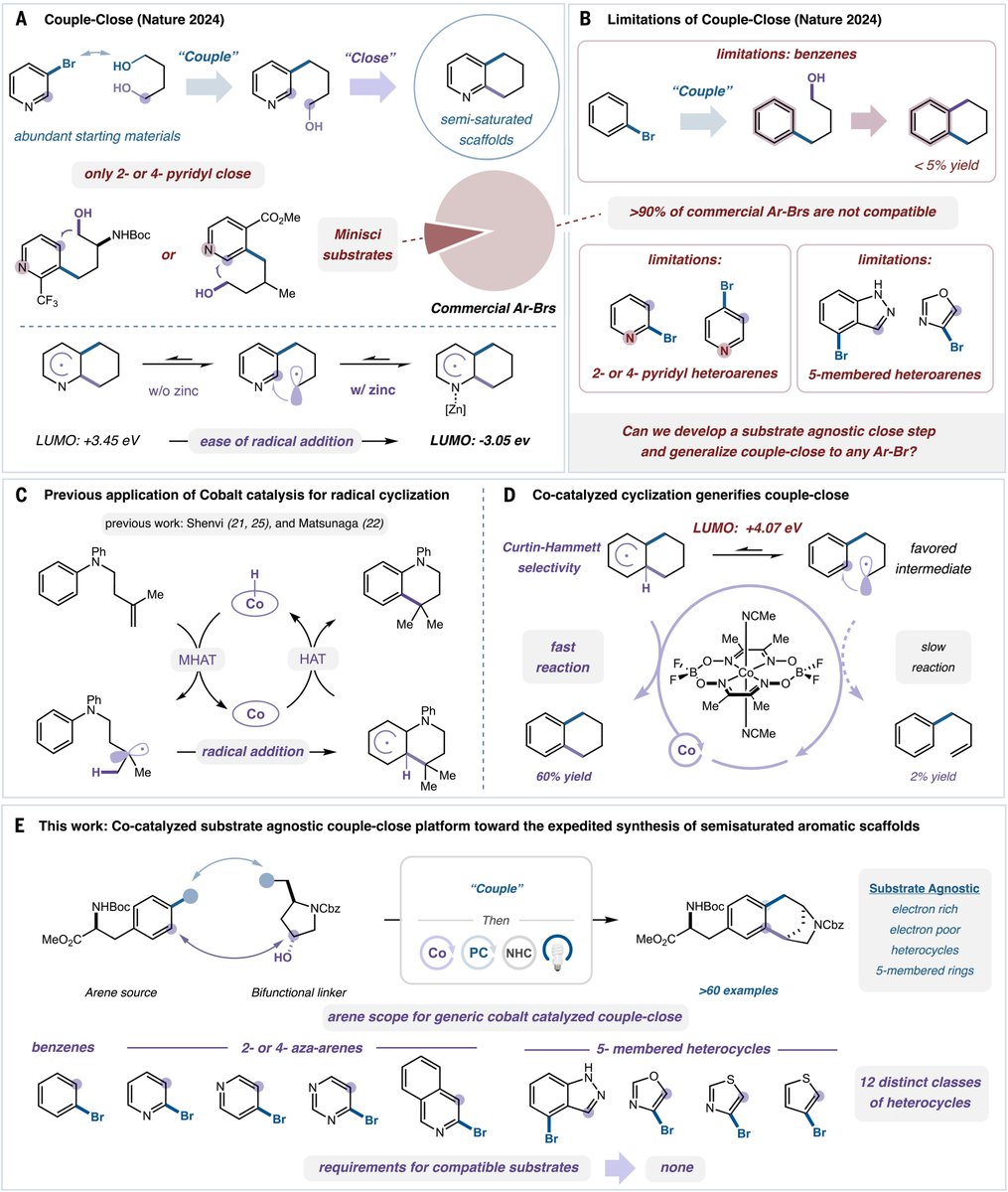
The David MacMillan Lab @macmillan_lab advances a couple-close strategy to make “the impossible, possible.” Great work Jiaxin (Jay), Will, Johnny, Will, Noriyuki, Alice, Taylor, Chris, Marian, Dave!
Enjoy our story on the lab’s new research in Science: https://t.co/aHbaGFgCBD
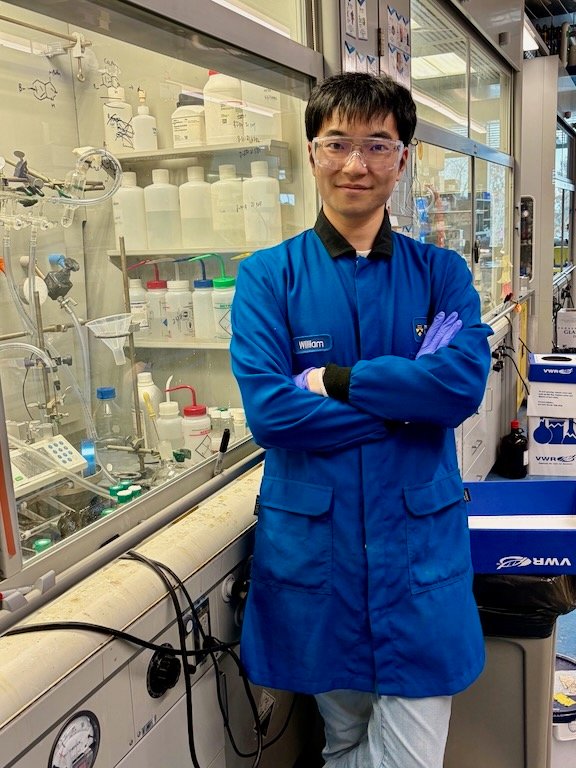
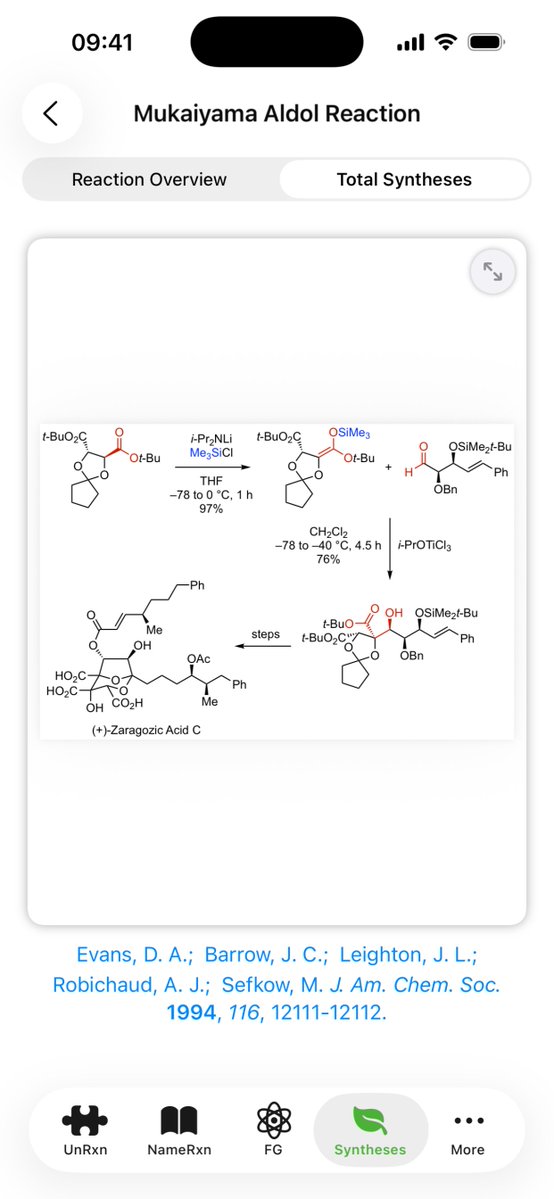
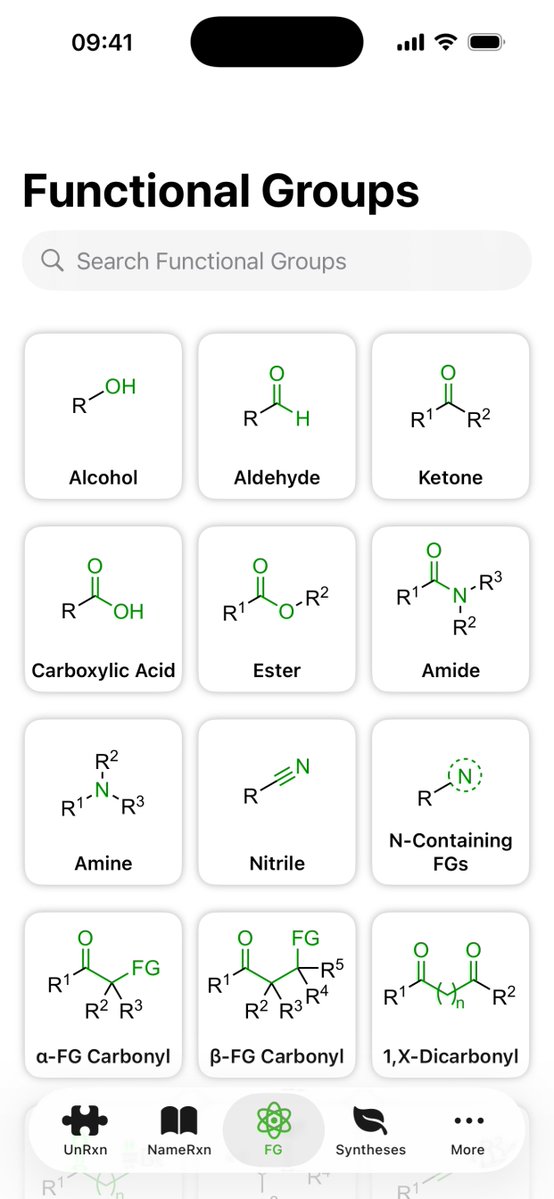
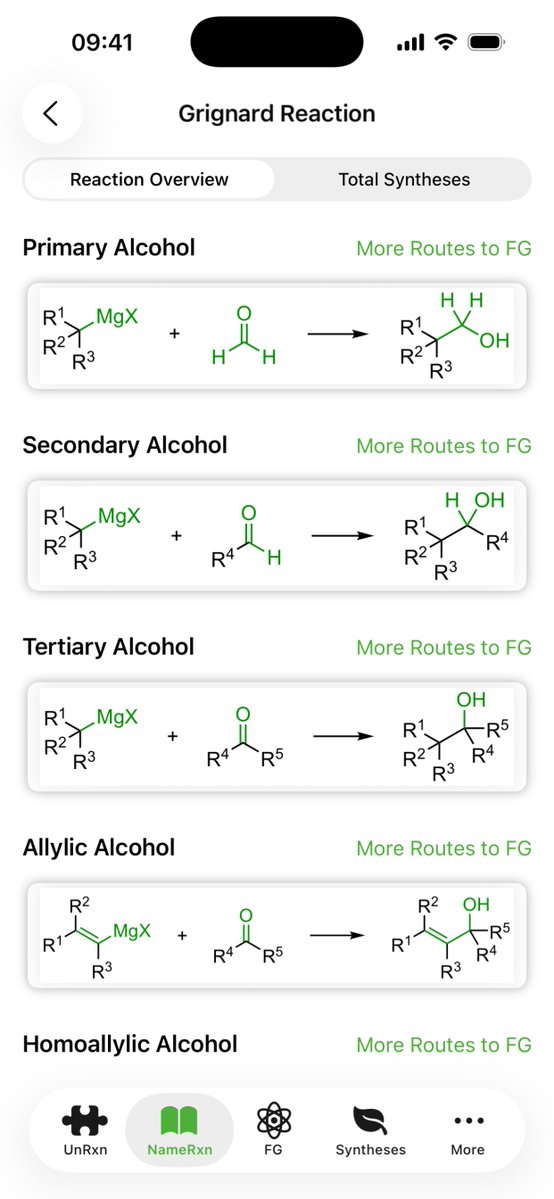
Our postdoc @Willi_Amberg built @SynStrategy a learning tool that categorizes 500+ reactions by functional group with 400+ total synthesis examples. If you’re into #OrgChem, check it out (it’s free)!
iOS: https://t.co/vTpNTwl4ZU
Android: https://t.co/yMQsiJUZU6
#ChemTwitter
Just out @ChemicalScience One more example of Migratory 1,n-Cycloannulation Reaction (MCAR) of alkenes for modular and diverse synthesis of oxaheterocycles. Check out: https://t.co/CN0rGRcg8n
Our recent work in steroid synthesis, which features a tandem Negishi/Heck cross-coupling and a Baran reductive olefin coupling (BROC), is now out in @J_A_C_S:
https://t.co/B58tfCNQ5R
Check out our review on the emerging methods and strategies for the efficient synthesis of steroid natural products in Chem. Soc. Rev. Thanks @yuwang175
for writing this review: https://t.co/vmaj2yAFRh
Check out our latest synthesis of deoxylimonin by a bioinspired skeletal reorganization approach in @J_A_C_S. Very honored to have our work online together with Tim Newhouse's amazing synthesis of deoxylimonin. https://t.co/GXPAjdpoqw
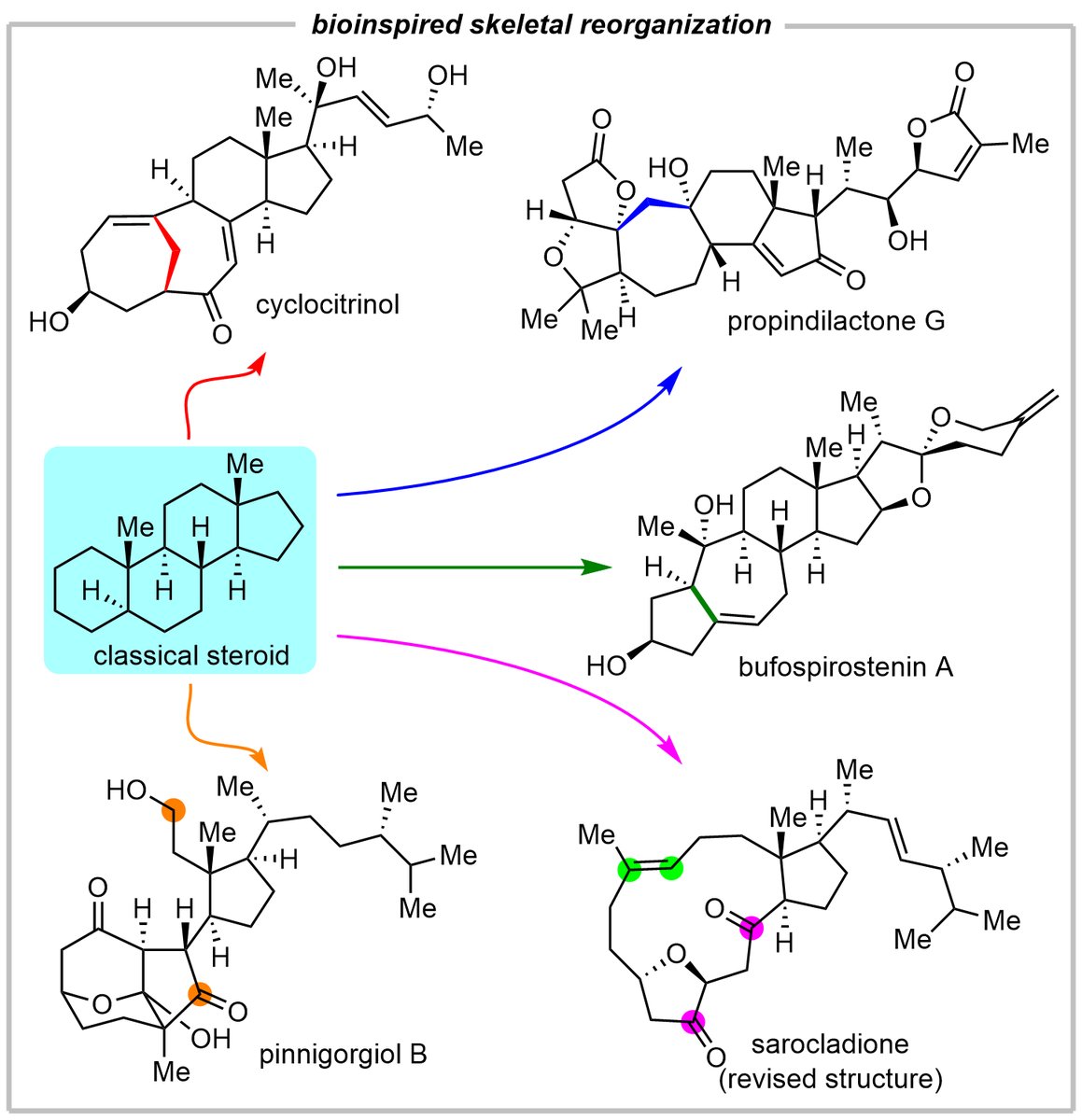
Thrilled to summarize our bioinspired skeletal reorganization approach for the synthesis of steroid natural products in Acc. Chem. Res. Credit to @yuwang175 for writing this Account. Big thanks to members of my team for their great contributions: https://t.co/2TPxHXhSyp