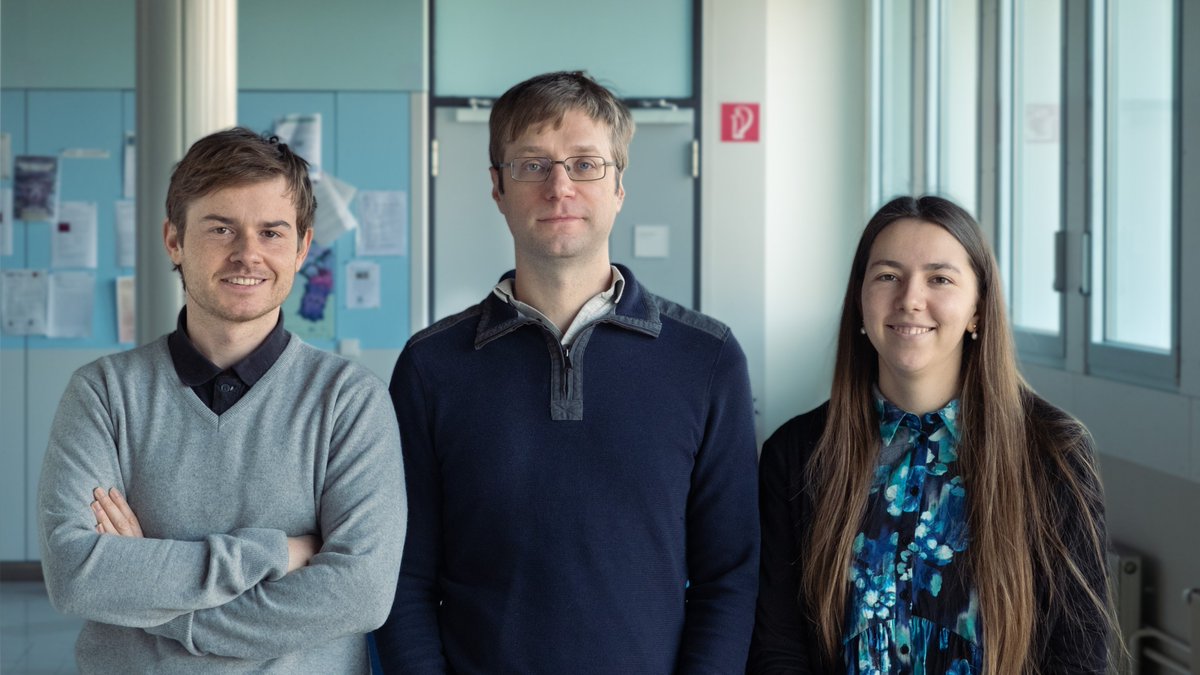
Glad that scsHi-C is finally out: A method to investigate sister-chromatid specific chromatin structure! Thanks to JM Peters at @IMPVienna,@golobor, Ronald Micura at @uniinnsbruck,@AmeresSL and everybody at the gerlich lab @gerlich_daniel at @IMBA_Vienna! https://t.co/pAXDm7NRKJ
And we’re #hiring! https://t.co/DhbfValAeY
Attention #CompBio#postdoc candidates! We have projects focused on #3DGenomics, #Multiomics in human health, #aiml developing and applying both foundational infra and cutting-edge approaches.
Apply here: https://t.co/moLu27Cz6Y
We at @Open2C_team are looking for a journal for two of our manuscripts on software tools for Hi-C data analysis: pairtools (https://t.co/rhITl5uugU) and cooltools (https://t.co/oBMx5u8hdy)!
In our latest paper, we use imaging and high-throughput DNA sequencing to probe the confirmation of replicated chromosomes. Read about how cohesin is able to resolve sisters through LE - and more - in our manuscript, published this week in @embojournal
(1/2)
First authors @manuelalonsoya1 (l) and Tamara Klockner (r) were able to recapitulate some of the aneuploidy patterns seen in cancer and identified specific genes responsible for the selection of certain aneuploidies. Link to the publication: https://t.co/IXVcbg2Qn2 @univienna
@__mharrison__ I use it for larger than memory data (150+ Gb), as duckdb can run queries on big parquet files directly. Especially for cases where I need conditional joins, as these can't really be done in pandas or dask without using way too much memory for intermediate results.
Pleased to introduce our latest preprint, out now: “Cohesin-mediated DNA loop extrusion resolves sister chromatids in G2 phase”. We present new quantitative assays probing the conformation of replicated chromosomes by imaging and high-throughput DNA sequencing. A tweetorial:
1/9
The Gerlich lab is hiring! We are looking for a Research Technician to join our team @IMBA_Vienna, @viennabiocenter. For more info and to apply: https://t.co/JmYe70IDLb
🧵Here’s a tweetorial on our latest work on the distinct transcriptional roles of chromatin remodelers in Drosophila. Thanks to @AlexanderStark8 and all the members of the @stark_lab who made this possible.
Hot off the press @Nature! "A mitotic chromatin phase transition prevents perforation by microtubules". Our work on mitotic chromosome formation, a tweetorial:
In #collaboration with @bryangibsonphd, @ShotaroOtsuka + the lab of Mike Rosen @UTSWNews
1/6
https://t.co/wztnLRF8EV
Delighted to share our work, out today, on the roles of histone deacetylation and condensins in shaping mitotic chromosomes. Check out the tweetorial and paper:
https://t.co/hrTpoLi7hG
Genes—like early explorers who braved the seas—can also embark on extraordinary journeys. It is now clear that horizontal gene transfer takes place even between highly divergent animals species! 🐛🦋🪱🐟. But how exactly does it happen? Find it out in our latest preprint!
@AliMuja11336895 @hicognition Yes! You can add different genome assemblies for different organisms and the regions and features you add will be associated with them! Have a look at our docs for details: https://t.co/aOABL8c6OL
In contrast to conventional genome browsers, which visualize a specific subregion, HiCognition can interactively analyze large sets of genomic regions that are of particular interest in many biological questions. @hicognition
https://t.co/dwjXoqrHHS
#3DGenome#bioinfo#DNA
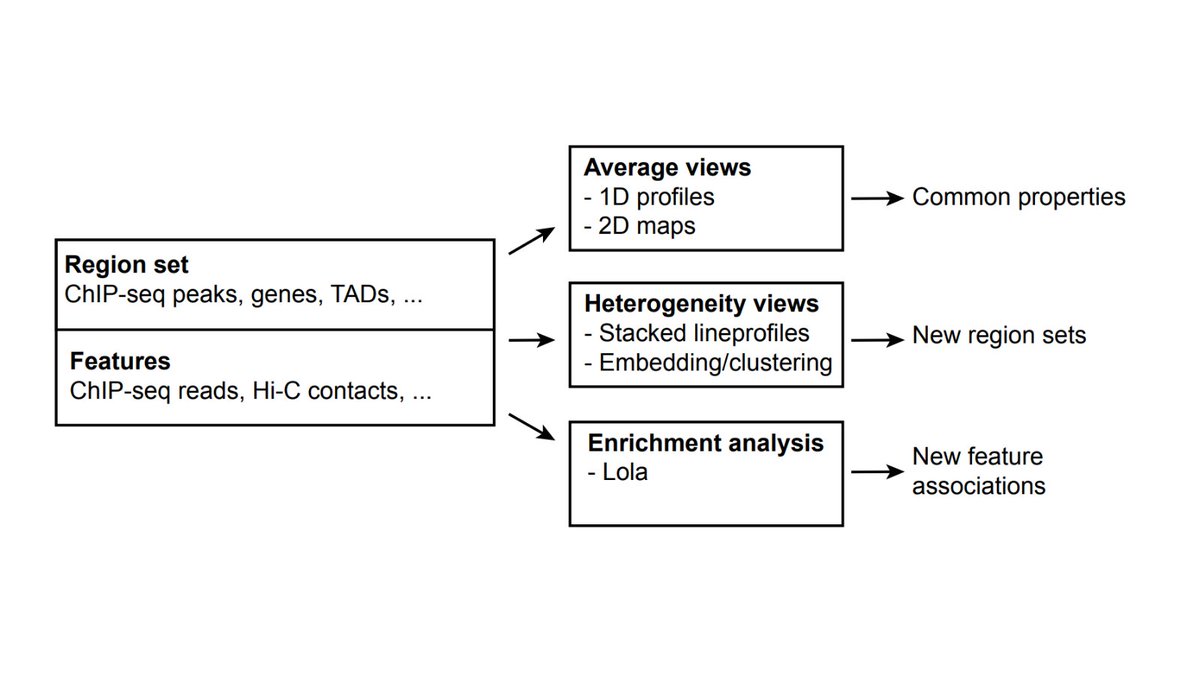
HiCognition allows data analysis of genomic datasets based on the genomic region-set approach. Combined with efficient preprocessing and interactive data visualization, this enables rapid exploration.
@hicognition#3DGenome#bioinfo#ComputationalBiology#genomics#scicomm
1/5
HiCognition allows users to visualize particular genomic features at these region-sets and provides a wide array of widgets that capture different analysis use cases.