🚨 CHOCANTE: Um ex-pesquisador da Anthropic vazou o framework interno exato que a equipe usa.
A maioria trata o Claude como um chatbot básico e deixa 60-70% do poder de raciocínio na mesa.
Esses 9 prompts são como os profissionais realmente usam : testados internamente para máxima clareza, honestidade e profundidade.
Pronto para copiar e colar. Zero enrolação.
Salva essa thread. Seu jogo no Claude vai mudar para sempre.
(Dica pro: use na ordem para resultados compostos)
🚨 Anthropic just showed a 27-minute workshop on how to actually do prompts for Claude.
Taught by the people who built it.
Free. No registration. No paywall.
I've seen $300 courses that don't cover what they teach in the first 8 minutes.
Watch it and bookmark it now.
Everyone keeps saying AI gives them garbage. Anthropic just proved the problem is you, not the model.
This 24 minute video rebuilds one prompt from useless to flawless. Save it for the evening with tea - now that Opus 4.8 is here, getting this is everything.
🚨 Anthropic just showed a 27-minute workshop on how to actually do prompts for Claude.
Taught by the people who built it.
Free. No registration. No paywall.
I've seen $300 courses that don't cover what they teach in the first 8 minutes.
Watch it and bookmark it now.
Karpathy’s CLAUDE.md just hit #1 on GitHub Trending.
220,000+ stars.
Most developers still haven't read it.
It's only 65 lines.
Yet it reportedly boosted AI coding accuracy from 65% → 94%.
The entire playbook:
→ Think before coding
→ Keep it brutally simple
→ Make only surgical changes
→ Define success before writing code
That's it.
65 lines.
4 rules.
A massive edge.
Save this before everyone else discovers it.
Anthropic engineer showed how one person can run 5 AI agents, that code, test, review, and deploy at the same time.
In 30 minutes they built the whole thing live in one session.
Here's what they cover:
> when to use one agent vs a full team
> how to split work so agents don't step on each other > the exact framework for deciding what each agent handles
that's exactly why, I put together a guide on building agent teams that actually work.
full guide in the article below 👇
Developers are quietly building a second brain inside their AI coding tools right now.
And almost nobody realizes how important this shift is.
Claude Code’s "Skills.md" looks like “just another markdown file.”
It’s not.
It’s the beginning of programmable AI memory for software engineering.
Most AI coding workflows today are broken in the same way:
• repetitive prompting
• inconsistent outputs
• forgotten context
• unstable architecture decisions
• AI behaving differently every session
So developers waste hours re-explaining:
“use this stack”
“follow this pattern”
“don’t break this API”
“write code this way”
Over and over again.
"Skills.md" changes that completely.
Instead of prompting the AI every time…
You teach it how your team builds once.
Now Claude starts operating with:
- coding standards
- architecture rules
- debugging workflows
- testing systems
- project conventions
- review patterns
- deployment logic
persisted directly into its workflow.
That’s a massive shift.
Because this is where AI stops feeling like autocomplete…
and starts feeling like infrastructure.
The real breakthrough in AI coding isn’t smarter models anymore.
It’s persistent operational context.
The teams moving fastest right now are not the ones writing better prompts.
They’re the ones building reusable intelligence layers around AI.
That compounds.
Fast.
And the scary part?
Most developers still haven’t noticed this transition happening.
They’re benchmarking models.
Meanwhile advanced teams are quietly building internal AI operating systems around their workflows.
That gap is going to become enormous.
"Skills.md" is interesting because it represents something much bigger than Claude Code itself:
AI that adapts to YOUR engineering system instead of forcing engineers to adapt to the AI.
That changes:
• onboarding
• consistency
• code quality
• iteration speed
• institutional memory
• engineering velocity
A lot of people will look back at these “simple markdown skill files” the same way we now look at:
- Dockerfiles
- package.json
- .gitignore
- tsconfig
Small files.
Huge workflow shift.
The future of AI coding won’t belong to the people with the longest prompts.
It’ll belong to the people who build the best AI environments.
And that transition has already started.
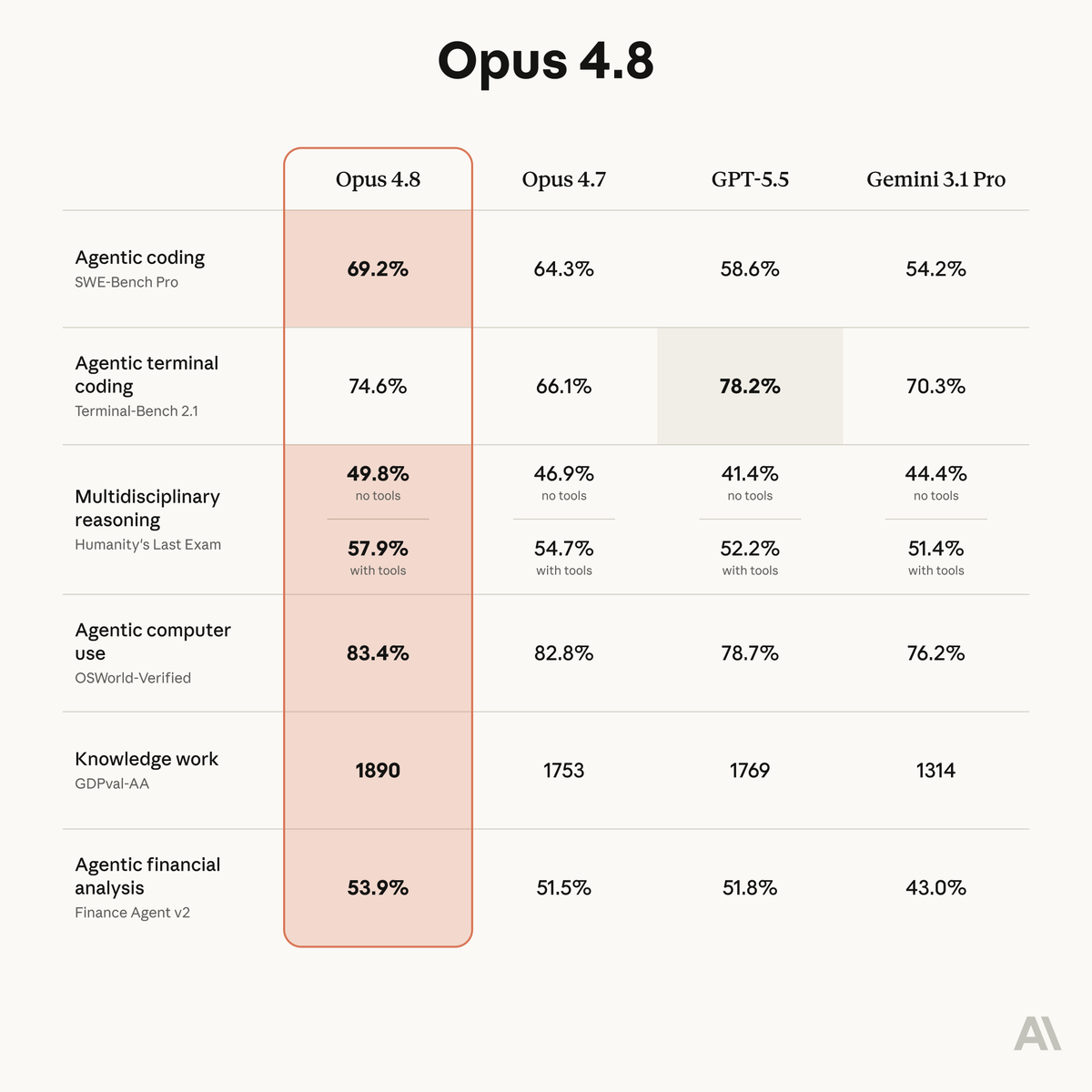
Introducing Claude Opus 4.8: it builds on Opus 4.7 with sharper judgment, more honesty about its own progress, and the ability to work independently for longer than its predecessors.
Available today at the same price.
Arsenal: PL Report 25/26
I worked on a team report alongside that Garner report.
Since this has taken a lot out of me, my brain needs a reset. I can't be touching anything data related for a while (except for my job🙁)
PDF here in case you prefer it:
https://t.co/FT2RQ5JwSO
Andrej Karpathy just explained the future of software engineering without directly saying it.
The best AI engineers are no longer “prompting.”
They’re building systems around the agents.
Karpathy’s biggest insight wasn’t:
“Claude can code.”
It was:
LLMs become dramatically better when you force them into disciplined workflows.
That’s why "CLAUDE.md" files are suddenly everywhere.
Not because they’re prompts.
Because they behave like an operating system for the agent.
Karpathy called out the exact problems with AI coding:
- models assume instead of asking
- they overengineer simple tasks
- they hide confusion
- they rewrite unrelated code
- they optimize for completion, not correctness
So developers started encoding rules directly into the workflow:
→ Think before coding
→ Simplicity first
→ Surgical edits only
→ Goal-driven execution
And the results are wild.
People are now running multiple Claude Code agents in parallel like engineering teams:
• one agent researching
• one debugging
• one writing tests
• one optimizing code
• one validating outputs
Not “AI assistance.”
Actual orchestration.
And this part from Karpathy changes everything:
“Don’t tell the model what to do. Give it success criteria and let it loop.”
That is the shift.
From:
“write this function”
To:
“here’s the goal, constraints, tests, and verification system — now iterate until correct.”
The craziest part?
This already feels like a phase shift in engineering.
A lot of developers quietly went from:
80% manual coding → to 80% agent-driven coding in just months.
Not because AI became perfect.
Because the leverage became impossible to ignore.
We’re entering an era where the highest leverage engineers won’t necessarily be the best coders.
They’ll be the people who build the best systems around AI agents.
15 AI accounts worth following on X:
1. @karpathy
His tweets shape AI conversations months before everyone else starts talking about them.
2. @fchollet
Deep thoughts on intelligence, benchmarks, and where AI still falls short.
3. @ylecun
Deep learning pioneer. Big research ideas, sharp takes, and occasional drama.
4. @AndrewYNg
Practical ML advice, AI education, and real-world implementation insights.
5. @rasbt
Hands-on ML + LLM tutorials. Some of the best “build from scratch” content out there.
6. @dair_ai
Great ML paper threads and easy-to-follow research explainers every week.
7. @lilianweng
In-depth LLM research breakdowns. Always worth reading.
8. @jeremyphoward
Practical deep learning, AI news, and thoughtful takes on where the field is heading.
9. @simonw
LLM tools, experiments, prompting, and engineering breakdowns.
10. @_akhaliq
Best place to discover new papers, models, and open-source AI releases.
11. @ID_AA_Carmack
Unique AGI and low-level optimization takes that make you think differently.
12. @gwern
High-quality long-form essays and deep research notes on AI.
13. @goodside
LLM prompting, evaluation, and real capability testing.
14. @drfeifei
Computer vision pioneer focused on human-centered AI and spatial intelligence.
15. @demishassabis
DeepMind CEO. One of the most important voices shaping the future of AI.
Who else should be on this list?
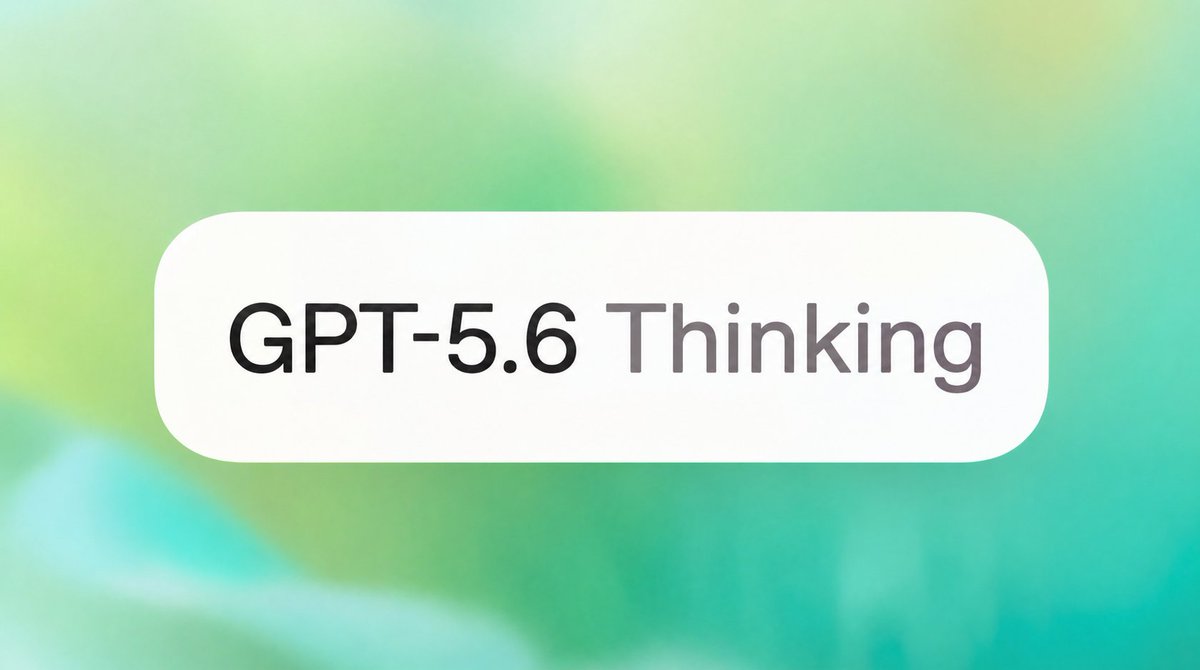
GPT-5.6 Leaks : Coming in June
- OpenAI researchers hinted that the model behind a recent major math breakthrough is already being used internally as a daily driver for debugging and technical work
- Internal testing tags iris-alpha, ember-alpha, and beacon-alpha were spotted during development, potentially pointing toward multiple GPT-5.6 variants being tested
- GPT-5.6 seems heavily focused on stronger multi-step reasoning, better agentic workflows, and improved frontend generation capabilities
- Canary testing references are already appearing in developer environments, the same quiet rollout pattern seen before GPT-5.5 launched
- Current leaks point toward two models arriving: GPT-5.6 and GPT-5.6 Pro
- GPT-5.6, Sonnet 4.8, and Gemini 3.5 Pro are all expected in June, next month is looking like an AI festival
10 careers that will dominate the next 15 years:
1. Al Systems Engineers
2. Cybersecurity Specialists
3. Data Engineers
4. Product Managers
5. Software Engineers With Domain Expertise
6. Cloud Architects
7. Quantitative Analysts
8. Automation & Robotics Engineers
9. Healthcare Specialists With Technical Depth
10. Legal Experts in Tech, IP, and Regulation
Research papers you must read for AI Engineer interviews:
1. Attention is all you need (Transformers)
2. LoRA (Low rank adaption)
3. PEFT ( Parameter Efficient Fine Tuning)
4. VIT (Vision Transformers) 5. VAE (Variational Auto Encoder)
6. GANs ( Generative Adversarial Networks)
7. BERT ( Bidirectional Encoder Representation from Transformers)
8. Diffusion Models (Stable Diffusion)
9. RAG (Retrieval Augment Generation)
10. GPT (Generative Pre-trained Transformers)
11. MoE (Mixture of Experts)
12. RLHF (Reinforcement Learning from Human Feedback)
13. LLaMA (Large Language Model Meta AI)
Personal update: I've joined Anthropic. I think the next few years at the frontier of LLMs will be especially formative. I am very excited to join the team here and get back to R&D. I remain deeply passionate about education and plan to resume my work on it in time.