Very happy to have (mostly) finished this project: county-level election returns for the US House from 1990 to the present. Currently such data are only available from very expensive sources. I've compiled a dataset that provides it for free.
https://t.co/zEnkpH4lKw
Glad it’s finally out! -- Data show Chinese students in the US are more politically and socially liberal, and more pro-market, than their counterparts in China.
We started this project in 2017–18 (!) and carried it through the pandemic. So many people to thank, named and unnamed.
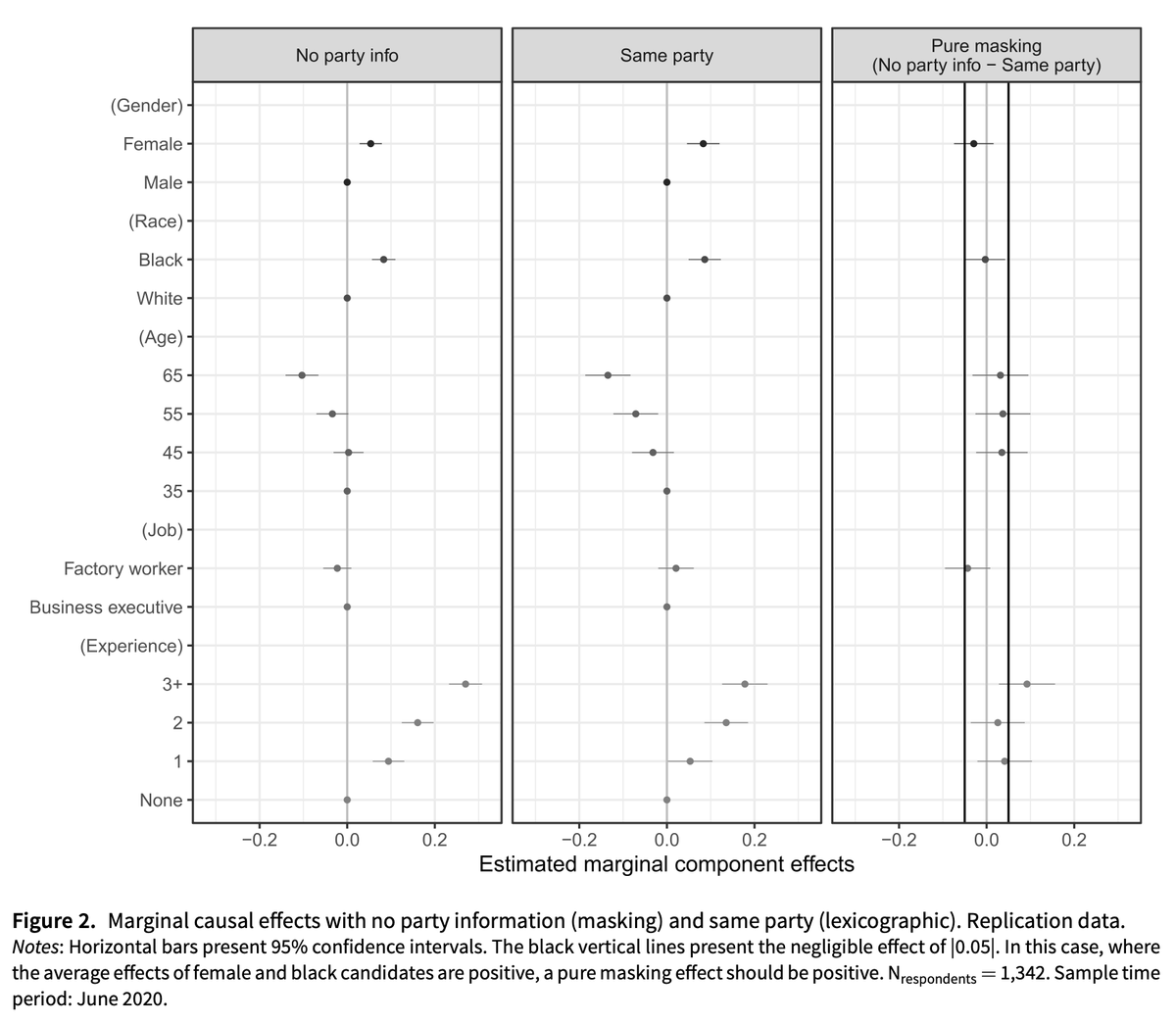
🧩 Masking or lexicographic preferences? The same choice patterns can reflect very different processes.
➡️ @SimonCalmar & @MortenHjortskov show how conjoint experiments can distinguish between these two explanations of political choice https://t.co/dLeaZNfpdp
Grateful to have this out in @IntSecHarvard. @jessicacweiss and I show how Cold War analogies obscure more than they reveal about US-China relations. 1/6
"The Cost of Geoeconomic Coercion." I address costs of using economic policies for geopolitics. Part of a great special issue of Finance and Development on Geoeconomics. My article page 30, full issue here: https://t.co/V9EClrXBkG
My article on social desirability bias in surveys about foreign policy, coauthored with @yasuki_kudo and Sohei Shigemura, was just published in @JPR_journal! We report the results of a list experiment in Japan. https://t.co/51Qrn0OVcz
A co-authored paper on self-disclosure to AI chatbot is published. It's a cross-national study in Mainland China, Germany, Japan, Hong Kong, and the U.S., and it's open access.
https://t.co/TliN7sVeXn
The end of an era. Now in print, an argument that the post-war era is coming to an end. In the LSE Public Policy Review 4, No. 2 (2026), available here: https://t.co/46vBtoHe8u
📢 New paper out in @ISQ_Jrnl! @RikioInouye and I examine Americans’ selective sympathies toward Israelis and Palestinians. OA: https://t.co/8l9kE3MWxe
Methodologically, we use "choice-level" conjoint analysis to examine how different attributes shape comparative evaluations.
Questions about how the “war powers” work in practice? Check out my piece in @apsrjournal. TL;DR President is far more constrained by Congress that usually realized.
How do MNCs respond to political tension? Our new @ISQ_Jrnl paper finds an 8% relative drop in mainland China MNCs' imports from Taiwan after the 2002 cross-Strait tension, especially for firms with less diversified supply chains and no Taiwanese ties. https://t.co/XA1P4vLWKM
1/ We have a paper out in @Nature today with the worrying conclusion that LLMs may create more incentives for governments to control and coordinate media. https://t.co/fXcK65tUfZ
New paper in Nature. The more a government controls its domestic media, the more it dominates AI training data, the more pro-regime outputs we get from AI. By scraping the open web, LLMs are unwittingly laundering state-coordinated narratives into seemingly objective answers.
New paper w/ @KellyMatush & @YusakuHoriuchi.
Do US presidents get a domestic approval boost from foreign travel—by looking “presidential” or statesmanlike?
�� We find no evidence: https://t.co/gNsuoKNLec