@austincampbell@dampedspring In Frontier markets there is an unmet appetite for investing without the legacy centralized architecture. Try investing $500 with no formal proof of address in an African urban setting. We can use Alphabet and Microsoft products daily. So why not invest in the corporations?
@CarmelleCadet Fractional reserve banking is hard to grasp for most, worse still it is complicated by the fact debt is money (HQLAs).
Worse is the hidden theft of wealth by inflation to reduce the very debt they are generating hand over fist!
Then trap us in the system for tax!
@wirexapp UX and UI need a bit of work. Functionality is also not great. Worst of all the fees are horrendous. Withdrawal of USDC 220.00 costs USDC 10.00🤣
You raised $5M for a crypto payment startup “banking the unbanked.”
But 2.7M+ Nigerians hold $198M in crypto,
and still can’t use it to pay for ChatGPT.
In Ghana, 65,000 users hold >$7M,
but they can’t access Twitter Premium, Notion, or Udemy using crypto payments.
This isn’t a tech gap. It’s an arrogant disconnect.
You built crypto payments for panel slides, not for people.
For an SF VC applause, not Lagos survival.
Crypto payments aren’t slow to adopt because it’s too early, it’s because they’re incorrectly aimed at markets with a lesser pain.
Ever tried subscribing to X Premium in Nigeria?
If your card works, and that’s a big if,
you’ll pay 5x the local rate,
through a shady third party that charges like it’s brain surgery.
UX isn’t the problem. Empathy is.
Try sending a $50 stablecoin payment.
Watch the recipient:
• Pray their wallet syncs
• Dodge scam tokens
• Pay $7 in gas
• Then beg a P2P merchant for fiat
All while you post about “global inclusion.”
Let’s be clear:
Stablecoins didn’t hit PMF. They hit PR.
You’re checking boxes:
✔ “Add on-ramp”
✔ “Partner with @moonpay
✔ “Enable crypto payments”
But ask yourself:
Who’s paying?
Not Americans. They’re using Apple Pay.
Not Europeans. They’re defaulting to Klarna.
And not the emerging markets you say you’re building for because they’re locked out by design.
Crypto doesn’t have a UX problem.
It has a class problem. A care problem.
You’re solving for conference clout,
not the chaos of real-world payments.
And here’s the kicker:
Regulation isn’t the only blocker. Design is.
The unbanked don’t need more decks.
They need delivery.
You want to “help brands accept crypto”?
Cool. But who’s paying with it?
Because it’s not me. Not easily. Not affordably.
Paypal still doesn’t work in Nigeria.
Off-ramps charge a limb.
And most wallets feel like algebra.
I’ve seen founders chasing 0.2% yield in markets that already have Stripe while ignoring $10B+ in
demand from people desperate to pay 5% fee for payment rails.
You didn’t build for the unbanked.
You built for the banked, just with tokens.
So here’s the question that should haunt you:
Are you building crypto payments for the real world, or just role-playing fintech on the conference circuit?
Because crypto payments won’t be judged by its market cap.
It’ll be judged by adoption and the biggest user base in crypto, who is currently left behind.
The unbanked don’t need your promises.
They need your product.
Now go build one.
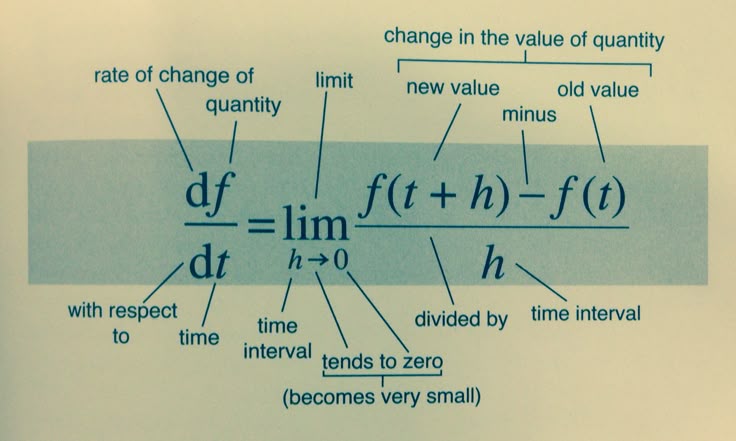
The derivative formula measures how a quantity ( f ) changes over time ( t ) by finding the limit of the difference between new and old values as the time interval ( h ) gets very small. It's a key concept in calculus. ✍️
This today from @ONS: “In London, the average home was not affordable for any household income decile; in three other regions, the average home was only affordable to the top decile.” This in a nutshell is the UK housing crisis for younger people
Low trust = High transaction costs. In the 3rd world this will eventually be the unlock for crypto, mass adoption due to security of transactions at minimal cost.
Another problem with low trust society (like third world) is it actually kills the velocity of money
If you have high probability of scams you naturally do less stuff (purchases broadly)
Kills velocity of money impacting GDP until trust is restored