Applied Scientist Intern @Microsoft | PhDing @GeorgiaTech | Past: @AmazonScience @MSFTResearch | NLP/Responsible AI for Mental Health | Opinions are personal
Excited to be back again at @Microsoft as an Applied Scientist Intern. I'll be working in the Outlook X Copilot group and collaborating with @acwio , @hyeonsu_b_kang , and Vivian Lai. 😄
My research will focus on the future of safety and trust in AI-driven email experiences 📧
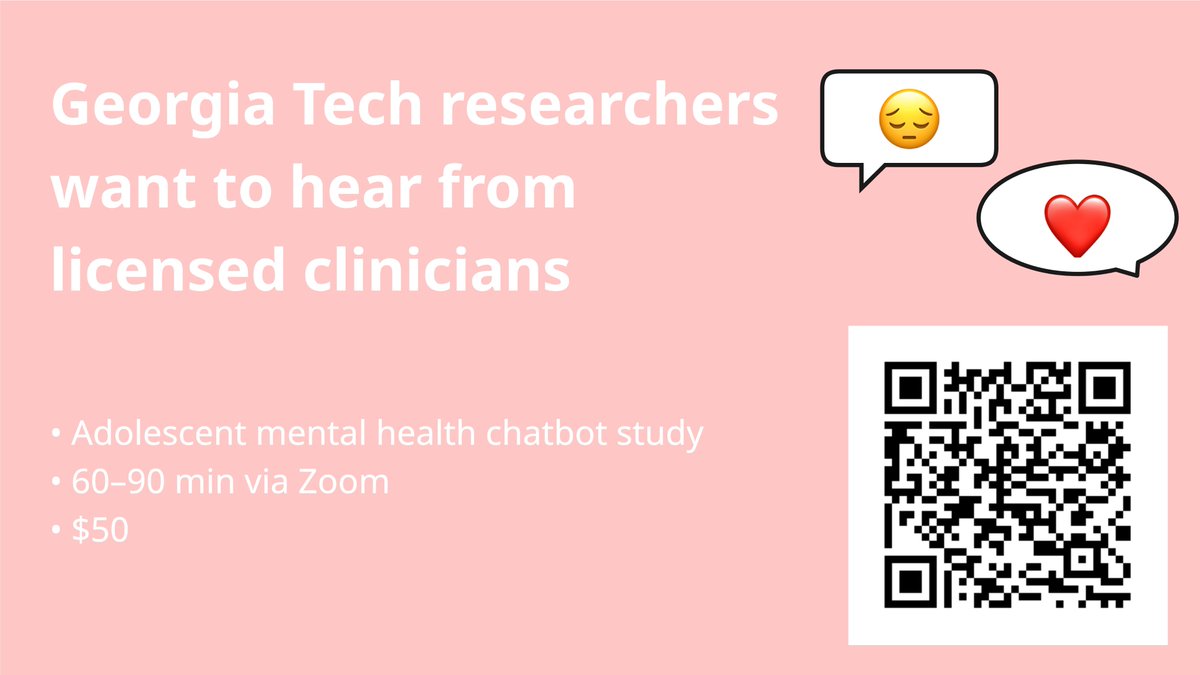
📣 Recruiting Licensed Clinicians
Georgia Tech researchers are running a pilot workshop on designing an adolescent mental health chatbot.
🕒 60–90 min (Zoom)
💵 $50 compensation
👩⚕️ Licensed clinicians only
👉 Sign up: https://t.co/zNaG9W81HX
RTs appreciated 🙏
Super excited and grateful that we received a Google Academic Research award to advance our efforts in Loneliness understanding and even more excited of this new collaboration with @munmun10, @monojitchou, @mohit__30 and @as3eem.
@mbzuai#lonelinessresearch#NLProc
https://t.co/y9rEXxweSQ
Excited to be in Montreal this week for COLM 2025!
I have two papers accepted this year:
1️⃣ The Unlearning Mirage, a dynamic framework for evaluating LLM unlearning.
2️⃣ With @Harsh_N_Lalai10, using 20 Questions as a creative framework to systematically evaluate geographical bias in LLMs.
Check out the individual threads!
Hello @amazon 👋
Excited to share that I have joined Amazon as an Applied Scientist Intern. I'll be working within the Applied AI group and my work will focus on agentic AI systems 🙌
I would love to catch up If you are in or around Bellevue/Redmond/Seattle. Looking forward to an exciting fall season ahead! 😄
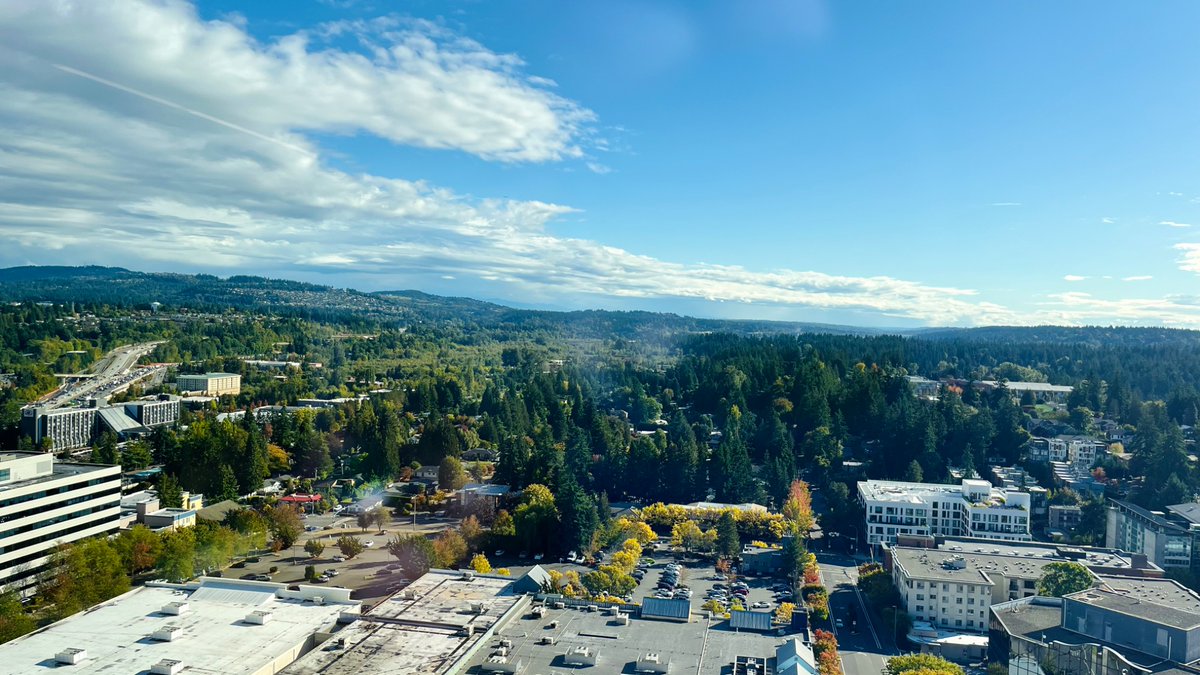
P.S: View from the office 🍁
Excited to share our upcoming #AIES2025 paper on how large AI models can be responsibly applied in real-world vertical systems (like in healthcare and education). This also happens to be the the final paper of my PhD journey at Georgia Tech 🎓
Foundation models are powerful, but not plug-and-play solutions that immediately translate to user-facing impact. Our work introduces a framework that shows how to bridge from the models themselves to users' needs. Our work also underscores the healthy dynamism needed across the development and deployment layers: it calls on model developers to incorporate feedback from vertical deployments and it urges vertical-focused practitioners to recognize where their innovations could broaden into vertical-agnostic improvements. Ultimately, this coordinated and interdisciplinary effort will ensure that large AI models effectively deliver on users' needs.
Check out the paper for more details, and the webpage for an interactive illustration of the framework that is grounded in specific examples across different domains.
With an amazing team of co-authors at @GeorgiaTech@GTCSE@ICatGT : @_jiawei_zhou , @mohit__30 , @srijankedia , and @munmun10!
🔭 Searching for a postdoc to join me at @nyutandon ! Focus on human-AI interaction x mental wellbeing research x future of work.
📧 Questions? Email me w/ sub: [Prospective Postdoc]
🔗 Apply: https://t.co/QOvlcD6iC6
🙏 pls RTs!
#AcademicTwitter#HCI#AI
Extremely honoured and excited to attend Heidelberg Laureate Forum (@HLForum) this year 😄
Looking forward to having interesting discussions, learning from the laureates, and making new connections!
Couldn’t be at #ACL2025NLP, but check out our ACL paper from @MSFTResearch!
We study how implicit cues in video demos (eye gaze & speech) impact personalized assistance in VLMs.
TL;DR:
- RGB + gaze > RGB alone
- Gaze vs. speech impact is task-specific
📄 https://t.co/r9WMVidmaC