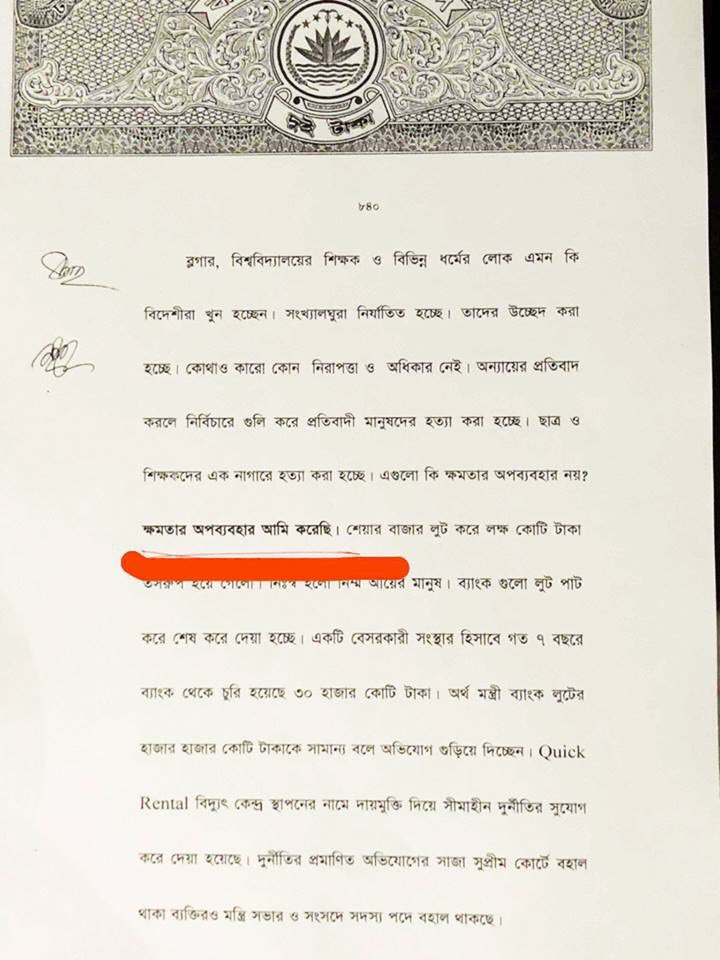
A judge tampered w the testimony of opposition leader @BegumZiaBd changed her surprised query, "I have misused power?" into a confession by altering the punct'n marks,"I have misused power.", and found her guilty. @hrw@UN_HRC@amnesty@UN@USAmbBangladesh@Europarl_EN @camanpour
You are nothing but a puppet and beneficiary of your Dictator mother #SheikhHasina. And your mother is not an elected official of Bangladesh.
#StepDownHasina
It is not just the Bangladesh prime minister, Sheikh Hasina, in trouble. The Daily Mail reports that her niece Tulip Siddiq, a UK MP and junior Labour government minister, has just been reported to the Parliamentary Standards Commissioner for failing to declare income from a London rental property for more than a year. I think this could be a developing story! https://t.co/159uVWAqlE
The decision on Friday by the Awami League government to call in the army to deal with the escalating law and order problem, following the killing of over 130 people at the hands of law enforcing officers, brings into focus what role the military may play in Bangladesh in coming days and weeks. Here are a few points:
1. The last time that the army played a decisive moment in Bangladesh politics was in 2007, when with the blessing of the international community, and with the agreement of the President, the army took over power for a period of two years, operating through a civilian caretaker government. The rationale then for calling a state of emergency was to stop what appeared to be about to happen, a rigged election organised by the pro-Bangladesh Nationalist Party (now the main opposition party). The two years of army control ended at the end of 2008 with elections, which most people deemed to be free and fair, and which the Awami League won.
2. Looking back now it seems rather extraordinary that the rationale at that time for the army take-over was a risk of a "rigged" election when since then Bangladesh has experienced three elections under the current Awami League government, in 2014, 2018, 2024 which have either been systematically rigged or uncontested in favour of the governing party - yet the army and the international community have barely lifted a finger in response. A discussion for another day.
3. Some people might think, with the government now calling in the army to assist the government, that this provides an opportunity for the army, with over 130 law enforcement killings and a breakdown in law and order, to do much the same thing as it did in 2007. However the context is very different:
- in 2007, there was only an election time caretaker election and not a political government in power, so it was easier for the army to pressure the President to consent to the army takeover.
- in 2007, the international community was far more active in Bangladesh politics (than it is now) and helped with the transfer of power;
4. There is also the issue of the political loyalty of the current head of the army, Waker-uz-Zaman towards the prime minister Sheikh Hasina. It is notable that
- he is the son-in-law of General Mustafizur Rahman, who was the army chief when Hasina was in power in her first term (1996-2001) who had particular loyalty to Hasina at the time.
- there is a family connection to the prime minister as Waker's father in law was the prime minister's uncle by marriage.
5. It is important to note that India, which has wholeheartedly supported Sheikh Hasina and the Awami League in the last 15 years continues to have significant influence over the Bangladesh army leadership, and indeed it is rumoured provided a green light for the Bangladesh army to play its current role on the streets of Bangladesh. Whilst, the army may take some cues from Washington, London and Brussels, (who anyway have not been particularly critical of the current Bangladesh government actions) India's role is likely to be decisive
6. Though future days are difficult to predict, with the curfew being lifted it is difficult to see protests stopping - as even if the Supreme Court on Sunday passes an order that ends quotas in support of the student demands (which it will surely do), there is huge anger within Bangladesh at the killings by the law enforcing authorities. These protests could be difficult for ordinary law enforcing authorities to restrain.
7. The question is how loyal the army will be to the Awami League regime if in such a scenario army officers are ordered to shoot at student and civilians. The army is not homogenous and there are many different strains within it, as suggested by a statement that is said to have been issued by junior officers, in support of the student protests and refusing to shoot at civilians https://t.co/0rKISGxooe (the veracity of this statement can not be confirmed). An order of this kind could create tensions between the army leadership and the more junior officers.
8. In looking at all this it is important to note that these protests are not taking place within a democratic set up, in which the Awami League government has been freely chosen in recent elections. Instead, the Awami League is now an authoritarian government which has not allowed free and fair elections to take place since 2009, which has remained in power through the brute force of highly partisan law enforcement agencies and courts, and which therefore has in the eyes of many/most of its citizens very limited political legitimacy. This is the context in which these protests and law enforcement killings are happening - and this is the reason why commentators (like me) wonder whether we are seeing the beginning of the end of Awami League government - and a possible move back towards a democratic path in Bangladesh
9. However, due to the absenceof any other non-partisan powerful institution within Bangladesh, it seems difficult to see the Awami League being dislodged without the army playing some (even if limited) role - and it is for this reason that one should keep an eye on the decisions that the army takes.
10. Looking back at the last 15 years of Awami League rule, and the way in which it has managed to successfully eradicate all previous threats to its power, particularly from the opposition parties, the more likely scenario however is that the government will find a way to pacify the protestors , with the army safely back in its barracks.
Since Thursday, July 18, Bangladesh has been entirely cut off from the world. Within the country, people in one area are unable to communicate with those in another. Under Sheikh Hasina's orders, a nationwide massacre is being carried out while the Bangladeshi people remain isolated. In an attempt to control the situation, she has killed nearly 500 people, including teenage students, in the last three days. People involved in this #Quota_Reform_Movement have been taken from their homes by law enforcement, and many have been shot dead inside their houses. Despite such brutality, Sheikh Hasina has failed to control the situation and has ultimately imposed a curfew and deployed the military nationwide.
The students' movement has now evolved into an uprising, with the spontaneous participation of the general public underscoring the people's unwavering demand for Sheikh Hasina's removal from power.
I appeal to the international community to extend a helping hand to protect the people of Bangladesh from the attacks of Hasina's authoritarian and murderous forces. This support will help the country's people restore their lost democracy and human rights.
@StateDept@SecBlinken@DaveHallFCDO@FCDOGovUK@hrw@amnesty@UN@antonioguterres@POTUS@Keir_Starmer@BBCWorld@cnni@AJEnglish@DeutscheWelle
Ppl of BD are disappointed, we thought you came to meet us but instead of meeting people you met a minister who is part of a fascist government. Stop supporting fascist government @emimartinezz1 #StopSupportFacist
The Bangladeshi Foreign Minister's comments about foreign diplomats are offensive, unprofessional and hilarious.
বিদেশী কূটনীতিকদের সম্পর্কে বাংলাদেশের পররাষ্ট্রমন্ত্রীর মন্তব্য অত্যন্ত আপত্তিকর, অ-পেশাদার এবং হাস্যকর।
বাংলাদেশ ব্যাংক নিশ্চিত করেছে, তারা কাউকেই বিদেশে নাগরিকত্ব কিনতে কোন রকমের অর্থ লেনদেনের অনুমোদন দেননি। তাহলে প্রশ্ন, কীসের ভিত্তিতে বা কী উপায়ে বসুন্ধরার ব্যবস্থাপনা পরিচালক ও তার ভাইয়ের স্ত্রী ৫ মিলিয়ন ইউরো বা ৫০ কোটি টাকা বৈদেশিক নাগরিকত্বে বিনিয়োগ https://t.co/4bzKmbP0si
বাংলাদেশের বিজয়ের ছবি হিসেবে ভারতীয় গণমাধ্যম ও বন্ধুরা এ ছবি প্রকাশ বা প্রচার করে থাকে কিন্তু এটা কি আমাদের ছবি? আমাদের তথা বাংলাদেশীদের প্রতিনিধিত্ব? তাই লিখেছেন সাবেক ভারতীয় কূটনীতিক চন্দ্রশেখর দাশগুপ্ত। আমার কাছে, এ ছবিটি মুক্তিযুদ্ধের সবচেয়ে বিকৃত উপস্থাপন। যা এখনো চলে।
The @USAmbBangladesh and @usembassydhaka staff concluded a meeting today due to security concerns. We are raising this matter at the highest levels of the Bangladesh government,’ the US embassy in Dhaka later said in a statement. https://t.co/TOUluAwAxz
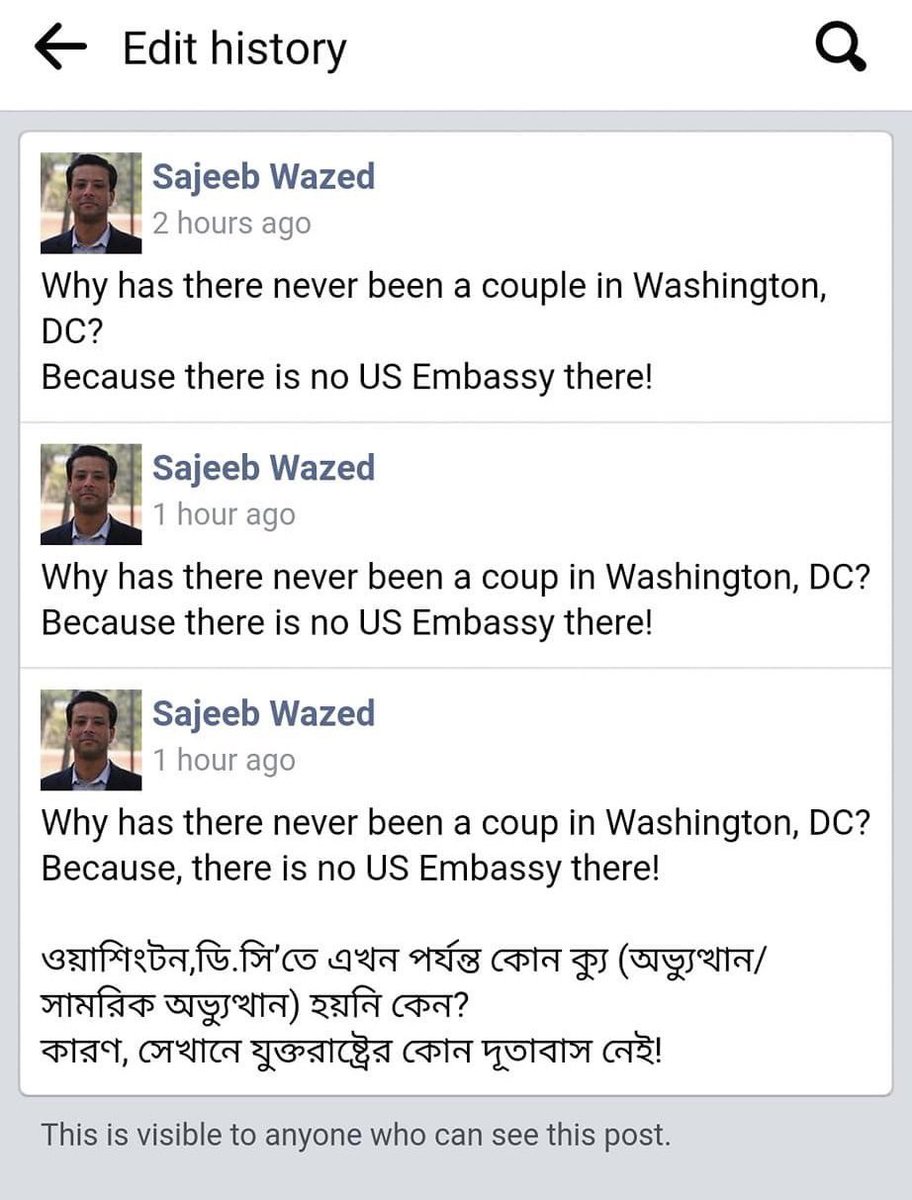
This is the second time in four years @usembassydhaka Ambassador Bernicat @StateDG and Ambassador Haas come under attack from agents of the ruling party in Bangladesh. The provocation is clear- the Bangladesh foreign ministry leaks Ambassador’s itinerary to ruling party to act!
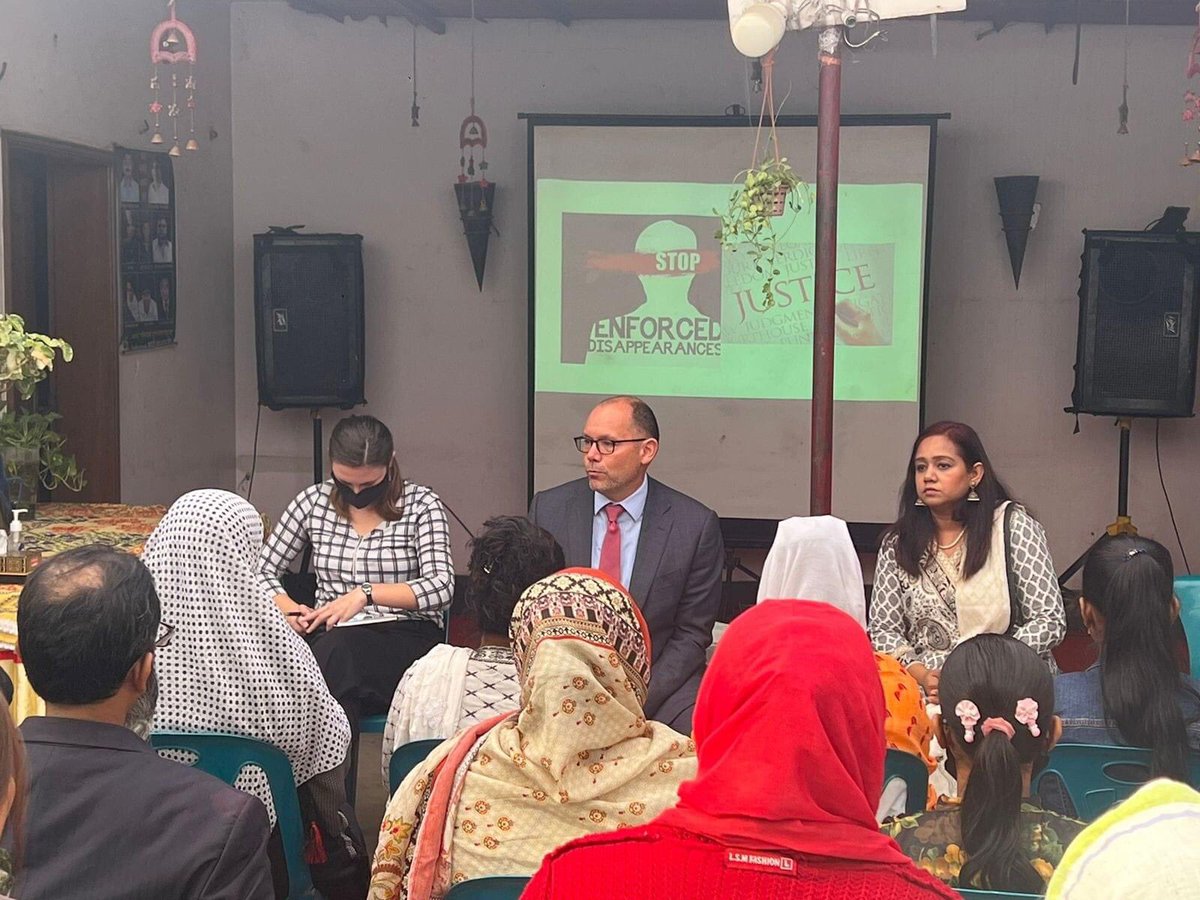
Today @usembassydhaka visited the family of BNP leader Sumon, missing since 2013,allegedly by the law enforcement agencies of Bangladesh.100s of BNP political activists like Shumon have been forcibly disappeared by forces likely to be involved with the current regime.
@UN@hrw
Bangladesh have no Democracy, no Human rights, we demand for immediately Restore Democracy and Human rights in Bangladesh, Also demand for Unconditional release our Mother of Democracy third times former prime minister Begum Khaleda Zia.