Wealth management works beautifully for the very rich and the very poor. The $20 trillion middle got left behind.
Arca is changing that — pairing real advisors with AI infrastructure so everyone can finally feel taken care of with their money.
Thrilled to participate in their $64M raise.
at https://t.co/ecog3CDPmf our product isn’t the software — it’s the financial outcomes we produce for our clients.
ofcourse AI is the core driver of it, but not the sole asset
It is stupidly hard to start a pure software company right now.
Customers don't want software, they want outcomes. So you end up having to do a lot of custom work for them.
Anything horizontal is on a ticking clock.
Every customer wants to deeply customize.
There are opportunities.
But you need to have a very heretical 2-3 year view of the world in order to build something good.
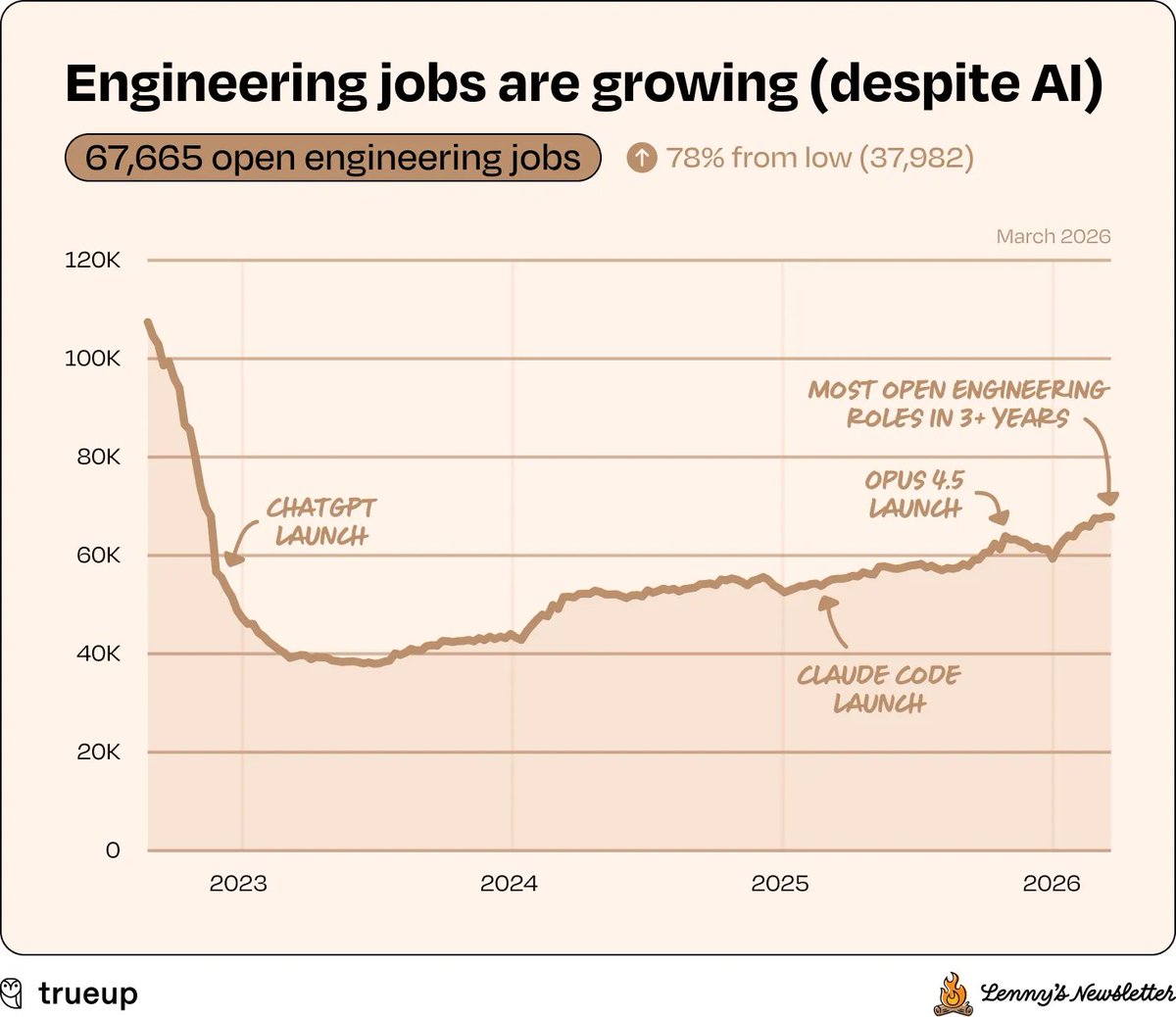
Engineering job openings are at the highest levels we’ve seen in over 3 years
There are over 67,000 (!!!) eng openings at tech companies globally right now, with 26,000 just in the U.S. We don’t know if there would have been more open roles if not for AI or if AI is actually leading to more open roles, but since the start of this year, the increase in open eng roles is accelerating even more.
@cramforce a challenge I've been wrangling with:
"which users > 50 yrs old expressed concern in sales calls?" — two-pronged ask; second half suited for an agent filesystem and the first half is trivial with simple DB filters where grep would crumble at scale...
what do you recommend?
@garrytan personal software seems v interesting but imo most people are happy using a thing someone else built + seldom have hyperspecific needs + lack creativity en masse
goa is absolutely deserted.
shocking seeing candolim beach shacks completely empty on a peak december weekend…
does cheap access to thailand blow goa out the water? or did they bite the hand that fed them?
silver lining tho: goa is clean af now
I see a lot of complaints about untested AI slop in pull requests. Submitting those is a dereliction of duty as a software engineer: Your job is to deliver code you have proven to work https://t.co/Eso7BWaTtF
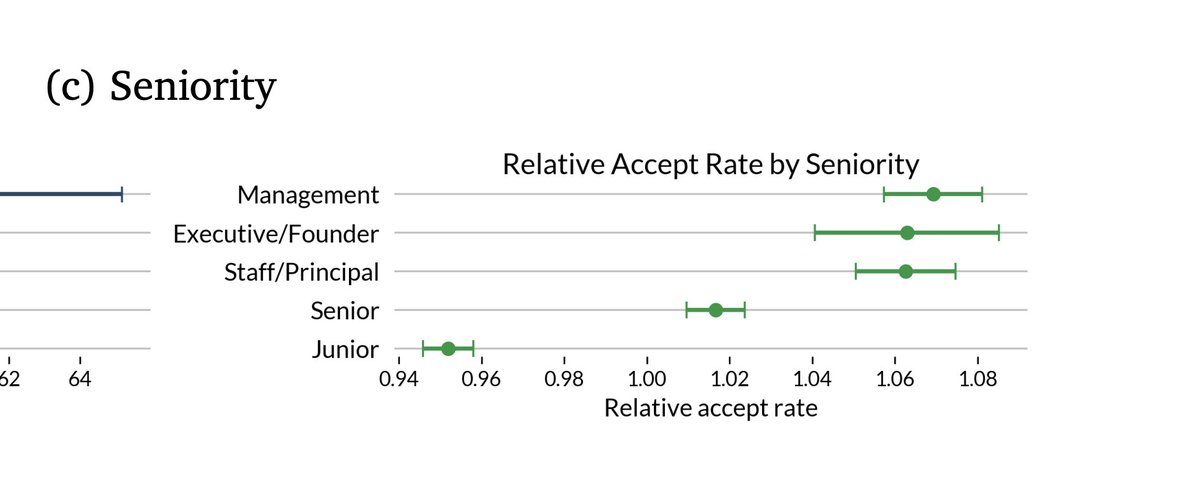
turns out, senior engineers accept more agent output than juniors. this is because:
- they write higher-signal prompts with tighter spec and minimal ambiguity
- they decompose work into agent-compatible units
- they have stronger priors for correctness, making review faster and more accurate
- juniors generate plenty but lack the verification heuristics to confidently greenlight output
shows that coding agents amplify existing engineering skill, not replace it
We’re starting to get a clearer sign of how vast the surface area of context engineering is going to be.
To build AI agents, in theory, it should be as simple as having a super powerful model, giving it a set of tools, having a really good system prompt, and giving it access to data. Maybe at some point it really will be this simple.
But in practice, to make agents that work today, you’re dealing with a delicate balance of what to give to the global agent vs. a subagent. What things to make agentic vs. just a deterministic tool call. How to handle the inherent limitations of the context window.
You had to figure out how to retrieve the right data for the user’s task, and how much compute to throw at the problem. How to decide what to make fast, and suffer potential quality drops, vs. slow but maybe annoying. And endless other questions.
So far there’s no one right answer for any of this, and there are meaningful tradeoffs for any given approach you take.
And importantly, getting this right requires a deep understanding of the domain you’re solving the problem for. Handling this problem in AI coding is different from law, which is different from healthcare. This is why there’s so much opportunity for AI agent plays right now.