The war in Iraq cost $3 trillion.
That money went somewhere.
It went to KBR. To Blackwater. To DynCorp. To Halliburton. To Boeing. To a hundred subsidiaries of subsidiaries billing the U.S. government over $1,000 for a toilet seat
The soldier who served in that war got a bumper sticker.
The executive who billed for that toilet seat got a bonus.
“Thank you for your service” is the bumper sticker talking.
The bonus is very, very quiet.
🇺🇸/IRAN - I US Carries Out More Strikes on Iran
▪️US claims strikes are in response to downed US Apache attack helicopter and "defensive" in nature;
▪️In reality, the attack helicopter was involved in imposing an illegal blockade on Iran (an act of war) following a unilateral and likewise illegal war of aggression launched against Iran in late February - follow up strikes since the "ceasefire" are meant to further degrade Iran's ability to DEFEND itself from ongoing US aggression;
▪️There is no "ceasefire" or "talks," just the US picking apart Iran just below the threshold of total war so it doesn't run out of munitions - but at a pace that prevents regional stability from resuming and energy exports from restarting;
▪️There are claims from US intelligence that Iran is rapidly rebuilding military capabilities lost during the previous US war launched February/March meaning Iran might be waiting to reach a certain level of readiness before launching more effective defensive operations - that remains to be seen;
▪️The US attacks coupled with the economic impact of the US blockade on Iran impose additional pressure on Iran ahead of what will be inevitably further "regime change" attempts;
▪️Unless the US blockade is broken or the multipolar world works around it - including preventing Iran's collapse and Asian nations from becoming energy dependent on the US - the US is still advancing its objectives both in the region and globally;
🚨 BREAKING
Iranian Armed Forces:
In response to last night's US aggression on Iranian soil, we attacked 4 targets with our long-range solid-fuel missiles, including #F35 fighter jet hangars and the #US Army Command and Control Center in Al-Azraq, #Jordan.
'SHOT-DOWN HELICOPTER' narrative a 'LIE' & 'PRETEXT' for MORE STRIKES on Iran — Former CIA Larry Johnson to RT
'If cockpit or main rotor had been hit... THE PILOTS WOULD BE DEAD'
The Trump regime deliberately targeted civilian water infrastructure in southern Iran. US missile attacks hit facilities serving the local population in Sirik. Targeting water supplies is a war crime under the Geneva Conventions. The US regime has exposed its true nature again.
🇺🇸🇯🇵 The US asked China to keep supplying rare earths to Japan. Beijing refused 🇨🇳
On Tuesday, China’s Foreign Ministry confirmed the rare earth export restrictions on Japanese military procurement will remain in place. Without exceptions and no silent reversals. After Tokyo’s firmer stance on Taiwan, Beijing’s January policy has remained unchanged.
Lin Jian was blunt” These materials are governed by export control law for a reason. They’re not ordinary commodities. They feed into advanced weapons systems, guidance technology and high-performance military components. The restrictions target Japanese government military end-use. Full stop!
He added that the measures aim to constrain Japan’s remilitarisation trajectory and slow any drift toward nuclear weapons capability. Instead of just diplomatic rhetoric, this reflects Beijing’s understanding of Japan’s plutonium stockpiles, reprocessing capabilities and the political situation in Tokyo due to the US security pact.
The data supports this assertion as well. China’s overall rare earth exports hit a four-month high in May, the Japan-specific squeeze is deliberate and narrow. Broader supply to the global market continues because China has zero interest in affecting industries that depend on these materials for civilian tech, EVs and renewables. The approach involves targeted pressure, not broad disruption.
The US request, pushed through diplomatic channels and flagged by Nikkei, then Bloomberg, changes nothing. Washington wants Beijing to keep feeding Japan’s tech and defence sectors even as it tightens containment, arms Taiwan and pressures allies to cut exposure to Chinese supply chains. The contradiction is hard to ignore.
Japan is following Washington’s script: diversify. It joined a trilateral “buyers club” with France and Canada. It signed a A$1.6 billion deal with Australia and even though these things sound reassuring in press releases, the physical reality is harder. Mining rare earths is relatively easy. Separating, refining them to battery, magnet grade and scaling production of neodymium-iron-boron magnets at the quality and cost China achieves? That took decades of state-directed investment, technical iteration and environmental trade-offs the West largely decided not to make.
The processing bottleneck is still overwhelmingly Chinese. No amount of G7 coordination or Australian mining deals erases that industrial fact overnight.
This looks like straightforward strategic resource management. Beijing is using leverage it actually possesses to raise the cost of actions that directly threaten core security interests, specifically Japan moving deeper into a US-led military posture aimed at Taiwan. That’s how great powers behave when they hold asymmetric advantages. They don’t hand strategic materials to countries actively aligning against them.
The US intervention only highlights the underlying weakness. If American strategy depends on China continuing to supply critical inputs to its key Asian ally while simultaneously trying to isolate Beijing economically, then the strategy has a structural flaw it can’t sanction or subsidise its way out of.
Washington can keep announcing “secure supply chain” initiatives. The era of open access to Chinese rare earth processing on Western political terms is over.
The question isn’t whether that’s fair. It’s whether anyone on the other side has actually understood it yet.
The months-long U.S.-Israel-Iran conflict has hit hard countries in the Gulf and wider Middle East region. Military action provides no solution and will only complicate the issue. At this critical juncture of Iran-U.S. negotiation, no one shall reignite the conflict. The sovereignty, security and territorial integrity of countries in the region should be respected and upheld.
The most telling thing about American political culture is what both parties agree on without discussing it.
Not healthcare. Not taxes. Not immigration.
The military budget.
Every year, regardless of which party controls Congress, regardless of the state of the economy, regardless of whether any war is being fought or won, the military budget grows.
No debate. No real scrutiny. No politician who wants a future in national office questions it fundamentally.
Five hundred billion. Six hundred billion. Eight hundred billion. Past a trillion.
For what? Against whom? Toward what strategic goal?
These questions are not asked in any serious way.
Because the military budget is not really a security policy.
It is a theology.
And you don't audit a theology.
You fund it.
And you thank God you live under its protection.
The Palau-flagged tanker, crewed by Indian sailors, was attacked by the United States as part of its blockade. Fortunately, all crew members survived the attack.
A total of 115 China-made light-rail trains will serve in Mexico City, Monterrey, and Guadalajara in Mexico during the 2026 FIFA World Cup to bring fans to the opening-match venue and the other two host stadiums, expected to handle more than 1.25 million passenger trips a day.
Trump has claimed an Iran deal was imminent at least 37 times
——
CNN noted that US President Donald Trump has repeatedly claimed a deal with Iran was imminent, counting at least 37 occasions — including before the ceasefire — in which he publicly said an agreement was close or suggested Iran was desperate to reach one.
The network argued there is no more evidence today that a deal is near than there was months ago, suggesting Trump may be trying to calm financial markets, convince others through repetition, or genuinely believes he can will an agreement into existence. CNN concluded that his repeated claims of an imminent deal should no longer be taken seriously.
Xi says he reaches important consensus with Kim on developing China-DPRK relations in new era
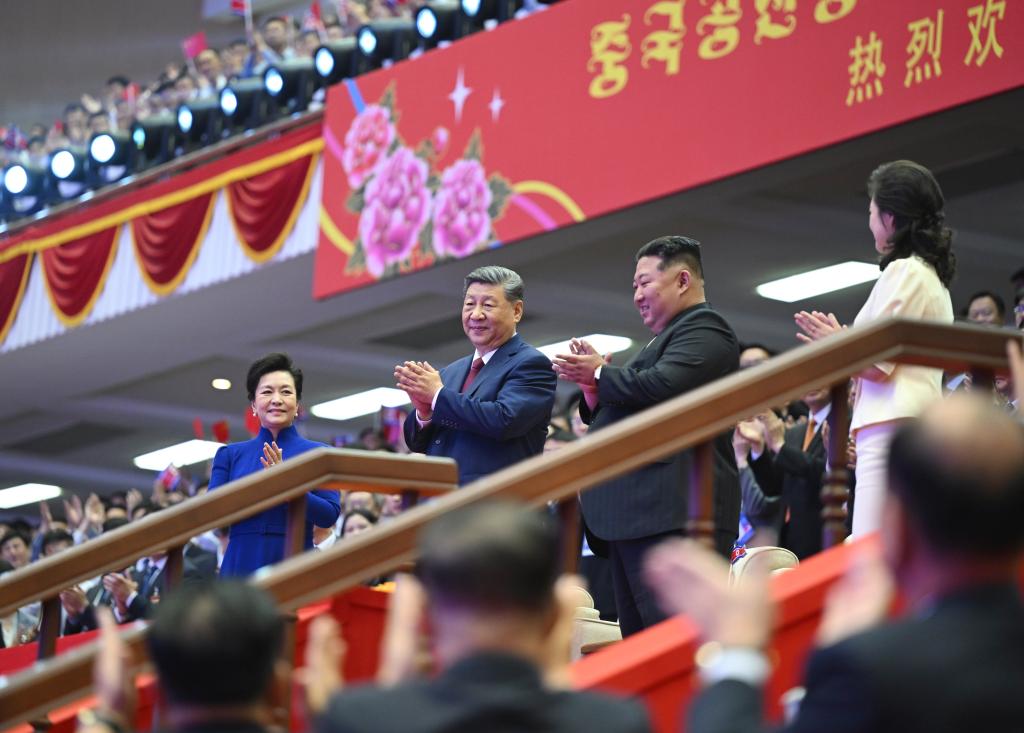
Xi Jinping, general secretary of the Communist Party of China Central Committee and Chinese president, said on Tuesday that he reached important consensus with General Secretary Kim Jong Un on developing relations between China and the Democratic People's Republic of Korea (DPRK) in the new era.
The two sides also had in-depth discussions on safeguarding peace and stability in the region and the world, Xi said when he and his wife Peng Liyuan attended the luncheon hosted by Kim, general secretary of the Workers' Party of Korea and president of the State Affairs of the DPRK, and his wife Ri Sol Ju.
Xi thanked Kim for the warm hospitality and thoughtful arrangements for the visit, noting that through the visit, the warmth and friendship extended by the DPRK party, government and people towards the Chinese party, government and people is felt even more deeply.
The mutual understanding between China and the DPRK has become deeper and more comprehensive, and the future development direction has become clearer and more definite, Xi said.
Xi said that he is ready to work with Kim to jointly lead China-DPRK relations to greater development and inject new and strong impetus into the socialist cause of the two countries.
For his part, Kim said that Xi's visit was a complete success, sending a positive message to the world that the DPRK and China are further strengthening their friendly cooperation, and attracting widespread attention from various sides.
Xi's visit was of great significance to bilateral relations and the future development of the region, Kim said, noting that the DPRK side stands ready to earnestly implement the important consensus reached during the visit, promote new tangible outcomes in bilateral cooperation, and advance DPRK-China relations to a new and higher level.
On Tuesday afternoon local time, Xi concluded his state visit to the DPRK and departed from Pyongyang. Kim and his wife went to the airport to see Xi and his wife off and held a grand farewell ceremony in their honor.
🚨🇨🇳 China's high-tech export boom is defies global uncertainty
China's export sector is proving exceptionally strong, fueled by global demand for AI hardware and green energy tech, China Chamber of Commerce data shows
🔸 Global AI investment surge plays to China’s strengths, as Chinese firms lead in printed circuit boards, optical components, and memory chips
🔸 Integrated circuit exports have grown by more than 20% annually for 13 straight months, with export value surging 92% in April alone
🔸 EV exports jumped 68.1% in the first four months of the year, while lithium battery exports rose 43.2%
Mature manufacturing and vertical integration are cementing China’s pivotal role in the global high-tech and green transition
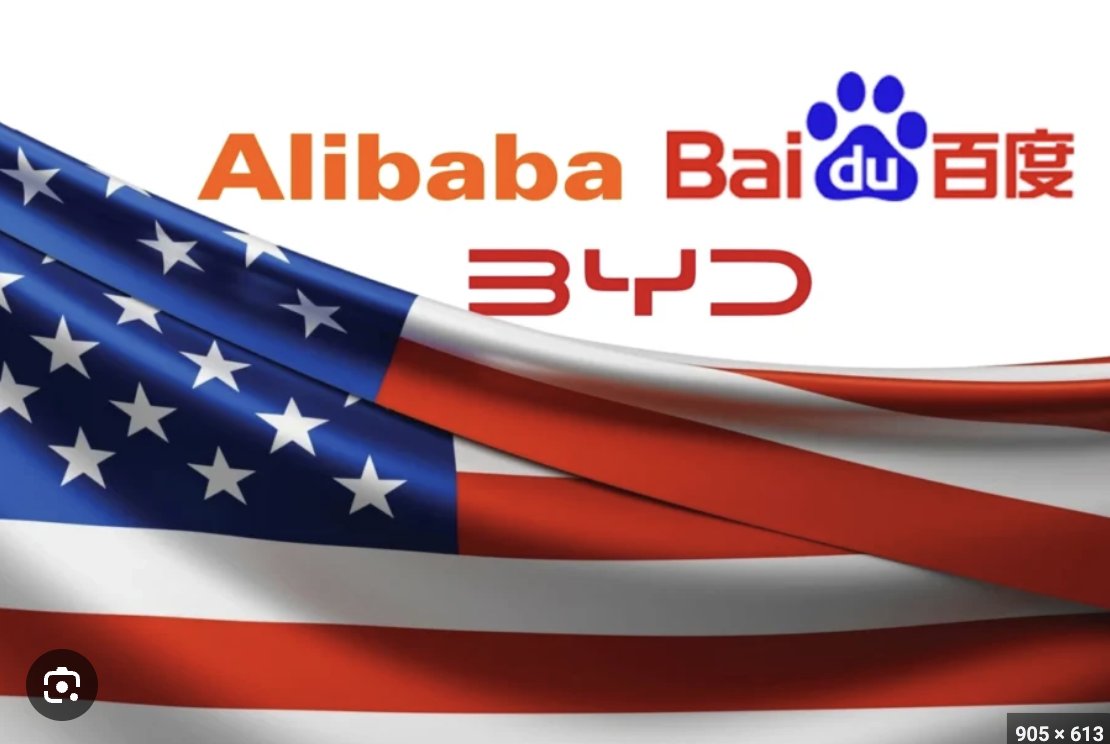
So let's get this straight. China builds the world’s biggest EV company, develops globally competitive AI firms, creates world-class memory chip makers, and suddenly the answer from Washington is… put them on another blacklist?
BYD sells millions of cars. Alibaba powers global commerce. Baidu pushes AI innovation. YMTC and CXMT are helping China solve one of the hardest technology challenges on Earth. Yet the Pentagon now wants people to believe these companies are somehow a threat simply because they are Chinese.
Meanwhile, American tech giants work hand in hand with the US military, build defence systems, cloud infrastructure, AI tools, and surveillance capabilities, but apparently that’s “normal”.
This is not about security. It’s about competition.
The reality? China was told it could never build advanced semiconductors. China was told it could never challenge Western EV makers. China was told it could never compete in AI.
Yet here we are.
Sanctions, entity lists, investment restrictions, we’ve seen this movie before. And every time, China adapts, localises, and accelerates.
What I keep saying remains true: Do not underestimate China.
From Yiwu in Zhejiang to Yiwu of the world.
From U.S. election hats, campaign signs and little flags, to World Cup scarves, jerseys, footballs, plush toys and fan merchandise — Yiwu does not look like a monopoly over any single industry.
It looks small.
Fragmented.
Messy.
Almost trivial.
But that is exactly its power.
Whatever the world suddenly wants, someone in Yiwu can find it, design it, customize it, produce it, pack it, ship it, and price it in a way most countries cannot match.
That is why Yiwu once became an unofficial weather vane for U.S. elections.
The volume of campaign hats, flags and victory merchandise ordered from China could become a strange little signal of American political mood.
And now, during the World Cup, the same machine wakes up again.
Flags.
Scarves.
Wristbands.
Team shirts.
Football gifts.
Fan toys.
Small orders.
Niche designs.
Fast turnaround.
Full capacity.
This is the part Western “overcapacity” narratives never understand.
China’s manufacturing strength is not just giant factories.
It is millions of small operators surviving inside the most brutal commercial ecosystem on earth.
A family workshop in Yiwu that can survive Chinese competition already has a level of speed, price discipline, supply-chain awareness and market instinct that protected industries in the U.S. and Europe cannot imagine.
They read trends faster.
They judge timing better.
They adjust designs faster.
They coordinate suppliers faster.
They enter markets faster.
They customize faster.
China did not become the world’s manufacturing center by forcing people to buy Chinese goods.
It became indispensable because the world kept discovering that no one else could deliver the same combination of price, speed, scale, flexibility and reliability.
Yiwu is not glamorous.
It is something far more frightening to China’s competitors:
A civilization of small goods powered by industrial instinct.
Xi Jinping, general secretary of the Communist Party of China Central Committee and Chinese president, and his wife Peng Liyuan, along with Kim Jong Un, general secretary of the Workers' Party of Korea and president of the State Affairs of the Democratic People's Republic of Korea (DPRK), and Kim's wife Ri Sol Ju, watch an artistic performance at the Pyongyang Gymnasium in Pyongyang, the DPRK, June 8, 2026.