@VankaAnita 's paper was one of the top 10 most downloaded of Association of @AAMCtoday 's @MedEdPORTAL publications in 2024.
💡 Focus: Writing clear, inclusive notes patients can access under the #CuresAct.
Read more: https://t.co/UlW5G8giRJ
The power of patient voices plus the power of AI? 💥 Let's go.
#OpenNotes is partnering with Abridge to enhance patient care with AI-generated visit summaries.
Read more: https://t.co/2ujXVDNNiQ
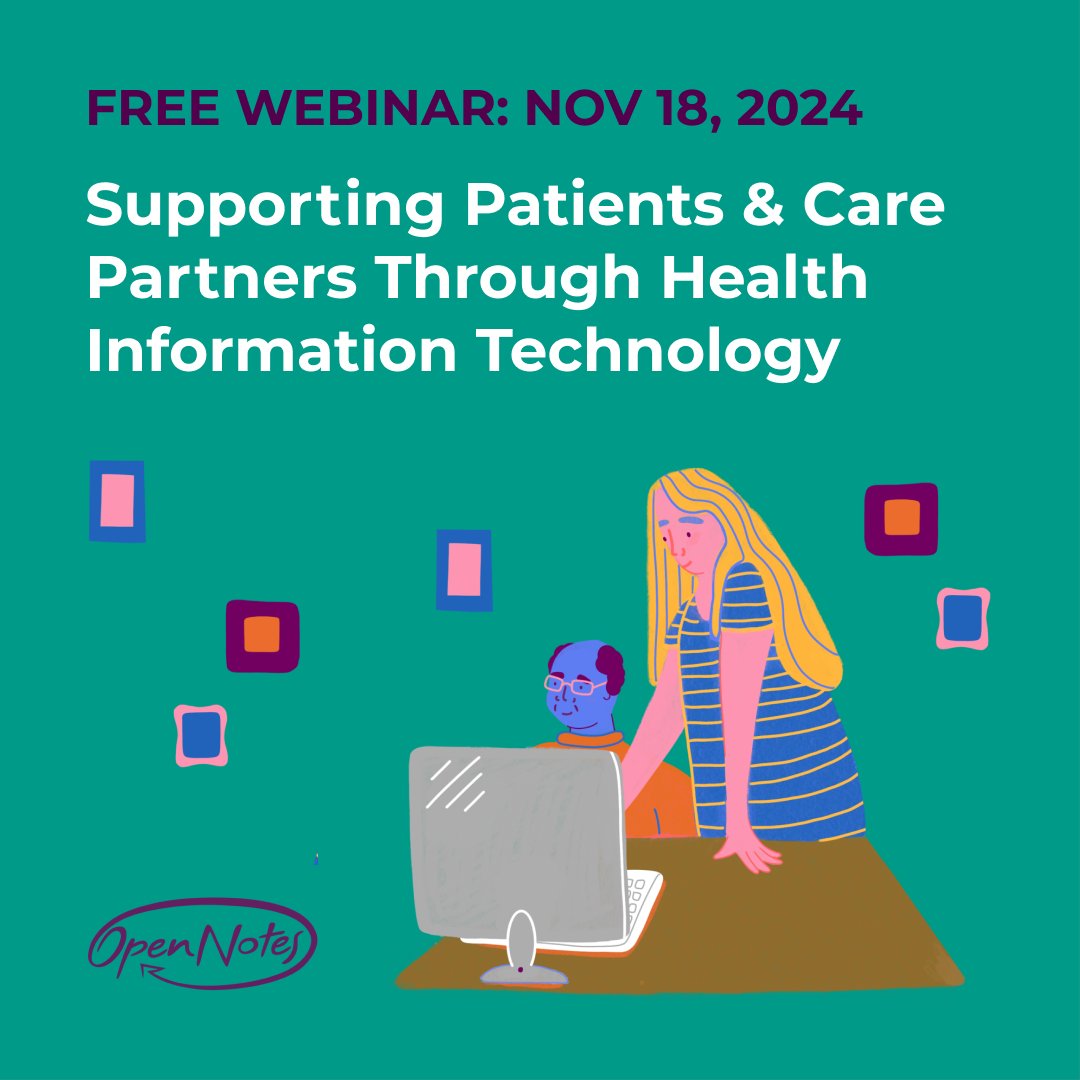
WEBINAR TODAY | Join the Coalition for Care Partners, @myOpenNotes & @JohnsHopkinsSPH for its webinar TODAY at 1pm ET on "Supporting Patients & Care Partners Through Health Information Technology." Learn more: https://t.co/ZZvcv4E6Xx
📣 𝗔𝗻𝗻𝗼𝘂𝗻𝗰𝗲𝗺𝗲𝗻𝘁: 𝗔𝗯𝗿𝗶𝗱𝗴𝗲 𝗮𝗻𝗱 @MyOpenNotes 𝗣𝗮𝗿𝘁𝗻𝗲𝗿 𝗼𝗻 𝗥𝗲𝘀𝗲𝗮𝗿𝗰𝗵 𝘁𝗼 𝗘𝗻𝗵𝗮𝗻𝗰𝗲 𝗔𝗜-𝗣𝗼𝘄𝗲𝗿𝗲𝗱 𝗣𝗮𝘁𝗶𝗲𝗻𝘁 𝗡𝗼𝘁𝗲𝘀
Today, we’re announcing a partnership with OpenNotes at Beth Israel Deaconess Medical Center that will enhance patient notes by bringing patient-clinician conversations to the forefront of research.
OpenNotes is leading a study using focus groups to evaluate Abridge’s AI-generated Patient Visit Summaries. These notes are written based on the clinician-patient conversation in real-time at an 8th-grade reading level. The insights from the study will be used to enhance these notes to better meet the needs of some of the most important healthcare stakeholders: clinicians, patients, and patient advocates.
This partnership is part of the OpenNotes Lab, an initiative fostering collaboration between patients and clinicians in developing AI-powered tools. OpenNotes joins other leading healthcare organizations that enrich Abridge’s generative AI platform with scientific research and deep technology integrations.
💬 "This research collaboration with OpenNotes will harness the power of actual patient conversations in informing the next generation of visit summaries, an invaluable tool in keeping patients engaged with their care." – Dr. @ShivdevRao, CEO and Founder of Abridge.
Learn more: https://t.co/CJLgFuC1oJ
We just dropped new resources for clinicians on how #OpenNotes helps with safer care. 🌟
The research is clear! 🔎 Greater healthcare transparency can significantly improve trust and strengthen the patient-doctor relationship.
Read more: https://t.co/xjCDrHx8AW
How can we make caregiving a little easier using health information technology?
In honor of #NationalCaregivers Month, we’ll be hosting a webinar on November 18th at 10am PT / 1pm Eastern with @JohnsHopkinsSPH and Coalition for Care Partners.
Sign up: https://t.co/SfD1tvHfOm
Imagine leaving your medical visit with a summary that’s clear, accurate & easy to understand.💡
That’s the goal of our partnership with @AbridgeHQ!⚡️
By involving patients in the design, we’re making health transparency the new standard.
#healthAI
https://t.co/UcJuT3mq3T
Social determinants of health (SDOH) are becoming as important as traditional measures in medicine. But what's the best way to handle this sensitive data?
Read our study in @JAMANetworkOpen : https://t.co/RWueexf8Ls
#OpenNotes#HealthIT#MedTwitter@TheLizArmy
Electronic medical records were supposed to transform the patient experience. Here’s how patients can use them to make sense of their healthcare data. https://t.co/esokCozG1I
"Patients know what they want and are saying it loud and clear—we want full interactive access to our medical records through apps or portals that we can use to inform our decisions and manage our care." @acpatient @tessajlrichards @ceineken @WalkSquawks
https://t.co/eFEJsdjZ4h
"Clinicians are taught originally that, "The record is for me, it's a memory aid for me. And it's a way for me to look back and see, you know, are there patterns here?" And then it became something for the healthcare organization to use as billing. But it was still like, this is for me, it's not for the patient"