Micrometer sized tin droplet plasmafied using 3x60kHz laser. Upping the EUV ante from 2x50kHz for next gen machines, improving efficiency and productivity. #ASML
GRAPHIC WARNING: This video contains sensitive footage that may disturb some viewers. A massive flash flood in the Himalayan border areas of Nepal and China's Tibet washed away villages while damaging roads, bridges and power projects in a region bordering Tibet, authorities said.
We've been getting a lot of questions lately about how the Internet Archive digitizes books.
The short answer: page by page, by hand.
You may remember our viral 2021 video of Eliza Zhang scanning a book. That's still how we do it.
Meet Eliza, and learn how we scan books: https://t.co/gt9s5lbPE4
@carbonphysicsai The challenge is creating systems that improve yield predictions and reduce wafer runs without needing unrealistic volumes of destructive experiments first
@carbonphysicsai Trusted AI is necessary but far from sufficient. In fabs, the limiting factors are yield economics and the cost of failure data. Building useful digital twins or physics-informed networks requires rare, expensive edge-case and failure data that we deliberately try not to generate
The value is not autonomous fabs or factories tomorrow; it's dramatically faster iteration, better process windows, lower experimental cost, and earlier detection of issues – always with human oversight on critical decisions.
Been disentangling this kind of misinfo in the semicon industry for the last several years. LLMs can't do real-time closed-loop control, high-precision metrology decisions or recipe optimization on fab or factory floors.
People hear "scientists use AI to solve X" and they think it was some LLM superbrain solving the entire problem, and not some domain experts using their domain expertise to create a machine learning algorithm to do dimensionality reduction for one aspect of the problem
We already use machine learning extensively in computational lithography and metrology. The next leverage is tighter integration of physics-constrained AI into process control and materials selection so we can move faster on High-NA and beyond while protecting yield.
This is exactly how AI hype turns real science into fake news.
Yes, Moderna used AI and computational algorithms in this cancer program, especially to analyze tumor mutations and select neoantigens.
But this is NOT a story about ChatGPT, LLMs or the recent generative AI boom suddenly curing cancer.
Moderna and Merck started this program in 2016. The first patient was dosed in 2017. The technology has been developed and clinically tested for years.
The actual breakthrough is personalized mRNA cancer therapy + Keytruda showing positive Phase 3 results in melanoma.
That is already huge. There is no need to rewrite it as “AI cured cancer.”
I am very pro AI, but pretending every scientific breakthrough happened because of today's AI hype makes the whole field look less credible.
In an era where anyone can generate convincing nonsense in seconds, accurate and authentic posts will become much more valuable.
Rilwan was abducted 12 years ago. The state says he was murdered. But it has never produced a body, a confirmation of death, or the report that is supposed to explain how it knows. @HindhaIsmail on a disappearance quietly turned into a murder case. #FindMoyameehaa
https://t.co/Ye0HTI6KH0
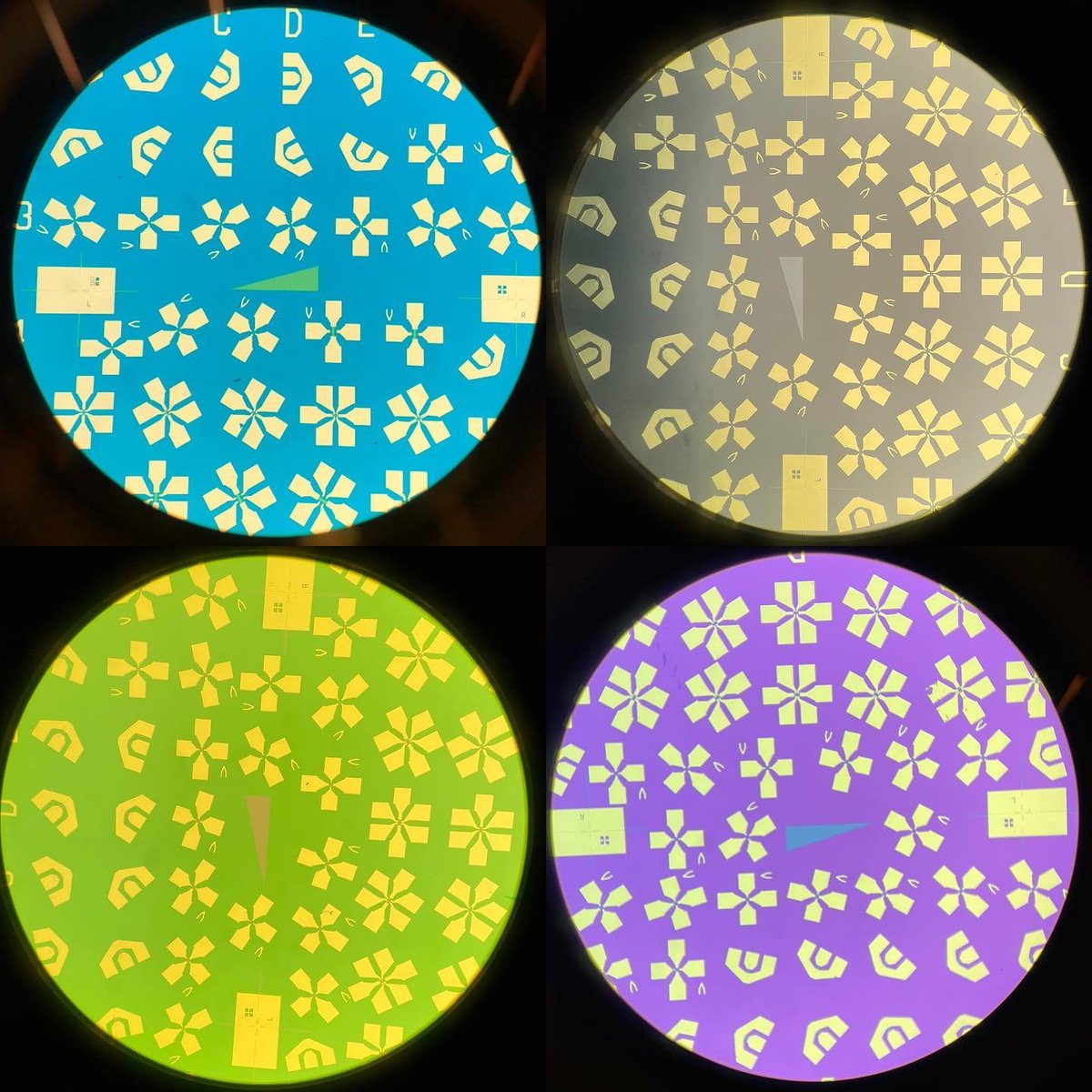
Testing our PFAS-free CAR formulation across varied underlayers to evaluate baseline substrate independence. While thickness and material variations yield distinct thin-film interference colors, the macro-scale wetting and target pattern uniformity remain consistent.
Look at chiplets and advanced packaging - classic knight moves. We're using yield economics to bypass heavily defended physical limits. To survive in this game, engineering isn't enough. You gotta play both pieces.
The clash is brutal. You can tape out a beautiful architecture that perfectly satisfies the bishop, but if defect rates nuke your wafer costs, the Knight just forked your entire startup strategy.