Hey @NASASun fans – this account is moving! 🚛
Going forward, all solar activity reports and alerts will come from the new @NASASpaceAlerts account, where we'll share breaking news about solar activity as well as asteroids, meteors, comets, and noteworthy happenings in our local space environment. If you want to stay updated on what's happening on the Sun, give @NASASpaceAlerts a follow!
For all other heliophysics-related content, we’ll be delivering it to you from the @NASASolarSystem account, so give them a follow as well!
Once the move is complete, we will post a final notice to this account, then mark it as archived.
Thanks for being with us for all our trips around the Sun!☀️
The TRACERS live telecon starts in 1 hour!
Listen in as mission experts discuss this soon-to-launch mission to study magnetic explosions in space. 🧲💥
https://t.co/CyzSRLU2By
Answer: That thing blocking the Sun at 2:47 is... us! 🌎
SDO has entered its Earth eclipse season, a three-week period that happens twice a year. During Earth eclipse season, SDO's orbit takes it behind Earth for brief period of time, momentarily blocking the spacecraft's view.
Learn more: https://t.co/j0zzu4Zw3e
It’s #SunDay! This week’s (July 4 - 10) space weather report includes:
· 2 M-class flares
· 0 C-class flares
· 32 coronal mass ejections
· 0 geomagnetic storms
This video from NASA’s Solar Dynamics Observatory (SDO) shows the week’s activity.
At about 2:33, SDO performs one of its calibration maneuvers, which keep the spacecraft’s telescopes in top working order.
But what’s that at 2:47? 👇🤔
At about 2:47 in the above video, something briefly blocks SDO’s view of the Sun. What is it?
Share your guesses below – the answer will be revealed Monday, July 14 at noon ET! 🎉
More on flares & coronal mass ejections: https://t.co/psyc4q6QJ2
From tracking plasma flows on the Sun, to detangling solar eruptions, to creating a “digital twin” of our entire neighborhood in space, NASA’s DRIVE Science Centers are on the case – and they now have new webpages! 👇
https://t.co/amffw0mSZk
https://t.co/SPUesQWb1m
https://t.co/noHSeNgGJn
Established in 2022, NASA’s DRIVE Science Centers are like heliophysics think tanks, where modelers, theoreticians, computer scientists, and observers come together to unravel the Sun’s biggest mysteries.
More: https://t.co/F0hUNraOlG
🖼️ credit: COFFIES DRIVE Science Center/Nick Featherstone
Four facts about the solar wind that will blow your mind: ☀️🌬️🤯
1. The solar wind has been blowing non-stop since the Sun formed about 4.6 billion years ago. ⌛
2. It travels about 1 million miles an hour (and faster). 🏃
3. It carries about 1.5 million tons of mass away from the Sun every second. 😯
4. It could keep blowing at that rate for a TRILLION YEARS without depleting the Sun! ⚖️
That’s a lot of solar wind — so where does it all go? 🤔👇
1/2 🧵
This is the view from WITHIN the Sun’s atmosphere! ☀️👀🛰️
NASA’s Parker Solar Probe just released imagery from its closest-ever flyby of the Sun, revealing details in the solar atmosphere that scientists will be studying for years.
More: https://t.co/ZDyJ1ReiWC
This month, the Sun is stealing the spotlight!
July’s #NASAScience calendar image showcases a spectacular solar eruption, captured in Dec. 2023 by the SUVI instrument aboard NOAA’s GOES West satellite. This SUVI 304Å image reveals plasma in the Sun’s upper chromosphere, at a temperature around 6,000 kelvins. 🔥
Dive deeper into the science: https://t.co/7tAdTmiwCG
It’s #SunDay! This week’s (June 27 - July 3) space weather report includes:
· 0 M-class flares
· 1 C-class flare
· 25 coronal mass ejections
· 0 geomagnetic storms
This video from NASA’s Solar Dynamics Observatory (SDO) shows the week’s activity.
More on flares & coronal mass ejections: https://t.co/sLn7x6igf1
It looked like a minor solar eruption — but it had a major effect on Earth. ☀️💥🌎
In April 2023, a relatively weak solar storm produced vibrant auroras visible as far south as Arizona.
Now, scientists have new insights into what made this storm so impactful — and how we might better detect similar events in the future.
Learn more: https://t.co/Vo7yGMHZda
📸 Aurora over Larimore, North Dakota. Credit: Elan Azriel
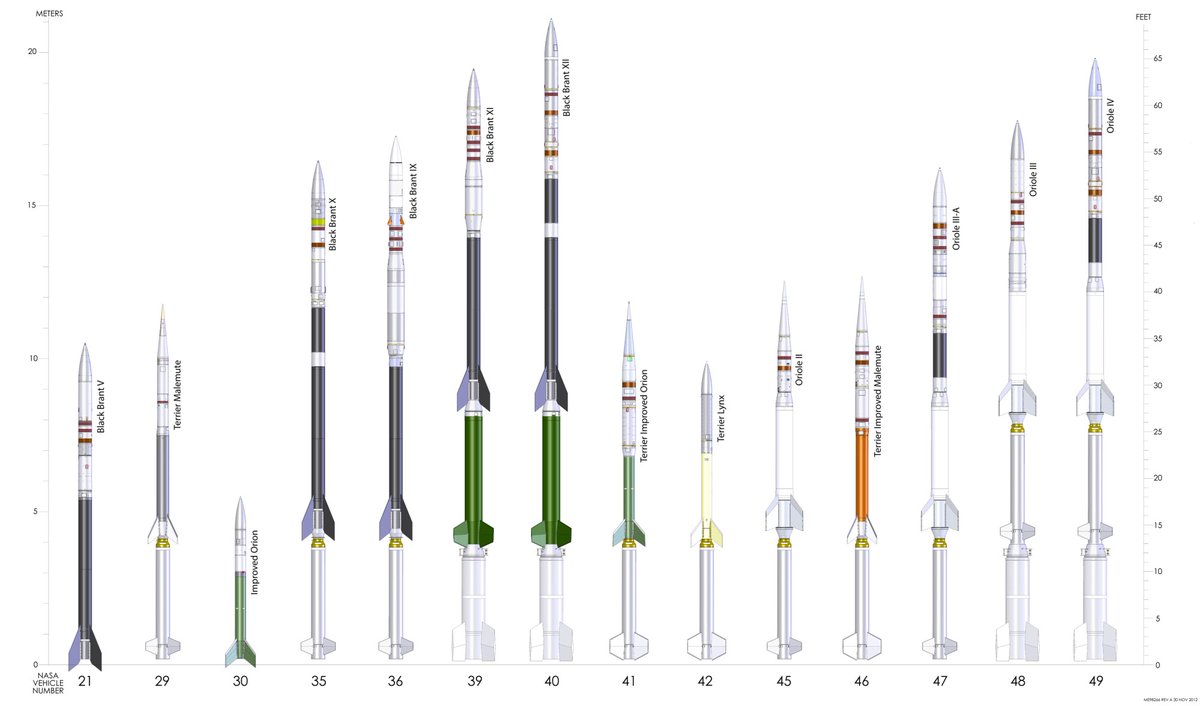
@EdwardGiugliano@NASAWallops They were both Terrier-Improved Malemutes! In this image, it's the one numbered "46."
You can learn a little more about the vehicles we use here: https://t.co/5l2CNgTBDV
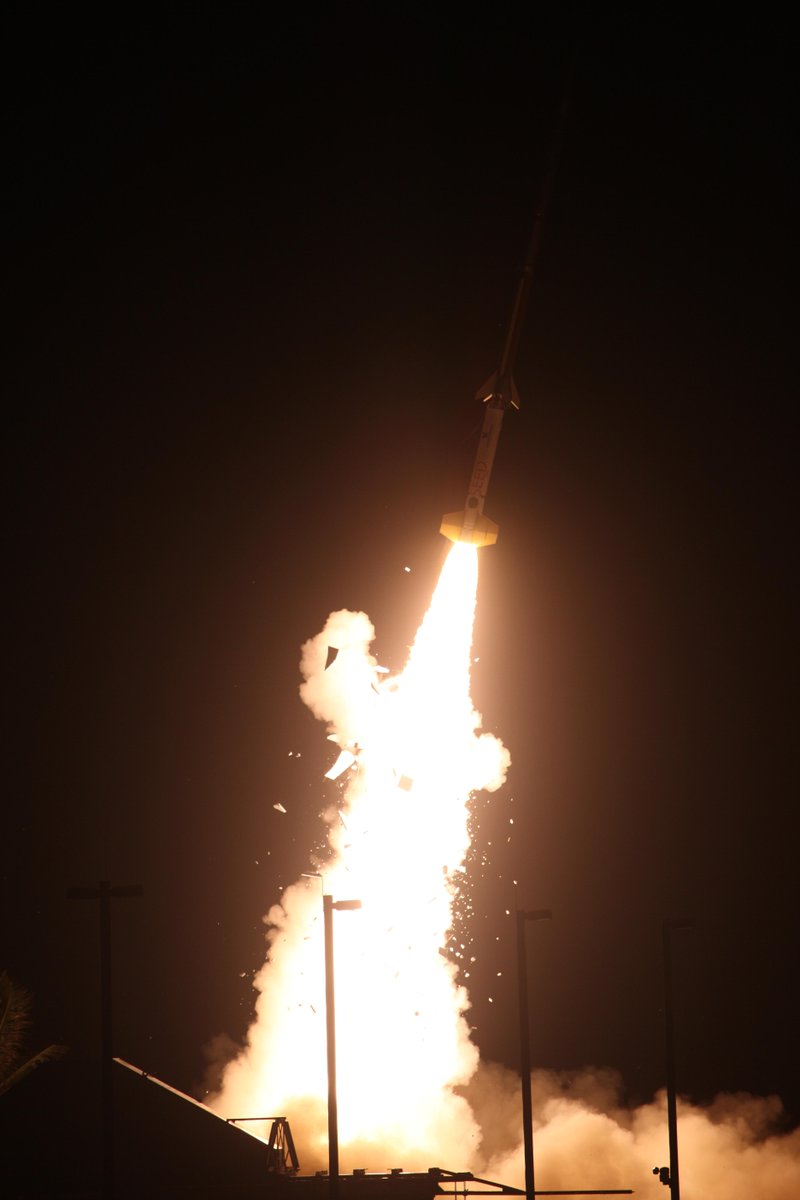
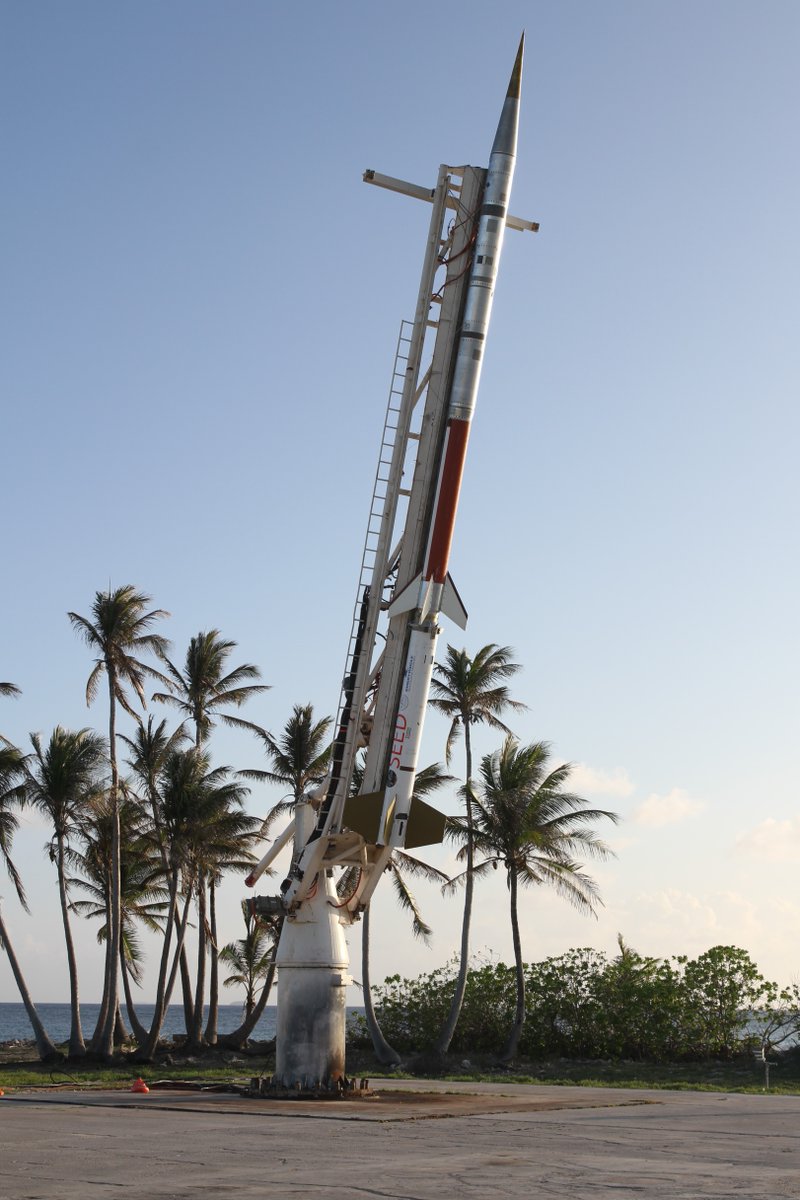
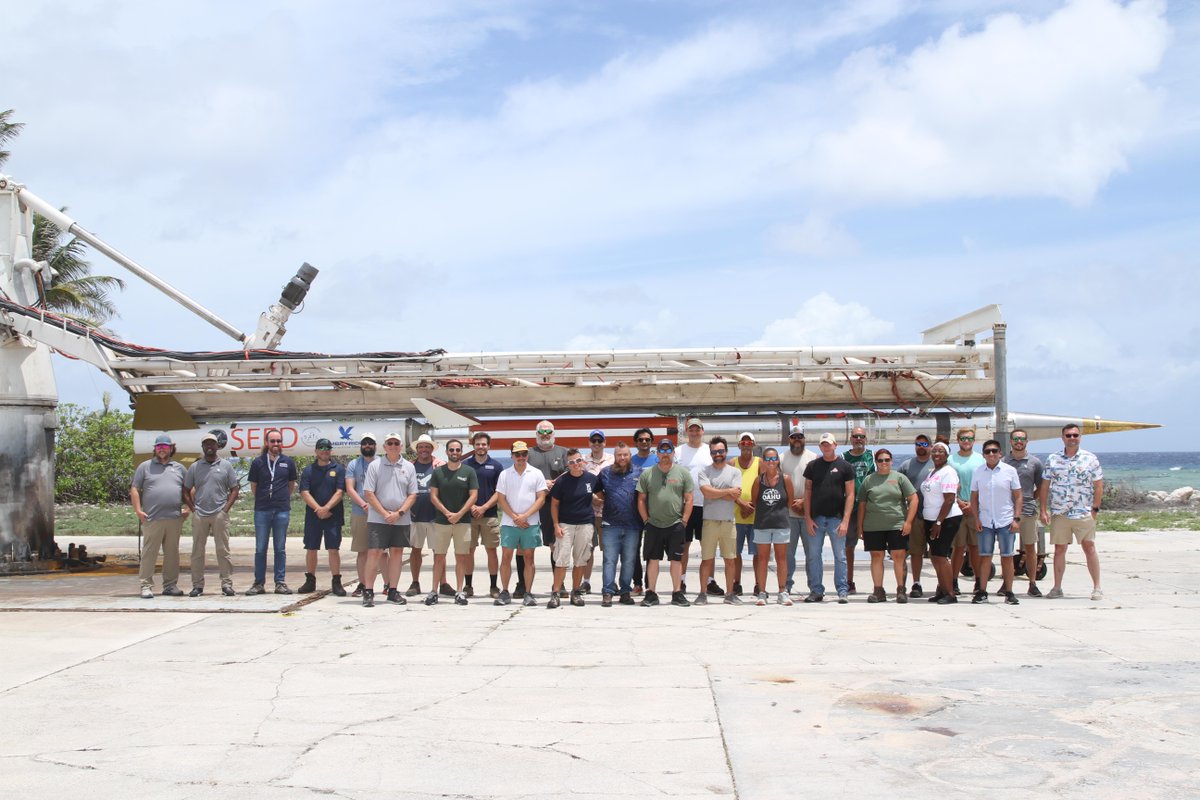
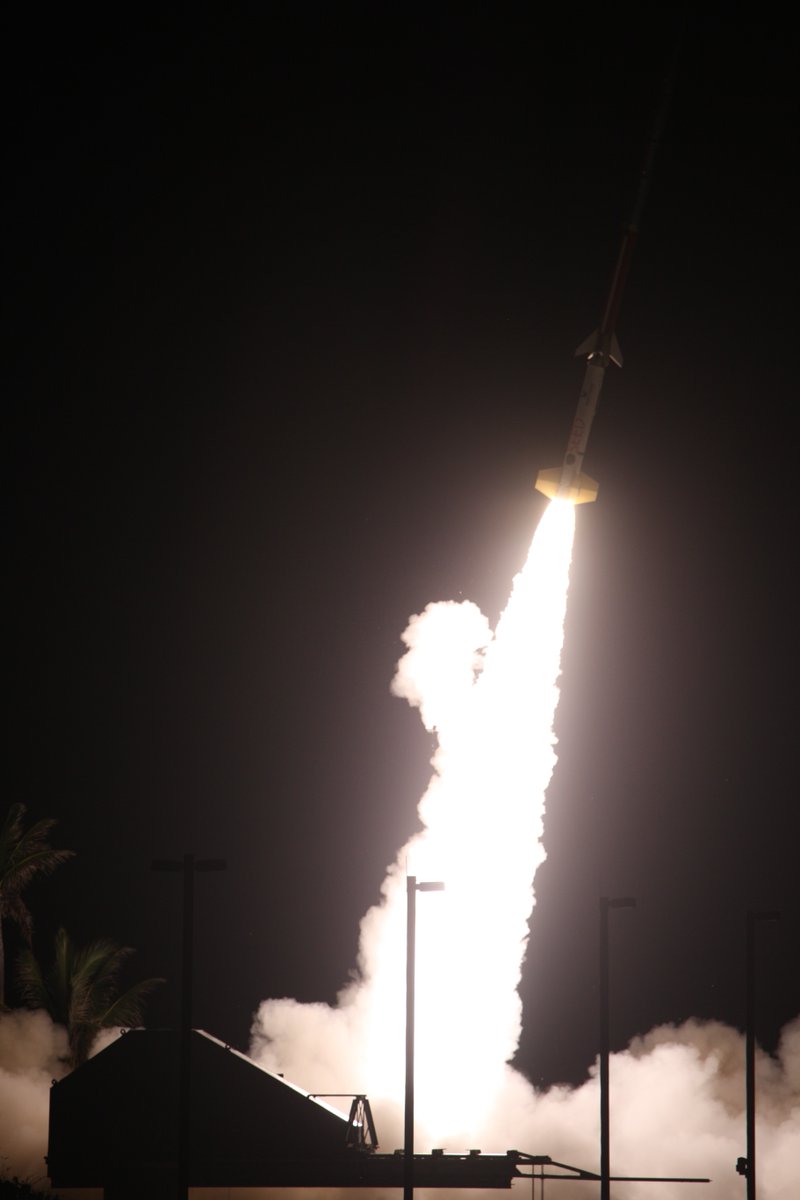
Two successful launches, and that’s a wrap! 🚀🚀
The two SEED mission rockets launched from Kwajalein Atoll in the Marshall Islands on June 20 and June 28, reaching peak altitudes of 95 miles (153 kilometers) and 97 miles (157 km), respectively.
Preliminary data suggest that both rockets flew through Sporadic-E layer clouds and all experiment systems worked as expected.
Congrats to the team, time to head home!
More about the SEED mission: https://t.co/IVEz8z50wj
Photos:
1. SEED team in front of the first rocket
2. The first SEED rocket vertical on the launch rail
3. First SEED rocket launch
4. Second SEED rocket launch
📸 credits: NASA/Chris Lanier
@NASAWallops
It’s #SunDay! This week’s (June 20-26) space weather report includes:
· 2 M-class flares
· 2 C-class flares
· 34 coronal mass ejections
· 0 geomagnetic storms
This video from NASA’s Solar Dynamics Observatory (SDO) shows the week’s activity.
More on flares & coronal mass ejections: https://t.co/sLn7x6igf1
Thank you to the millions who watched NASA's eclipse broadcast, took time to experience the eclipse, and shared in the wonder of the Sun and our place within this amazing universe.♥️
And HUGE congrats to the @NASASun team members who made this broadcast possible! It took many months of planning and hard work, but it was our honor to share this celestial spectacle with so many around the world.
We won an Emmy!
Our live broadcast coverage of the 2024 total solar eclipse received this year's Emmy Award for Outstanding Live News Special. Get the details: https://t.co/46GQ0MoJ8Y
2/2 🧵
The solar wind fills space around us to create a giant "bubble" we call the heliosphere.
The heliosphere’s size, shape, and dynamics are mostly still unknown — but maybe not for long!
NASA’s IMAP (Interstellar Mapping and Acceleration Probe) mission, scheduled to launch late September this year, will chart the heliosphere, revealing how the Sun and solar wind create and maintain our giant bubble in space.
Ahead of launch, the spacecraft just got two more of its 10 instruments installed: https://t.co/nzKrZVhHwD
More about IMAP: https://t.co/6YH0Jw2joC
More about the solar wind: https://t.co/ytoUyVv7Ue
Four facts about the solar wind that will blow your mind: ☀️🌬️🤯
1. The solar wind has been blowing non-stop since the Sun formed about 4.6 billion years ago. ⌛
2. It travels about 1 million miles an hour (and faster). 🏃
3. It carries about 1.5 million tons of mass away from the Sun every second. 😯
4. It could keep blowing at that rate for a TRILLION YEARS without depleting the Sun! ⚖️
That’s a lot of solar wind — so where does it all go? 🤔👇
1/2 🧵
Another daring dive by the Sun, complete! 🛰️☀️✅
On Thursday, June 19, NASA’s Parker Solar Probe completed its 24th close approach to the Sun, matching its record distance of 3.8 million miles (about 6.2 million kilometers) from the solar surface and mind-melting top speed of 430,000 miles per hour (about 692,000 kilometers per hour).
More: https://t.co/TV1a24Yc8e
It’s #SunDay! This week’s space weather report includes:
· 2 X-class flares
· 12 M-class flares
· 38 coronal mass ejections
· 1 geomagnetic storm
This video from NASA’s Solar Dynamics Observatory (SDO) shows the week’s activity.
The two X-class flares both erupted from the same active region. Spot them at about 2:11 and 3:06 below! 🤩
More on flares & coronal mass ejections: https://t.co/sLn7x6igf1
IMAP is now at the Astrotech Space Operations Facility near the agency's Kennedy Space Center in Florida prepping for launch later this fall.
IMAP will study the heliosphere, the Sun’s magnetic bubble protecting our solar system from interstellar space.
More about IMAP: https://t.co/aBnA3ZlHoS
So fresh and so clean, clean 🧼🫧
Inside the clean room at the Johns Hopkins Applied Physics Lab, NASA’s IMAP (Interstellar Mapping and Acceleration Probe) got its 10 instruments integrated into the spacecraft. 👇