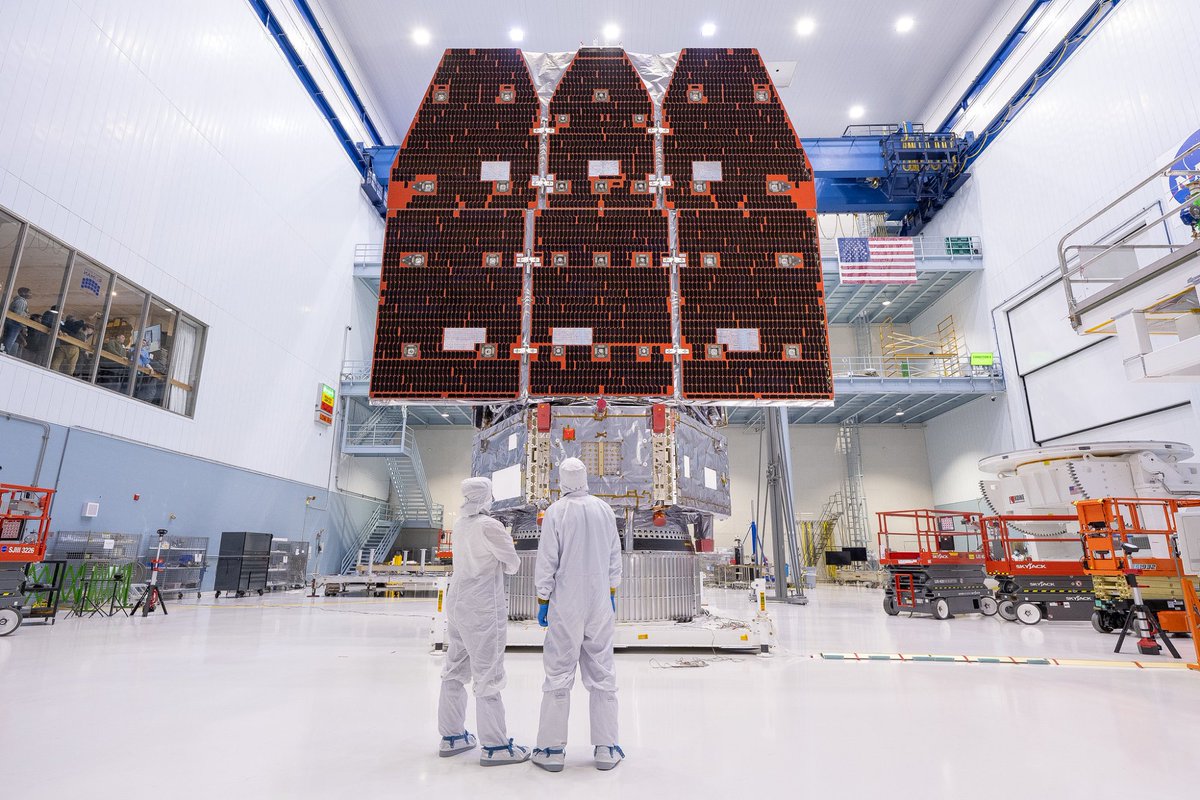
Our next gamma-ray mission is on the move!
The scientific instruments for COSI have arrived at a Northrop Grumman satellite manufacturing facility, where they will be installed onto a spacecraft and undergo testing ahead of launch next year. Learn more: https://t.co/FL7pgXLi3c
. @ESA_Euclid just broke its own record 🏆
The #DarkUniverse detective 🕵️ has discovered the most distant quasar to date: a galactic core seen just 630 million years after the Big Bang 👉 https://t.co/d53K2NLGfw
Nicknamed Dún Aonghasa, the object is the red dot in the centre of this image 👇
How do we search for the invisible glue that holds the universe together?
Learn more about dark matter — the “missing�� mass in the universe that has puzzled scientists — in our episode of Astro-Investigates: https://t.co/GRtn4DsbgE
Raising the bar 🏋️
A brilliant galaxy with a distinctive central bar of stars takes centerstage in this new Hubble view. Called NGC 4394, this galaxy resides about 55 million light-years away: https://t.co/e7W6ZKaAK8
Last week, Voyager 1 reached a light-day away from Earth after sailing through the solar system for nearly 50 years. But how does that compare to other cosmic distances? (Hint: we measure many of them in light-YEARS.)
Ponder the vastness of space with us: https://t.co/mne39lUmbz
So many cosmic questions await.
More answers will come with the start of @NASARoman's science operations.
But Hubble's mission continues, since both observatories were designed to seek knowledge on different types of astronomical questions. ⬇️
Onions have layers. Stars have layers.
Webb’s mid-infrared instrument is giving us new details on supernova remnant Cas A, helping astronomers chronicle the structure and evolution of Cas A’s original star. https://t.co/HIzhJCiNwO
In the time it takes you to read this, the expanding universe will carry the spiral galaxy UGC 2885 another 49,000 miles away from us. That’s about six Earth diameters. Though, it’s still not much compared to its distance of a billion trillion miles. #MondayMotivation
Get excited! @NASARoman's first images will be revealed during a live stream on Dec. 7.
The images will showcase the unique scientific capabilities of Roman, which will soon capture deep, panoramic, never-before-seen views of the universe.
MORE INFO: https://t.co/Hpx1LI3qRt
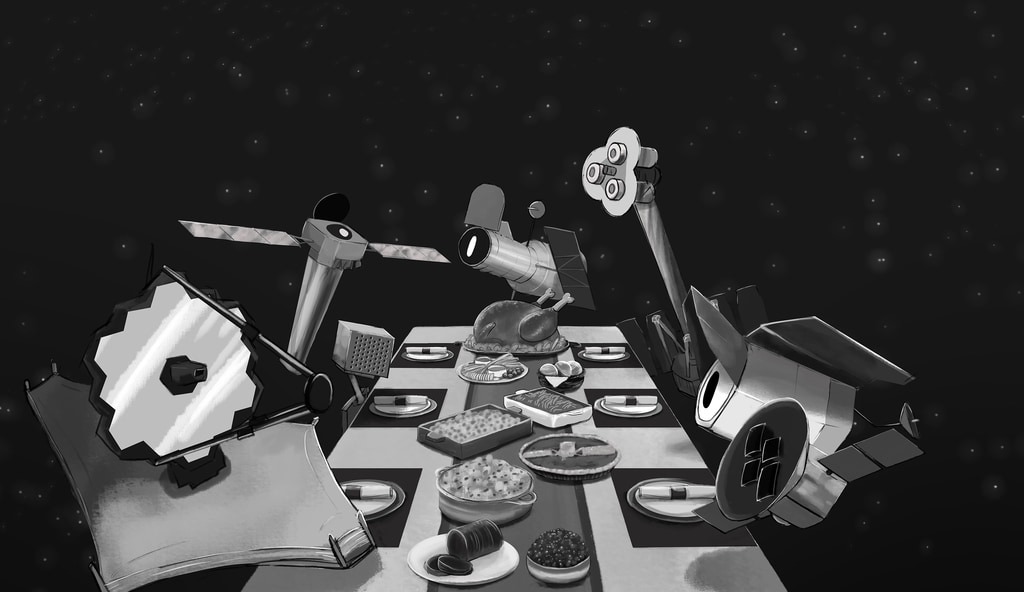
Still making Friendsgiving plans?
We've got ours all lined up, joining NASA's cornucopia of space telescopes! Thankful to be part of this cosmic dream team.
https://t.co/WG3xmdSgBB
#OTD in 2004, our recently retired Neil Gehrels Swift Observatory launched to study our universe in gamma-ray, X-ray, ultraviolet, and optical light. Swift's data will continue to reveal the secrets of gamma-ray bursts, black holes, stars, and more. https://t.co/xGHbTSydrE
Where is Voyager 1 now? 👀
On Nov. 18, our intrepid traveler made history by reaching one light-day away from Earth.
But the adventure continues, and you can follow along!
Some views are worth stopping for 🌌
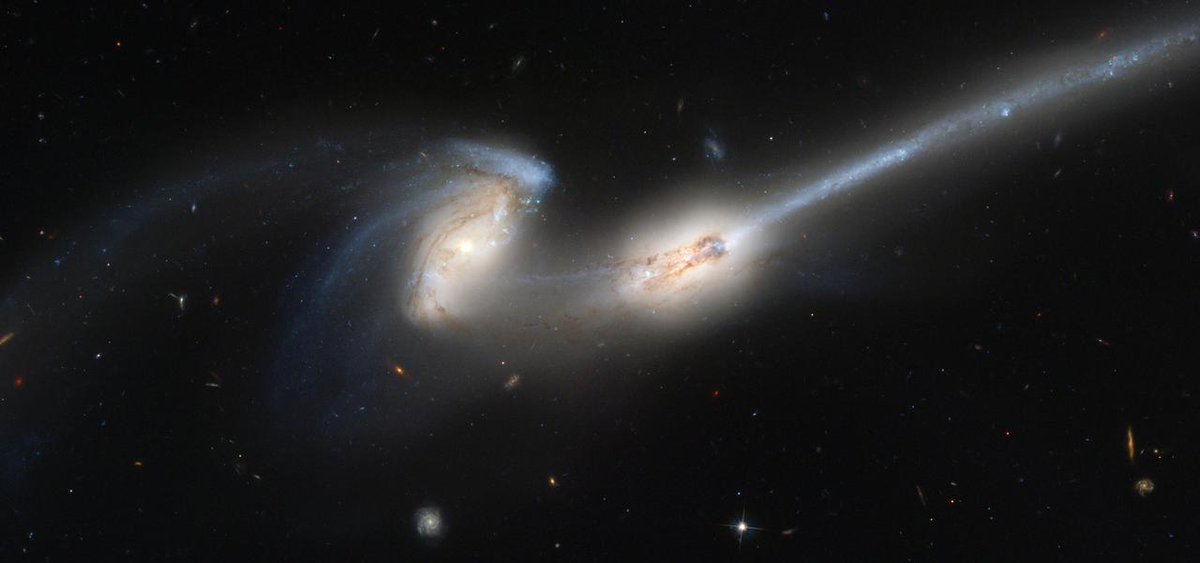
Located 300 million light-years away in the constellation Coma Berenices, the galaxy pair known as NGC 4676 was captured by @NASAHubble. Nicknamed “The Mice” for their long tails of stars and gas, the duo will eventually merge into a single giant galaxy.
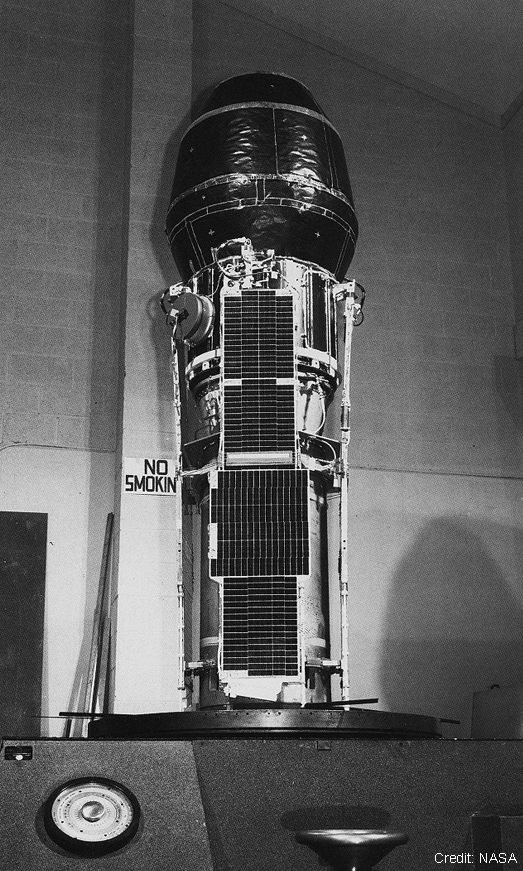
#TBT to Nov. 15, 1972, when NASA’s Small Astronomy Satellite 2 launched to study the universe. The telescope gave us the first detailed look at the gamma-ray sky and discovered Geminga, a pulsar located 800 light-years away that remains an intriguing source for astronomers.
Researchers developed a method that can find pulsars in data from our Fermi telescope a million times faster. With a technique that uses algorithms based on cryptography, the team found a pulsar spinning 261 times per second in much less time than before: https://t.co/CBGCgDAwib
Tiny grains of space dust are helping NASA scientists uncover clues about how our solar system formed.
By analyzing particles collected from Earth’s stratosphere, researchers found evidence of an ancient icy reservoir in the distant Kuiper Belt, showing that water in the outer solar system contained unusually high amounts of heavier oxygen isotopes. Read: https://t.co/Waxc4uC3nd
#OTD in 1989, our Cosmic Microwave Background Explorer, or COBE, was launched. The satellite was a crucial stepping stone in understanding the cosmic microwave background — the baby picture of our universe. https://t.co/chyi8jLmJl
After nearly 50 years, Voyager 1 has traveled more than one light-day from Earth.
Hear about what the Voyager mission has taught us about our solar system—and beyond—in the newest episode of our Curious Universe podcast: https://t.co/myZespHoPz
Voyager 1 is now one light-day from Earth!
Join @NASA scientists and mission leaders tomorrow, Nov. 19 at noon EST for a discussion about this historic milestone, the science Voyager 1 and 2 are still collecting in interstellar space, and the challenges of keeping these pioneering spacecraft operating.
📺: https://t.co/SL3B2oflwe
Two stars enter...
Webb observed the aftermath of a star merger, helping astronomers piece together the fate of the pair. Webb’s quick-turn look was cross-referenced with ultraviolet, visible, and near-infrared data from telescopes both in space and on the ground.
https://t.co/DJb4HM0dtq
A "S"urprising Hubble view!
The galaxy pair IC 2545 almost appears like an "S" in this image. Both cores of the merging galaxies are still visible in the central region.
IC 2545 is located around 450 million light-years away: https://t.co/8ABG8oyR3k