Ep 28: Building the Open Lakehouse for the AI Era with @cto_datazip from @_olake
Hudi vs. Iceberg vs. Delta, sub-10-min CDC for fintech, Arrow-based ingestion, and what Iceberg decoupling from Parquet means for AI.
🎧 https://t.co/LQnUCL12XG
"What's your moat?" is the wrong question.
In AI, there are no permanent moats — only time-bound advantages and what you build on top of them.
The right question: how long does your moat last, and what does it buy you time to do next?
link below
From Session Replays to Autonomous Improvement
We talk to @getmilana 's @rohankatyal29 & @raghavsethi about shipping the first AI Product Engineer. An agent that turns session replays into shippable code.
Dashboards are dying. Agents own the OKRs now.
https://t.co/JAS8Bu1YGl
"Never bait and switch developers." @jamwt watched CRDTs promise magic on day one and deliver misery by month six. Convex starts with serializable transactions and typed, reactive code instead - and it turns out that's what AI agents write best too. episode link below
Hot take: Feature Stores failed because they were essentially Shadow IT. 📉
@hussainsultan from xorq joins to explain why we need "lock files" for data pipelines—making ML workflows reproducible across engines like Snowflake and DuckDB without the glue code.
link below
LLM apps are moving fast, and the risks are moving faster.
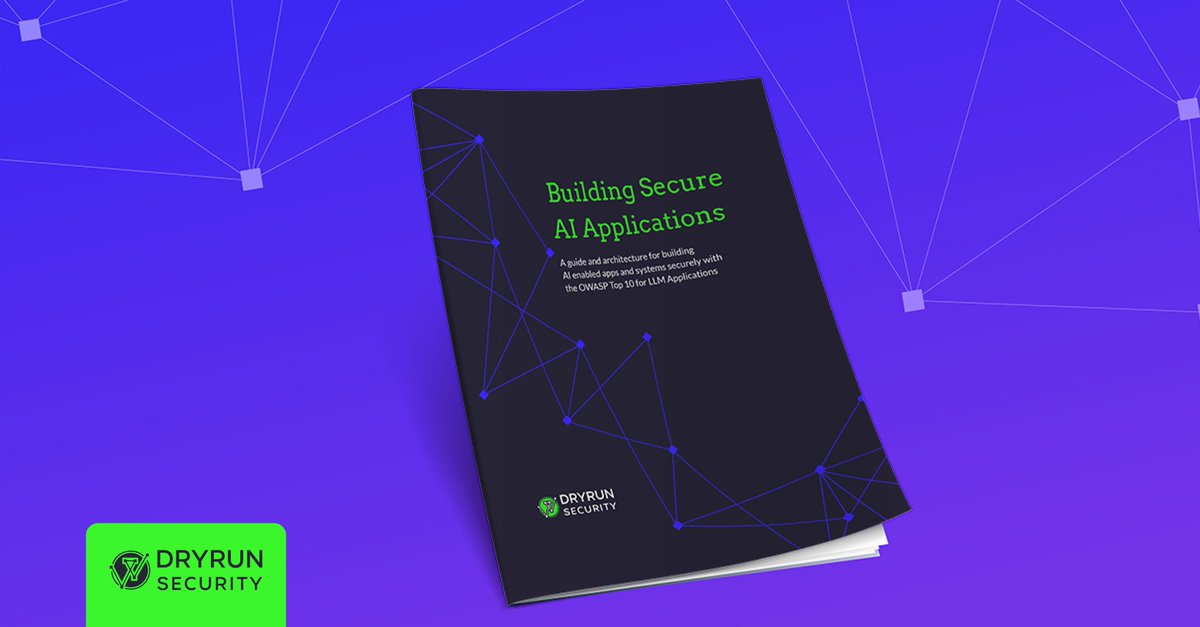
That’s why we’ve developed a guide for securing AI Applications.
In “Building Secure AI Applications,” we break down how the OWASP LLM Top 10 shows up in real systems and map each risk to controls teams can actually implement today.
If you’re building or securing LLM features, we include a full vendor-neutral reference architecture.
Download the Guide → https://t.co/3AxskY5EsE
“A terabyte is not big data anymore.”
New episode with the creator of pandas & Apache Arrow @wesmckinn on: Arrow vs Parquet, next-gen file formats, why DuckDB/DataFusion often beat “big data”, and how AI coding agents are changing open source infra.
link below
Big day - announcing @arcjet's Series A + our new local AI security model 🚀
An opt-in AI layer that runs expert security analysis for every request, entirely locally. 🏡
Accurate detection is the hardest part of security. 🎯
Legacy network-edge tools see packets, not users or logic. Real context lives in your code - where better decisions can actually be made. 🤖
That’s why we built Arcjet’s first AI security model. 🛡️
It runs inference locally in milliseconds, right inside your request handlers. Adds an extra layer to your defenses so you can ship faster and safer. 🍰
Arcjet now protects 500+ production apps used by 1,000+ developers - stopping bots, scrapers, spam, and fake accounts. 🕷️
So we’ve raised an $8.3M Series A led by @pluralplatform, bringing total funding to $12M. Also participating: @a16z, @seedcamp, @feross, and @jeffiel 💸
I'm excited to work alongside a small but exceptional team building the security platform that ships with your code. 🚀
Five years after starting @intros_ai, I’m thrilled to announce that we’ve been acquired by @BevyHQ.
We’re joining forces to push the boundaries of how AI connects, personalizes, and engages communities.
1/12. I'm excited to share our latest technical blog post on ParadeDB.
After a brief hiatus focused on transforming ParadeDB into an enterprise-ready database, expect to hear a lot more from us.
Today's post: How ParadeDB built an LSM on top of Postgres block storage. 🧵
“Durable objects” aren’t just a buzzword.
They’re how Cloudflare is rethinking state at the edge.
@ajoshhoward breaks down the shift from OLAP systems to real-time coordination primitives, what makes workers + DOs unique, and why multiplayer + agents thrive on it.
Link below
How does a simple tool evolve into a billion-dollar platform?
Erik Swan, co-founder of Splunk, shares insights on:
Starting with a focused “hammer” before scaling
The “physics of business” in go-to-market strategies
Navigating product-led growth and network effects
Link below