We're hiring a Research Engineer at @Arsenal ⚽🔴⚪ to work directly with our Men's First Team!
We're building state-of-the-art AI models for the football domain. This role will focus on building the application layer for our research to advance coaching and analysis workflows.
Embedding psychiatric nurse practitioners and specialized support staff in the ED was associated with shorter stays for psychiatric emergencies, especially for patients on involuntary holds.
#EmergencyMedicine#MentalHealth#AnnalsEM
✨ Opportunity for research team @OpenAI
partner with research, engineering, and operations to design and implement pragmatic solutions for acquiring data
Data will pave the way for AGI. This is a foundational TPM role to shape frontier AI models with real world data, RL environments, and data acquisition.
Check details
https://t.co/DeA5rdOX1x
New Open Access article by Hooft et al. in BMC Pediatrics describing antibiotic prescribing practices and microbiology data at a tertiary care center in TZ
New Article: Pediatric empiric antibiotic use and resistance patterns at a single tertiary care hospital in Tanzania https://t.co/sncCp5CG4p #PEM#FOAMed#PEMUPDATES
I finally added the thing everyone kept asking for: OpenMed models now run in your browser and on Android, via ONNX. 🔥
Watch it de-identify a clinical note fully on-device: 19 identifiers gone, 0 bytes leaving the machine. No server, no API.
What should run on-device next?
I’m hiring for my research team @OpenAI 🪄
Data will pave the way for AGI. This is a foundational TPM role to shape frontier AI models with real world data, RL environments, and data acquisition.
Looking for:
- Entrepreneurial, gritty, high horsepower
- Highly technical and deeply curious about AI research
- Excited to lead relationships with CEOs and data partners from day 1
We are hiring scientists to come work with our team at Anthropic! Feel free to mention me specifically when you apply so we make sure it's routed correctly.
Links to job posts below in 🧵:
For the past two weeks, our independent team of statisticians, AI evaluation experts, clinical AI researchers, and clinicians was given a unique opportunity to test one question: “How well do different AI tools answer user questions on the OpenEvidence (OE) platform?”
"Human-AI co-design for clinical prediction models" is now published in @npjDigitalMed! If you've wanted to build interpretable & accurate prediction models from unstructured data, our AI agent framework HACHI was designed for you! https://t.co/dYLsjYbdYK
We're looking for the next cohort of Stanford Biodesign Innovation Fellows!
This is an opportunity to join the first and most established health technology innovation training program in the world. Our fellows work in multidisciplinary teams to learn how to identify important unmet clinical needs, invent technologies to address them, and prepare to implement those solutions into patient care.
If you are an innovator, who is passionate about improving patient lives and you have a background in healthcare, engineering, computer science, or business, I encourage you to send your application before August 27, 2026.
More info: https://t.co/O97Dqou6mb
It’s something the @guardian do every time a major tournament rolls around but this guide to every single one of the 1,248 players involved in this summer’s World Cup is an incredible resource.
Bravo to everyone involved in putting it together. 👏
https://t.co/atjL08fuja
Out now in AJEM: investigation by Chen et al. suggests a small financial incentive alone cannot overcome systemic barriers to ED patient flow. Improving flow likely requires reimagining traditional team workflows. https://t.co/fpCqfN16o8
LabelMe v6.1 is out.
- SAM3 AI-Box: drag one box, get multiple shapes
- AI toolbar: 4 tools collapsed into 2 (AI-Points, AI-Box)
- Progress bar for model downloads
- Open one image, the whole folder loads
Notes: https://t.co/aqMyE0MVJr
Are you deploying AI in a clinical setting?
We’ve expanded our #AIMI26 Call for Abstracts!
Inviting submissions for posters & short oral presentations (“What’s Working Now: Real-World Deployments in Health AI”)
Apply by Apr 10: https://t.co/w1QxAiUO9g
#StanfordAIMI#HealthAI
You have no experience.
You’ve never started a company.
You’ve never had a full time job.
Nike is going to kill you.
You’re a kid.
You don’t have technical skills.
You shouldn’t build hardware.
Apple is going to kill you.
You can’t build hardware.
You can’t measure heart rate non-invasively.
Athletes don’t care about recovery.
Under Armour is going to kill you.
It won’t be accurate.
You don’t listen.
You’re an ineffective leader.
You can’t recruit great talent.
You’re going to have to pay every athlete.
You can’t measure sleep non-invasively.
It’s too expensive to research.
Athletes are a small market.
The product costs too much to make.
The product costs too much to sell.
Your valuation is too high.
Consumers aren’t going to want it.
Hardware is too hard.
You should measure steps.
Fitbit is going to kill you.
You can’t build a marketing engine.
You can’t raise enough money.
You need a real CEO.
Google is going to kill you.
You can’t be a subscription.
You can’t build a brand.
You can’t do consumer in Boston.
Your valuation is too high.
You shouldn’t make accessories.
You shouldn’t make apparel.
Lululemon is going to kill you.
You can’t predict Covid.
Stay in your niche.
You are going to run out of money.
You can’t build a health platform.
Amazon is going to kill you.
You can’t measure blood pressure.
You can’t get medical approvals.
The market is too small.
You don’t understand AI.
The market is too competitive.
It won’t work internationally.
The supply chain is too complicated.
You can’t build an AI.
You can’t raise enough money.
It’s too competitive.
Healthcare isn’t going to want it.
…
Just keep going ✌️
hi people in berkeley/sf,
i run a paper reading group on interpretability (and other deep learning topics) at our amazing group house in berkeley. we'd love for more curious people to join us.
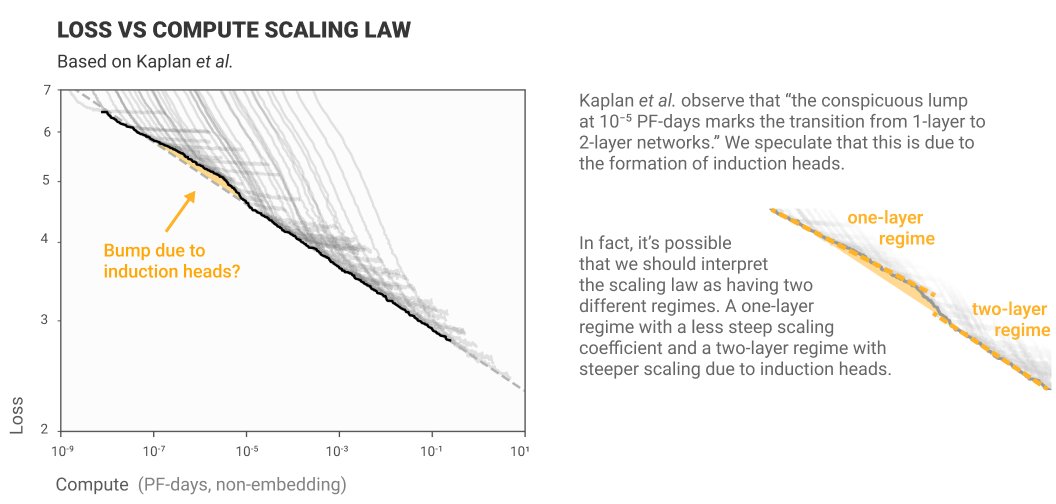
this wednesday (4/1), we're discussing anthropic's "in-context learning and induction heads" paper which shows how induction heads are responsible for majority of in-context learning in transformers.
if you're interested in joining, pls reach out! no interp background required as long as you're just a curious person.
You can make a Hugging Face Space private but keep its URL publicly accessible.
Private repo. Public app. No one sees your code, everyone uses your endpoint.
I deploy private medical endpoints for clinical agents this way. HIPAA-sensitive inference behind a public API.
Didn't know this existed until last week.
What's your favorite hidden @huggingface feature?
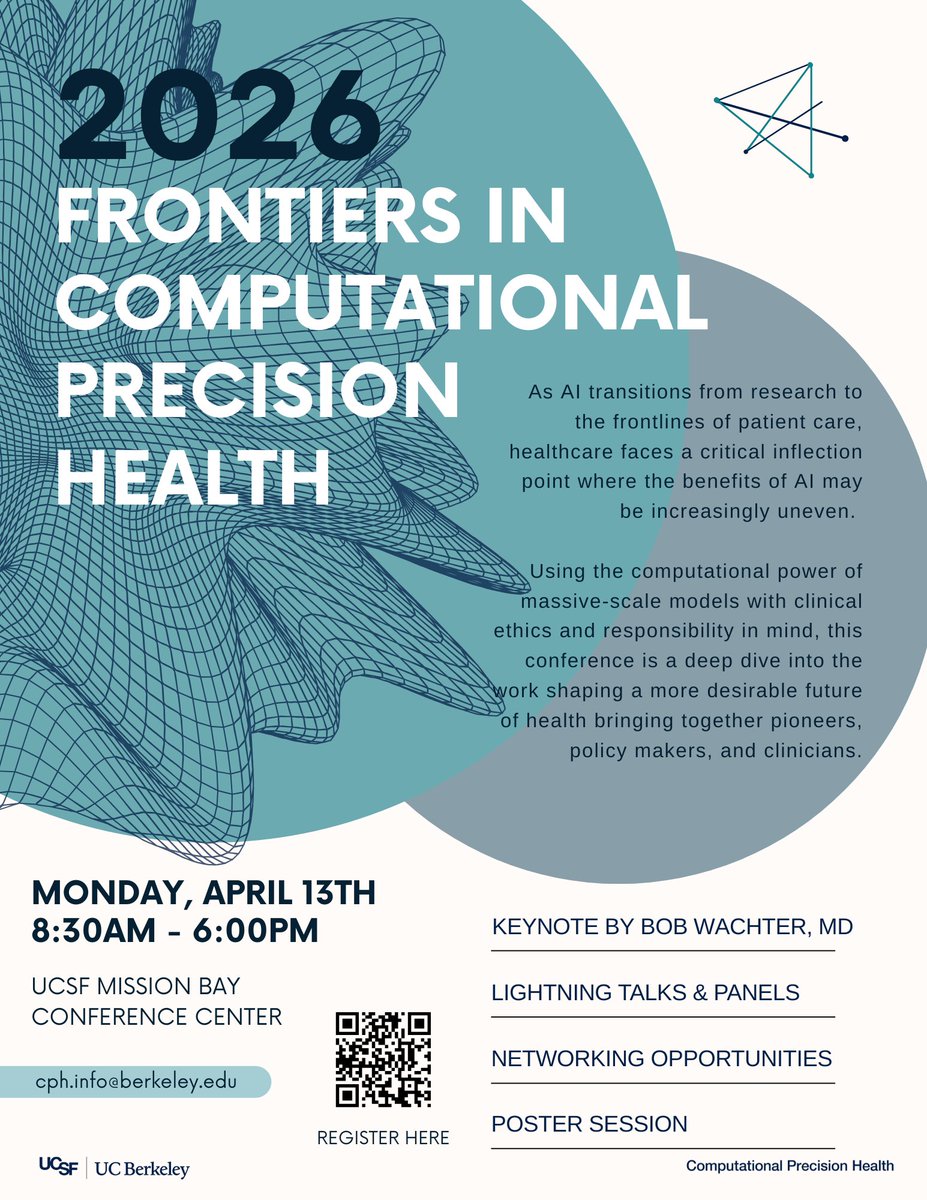
Health AI is moving fast. The hard truths are lagging behind. @UCSF_Ci2's Drs. Maggie Chung (@MaggieChungMD) & Adam Yala join the conversation at the 2026 Frontiers in Computational Precision Health Conference on April 13. More info ⬇️