@eaglesanalysis1@of_buchsbaum@lolyutrash68502@ShaneHaffNFL You are talking about tight window throws still. You get it. Adding to the conversation from a different angle like this is helpful and fills out the gaps in evaluating the situation.
You argued in bad faith by changing the topic from small window throws to overall view of Hurts. You couldn’t stay on topic and thus led to this conversation going off the rails. Shane quoted a stat saying it showed one result. You said no it doesn’t. But didn’t expand. There was no place for the conversation to go.
Colombia just held their election.
They require voter ID and use paper ballots. They hand-count the votes of each station one by one. No machines or mail-in ballots due to security concerns.
~24 million votes.
It was all done in a couple hours.
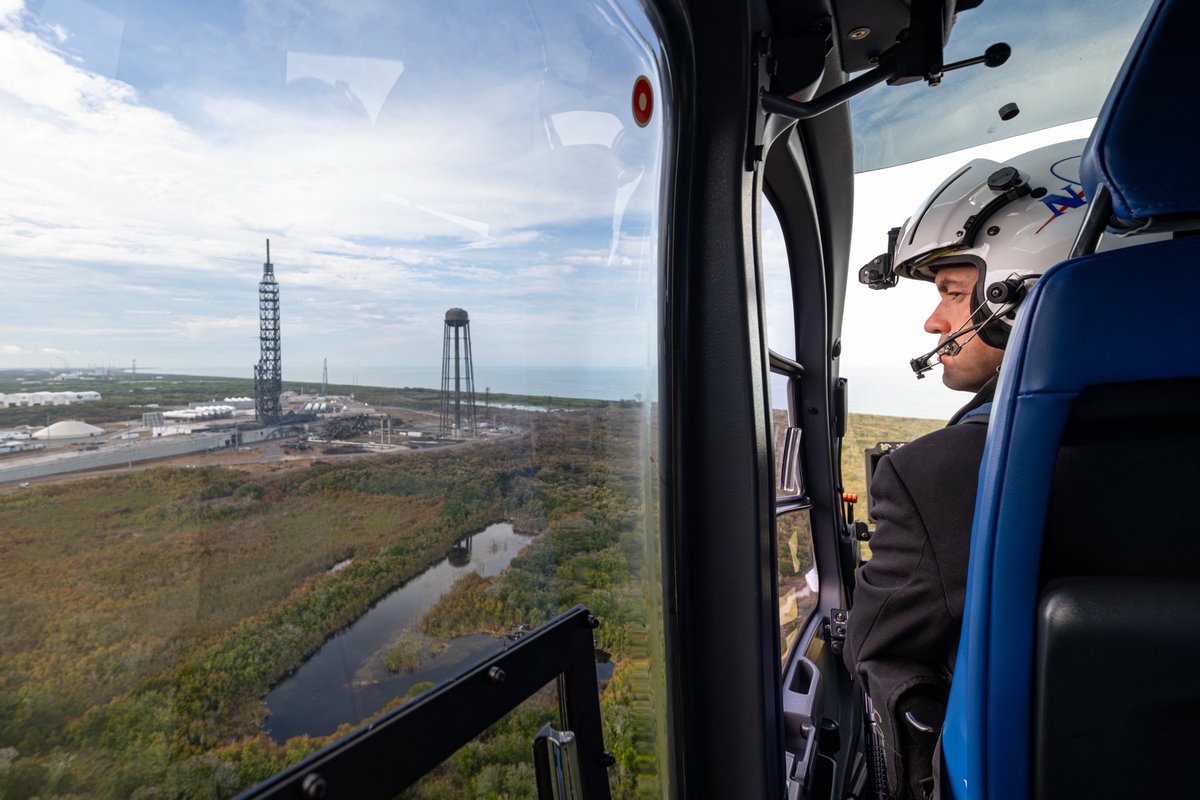
We go where we need to be, and today that was @NASAKennedy.
Some of my senior engineers and I spent time at @blueorigin with @JeffBezos and @davill, speaking with the workforce and seeing the damage at LC-36 firsthand. I appreciated the opportunity to hear directly from those working through the aftermath and better understand the challenges ahead.
There is a lot of work to do, but this is exactly why people choose careers in aerospace, whether at NASA, Blue Origin, or across the industry. The talent in this field thrives under pressure and performs at its best when solving the toughest problems.
We have been saying for months at NASA that we are not going to sit on our hands and wait for the capabilities necessary to achieve the nation’s most pressing objectives. We are going to take an active role alongside our partners, just as we did in the 1960s, to overcome setbacks, remove obstacles, and deliver the intended outcomes.
@NASA is committed to helping the Blue team recover, continue to advance their lunar lander and get New Glenn back to launching as soon as safely possible.
America’s greatest achievements in space were never the result of avoiding setbacks. They came from overcoming them. We have done it before, and we will do it again🇺🇸
Anyone that doesn’t think space data centers will work has their head in the sand. Elon realized nvidia is selling the shovels in a gold rush and he’s trying to sell the bulldozers and front loaders. Starship is the key. Once that is working it’s over. There will be no red tape and local government to deal with. They can ramp at an insane rate.
In our last conversation, Gavin said data centers in space will be the most important thing in 3-4 years.
He explains that means "racks in space" and thinks orbital compute will solve the watts shortage:
"When people hear data centers in space, they picture a Pentagon-sized building in space. That's not what it is.
A Blackwell rack weighs 3,000 pounds. It's eight feet high. Four feet deep. Three feet wide.
It's racks in space. It has these solar wings that are probably 500 feet long on each side.
You keep it in a Sun-synchronous orbit, so those solar panels are always in the sun.
And then because it's in an exactly Sun-synchronous orbit, the radiator, which extends behind it for hundreds of feet is in the shade.
You link these racks using lasers traveling through vacuum which are already on every Starlink.
SpaceX operates the world's largest satellite fleet, which is 98 or 99% of all satellites in orbit. Every Starlink, they're cooling it today.
I think Starlink V3 is going to operate at 20 kilowatts. A Blackwell rack is only 100 kilowatts.
And people talk a lot about density. Well, if you're connecting the racks with lasers through vacuum, you can make the rack bigger physically.
In space, there's all sorts of things that SpaceX can do. They also now operate the largest data center on Earth.
I've spent a lot of time at Starbase over the years, and I've talked to a lot of SpaceX engineers.
It is the most talented group of engineers on planet Earth, and they're very confident they have solved this."