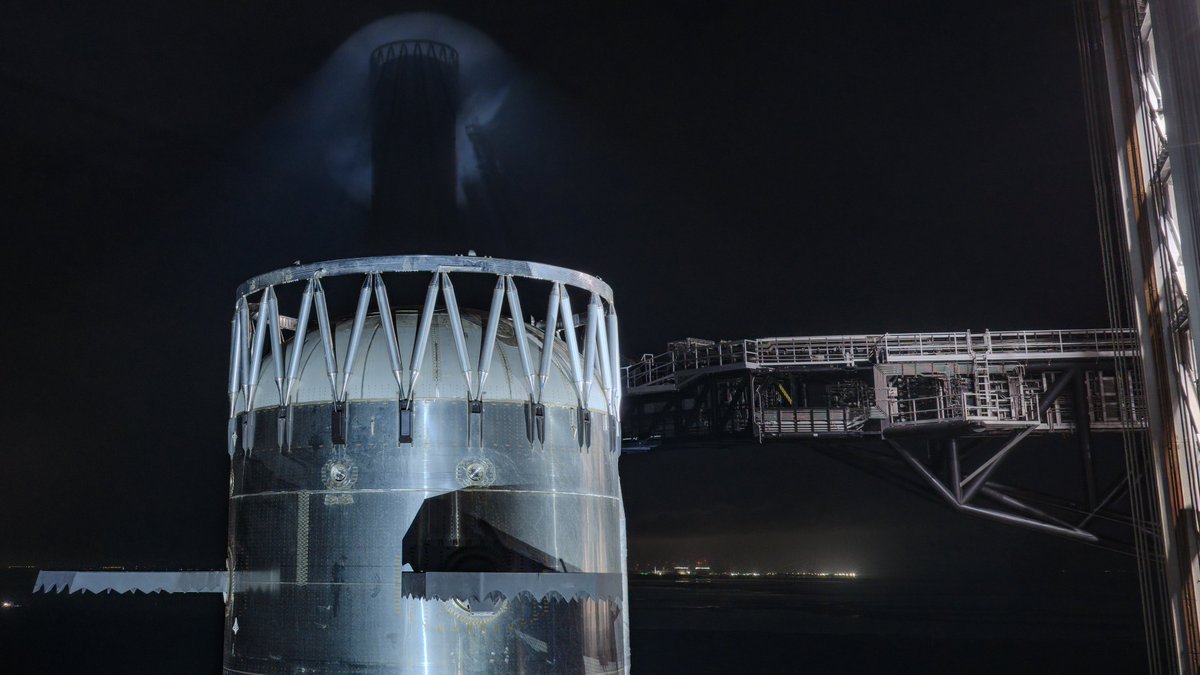
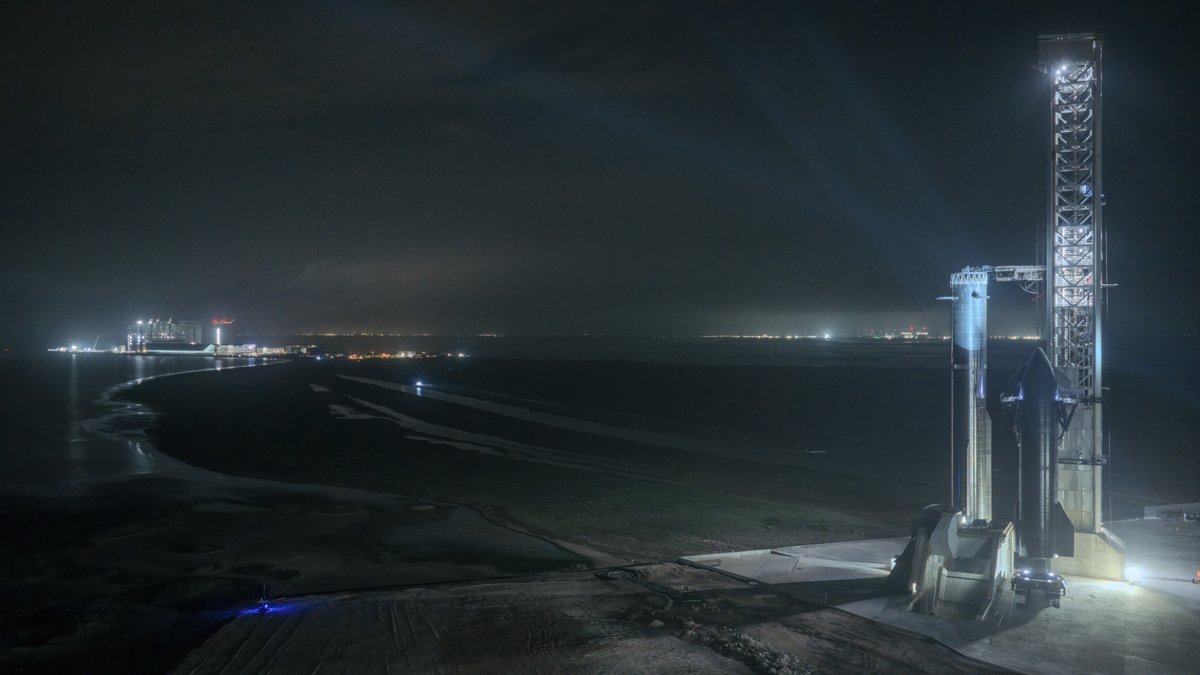
@Nodragem first of all, release both. but also one is blue on blue,the othe ris blue on orange, which one has more contrast and readability? there you go
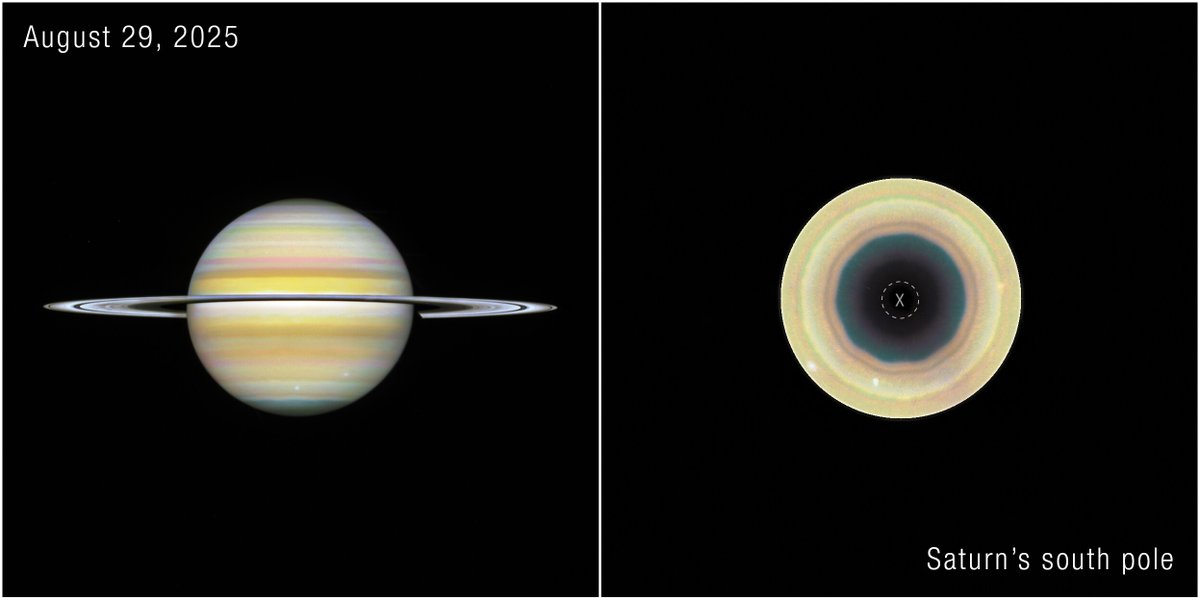
🆕 Hubble has spotted a decagon at Saturn’s south pole! 🪐
For more than 40 years, astronomers have been watching the hexagonal jet pattern 🌬️ on Saturn’s north pole. Now, they have discovered another pattern, on the planet’s south pole. 1/2
I think we can all agree that weekends are for simulating an entire drosophila connectome on your home compute and hooking the brain up to drive a virtual rover around looking for rewards
Strong M7.6 solar flare erupted with a massive amount of plasma. The associated coronal mass ejection is deflected away from earth but very likely has earth-directed components.
This is a cliff, that's a kilometre tall on a comet. No atmosphere. No weather.
This is Comet 67P/Churyumov–Gerasimenko, the comet visited by the Rosetta mission.
Pictures taken on the surface of an asteroid
This is what the surface of an asteroid looks like. The Japanese Hayabusa 2 space craft managed to land on the surface of the Ryugu asteroid in July 2019 and transmit these photos to Earth.
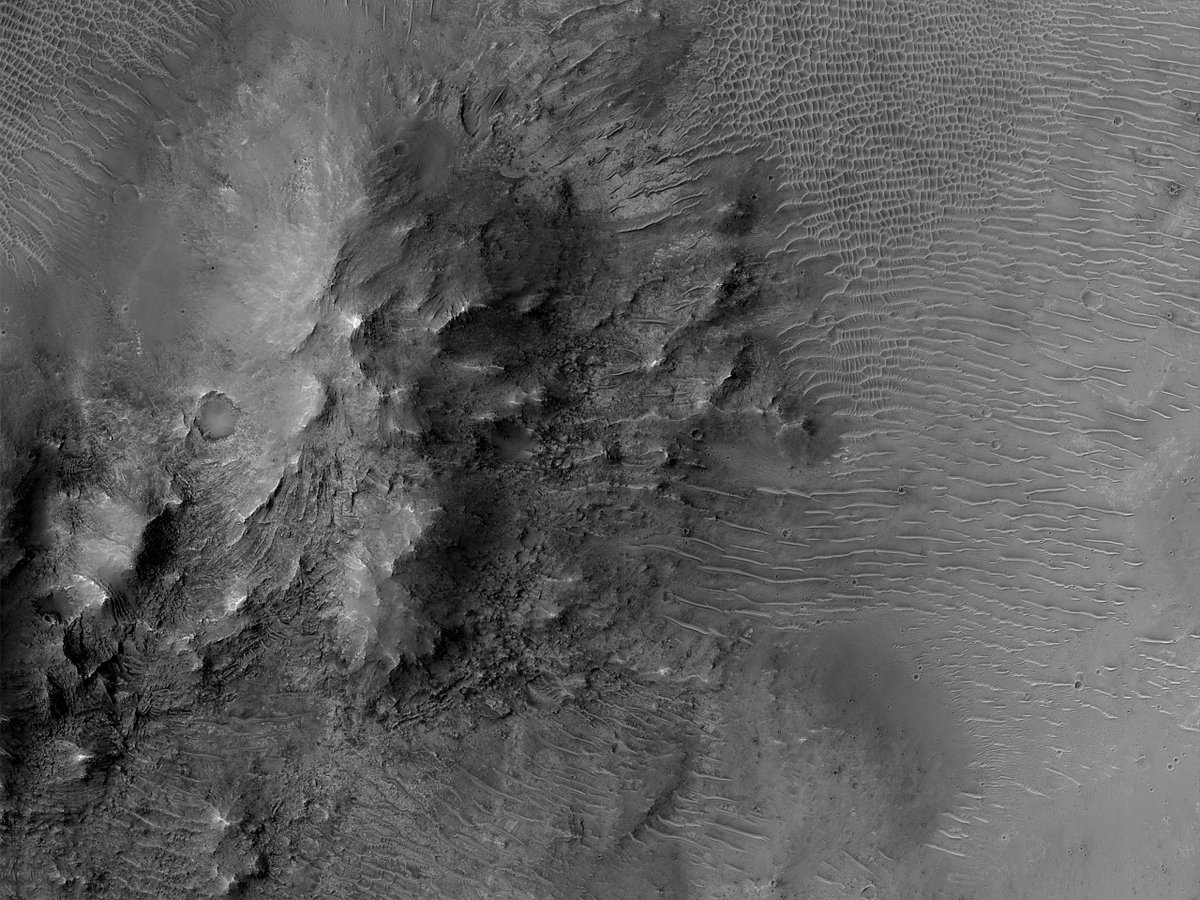
HiPOD: A Crater Floor in Sinai Dorsa
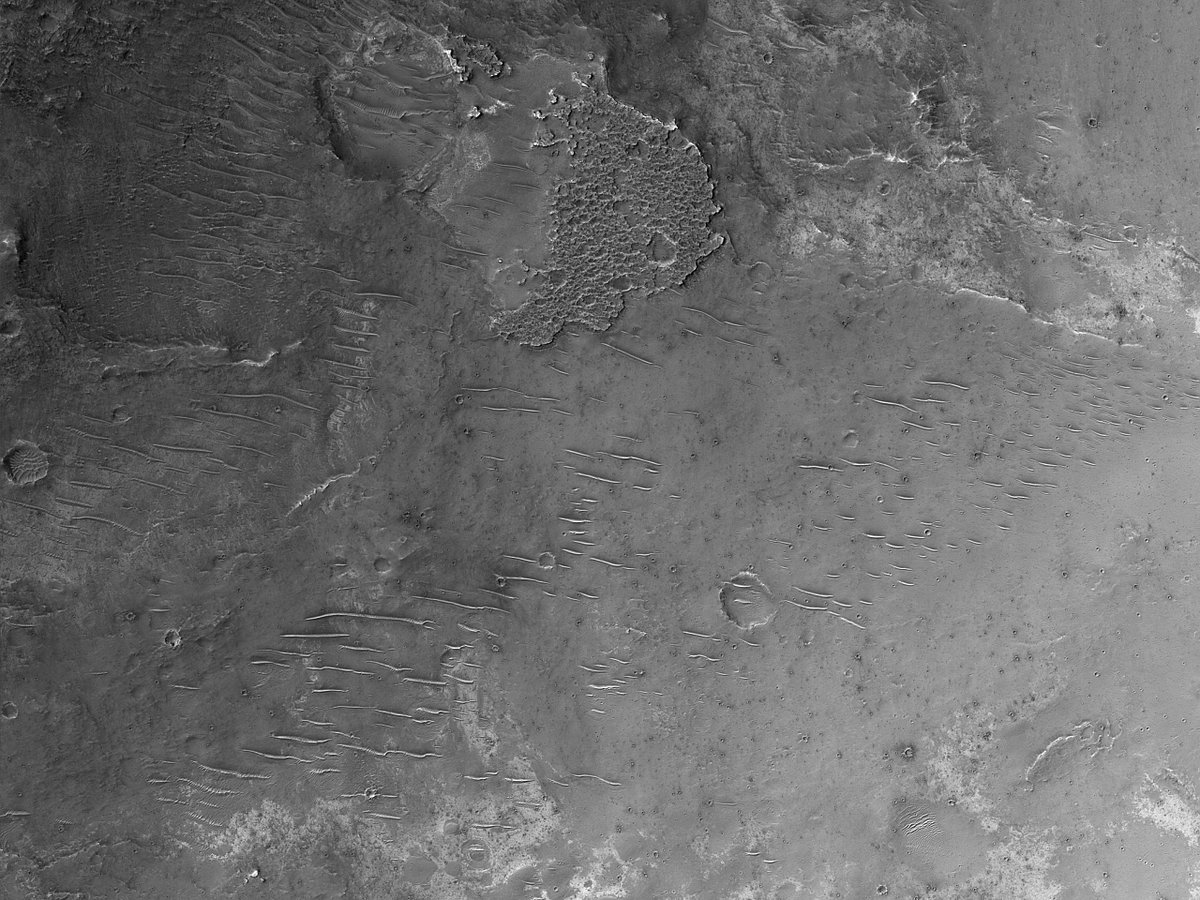
Most late-stage lake deposits are low elevation. Is this candidate lake deposit in an impact crater on the Tharsis plateau an exception? In Context Camera data, it looks like confirmed lake deposits.
https://t.co/xVyonp0h7n
#Mars#NASA
BREAKING: The largest 3D map of the Universe is now complete 🌌
Last night @desisurvey, mounted on the Nicholas U/ Mayall 4 meter telescope at @KittPeakNatObs, finished its 5-year survey of the cosmos, mapping 47M+ galaxies and quasars.
🔗https://t.co/ypVX7edRqW
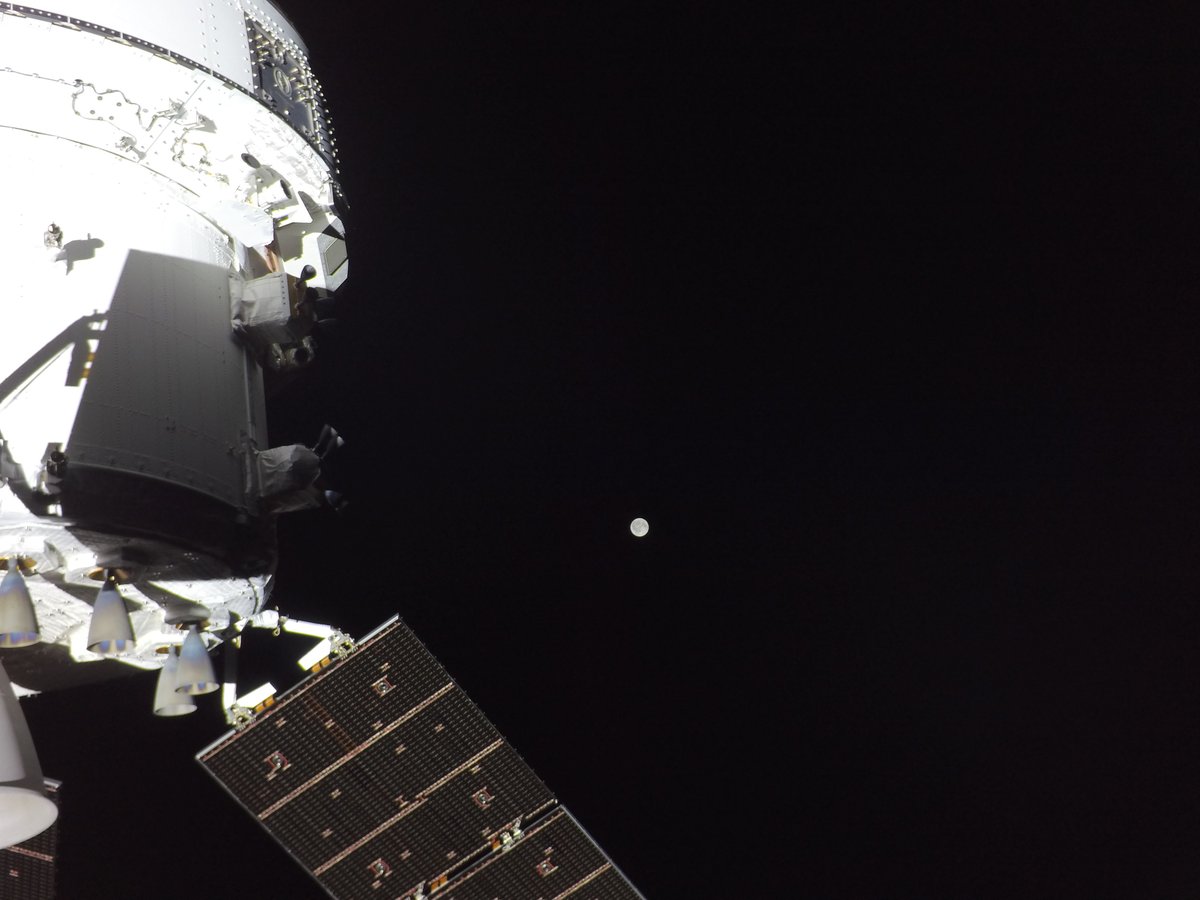
We’re halfway there.
At the time of posting this, the Artemis II mission is about halfway to the Moon. When the astronauts arrive, they will conduct a lunar flyby and collect scientific observations of the Moon’s surface.
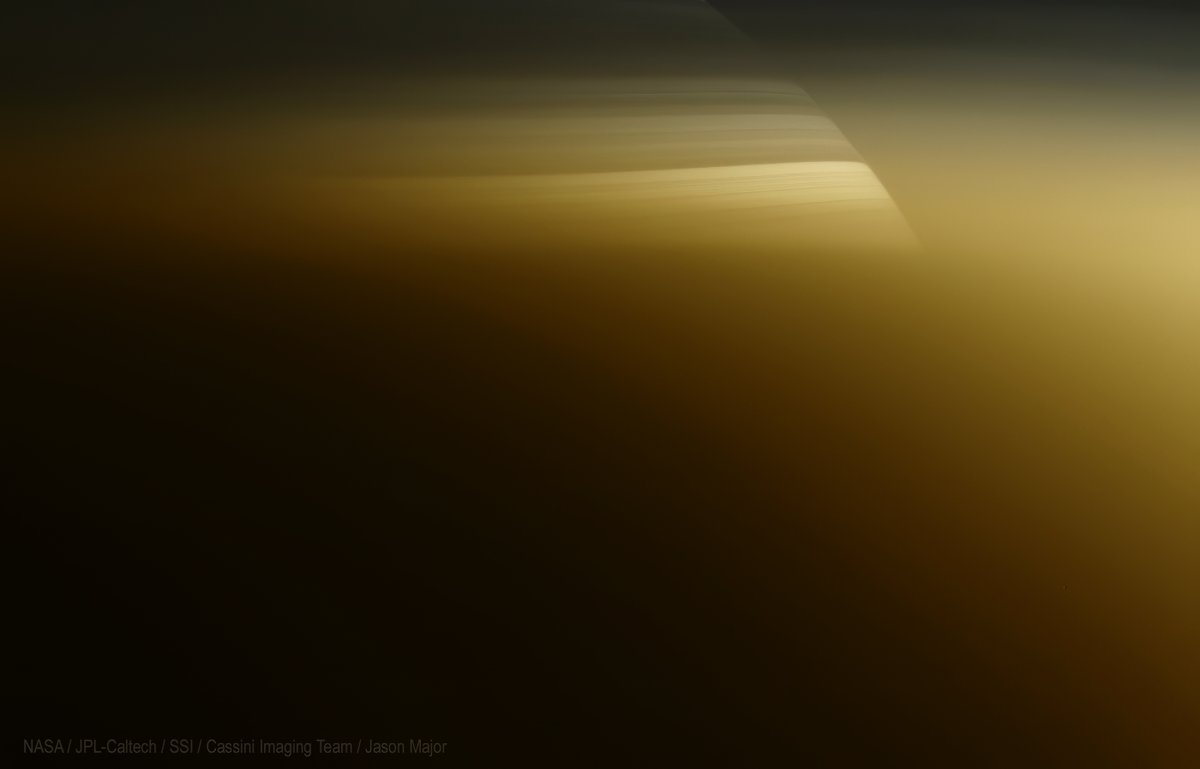
This image shows part of Saturn seen through the upper haze of Titan's atmosphere. It's an actual image captured with Cassini's narrow-angle camera on March 31, 2005 from a distance of about 6400 km (to Titan) and adjusted to approximate natural color on Titan.
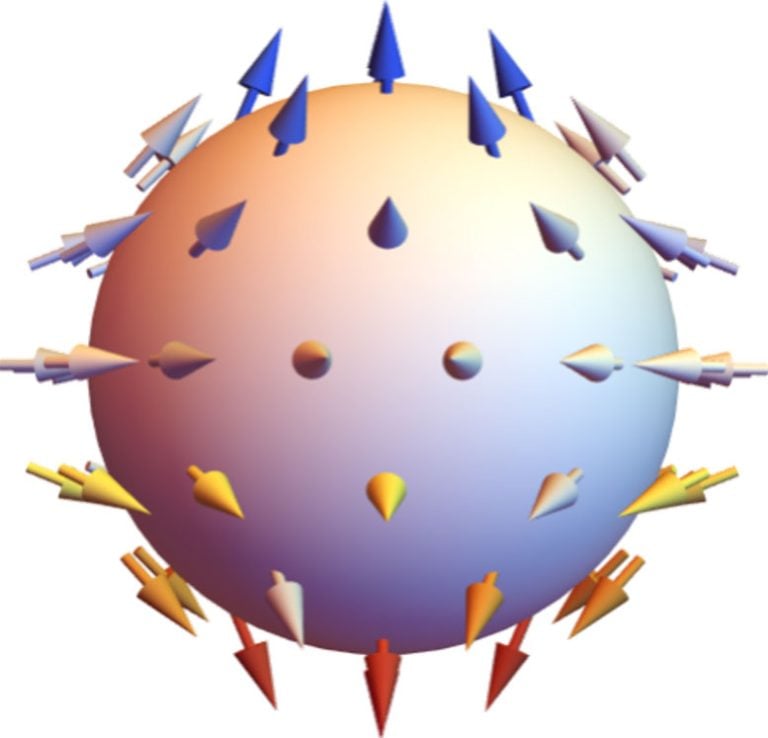
Revealing the topological nature of entangled orbital angular momentum states of light
https://t.co/RRSVcqHPJn
PDF DOWNLOAD
https://t.co/RJFjLQVifl
This study, published in Nature Communications, shows that measuring the orbital angular momentum (OAM) of two entangled photons reveals a topological structure embedded within the entanglement itself. Because orbital angular momentum (OAM) can assume an unlimited range of values, the possible topological configurations are also effectively limitless. “We report a major advance in this work: we only need one property of light (orbital angular momentum) to make a topology, whereas previously it was assumed that at least two properties would be needed – usually orbital angular momentum (OAM) and polarization,” says Professor Andrew Forbes, from the Wits School of Physics.
The team reports the highest level of topology observed in any physical system so far: STRUCTURES SPANNING 48 DIMENSIONS AND MORE THAN 17,000 DISTINCT TOPOLOGICAL SIGNATURES. This vast set of patterns could function as a powerful new framework for encoding quantum information in ways that remain stable even in the presence of noise.
https://t.co/zTubmu2vA2
An exquisite view of Arp-Madore 2105-332, an interacting galaxy system 200 million light-years from us, accompanied by a coincidental line-up of distinct galaxies.
(Credit: ESA/Hubble & NASA, J. Dalcanton, Dark Energy Survey/DOE/FNAL/NOIRLab/NSF/AURA, L. Shatz)
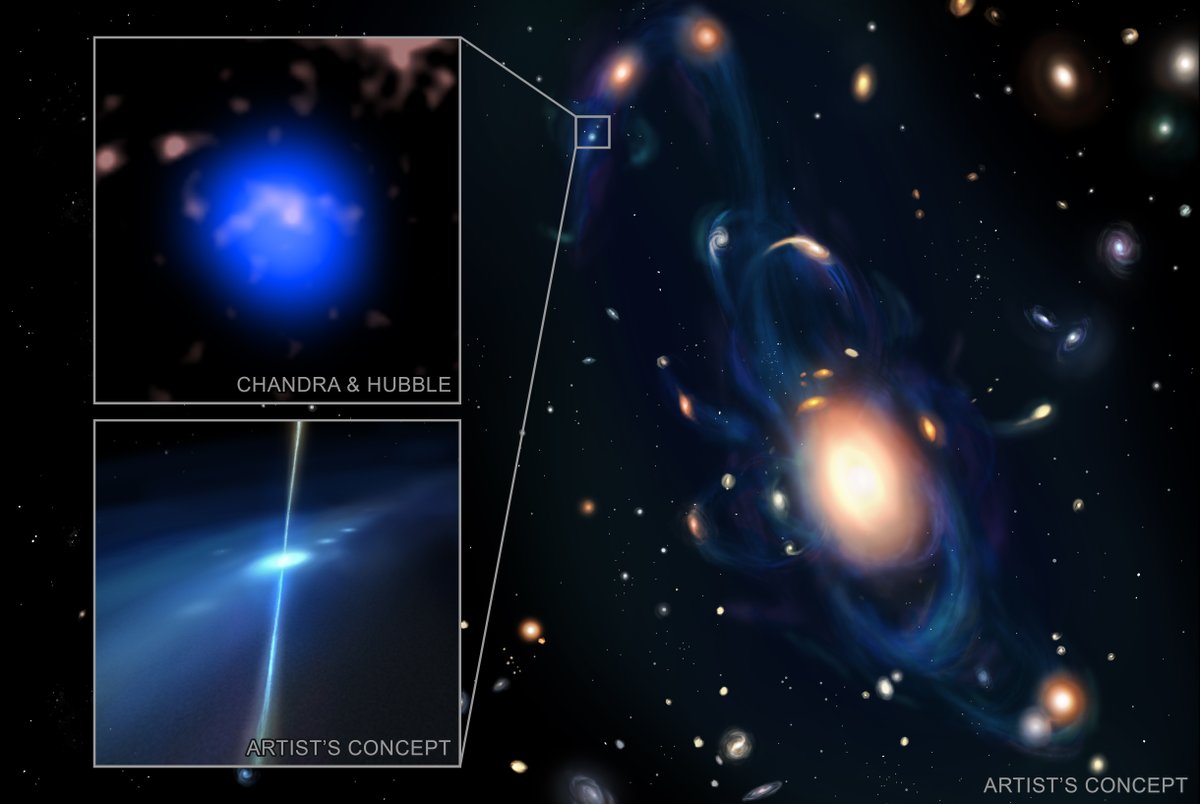
Several @NASA telescopes have likely uncovered a collision between two ultradense stars in a tiny galaxy. Astronomers have never seen this type of explosive event in an environment like this before!
🔗 https://t.co/OTK3DtkUNj