Well said. This is why long-term outcomes matter more than short-term symptom suppression.
A recent @JAMAPsych trial found that patients who tapered or stopped antipsychotics early had similar—or better—outcomes at years 3–4, with better metabolic health.
The future is precision psychiatry focused on bio-energetics, not one-size-fits-all dosing.
https://t.co/eWu175Pd8b
I would recommend to review cancer glycolysis and the Warburg effect in more detail. While cancer cells increase glucose uptake, they accumulate more lactate which, as Warburg already saw 102 years ago, is a sign of “injury to cellular respiration”, aka mitochondria. Lactate accumulation is what really struck Warburg a century ago.
A combination of overexpression of LDH and downregulation of MPC, PDH and mitochondrial function will decrease pyruvate oxidation favoring its reduction to lactate. It is basic cancer glycolysis.
As you can read and also see in the figure, I never said that pyruvate cannot be oxidized. I said it cannot be transported and oxidized as desired which is quite different…
As far as lactate, it is also basic cancer glycolysis as of course, wherever there is a mitochondria (even if not functioning at its full potential), there will be lactate oxidation (less though than in healthy cells). The purpose of the Warburg Effect is not to produce lactate for “biomass” purposes (every cell consumes lactate). It is to produce lactate for signaling purposes towards carcinogenesis.
The Five Steps of Lactagenesis in Cancer:
Summary:
1) Increased glucose uptake (Warburg, 1923). We now believe that the purpose and explanation to produce Lactate for carcinogenesis (San-Millan and Brooks, 2016).
2) Cytosolic pyruvate cannot be transported and oxidized in mitochondria as desired due to decreased mitochondrial capacity to transport and oxidize pyruvate. Hence, pyruvate is reduced to lactate, signaling an injury to cellular respiration, aka mitochondria (Warburg, 1923).
3) Hidrogen ions associated to Lactate are responsible for the typical acidic tumor micorenvironment (TME). One function of TME is to disrupt immune function.
4) Lactate Travels to the cell nucleus and through histone "lactylation" it exposes genes to be expressed (Zhang et al, 2019). Lactate in fact, regulates the expression of main genes involved in breast cancer (San-Millan et al, 2019).
5) The overexpression of different genes leads to aberrant cell growth and proliferation leading to cancer.
6) Lactate is indispensable player in angiogenesis, immune escape, metastasis and self-sufficient inefficient (yet not apoptotic) metabolism of cancer cells (San-Millan and Brooks, 2016).
Lactate is a main player in cancer (if not the main one). Pharma industry MUST step it up and develop novel therapeutics to target lactate in cancer.
The brain is full of mitochondria!
But how many, and where?
Different types of mitochondria specialize for energy transformation and other functions
In MitoBrainMap v1.0 we provide the first maps of mitochondrial content and OxPhos capacity across the human brain
There are two variables involved in the growing and shrinking of fat cells--insulin and energy.
The traditional view is solely focused on energy (measured in calories). While this certainly matters, the fat cell, not unlike other cells of the body, doesn't know what to do with the energy--it needs a signal that enables the fat cell to understand the body's overall metabolic state (i.e., "are we in a fed or a fasted state?"). This is where insulin comes in.
Insulin is the unavoidable and essential signal that informs the cell (by activating and inhibiting the proper processes) that it's time to store energy as fat. The lower insulin gets, the more impossible it becomes for a fat cell to store energy, and they're forced to shrink.
One substantial problem with the traditional view, and its total ignorance of insulin's importance, is the push to hunger.
If one's weight loss journey begins with "cutting calories", without addressing elevated insulin, the metabolic milieu begins to work against them. With elevated insulin pushing energy into cells for storage, the overall energy (measured in total caloric molecules, such as fats, glucose, ketones, lactate) in the blood drops. This is a problem for the brain.
The brain, sensing this reduction in available energy, has one response--hunger. The brain drives the body to replace the energy, ignorant to the fact that there's actually an abundance of energy stored in the body already (i.e., there are hundreds of thousands or millions of calories stored in fat), because if insulin is elevated, the body can't tap into that energy. Remember--insulin is telling fat cells (and other cells) to store energy, not break it down.
Thus, the prudent and long-term strategy for shrinking fat cells should be based on reducing insulin. Lower insulin by controlling carbohydrate consumption. With reduced insulin, metabolic rate will increase, total energy in the blood will increase, and hunger will go down. In this scenario, there's no need to focus on energy as a variable because it will generally (not always) take care of itself.
The concepts are simple:
1. Control carbs
2. Prioritize protein
3. Don't fear fat (that comes with protein)
Eventually, when ready and if needed, the final step:
4. Fast frequently
This is the key to improving and maintaining metabolic health.
[These principles are outlined in my book: How Not to Get Sick.]
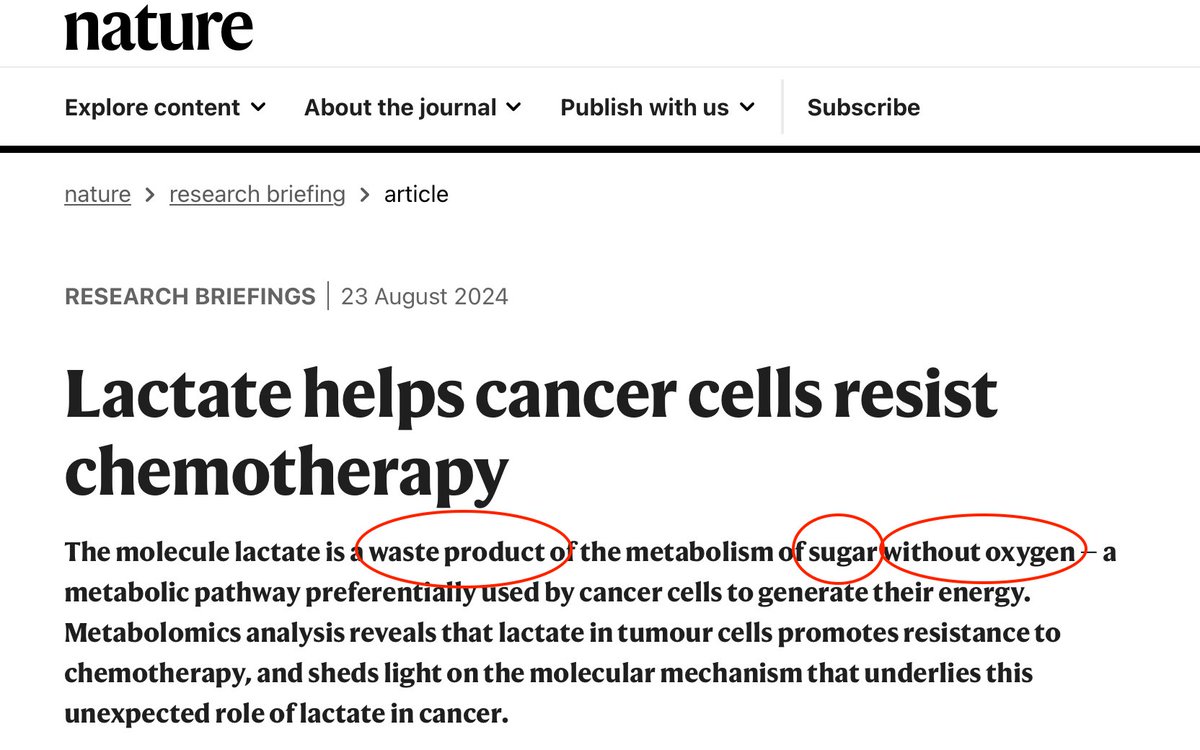
Dear @Nature, I am baffled by the monumental mistake about the "definition" of what lactate is, which is shown right in the 1st sentence of this article.
-Lactate is NOT a waste product. Thanks by the work of Dr. George Brooks, It has been known for over 40 years that lactate is NOT a waste product.
In fact, lactate is the preferred fuel by most cells and one of the most important signaling molecules in the body. Particularly in cancer, lactate plays a key role in the process of angiogenesis, immune scape, gene expression and metastasis...
-"Sugar"?. Are glucose and pyruvate metabolism, some of the most complex metabolic pathways in humans, be that poorly simplified as "sugar"?. 😬
-"without Oxygen"?. Again, Thanks to the work by George Brooks, it has been known for >40 years that Lactate can be produced under FULLY aerobic conditions and it's production is NOT only a result of lack of O2....
It is extremely difficult to publish in Nature due to its super high standards and requirements, such as defining what you are studying very well...However, in this article, the are 3 monumental mistakes showing lack of knowledge of what exactly lactate is right in the very first sentence...Now, many people reading the article could walk away with the idea that lactate is a waste product from sugar and produced when there is lack of O2...😬
C'mon @Nature, you, your Editor and reviewers can do better than this...Thank you
PART 3: The Power of the Plate! 🍽️ Get an inside look at the delicious, nutritious meals served at @AccordMetabolic in Arlington MA.
This innovative new residential care center, led by psychiatrist Dr. Matthew Bernstein offers chef-prepared ketogenic plans tailored to each individual's metabolic needs and dietary preferences to stabilize and heal brain chemistry.
Hope is on the menu! Learn more at https://t.co/nV6Rj1QU0K.
Grâce à son approche pionnière cette première clinique de soins métaboliques en santé mentale est un point de référence précieux pour les thérapeutes et un espoir pour les patients. 🙌
Espérons que cet exemple se multiplie comme des petits pains ; low-carb bien entendu!!!
It's publication day! 📚 If you have a mental health issue of any kind, changing your diet could help you in ways that no medicine can—the secret is knowing which dietary changes are most worth making and why.
Take direct aim at the dietary root causes of mental health problems by combining the surprising truth about brain food with the cutting-edge science of brain metabolism.
Feel like you've tried everything already? Don't give up. Hope is on the menu!
Order from your favorite bookseller or ask your library to stock a copy.
➡️ https://t.co/5P9aZMqY02 #ChangeYourDietChangeYourMind
Introducing @AccordMetabolic—the first residential treatment program in the world to offer comprehensive metabolic care to adults with mental health conditions, opening July 8th in Arlington, MA!
Meet psychiatrist/director Dr. Matthew Bernstein and his talented team to hear more about their compassionate, cutting-edge services. This is the future of quality #mentalhealth care.
Like this post for Part 2: a behind-the-scenes tour of the beautiful home environment Dr. Bernstein's team has created.
Discover more about the Accord program and see if it’s the right fit for you or a loved one: https://t.co/nV6Rj1QU0K
Please read and share. @KetoCounselor's analysis of the questionable decision by the @MDHealthDept to shut down ongoing scientific research is spot on.
It's time to call Maryland's Secretary of Health and the Governor, who appointed her, to task.
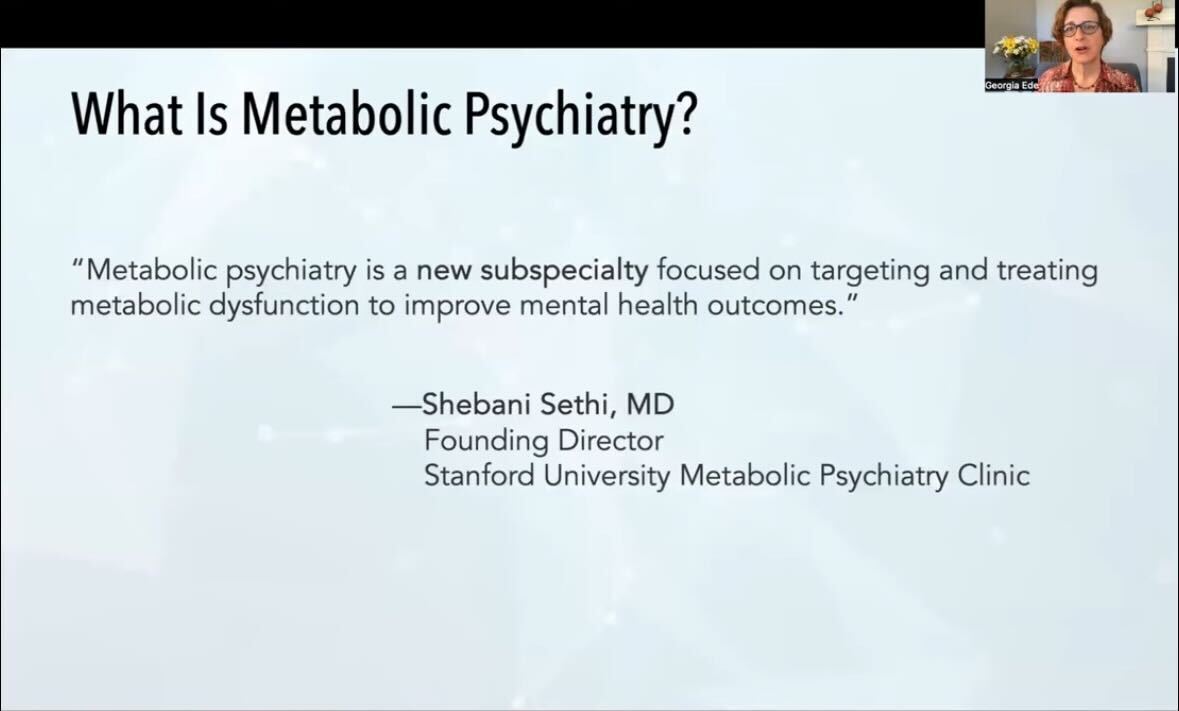
This insightful perspective from @GeorgiaEdeMD provides a comprehensive overview of how #MetabolicPsychiatry unlocks new nutrition-based treatment options for psychiatric patients.
Watch this episode of @MetabolicSummit’s podcast to learn more: https://t.co/0VzFfAh0iE