Research focuses on how proteins fold in the Endoplasmic Reticulum (ER) and mechanisms that cause cell stress and how cells adapt under stress conditions.
Our paper on the #UPR transducer, ATF6, is published today in #PNAS. We highlight redox-dependent dimerisation of ATF6 as key regulatory element. Many thanks @BulleidNeil, @Saxy_Scientist, and members of @BulleidNeil Lab. 🙏🏾 @wellcometrust for funding.
https://t.co/YobCOy8WAV
Plant cells undergo incomplete division and remain connected. This image illustrates two daughter cells linked by strands of endoplasmic reticulum spanning plasmodesmata—tiny bridges for intercellular communication.
New findings in Science reveal that the endoplasmic reticulum holds these bridges open during cell division; without it, plasmodesmata close, addressing a long-standing question about how to combine cell division and communication. https://t.co/N38POIt9tk
IRE1-dependent GOLIM4 expression controls protein secretion to modulate glioblastoma cell adhesion and migration https://t.co/soqn4gCUdf #biorxiv_cancer
Image 5 of 5: AstrocytER
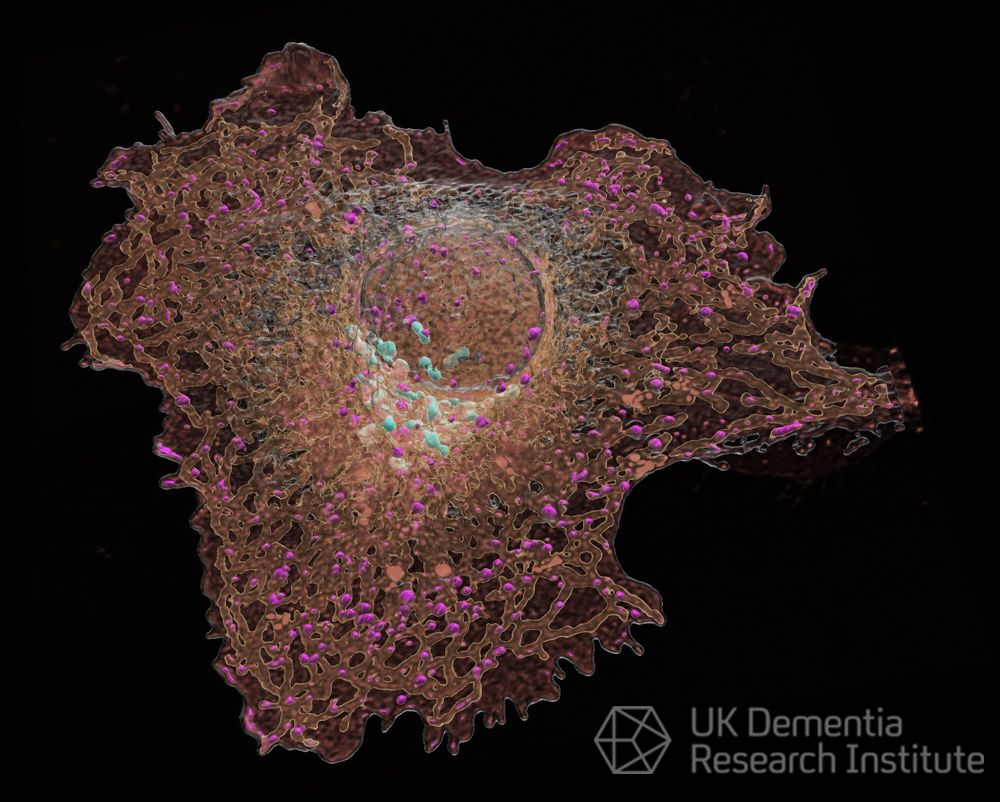
The endoplasmic reticulum (ER), a network of membranes through which proteins and other molecules move, is stained within astrocytes, the star shaped supporting brain cells.
7/7
Image 4 of 5: Amyloid Precursor Protein (APP) - an intracellular journey
APP produces the toxic amyloid beta protein that forms amyloid plaques in Alzheimer's disease. Researchers found that APP's location in the cell is important for how much amyloid is produced.
6/7
Image 3 of 5: Super Nova
Astrocytes and Microglia eating up amyloid plaques to fight against the build up and damage caused by misfolded amyloid protein.
5/7
Image 2 of 5: Microglia Pioneers
Microglia usually help maintain brain health, but scientists believe they may contribute to the development of Alzheimer's. Here, human microglia (green) grown on a thin slice of mouse brain interact with mouse neurons (red).
4/7
Image 1 of 5: The First Responders
Microglia (red and cyan) respond to amyloid plaque (yellow), one of the hallmarks of Alzheimer’s. Microglia are specialised cells that can take on different roles depending on where and how they are needed.
3/7
🔔@CecileCrapart talking at #EMBOer24 about her PhD work on how ER structure dictates its function as a Ca2+ delivering device
covered in https://t.co/mbM153ULCe and https://t.co/gsfDCeZHHX
BREAKING NEWS
The Royal Swedish Academy of Sciences has decided to award the 2024 #NobelPrize in Chemistry with one half to David Baker “for computational protein design” and the other half jointly to Demis Hassabis and John M. Jumper “for protein structure prediction.”
We are delighted to once again be named in the world’s top 100 universities in the @timeshighered World University Rankings!
More: https://t.co/J3SkmPZ75j
#THEUniRankings@THEworldunirank
Final call for Scientific Outreach Grant applications! With different funding levels available, don't miss out on this chance to take your molecular biosciences activities to a new and broader audience. Deadline 9 October! https://t.co/cfPSCbCatM
MBoC Call for Papers: Special Issue on Protein Quality Control
Submit an article by October 31 to be considered by lead editors:
@LizMillerCU, @MRC_LMB and @Guillou76, @NTUsg
Learn more and submit:https://t.co/HOIAG153Y1
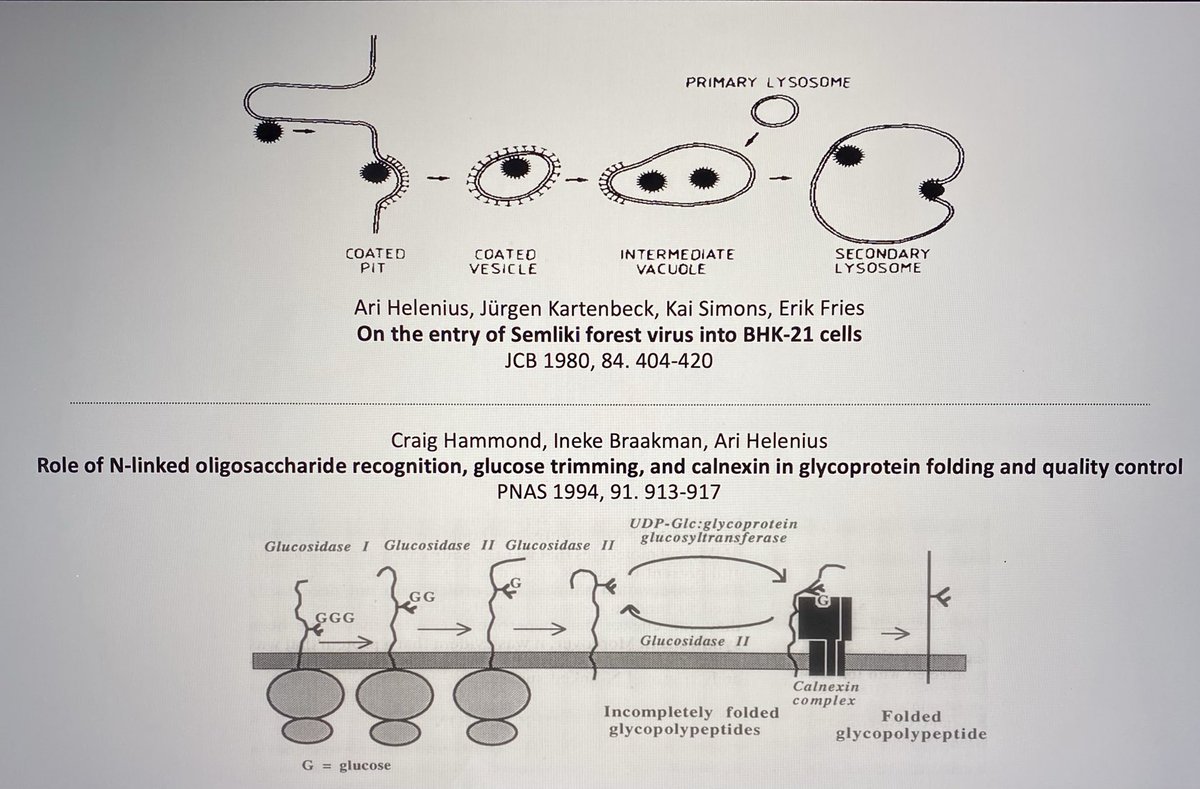
Pre-Ai, hand drawn schematics by Ari Helenius published many years ago. Up there, Ari tells us how enveloped viruses enter our cells. Down below, Ari discovers how our cells check the quality of the proteome. Seminal discoveries. Happy 80th birthday Ari.
Paper Alert!
Our new work shows collagen IV variants act by collagen IV deficiency, hypertrophic remodeling and endothelium-dependent hyperpolarization in small vessel disease, a major cause of #stroke & #dementia@eBioMedicine@TheLancet@UofGSCMH
https://t.co/x6BRIGBTPD
a 🧵